


 Deutsch
 English
 Español
 Français
 Nederlands
 Português


 Share
Share




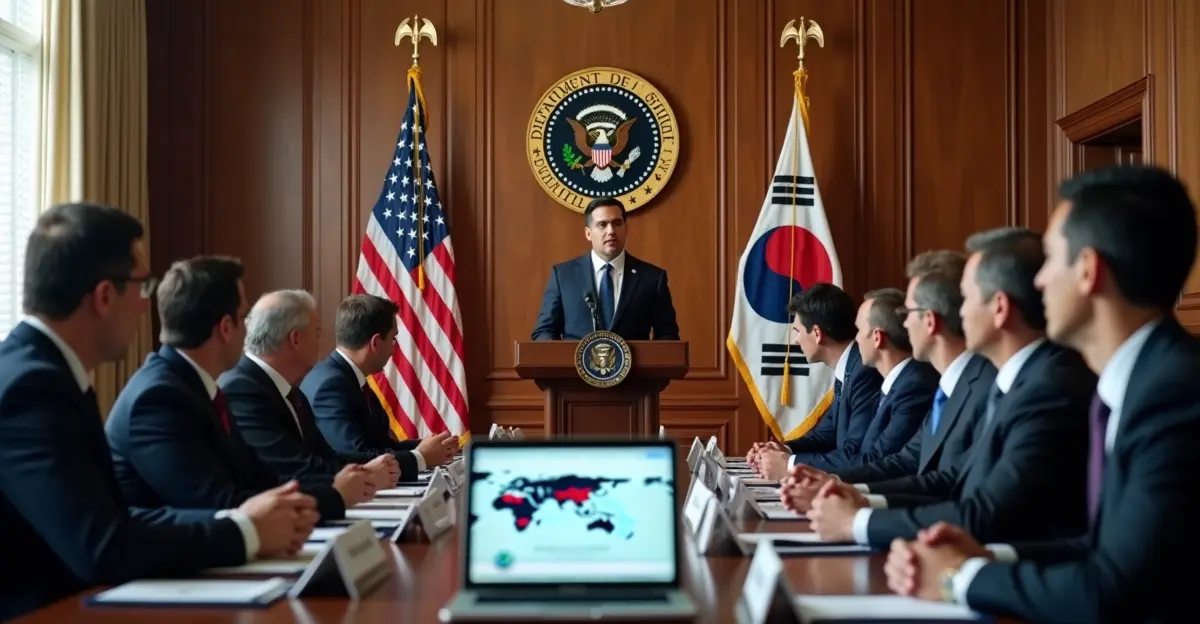
In February 2026, the United States hosted the inaugural Critical Minerals Ministerial in Washington, D.C., convening representatives from 54 countries and the European Commission to launch the Forum on Resource Geostrategic Engagement (FORGE). This plurilateral coalition, chaired by the Republic of Korea, represents the most coordinated Western effort to rewire strategic supply chains since the Cold War, directly targeting China's near-monopoly on rare earths and critical minerals essential for defense, AI, batteries, and clean energy technologies.
What Is the FORGE Alliance?
FORGE is a successor to the Minerals Security Partnership (MSP) and aims to create a preferential trade-and-investment zone with coordinated price floors to counter adversarial market manipulation. The alliance brings together nations representing over two-thirds of the global economy, with the goal of diversifying supply chains for the 60 minerals on the U.S. critical minerals list. According to the U.S. State Department, the ministerial produced 11 new bilateral framework agreements with countries including Argentina, Morocco, Peru, the Philippines, the United Arab Emirates, and the United Kingdom, bringing the total to 21 such deals in just five months.
Over $30 Billion Mobilized for Critical Mineral Projects
A key outcome of the ministerial was the announcement of over $30 billion in U.S. government-backed loans, investments, and support for critical mineral projects. The centerpiece is Project Vault, a $10 billion Export-Import Bank (EXIM) initiative to establish a domestic strategic reserve for critical minerals. The Bipartisan Policy Center reports that Project Vault is structured as a $12 billion public-private partnership, combining the EXIM loan with nearly $2 billion in private capital, creating the U.S. Strategic Critical Minerals Reserve. Companies can request specific minerals at fixed prices, reducing exposure to supply disruptions and price volatility while committing to purchase stockpiled minerals later at locked-in rates.
The Project Vault strategic reserve is designed to shield American manufacturers from supply shocks and strengthen the domestic critical minerals sector. Vice President JD Vance described a system of "reference prices for critical minerals at each stage of production," maintained through adjustable tariffs, to ensure stable markets and incentivize domestic processing capacity.
Countering China's Dominance in Rare Earths and Critical Minerals
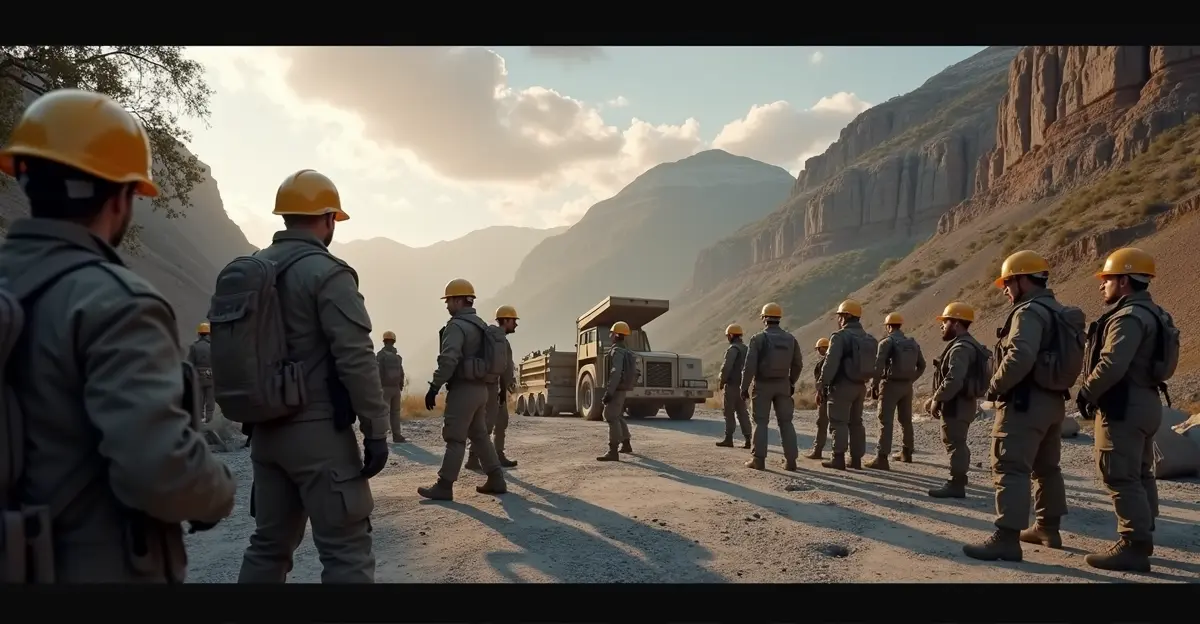
China currently controls approximately 85-90% of global rare earth refining capacity, roughly 90% of battery component production, and has invested over $120 billion in outbound critical mineral projects since 2023. This concentration poses significant risks to Western economies and defense supply chains. The FORGE alliance directly addresses this vulnerability by creating alternative supply routes and investment frameworks that reduce dependence on Chinese processing.
The US-China critical minerals competition has intensified as both nations recognize that control over these resources determines technological leadership in AI, robotics, and clean energy. FORGE's plurilateral approach, combining bilateral frameworks with coordinated price floors, represents a strategic shift from the multilateral MSP model to a more agile minilateral structure that can respond quickly to market manipulation and supply disruptions.
How FORGE Reshapes Global Trade Geometry
Preferential Trade-and-Investment Zone
FORGE establishes a preferential trade zone among member nations, with reduced tariffs and streamlined investment rules for critical mineral projects. This creates a parallel supply chain network that bypasses Chinese-dominated routes. The 11 new bilateral frameworks signed at the ministerial include provisions for joint exploration, processing technology transfer, and offtake agreements that lock in supply for decades.
Coordinated Price Floors
A novel feature of FORGE is the implementation of coordinated price floors for critical minerals at each stage of production—from raw ore to refined metals to manufactured components. These reference prices, backed by adjustable tariffs on non-member imports, aim to prevent China from using its market power to undercut competitors and drive them out of business. The system is designed to ensure that mining and processing projects in member countries remain economically viable even during periods of global oversupply.
Investment Architecture
The over $30 billion mobilized includes funding from EXIM Bank, the U.S. International Development Finance Corporation (DFC), and allied development finance institutions. The critical minerals investment architecture prioritizes projects in geopolitically stable countries with strong environmental and labor standards, creating a "responsible sourcing" premium that differentiates FORGE-sourced minerals from Chinese alternatives.
Expert Perspectives on FORGE's Potential and Challenges
The Atlantic Council notes that while FORGE represents a significant step forward, key questions remain about whether bilateral leverage can be transformed into genuine plurilateral coordination. The Bipartisan Policy Center highlights challenges with physical stockpiles, including warehouse space requirements, potential market destabilization, and the importance of procurement contracts to stimulate domestic supply. "Project Vault can serve as a customer of last resort for mineral projects, but without accompanying procurement contracts, its impact on domestic supply development will be limited," the center's analysis warns.
The Peterson Institute for International Economics emphasizes that the success of FORGE depends on aligning the interests of diverse member nations, from resource-rich developing countries like Argentina and Morocco to technology-intensive economies like South Korea and the UK. The critical minerals geopolitics 2026 landscape will test whether this coalition can maintain cohesion under pressure from Chinese countermeasures.
FAQ: FORGE Alliance and Critical Mineral Supply Chains
What is the FORGE Alliance?
FORGE (Forum on Resource Geostrategic Engagement) is a plurilateral coalition of 54 countries and the European Commission, launched in February 2026, aimed at diversifying critical mineral supply chains and countering China's dominance in rare earths and battery materials.
How much funding has been mobilized for critical mineral projects?
Over $30 billion in U.S. government-backed loans, investments, and support has been mobilized, including $10 billion for Project Vault, a domestic strategic reserve for critical minerals.
What is Project Vault?
Project Vault is a $12 billion public-private partnership (combining a $10 billion EXIM loan with $2 billion in private capital) that establishes the U.S. Strategic Critical Minerals Reserve, allowing companies to secure minerals at fixed prices to hedge against supply disruptions.
How does FORGE differ from the Minerals Security Partnership?
FORGE replaces the MSP with a more agile minilateral structure that includes coordinated price floors, a preferential trade-and-investment zone, and adjustable tariffs to counter market manipulation by adversarial nations.
Which countries signed bilateral frameworks at the ministerial?
Eleven new bilateral frameworks were signed with countries including Argentina, Morocco, Peru, the Philippines, the United Arab Emirates, and the United Kingdom, bringing the total to 21 deals in five months.
Conclusion: A New Era for Strategic Resource Security
The FORGE alliance marks a fundamental shift in how Western nations approach critical mineral security. By combining diplomatic coordination, financial mobilization, and market mechanisms like price floors and preferential trade zones, the coalition aims to create a resilient alternative to Chinese-dominated supply chains. The success of this initiative will depend on maintaining political will among 54 diverse nations and effectively implementing the complex architecture of reference prices and bilateral agreements. As the energy transition accelerates and demand for critical minerals surges, the FORGE alliance represents the most ambitious attempt to date to rewire global trade geometry for strategic resources.



Follow Discussion