


 Deutsch
 English
 Español
 Français
 Nederlands
 Português


 Share
Share




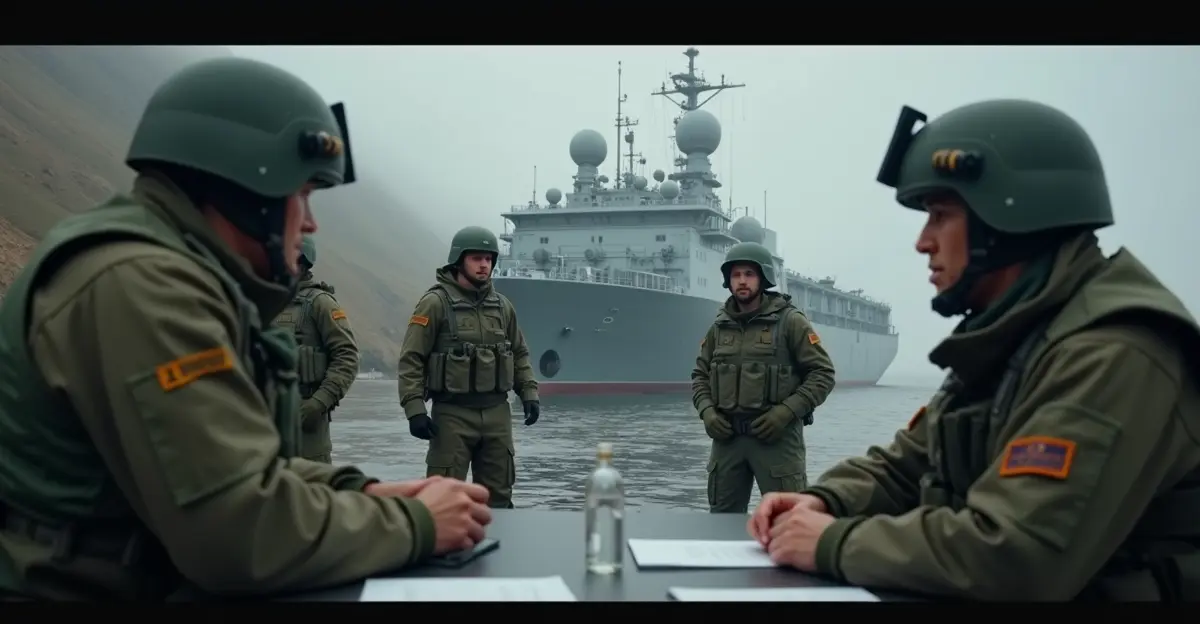
Europe is executing its most dramatic peacetime military buildup in modern history, with combined defense budgets projected to approach €800 billion annually by the end of the decade. Following NATO's June 2025 Hague Summit, allies committed to a minimum 3.5% of GDP defense spending floor, with a 5% target by 2035. The 2026 NATO Annual Report, released on March 26, confirmed a landmark 20% real-terms increase in defense spending by European allies and Canada in 2025, with all NATO members now meeting or exceeding the 2% target. This shift is accelerating European strategic autonomy, reshaping transatlantic burden-sharing, and creating structural demand shifts across defense industries, energy infrastructure, and capital markets globally.
Context: A Defining Strategic Realignment
The United States' 2026 National Defense Strategy, published on January 23, signals a reduced American focus on European security. While reaffirming NATO commitments, the strategy explicitly expects Europe to assume primary responsibility for its own conventional defense. This evolution marks a turning point in transatlantic security relations, reinforcing the urgency of Europe's rearmament. The NATO burden-sharing debate has shifted from rhetoric to reality as European nations scramble to fill capability gaps.
NATO Secretary General Mark Rutte, presenting the 2025 Annual Report in Brussels, highlighted a "real shift in mindset" among European allies and Canada, who are taking more responsibility for their own security rather than relying on US military might. Key milestones included the creation of Baltic Sentry to protect undersea infrastructure and Eastern Sentry to strengthen deterrence along the eastern flank.
Germany Leads the Charge
Germany has emerged as the undisputed leader of Europe's defense transformation. The country's 2026 defense budget totals approximately €108.2 billion — combining a regular Bundeswehr budget of €82.7 billion with a €25.5 billion contribution from the special 'Zeitenwende' fund established after Russia's 2022 invasion of Ukraine. This represents a 25% year-on-year increase and makes Germany the fourth-largest defense spender globally, nearly double France's budget.
Defense Minister Boris Pistorius emphasized that "the security situation comes before budget constraints." Major procurements include up to 1,000 Leopard 2A8 tanks, 3,500 Boxer armored vehicles, 5,000 Patria trucks, 20 additional Eurofighter jets, and new air-defense systems. The budget also provides for 10,000 new soldiers and approximately €8-9 billion for Ukraine assistance. A new "Bundeswehr Planning and Procurement Acceleration Act" aims to streamline complex procurement processes that have historically delayed major acquisitions.
Poland and France: Key Contributors
Poland leads NATO's European members in relative terms, allocating 4.5% of GDP to defense — the highest percentage among all NATO allies. The country received the largest share of EU SAFE loans at €43.7 billion. France, meanwhile, has allocated €68.5 billion for defense in 2026, focusing on nuclear deterrence modernization and expeditionary capabilities. The European defense spending race is reshaping the continent's military balance, with Germany now outspending France and the UK combined, raising concerns in Paris about a German-dominated strategic autonomy.
The EU's SAFE Program: €150 Billion in Defense Loans
The EU's Security Action for Europe (SAFE) instrument, adopted on May 27, 2025, provides up to €150 billion in long-maturity loans to member states for urgent defense investments. SAFE is the first pillar of the ReArm Europe Plan (Readiness 2030), which aims to unlock over €800 billion in total defense spending. The first loan disbursement of €6.56 billion to Poland occurred on May 29, 2026.
SAFE funds procurement across two categories: Category 1 covers ammunition, artillery, ground combat capabilities, small drones, cyber, and military mobility. Category 2 includes air and missile defense, maritime systems, larger drones, strategic enablers, space, AI, and electronic warfare. Crucially, contracts must ensure no more than 35% of component costs originate outside the EU, EEA-EFTA, or Ukraine — a provision designed to strengthen Europe's defense industrial base and reduce dependency on non-EU suppliers.
Industrial Challenges: Can Europe Deliver?
Despite the unprecedented financial commitments, Europe's defense industrial base faces critical bottlenecks that threaten to undermine the entire rearmament effort. The European defense technological and industrial base (EDTIB) remains configured for peacetime output, suffering from fragmentation across over 150 different weapon systems, supply chain vulnerabilities, and a severe talent crisis.
Approximately 25% of defense engineers are near retirement, and the EU faces a tech talent gap of 3.9 million by 2027. Competition from the tech and automotive sectors, offering 20-50% higher pay, exacerbates the problem. The European defense industry bottlenecks could turn political ambition into wasted expenditure if not addressed urgently.
Key capability gaps remain critical. Integrated air and missile defense may take 5-10 years to achieve, space-based ISR systems over 5 years, and long-range strike capabilities are advancing through the ELSA framework and UK-German collaboration on 2,000km-range precision weapons. The EU's Defence Industrial Strategy aims for 50% of defense procurement within Europe by 2030, favoring domestic suppliers and ensuring long-term contracts and earnings visibility for leading European defense firms.
Market and Economic Implications
The defense spending surge is creating structural demand shifts across capital markets. European defense stocks rebounded strongly in early 2026, with the STOXX Europe Defence Index up 14% year-to-date after a mixed 2025. According to Janus Henderson portfolio managers Christopher O'Malley and Julian McManus, markets continue to underestimate the scale and durability of Europe's defense spending cycle.
The IMF published a working paper (2026/053) examining the macroeconomic consequences, finding that past defense spending stimulated short-term economic activity with sizable cross-border spillovers. However, the fiscal burden is significant: Germany's debt-brake reforms and a €500 billion investment fund are supporting the buildup, but other nations face difficult trade-offs between defense, social spending, and debt sustainability.
Expert Perspectives
Analysts at the Munich Security Conference 2026 noted that Europe has shifted from asking permission to asserting leadership in security affairs. However, experts warn that financial commitments must translate into concrete military output. The European strategic autonomy debate is no longer theoretical — it is being tested by real procurement decisions and industrial capacity constraints.
"Europe's path may lie in digital and software-driven solutions rather than simply scaling legacy production lines," noted one defense industry analyst. The focus on drones, AI, electronic warfare, and cyber capabilities reflects lessons from the war in Ukraine, where cost-effective, rapidly deployable systems have proven decisive.
FAQ
What is the 3.5% GDP defense spending target?
NATO allies agreed at the June 2025 Hague Summit to a minimum defense spending floor of 3.5% of GDP, with a target of 5% by 2035. This represents a significant increase from the previous 2% target set in 2014.
How much is Europe spending on defense in 2026?
Combined European defense budgets are projected to approach €800 billion annually by the end of the decade. In 2026, Germany alone allocated €108.2 billion, France €68.5 billion, and Poland 4.5% of its GDP.
What is the EU SAFE program?
The Security Action for Europe (SAFE) instrument provides up to €150 billion in EU-backed loans to member states for joint defense procurement. It is part of the ReArm Europe Plan and aims to strengthen Europe's defense industrial base while reducing dependency on non-EU suppliers.
How is the US role in European security changing?
The 2026 US National Defense Strategy signals a reduced American focus on European security, expecting Europe to take primary responsibility for its own conventional defense. While the US reaffirms NATO commitments, the shift marks a fundamental change in transatlantic burden-sharing.
What are the main challenges facing Europe's rearmament?
Key challenges include industrial fragmentation (over 150 different weapon systems), supply chain bottlenecks, a severe talent crisis (25% of defense engineers near retirement), and production capacity limits. Without addressing these issues, financial commitments risk becoming wasted expenditure.
Conclusion and Future Outlook
Europe's €800 billion defense pivot represents the most significant strategic realignment since the end of the Cold War. The combination of NATO's new spending targets, the EU's SAFE program, and national budget increases is reshaping the continent's security architecture. However, the success of this historic buildup depends on Europe's ability to overcome industrial fragmentation, attract talent, and deliver military capability at scale. The coming years will determine whether Europe can translate financial commitment into genuine strategic autonomy — a question with profound implications for NATO, transatlantic relations, and global security.



Follow Discussion