


 Deutsch
 English
 Español
 Français
 Nederlands
 Português


 Share
Share




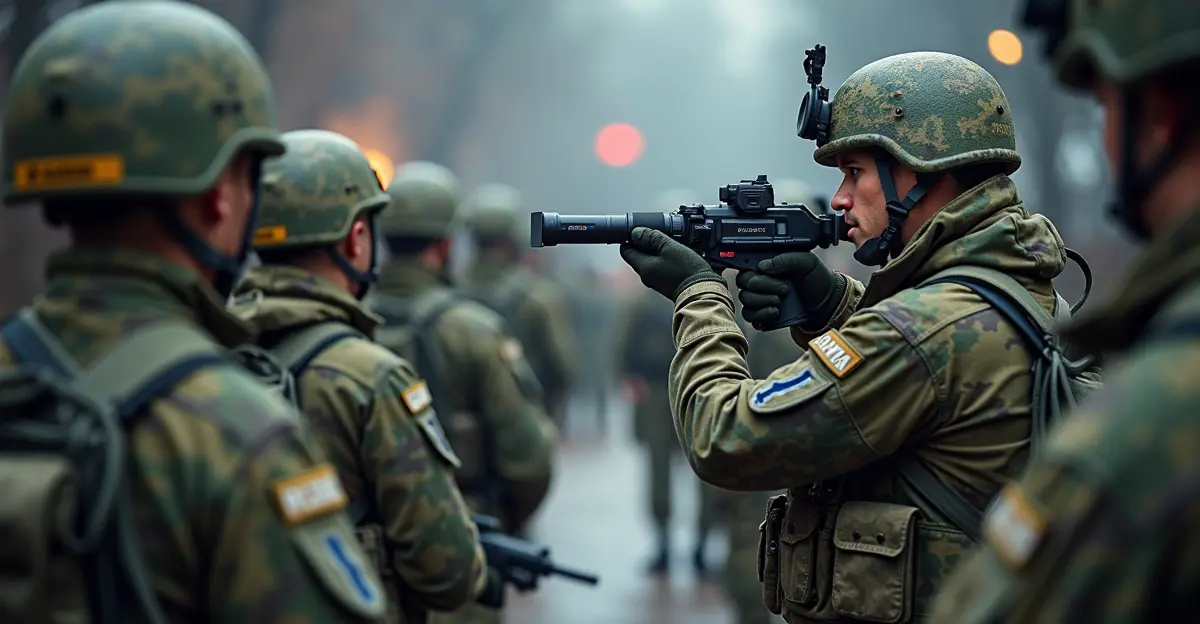
Europe is embarking on the most dramatic peacetime military buildup in modern history. Following NATO's June 2025 Hague Summit, allies committed to a 3.5% GDP defense spending floor, with a 5% target by 2035. By decade's end, European defense budgets are projected to approach €800 billion annually — a sum that raises profound questions for fiscal policy, EU debt markets, industrial strategy, and transatlantic relations. As the first fiscal impacts emerge in 2026 national budgets, the IMF published a dedicated working paper in March 2026 on the macroeconomic consequences, while McKinsey reports a 20% NATO spending jump reshaping baseline expectations. This is the defining macroeconomic and geopolitical story of the year.
The Hague Summit and the New Defense Baseline
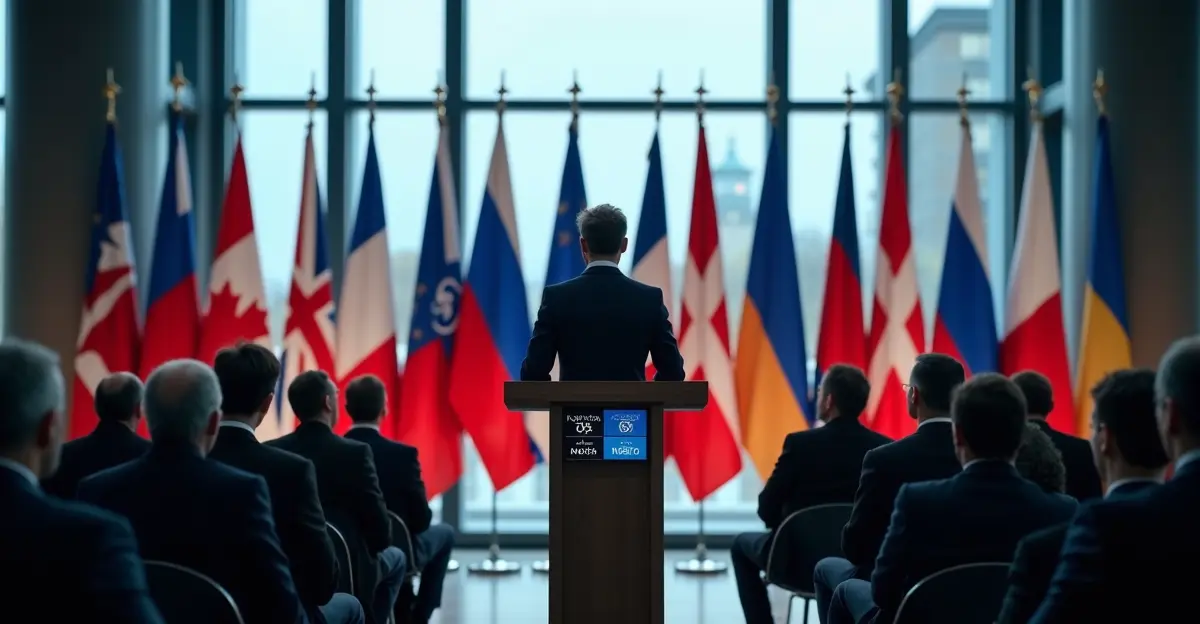
At the June 25, 2025 summit in The Hague, all 32 NATO allies agreed to raise defense spending to 5% of GDP, with at least 3.5% allocated to core defense requirements — up sharply from the previous 2% target. NATO Secretary-General Mark Rutte credited U.S. President Donald Trump for pushing the increase, noting that European allies and Canada would take greater responsibility for shared security. The remaining 1.5% can go toward infrastructure, cyber defense, and other supporting measures. Rutte cited threats from Russia, which intelligence suggests could attack NATO within three to seven years, and China's military buildup as reasons for the boost. A review is scheduled for 2029.
The NATO defense spending tracker from the Atlantic Council, updated April 2026, shows European allies outpacing expectations. In 2025, European allies and Canada increased defense spending by 20% year-over-year, with all allies now exceeding the previous 2% target. For the first time, a European ally — Norway — surpassed the United States in defense spending per capita.
Fiscal Implications: Debt, Inflation, and Growth
IMF Working Paper Findings
The IMF Working Paper (2026/053) by Davide Furceri and colleagues examines the macroeconomic consequences of Europe's historic defense spending shift. Using a panel dataset of 27 EU countries (1989–2023) and a novel high-frequency dataset of monthly defense procurement contracts, the authors find that past defense spending stimulated economic activity short-term with sizable cross-border spillovers. Defense spending multipliers varied significantly: they were larger when import intensity was low, fiscal space was ample, and public investment efficiency was high. Equipment procurement had the strongest relative impact. However, given the larger and more synchronized nature of the current buildup relative to past episodes, multipliers might fall below historical estimates, especially if monetary policy is not accommodative.
ECB Assessment
The European Central Bank's Economic Bulletin (2025) explored the fiscal implications of rising defense spending. In the June 2025 Eurosystem baseline projections, new defense spending measures since February 2025 amount to 0.6% of GDP cumulatively over 2025–27, with the bulk coming from Germany. Over half is allocated to government consumption (intermediate goods and personnel), while roughly 40% goes to investment. The expected impact on real GDP growth is close to 0.1 percentage points per year over 2026–27, while the inflation impact is assessed as muted over the projection horizon.
The EU's SAFE defense loan program provides a €150 billion instrument to support joint procurement. Nineteen member states requested access, with Poland set to receive the largest share at €43.7 billion, followed by Romania (€16.7bn), France and Hungary (€16.2bn each), and Italy (€14.9bn). Disbursements began in early 2026. The loans require that no more than 35% of component costs originate outside the EU, EEA-EFTA, or Ukraine, with stricter conditions for sensitive equipment.
National Budgets in 2026: Germany and Poland Lead
Germany approved a €524.54 billion budget for 2026, allocating €82.69 billion (about 15%) for the Bundeswehr. Combined with the Special Fund (Sondervermögen), total defense spending reaches approximately €108 billion — a €20.2 billion increase from 2025. Military procurement saw the largest rise (€16.8 billion), now representing 27.06% of the defense budget, with significant funds for vehicles, field equipment, PUMA IFVs, ground-based air defense, and ammunition (€15 billion). Berlin is also pursuing procurement reform through the new 'Bundeswehr Planning and Procurement Acceleration Act' (BwPBBG), expected in early 2026.
Poland is spending 4.5% of GDP on defense in 2025, according to SIPRI data, making it the highest spender among NATO's European members relative to GDP. The country is set to receive the largest share of SAFE loans, reflecting its strategic position on NATO's eastern flank.
Industrial Capacity and Labor Constraints
The European defense industrial base remains fragmented, characterized by national silos, duplicated capabilities, and lack of interoperability, according to a January 2026 EPRS briefing. Supply chain vulnerabilities, dependency on non-EU suppliers, and limited production capacity pose significant challenges. Key defense manufacturing sectors show employment rising at least 10% since 2021, with weapons/ammunition and ship manufacturing seeing around 20% increases. Market capitalization of EU defense producers is also expanding.
However, labor shortages and capacity constraints persist. A December 2025 outlook on the European defense industry identified 2026 as a defining year where Europe must convert political commitments into actual production output. The European defense industry consolidation trend is accelerating, with McKinsey highlighting opportunities through mergers, acquisitions, and partnerships to achieve economies of scale.
Transatlantic Relations and Strategic Autonomy
The 2026 U.S. National Defense Strategy, released January 23, 2026, marks a formalization of a trend: the United States no longer conceives of European security as its primary strategic obligation. An EPRS briefing analyzing the strategy notes implications for European defense cooperation and the push for strategic autonomy. The Hague Summit's emphasis on European burden-sharing reflects this shift, with European allies taking greater responsibility for their own defense.
Global military spending hit a record high of nearly $2.9 trillion in 2025, according to SIPRI, marking the 11th consecutive year of growth. Europe drove the surge with a 14% increase to $864 billion, the fastest annual rise among NATO's European members since 1953. U.S. spending fell 7.5% to $954 billion due to a lack of new Ukraine aid appropriations, though SIPRI warned the decline is likely temporary with over $1 trillion already approved for 2026.
Expert Perspectives
"The scale and synchronization of this defense buildup are unprecedented in peacetime Europe," said Davide Furceri, lead author of the IMF working paper. "Multipliers may be lower than historical estimates because of supply constraints and the simultaneous nature of the ramp-up across countries."
NATO Secretary-General Mark Rutte stated at the Hague Summit: "This is a once-in-a-generation transformation. European allies are stepping up to take greater responsibility for our shared security."
FAQ
What is the NATO 3.5% GDP defense spending commitment?
At the June 2025 Hague Summit, NATO allies agreed to allocate at least 3.5% of GDP annually to core defense requirements by 2035, with a broader 5% target including infrastructure and cyber defense. This replaces the previous 2% target.
How much will Europe spend on defense by 2030?
European defense budgets are projected to approach €800 billion annually by the end of the decade, up from approximately €430 billion in 2024, driven by NATO commitments and EU initiatives like ReArm Europe.
What is the EU's SAFE loan program?
The Security Action for Europe (SAFE) program is a €150 billion EU loan instrument to support joint procurement of European-made military equipment. Disbursements began in early 2026, with Poland receiving the largest share (€43.7 billion).
Will increased defense spending cause inflation?
The ECB assesses the inflation impact as muted over the projection horizon, with defense spending adding about 0.1 percentage points to GDP growth annually. However, supply constraints and labor shortages could create upward pressure if not managed carefully.
How does this affect transatlantic relations?
The buildup reflects a shift toward European strategic autonomy as the U.S. reorients its defense priorities toward the Indo-Pacific. The 2026 U.S. National Defense Strategy formalizes this trend, with Europe expected to take greater responsibility for its own security.
Conclusion: The €800 Billion Question
Whether Europe's rearmament stimulates technological competitiveness and energy transition co-investment or triggers unsustainable debt accumulation and inflationary pressure depends on execution. The IMF emphasizes that multipliers are larger when import intensity is low, fiscal space is ample, and public investment efficiency is high. The EU's focus on joint procurement and domestic production through SAFE loans aims to maximize economic benefits while minimizing leakage. As 2026 national budgets reflect the first real fiscal impacts, the world is watching whether Europe can convert political commitment into industrial reality without breaking its fiscal framework.




Follow Discussion