


 Deutsch
 English
 Español
 Français
 Nederlands
 Português


 Share
Share




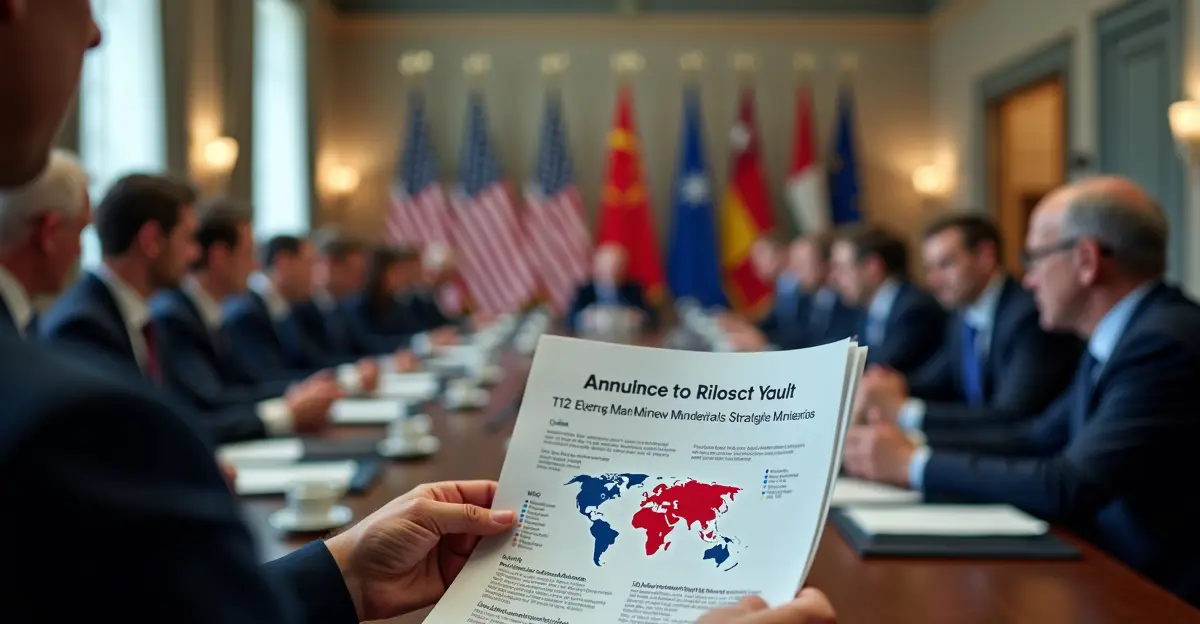
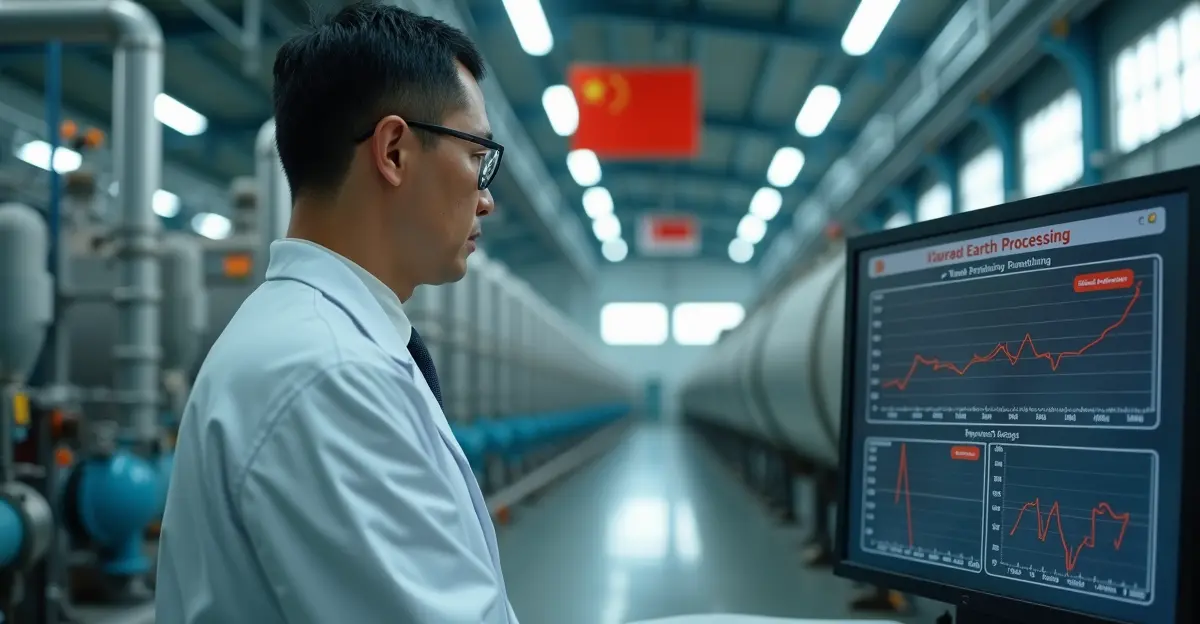
Geoeconomic confrontation has displaced climate change and cyber threats as the top global risk of 2026, according to the World Economic Forum Global Risks Report 2026. The report, based on a survey of more than 1,300 experts and leaders, warns that competition over critical minerals—lithium, cobalt, rare earths, and graphite—is now the most likely trigger of a global crisis. China controls roughly 90% of rare earth processing and 60% of lithium chemical capacity, giving Beijing unprecedented leverage over the energy transition and advanced technology supply chains.
What is geoeconomic confrontation?
Geoeconomic confrontation refers to the use of economic tools—tariffs, export controls, sanctions, and investment restrictions—to achieve strategic advantage. Unlike traditional military conflict, it plays out through supply chain disruptions, technology embargoes, and resource nationalism. The Global Risks Report 2026 finds that 50% of surveyed leaders expect a turbulent or stormy two-year outlook, rising to 57% over a decade. According to the WEF Global Risks Report 2026, geoeconomic confrontation was cited by 18% of respondents as the risk most likely to cause a global crisis in 2026, followed by state-based armed conflict at 14%.
Why critical minerals became the new battlefield
The clean energy transition has multiplied demand for critical minerals four to six times by 2040. Electric vehicles, wind turbines, AI data centers, and defense systems all depend on rare earth magnets, lithium-ion batteries, and cobalt cathodes. Yet production and processing remain highly concentrated. China controls 90% of rare earth refining, 80% of tungsten, and 60% of antimony, according to industry tracking data. This concentration has turned minerals into a strategic weapon.
China's tightening export controls in 2026
In February 2026, Beijing banned the export of rare-earth smelting technology and expanded restrictions to samarium, gadolinium, lutetium, europium, and ytterbium. Between June and July 2026, China restricted exports to 10 U.S. companies and 14 EU firms, including MP Materials and USA Rare Earth. The International Energy Agency warned that full enforcement could put $6.5 trillion of downstream production at risk, with the U.S. and Europe accounting for nearly half. By mid-2026, neodymium-praseodymium oxide prices had surged sixfold and Chinese rare earth exports fell 10% year-over-year.
Western countermeasures and strategic stockpiling
The U.S. and its allies are scrambling to diversify. Washington relaunched the Minerals Security Partnership as FORGE (Forum on Resource Geostrategic Engagement) with 54 nations, launched the $10 billion Project Vault strategic reserve through EXIM Bank, and allocated $30 billion in financing. The EU approved 60 Critical Raw Materials Act strategic projects worth about €22.5 billion. Australia's Lynas opened the first major rare-earth processing plant outside China, while Argentina signed a lithium agreement with the EU. These moves reflect a shift from just-in-time global trade to critical minerals supply chain diversification and just-in-case stockpiling.
Impact on alliances, industrial policy, and defense
Control over lithium, cobalt, and rare earths is redrawing geopolitical alliances. Indonesia maintains its nickel ore export ban, Chile and Mexico nationalized lithium reserves, and the Democratic Republic of Congo raised cobalt royalties. The U.S. Defense Production Act now treats tungsten scrap and battery black mass as strategic feedstocks, while Lockheed Martin signed a 10-year MOU with NioCorp to secure rare earths for defense platforms. The Defense Production Act critical minerals powers have expanded from mining grants to integrated defense-industrial supply chains, including $1.4 billion for Sila Nanotechnologies and $150 million for Niron Magnetics' rare-earth-free magnets.
“Geoeconomic confrontation is now the most likely trigger of a global crisis,” the WEF report concludes. Analysts warn that rebuilding independent supply chains could take 20–30 years, leaving only a 12–18 month window to counter Chinese dominance, according to trade war monitoring.
Frequently Asked Questions
What is geoeconomic confrontation?
It is the use of tariffs, export controls, sanctions, and other economic tools to gain strategic advantage, now ranked the top global risk for 2026 by the WEF.
Why are critical minerals a source of conflict in 2026?
China controls about 90% of rare earth processing and 60% of lithium chemicals, giving it leverage over EVs, defense systems, and renewable energy as demand rises four to six times by 2040.
What has China done to tighten export controls?
In 2026, Beijing banned rare-earth smelting technology exports, expanded licensing restrictions, and restricted shipments to 10 U.S. and 14 EU companies, causing rare earth prices to surge sixfold.
How are the US and EU responding?
They launched FORGE, Project Vault ($10 billion stockpile), $30 billion in financing, and the EU Critical Raw Materials Act with 60 strategic projects worth €22.5 billion.
Can supply chains be diversified quickly?
No—analysts estimate rebuilding independent supply chains could take 20–30 years, with a narrowing 12–18 month window to act.
Conclusion: The future of geoeconomic confrontation
As 2026 unfolds, geoeconomic confrontation over critical minerals will likely intensify. The race for lithium, cobalt, and rare earths is no longer about markets alone—it is about security, industrial survival, and the future of the energy transition. The WEF report's warning is clear: without coordinated diversification and stockpiling, the world faces a turbulent decade of supply chain warfare.


Follow Discussion