


 Deutsch
 English
 Español
 Français
 Nederlands
 Português


 Share
Share




China's escalating export controls on rare earths and critical minerals, which took full effect in early 2026, are fundamentally redrawing global supply chains for defense, electric vehicles (EVs), and renewable energy. With Beijing controlling 90% of global rare earth processing, 80% of tungsten, and 60% of antimony, the new restrictions have triggered price spikes of up to sixfold and slashed export licensing approval rates for European firms below 25%. As the United States pivots to bilateral frameworks with $30 billion in federal financing and the European Union launches 60 Strategic Projects under the Critical Raw Materials Act (CRMA), a new era of resource nationalism is reshaping global trade.
China's Strategic Stranglehold
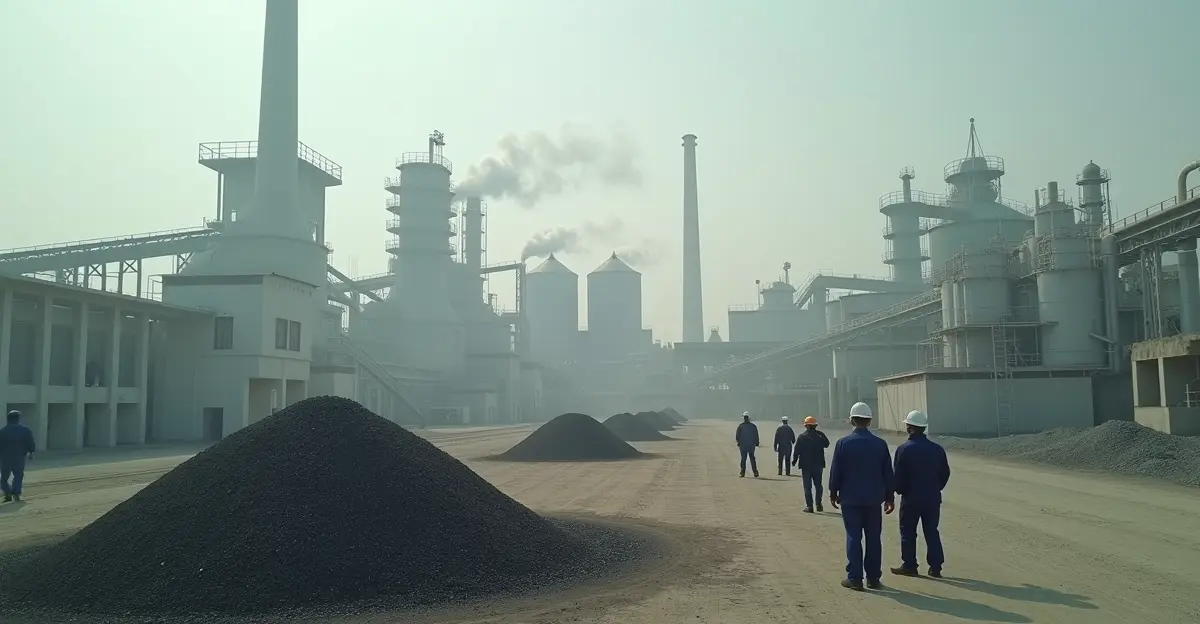
China's dominance in critical minerals is not accidental. Since the 1980s, Beijing has invested billions in subsidies and strategic planning to secure its supply chain position. Today, it controls roughly 70% of global rare earth production and close to 90% of refining and processing capacity. The 2025-2026 export controls, imposed through MOFCOM announcements, expanded controlled elements to include samarium, gadolinium, lutetium, europium, and ytterbium, while establishing a non-automatic licensing system that allows Beijing to adjust market access based on geopolitical priorities.
The rare earth export controls have created a dual-tier framework: fixed whitelists of just 15 firms for tungsten, 11 for antimony, and 44 for silver, where government selection precedes volume determinations. Even selected firms require individual shipment licenses with nominal 45-day review periods that routinely extend indefinitely. This delay-based approach creates supply chain uncertainty without triggering formal trade dispute mechanisms.
Price Spikes and Supply Disruptions
Between January and June 2026, neodymium-praseodymium oxide prices surged sixfold, tungsten concentrate prices tripled, and antimony prices doubled. European defense contractors report being unable to secure magnets for missile guidance systems. Over 80% of European companies depend on Chinese supply chains for minerals essential to defense, EVs, and renewable energy. A multi-institutional analysis warns that rebuilding independent alternatives would take 20-30 years—far exceeding the current geopolitical window.
The U.S. Response: FORGE and Project Vault
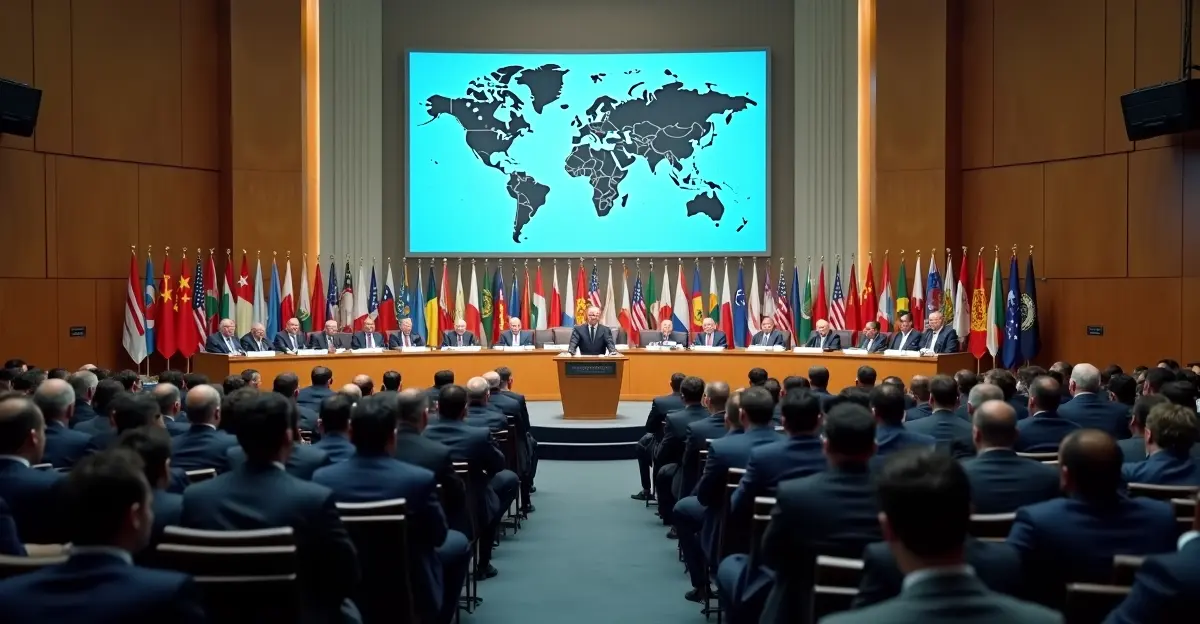
On February 4, 2026, the U.S. hosted the Critical Minerals Ministerial in Washington, D.C., led by Secretary of State Marco Rubio and Vice President JD Vance, with representatives from 54 countries and the European Commission. The event launched the Forum on Resource Geostrategic Engagement (FORGE), succeeding the Minerals Security Partnership, and announced over $30 billion in U.S. government financing support for strategic minerals projects.
Key outcomes included signing 11 new bilateral critical minerals frameworks or MOUs and launching Project Vault, a landmark Export-Import Bank initiative establishing a domestic strategic reserve for critical minerals with a $10 billion direct loan (plus $2 billion in private capital). Participating OEMs include Clarios, GE Vernova, Western Digital, and Boeing. The Critical Minerals Ministerial 2026 marks a shift from multilateral frameworks to bilateral/minilateral approaches, aiming to build secure, diversified, and resilient end-to-end supply chains essential for AI, robotics, batteries, and advanced technologies.
FORGE: A Preferential Trade Zone
FORGE creates a preferential trade-and-investment zone with coordinated price floors to counter China's dominance. The initiative includes 21 new bilateral agreements with resource-rich nations, aiming to reshape global supply chains for minerals critical to AI, batteries, defense, and clean energy. The U.S. strategy now focuses on building alternative processing capacity through major investments and legislation.
The EU's Critical Raw Materials Act in Action
The European Union has responded with its Critical Raw Materials Act (CRMA), which came into effect in 2024. In March 2025, the Commission approved 47 Strategic Projects within the EU, followed by 13 non-EU projects in June 2025, totaling 60 strategic projects. These span 13 EU member states covering extraction (25), processing (24), recycling (10), and substitution (2), focusing on lithium (22), nickel (12), graphite (11), cobalt (10), manganese (7), tungsten (3), and magnesium (1).
The CRMA targets by 2030 include at least 10% extraction, 40% processing, and 25% recycling domestically, with no more than 65% from a single third country. Strategic projects benefit from streamlined permitting (27 months maximum for extraction, 15 for others) and access to financing support, with total capital investment estimated at around €22.5 billion. A second call for projects received over 160 applications, with 75 focusing on the battery value chain and 21 on rare earths for permanent magnets.
The EU Critical Raw Materials Act represents Europe's most ambitious effort to reduce dependency on Chinese supply chains, but analysts caution that building meaningful processing capacity will take years.
Impact on Defense, EV, and Renewable Energy Supply Chains
The strategic implications of China's export controls are profound. Rare earths are essential for permanent magnets used in EV motors, wind turbine generators, and defense systems including missile guidance, radar, and electronic warfare. Tungsten is critical for armor-piercing ammunition and high-speed cutting tools, while antimony is used in military electronics and flame retardants.
European defense contractors report critical shortages, with some unable to secure neodymium magnets for precision-guided munitions. The EV industry faces potential production delays as battery and motor manufacturers scramble for alternative supplies. Renewable energy projects, particularly wind farms relying on direct-drive turbines with permanent magnet generators, face cost increases and timeline uncertainties.
According to the multi-institutional analysis, China is weaponizing control—not scarcity—by using temporary, reversible restrictions that maintain pricing power and extract strategic concessions while discouraging large-scale Western alternative investment. The critical minerals supply chain risks are now a top-tier national security concern for both Washington and Brussels.
Expert Perspectives
"China's export controls are not about cutting off supply entirely—they are about creating maximum uncertainty and leverage," said a senior analyst at the Center for Strategic and International Studies. "By keeping the spigot partially open, Beijing maintains pricing power and discourages the massive capital investment needed to build Western alternatives."
A European Commission official involved in the CRMA noted: "We have a 12- to 18-month window to demonstrate that alternative supply chains are viable. If we miss this opportunity, Chinese dominance will become entrenched for another generation."
Industry executives are more cautious. "Building a rare earth separation facility takes at least 12-18 months just for permitting and construction, and meaningful scale requires 5-7 years," said a senior executive at a Western mining company. "The timelines don't match the urgency."
FAQ
What are China's 2026 export controls on rare earths?
China's 2026 export controls are a set of regulations requiring licenses for shipments of rare earths, tungsten, antimony, and other critical minerals. They include fixed whitelists of approved exporters, individual shipment licenses with extended review periods, and categorical prohibitions on exports to U.S. military end-users.
How much does China control global rare earth processing?
China controls approximately 90% of global rare earth processing capacity, 80% of tungsten refining, and 60% of antimony production.
What is the FORGE alliance?
FORGE (Forum on Resource Geostrategic Engagement) is a 54-nation alliance launched by the U.S. in February 2026 to replace the Minerals Security Partnership. It creates a preferential trade-and-investment zone with coordinated price floors to counter China's dominance in critical minerals.
What is Project Vault?
Project Vault is a $10 billion public-private partnership (plus $2 billion private capital) establishing a U.S. Strategic Critical Minerals Reserve. It allows companies to lock in fixed prices and draw from the reserve as needed, protecting domestic manufacturers from supply shocks.
How is the EU responding to China's export controls?
The EU has launched 60 Strategic Projects under the Critical Raw Materials Act, targeting 10% domestic extraction, 40% processing, and 25% recycling by 2030. The projects span 13 member states and focus on lithium, nickel, graphite, cobalt, and rare earths.
Conclusion: A Narrowing Window
Western nations face a critical juncture. The 12- to 18-month window to build alternative processing capacity is already closing as China's bureaucratic delays and price manipulation discourage investment. While FORGE, Project Vault, and the EU's CRMA represent unprecedented efforts, the scale of the challenge is immense. Rebuilding independent supply chains would take 20-30 years, far exceeding the current geopolitical window. The next 18 months will determine whether the West can break free from Chinese dominance or accept prolonged vulnerability in the technologies that will define the 21st century.
Follow Discussion