


 Deutsch
 English
 Español
 Français
 Nederlands
 Português


 Share
Share




China's 2026 export controls on rare earths, tungsten, and antimony have triggered price spikes of up to sixfold and slashed licensing approval rates for European firms below 25%, exposing a structural vulnerability across Western defense, electric vehicle (EV), and renewable energy supply chains. With Beijing controlling roughly 90% of global rare earth processing, 80% of tungsten refining, and 60% of antimony production, the measures represent the most aggressive use of mineral leverage in modern economic history. This article analyzes the strategic calculus behind China's calibrated coercion, the Western response through the 54-nation FORGE alliance, and the multi-year timeline required to rebuild independent processing capacity.
Beijing's Strategic Calculus: Weaponizing Control, Not Scarcity
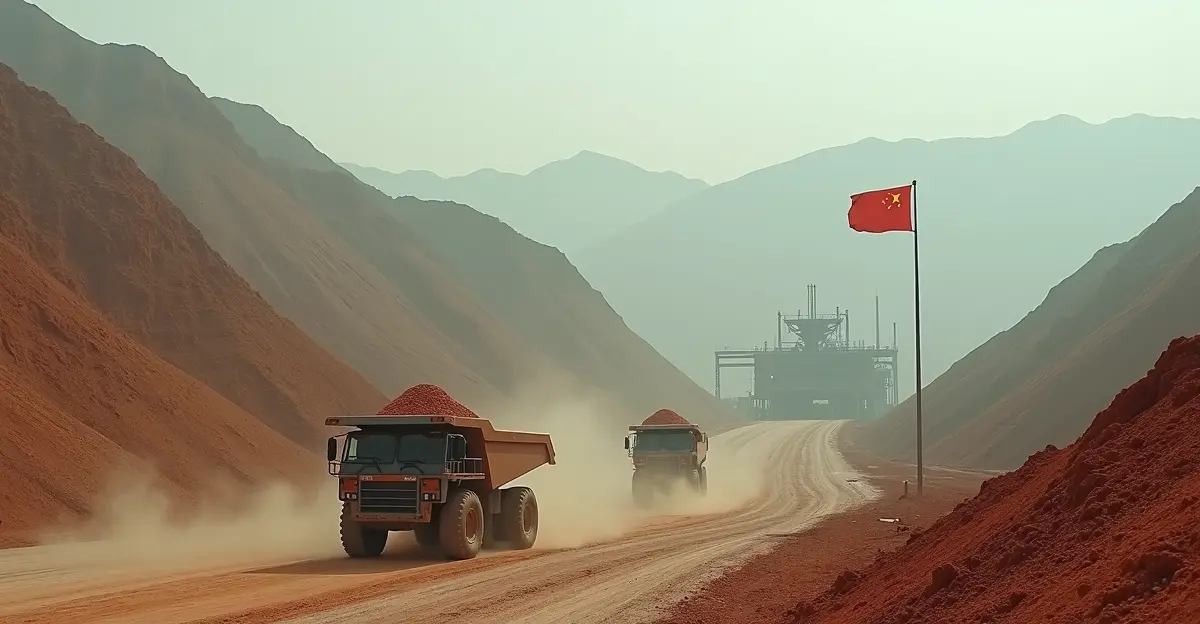
China's export control regime, codified through Announcement No. 18 of April 2025 and expanded in early 2026, covers seven medium and heavy rare earth elements—samarium, gadolinium, terbium, dysprosium, lutetium, scandium, and yttrium—along with their oxides, alloys, and compounds. The controls also extend to tungsten and antimony, both critical for defense applications. According to a multi-institutional analysis published in early 2026, Beijing is deliberately weaponizing its control over processing infrastructure rather than creating physical scarcity. The restrictions are temporary and reversible, designed to maintain pricing power and extract strategic concessions while discouraging Western investment in alternative supply chains.
The impact has been immediate and severe. Tungsten prices surged 557% between February 2025 and March 2026, reaching $2,250 per metric ton unit, driven by Chinese export curbs that cut shipments by roughly 40%. Antimony prices hit a historic high of $59,750 per tonne in July 2025 before partially correcting. European companies now face licensing approval rates below 25%, with Chinese suppliers demanding detailed end-use documentation that creates additional bureaucratic hurdles. The EU critical raw materials strategy has been directly challenged by these developments, forcing Brussels to accelerate its response.
The FORGE Alliance: A 54-Nation Counterweight
On February 4, 2026, the U.S. Department of State hosted the inaugural Critical Minerals Ministerial, bringing together representatives from 54 countries and the European Commission. The centerpiece was the launch of the Forum on Resource Geostrategic Engagement (FORGE), chaired by South Korea through June 2026, which succeeds the Minerals Security Partnership. FORGE aims to create a preferential trade-and-investment zone with coordinated price floors to counter adversarial market manipulation by dominant producers.
The ministerial produced 11 new bilateral critical minerals framework agreements, bringing the total to 21 deals in five months, with 17 more countries having completed negotiations. The U.S. has mobilized over $30 billion in investment support, including $10 billion from the Export-Import Bank for Project Vault—a domestic strategic reserve initiative. Vice President JD Vance advocated for enforceable price floors within the FORGE framework to stabilize markets against non-market distortions. A U.S.-Mexico Critical Minerals Action Plan was also signed, emphasizing trade-centered bilateral cooperation.
However, analysts caution that FORGE faces significant structural challenges. The Minerals Security Partnership successor must overcome divergent regulatory frameworks, environmental permitting timelines, and the sheer scale of China's existing infrastructure advantage. South Korea's chairmanship through June provides initial momentum, but long-term institutionalization remains uncertain.
Defense and Industrial Fallout
Military Vulnerabilities
European defense contractors face acute shortages of materials essential for missile guidance systems, F-35 components, armor-piercing munitions, and drone manufacturing. Military-related consumption of tungsten is projected to increase 12% in 2026 alone. The U.S. has not mined tungsten commercially since 2015, creating a critical vulnerability that new mine development—estimated at two years minimum—cannot quickly resolve. NATO has warned of critically low stockpiles, with the U.S. National Defense Stockpile dwindling to just 1.2% of its 1962 value.
EV and Renewable Energy Impact
The electric vehicle sector, which relies on rare earth permanent magnets for motor production, has seen production costs rise by approximately $500 per vehicle due to material price spikes. China controls 94% of global sintered permanent magnet production, giving it near-total leverage over this critical component. Automakers are accelerating efforts to develop rare-earth-free motor technologies, with BMW, Nissan, Renault, and Volkswagen leading adoption of current-excited wound rotor synchronous motors. However, rare-earth-dependent motors still account for 94.7% of the global light vehicle e-motor market in 2025, and alternatives remain years from meaningful scale.
Wind turbine manufacturers face similar pressures, as direct-drive turbines require substantial quantities of neodymium and dysprosium magnets. The renewable energy supply chain risks are compounded by the fact that over 80% of European companies depend on Chinese supply chains for critical minerals essential to the green transition.
The Timeline Problem: 20-30 Years vs. 12-18 Months
The most alarming finding from recent analyses is the timeline mismatch between Western action and Chinese entrenchment. Rebuilding independent rare earth processing capacity would take 20-30 years, according to industry estimates, far exceeding the current 12-18 month geopolitical window for decisive Western action. New rare earth separation facilities require 12-18 months minimum to construct, with meaningful scale requiring 5-7 years. Meanwhile, China continues to dominate not only production but also innovation, accounting for 81% of global rare-earth-related patent filings between 2014 and 2024.
The EU's Critical Raw Materials Act sets 2030 targets of sourcing 10% of demand domestically, 40% through processing within the EU, and 15% from recycling. However, without major acceleration, these goals will likely be missed. Europe currently imports 95% of its rare earths and has no large-scale mining or separation capacity. The EU Critical Raw Materials Act targets remain aspirational without commensurate investment and permitting reform.
Expert Perspectives
China is weaponizing control—not scarcity—using temporary, reversible restrictions to maintain pricing power and extract concessions while discouraging Western alternative investment, notes a multi-institutional analysis from early 2026. The West faces a narrowing window to act decisively or accept prolonged vulnerability.
Gregory Wischer of the Carnegie Endowment warned in 2024 that the U.S. military and NATO face serious risks of mineral shortages, a prediction that has materialized with alarming precision. The Carnegie analysis identified three key risks: foreign export controls, rising military demand amid great power competition, and disrupted sea-lanes—all now in play.
Industry sources quoted by Fastmarkets note that building alternative antimony supply chains is a long-term undertaking, with the antimony trioxide market remaining highly concentrated in a few countries. Similarly, S&P Global reports that rare earth supply bottlenecks are expected to persist through 2026 and beyond, with new projects facing significant lead times, technical hurdles, and investment requirements.
FAQ
What minerals does China control through export restrictions?
China controls roughly 90% of global rare earth processing, 80% of tungsten refining, and 60% of antimony production. The 2025-2026 export controls cover seven medium and heavy rare earth elements (samarium, gadolinium, terbium, dysprosium, lutetium, scandium, yttrium) along with tungsten, antimony, and related processing technologies.
How much have prices increased due to China's controls?
Tungsten prices surged 557% between February 2025 and March 2026, reaching $2,250 per metric ton unit. Antimony hit a historic high of $59,750 per tonne in July 2025. Overall, price spikes of up to sixfold have been recorded for critical minerals outside China.
What is the FORGE alliance?
The Forum on Resource Geostrategic Engagement (FORGE) is a 54-nation alliance launched on February 4, 2026, succeeding the Minerals Security Partnership. It aims to create a preferential trade-and-investment zone with coordinated price floors to counter Chinese market manipulation. South Korea chairs the forum through June 2026.
How long would it take to rebuild independent processing capacity?
Industry estimates suggest 20-30 years to fully rebuild independent rare earth processing capacity. New separation facilities take 12-18 months to build but require 5-7 years to reach meaningful scale. The West faces a narrowing 12-18 month geopolitical window for decisive action.
What is Project Vault?
Project Vault is a U.S. domestic strategic reserve initiative backed by a $10 billion loan from the Export-Import Bank. It aims to stockpile critical minerals for national security and industrial needs, representing the largest loan in EXIM Bank history.
Conclusion: A Defining Geoeconomic Challenge
China's calibrated use of mineral leverage represents the defining geoeconomic story of 2026. The FORGE alliance and Project Vault signal Western recognition of the threat, but the timeline for building alternatives remains daunting. With NATO stockpiles critically low, European defense contractors facing shortages, and EV production costs rising, the next 12-18 months will determine whether the West can begin to break China's stranglehold or must accept prolonged strategic vulnerability. The critical minerals geopolitics 2026 landscape will continue to evolve rapidly as both sides escalate their efforts.

Follow Discussion