


 Deutsch
 English
 Español
 Français
 Nederlands
 Português


 Share
Share




China's 2025-2026 export controls on critical minerals have triggered a seismic shift in global supply chains, with price spikes of up to sixfold outside China and licensing approval rates for European firms plummeting below 25%. As Beijing weaponizes scarcity rather than imposing outright bans, Western nations face a narrow 12-18 month window to act before strategic dependence hardens irreversibly.
China controls 90% of global rare earth processing, 80% of tungsten, and 60% of antimony — minerals essential for defense systems, electric vehicles (EVs), and renewable energy technologies. According to a multi-institutional analysis published in early 2026, over 80% of European companies depend on Chinese supply chains for these critical inputs, leaving them acutely vulnerable to Beijing's strategic leverage.
The Mechanics of Weaponized Scarcity
Unlike outright export bans, China's approach employs temporary, reversible restrictions that maintain pricing power while extracting strategic concessions. The EU critical minerals legislation has struggled to keep pace as Beijing introduced two waves of export controls in 2025, with the second wave later suspended for one year — creating uncertainty that discourages Western investment in alternative supply chains.
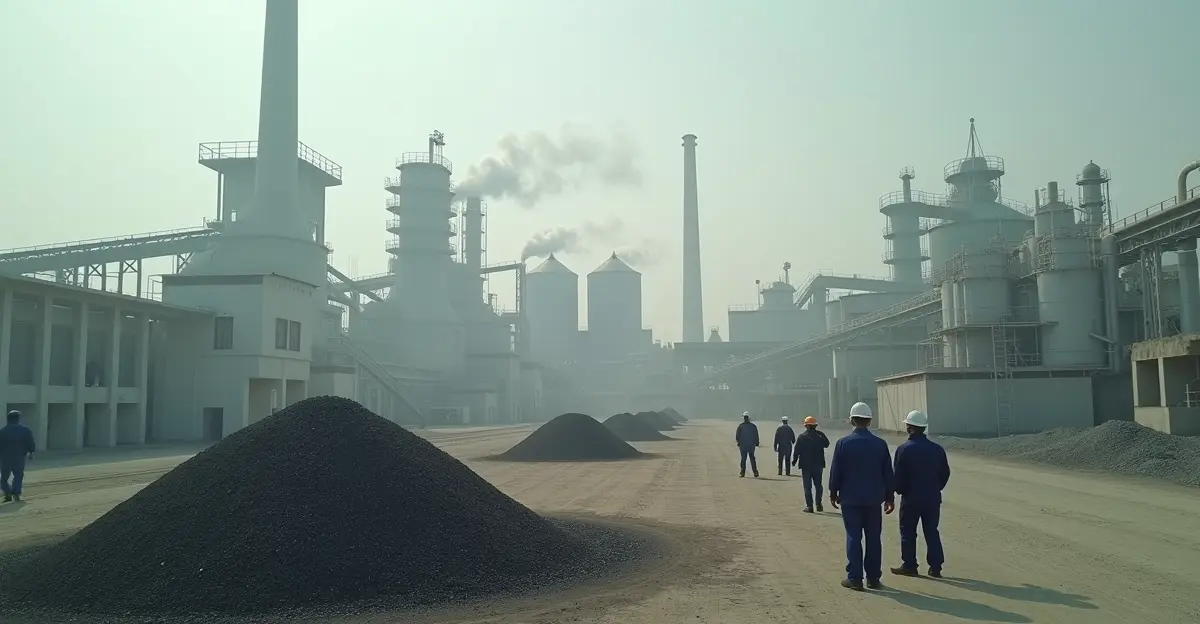
China's dominance is not limited to raw material extraction. The International Energy Agency estimates that China accounted for approximately 91% of global rare earth separation and refining production in 2024, and 94% of sintered permanent magnet production. The United States Geological Survey reported China's rare earth reserves at 44 million tonnes (rare earth oxide equivalent) in its February 2026 Mineral Commodity Summaries, while a 2026 patent landscape report found that China accounts for 81% of global rare-earth-related patent filings between 2014 and 2024.
Price Spikes and Supply Disruptions
The impact has been dramatic. Antimony prices surged up to 2,600% following China's December 2024 ban on exports to U.S. military users, according to industry analysis. Rare earth prices outside China have risen sixfold since the controls took effect. The U.S. still imports approximately 82% of its antimony consumption, with recycling covering only 15% of domestic demand.
European firms face particular strain. Licensing approval rates have fallen below 25%, forcing companies to consider relocating supply chains. A Reuters report from December 2025 documented how Chinese export controls are pressuring European automotive and transportation firms to restructure their operations.
The 20-30 Year Timeline for Independence
Rebuilding independent Western supply chains would take 20-30 years, far exceeding the current geopolitical window. A CSIS report from July 2025 emphasizes that simply diversifying mining sources is insufficient without building midstream processing capacity. New mines like Brazil's Serra Verde have already contracted their ore for Chinese processing, illustrating the depth of dependency.
The US Inflation Reduction Act follow-ons have attempted to address this gap, with the U.S. government mobilizing over $30 billion in financing support for critical mineral projects over six months. On February 4, 2026, the U.S. hosted the Critical Minerals Ministerial, announcing 11 new bilateral frameworks and the FORGE initiative as successor to the Minerals Security Partnership.
Strategic Pathways Forward
Governments dependent on Chinese supplies face three strategic pathways:
- Managed dependence: Accepting continued reliance while negotiating temporary exemptions and price stability, as seen in the November 2025 US-China rare earths deal that suspended controls on gallium, germanium, antimony, and graphite in exchange for U.S. technology export concessions.
- Costly independence: Investing in domestic mining, processing, and recycling infrastructure despite 20-30 year timelines and massive capital requirements. The EXIM Bank's $10 billion Project Vault for a domestic strategic minerals reserve exemplifies this approach.
- Hybrid resilience: Combining diversified sourcing from allied nations, strategic stockpiles, and recycling while maintaining some Chinese supply. The G7 critical minerals coordination framework, which accelerated in April 2026, supports this pathway.
Geopolitical Implications and the 12-18 Month Window
Multiple independent analyses in early 2026 confirm that Western nations have a narrow 12-18 month window to act decisively. The EU and U.S. signed a landmark critical minerals agreement on April 24, 2026, with U.S. Secretary of State Marco Rubio and EU Trade Commissioner Maros Sefcovic formalizing cooperation across the entire value chain — from exploration to recycling.
"The unacceptable risk of overconcentration of resources dominated by one or two countries is something we must address," Rubio stated at the signing ceremony. Sefcovic emphasized economic security, noting the need to learn from costly fossil fuel dependencies.
The agreement explores minimum pricing to prevent market flooding, coordinates subsidies and stockpiles, and establishes joint standards to ease Western trade. The U.S. has also signed similar agreements with Mexico, Japan, and Australia, building a network of allied supply chains.
However, the China rare earth export controls 2025 have already demonstrated Beijing's willingness to use its dominance strategically. The 2025 overhaul of China's export licensing regime — introducing a "One License, One Use" principle and real-name tax reporting — has created end-to-end transaction transparency that further tightens control over critical mineral flows.
Expert Perspectives
Analysts at the Center for Strategic and International Studies (CSIS) argue that developing mineral processing hubs — centralized facilities that transform raw ore into refined materials — could leverage economies of scale and concentrate specialized talent. However, they caution that no single country can independently match China's capabilities, making international collaboration essential.
Industry experts note that key signals to monitor include Beijing's posture when the suspension window closes in November 2026, execution of projects like Perpetua Resources' Stibnite antimony mine in Idaho, and enforcement against transshipment routes via Thailand and Mexico that currently bypass export controls.
FAQ
What critical minerals does China control?
China controls 90% of global rare earth processing, 80% of tungsten, and 60% of antimony. It also dominates processing of gallium, germanium, and graphite, which are essential for defense, electronics, and green energy technologies.
How have China's 2025-2026 export controls affected prices?
Prices for rare earths and antimony outside China have surged up to sixfold, with antimony experiencing spikes of up to 2,600% following targeted bans on exports to U.S. military users.
What is the 12-18 month window for Western action?
Multiple analyses indicate that Western nations have 12-18 months from early 2026 to make strategic decisions on critical mineral supply chains before China's dominance becomes structurally irreversible. Key legislation, including EU critical minerals acts and U.S. IRA follow-ons, reaches decision points this year.
Can the West build independent rare earth supply chains?
Rebuilding independent supply chains would take 20-30 years due to the complexity of mining, processing, and magnet manufacturing. The U.S. led rare earth production until the 1990s but now depends almost entirely on China for processing.
What are the three strategic pathways for governments?
Governments face three options: managed dependence (accepting reliance while negotiating terms), costly independence (building domestic capacity over decades), or hybrid resilience (combining diversified sourcing, stockpiles, and recycling with some Chinese supply).
Conclusion and Future Outlook
The 2026 critical minerals landscape represents a decisive moment for global economic security. As the EU, U.S., and G7 nations accelerate coordination, the effectiveness of their response will determine whether China's stranglehold on critical minerals becomes a permanent feature of the geopolitical order or a catalyst for diversified, resilient supply chains. The next 12-18 months will reveal whether the West can translate political will into tangible infrastructure and processing capacity — or whether strategic dependence hardens into vulnerability.

Follow Discussion