


 Deutsch
 English
 Español
 Français
 Nederlands
 Português


 Share
Share




China's escalating export controls on rare earth elements, tungsten, and antimony have created a strategic chokepoint for Western defense, electric vehicle (EV), and renewable energy industries, with prices spiking up to sixfold outside China and European licensing approval rates falling below 25%. This analysis examines how nations are scrambling to build alternative processing capacity, the feasibility of recycling and substitution technologies, and the narrowing 12-to-18-month window for decisive Western action before dependency becomes structurally entrenched.
China's Dominance and the New Export Control Regime
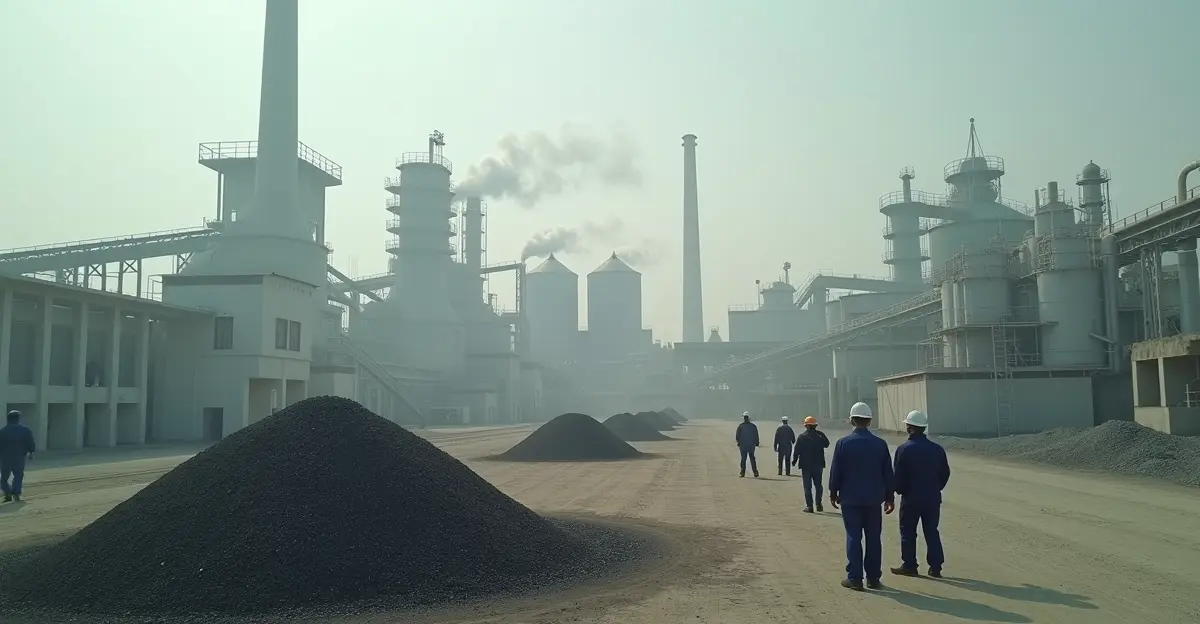
China controls approximately 90% of global rare earth processing, 80% of tungsten production, and 60% of antimony output, according to a multi-institutional analysis published in early 2026. In October 2025, China's Ministry of Commerce (MOFCOM) imposed sweeping new export controls via Announcements Nos. 55-62, covering extraction, processing, and magnet production for rare earths, as well as tungsten and antimony. The measures established a non-automatic licensing system and compliance notice regime for traceability, effectively allowing Beijing to approve or deny each shipment on a case-by-case basis.
The timing was strategic: the controls were announced one day before then-President Trump canceled his APEC meeting with Chinese President Xi Jinping, signaling a clear escalation in the ongoing trade and technology war. In response, the U.S. imposed an additional 100% tariff on all Chinese goods, bringing total tariffs to approximately 130%, and expanded export controls on critical software. The US-China trade war escalation has since deepened, with both sides using critical minerals as leverage.
Price Spikes and Supply Disruptions
The impact on global markets has been dramatic. Tungsten prices surged 557% between February 2025 and March 2026, reaching $2,250 per metric ton unit, driven by Chinese export restrictions and rising military demand. China's shipments of restricted tungsten products fell by about 40% in 2025 after Beijing added tungsten to its export control list. The U.S. has not mined tungsten commercially since 2015, making it almost entirely dependent on imports.
Antimony prices have also skyrocketed. China cut antimony exports by 97% in late 2025, prompting the Pentagon to deploy nearly $1 billion to rebuild domestic stockpiles for defense applications including ammunition, night vision systems, and nuclear weapons components. Rare earth prices outside China have seen sixfold increases, with neodymium-praseodymium oxide—critical for EV magnets—trading at record premiums over Chinese domestic prices.
European firms have been hit hardest. Licensing approval rates for European companies seeking to import Chinese rare earths and critical minerals have fallen below 25%, according to industry data. Over 80% of European companies depend on Chinese supply chains for materials essential to defense, EVs, and renewable energy. The European critical raw materials strategy is now under immense pressure to deliver alternatives.
Western Investment: Too Little, Too Late?
From January 2025 to January 2026, Western governments invested over $3 billion in rare earth supply chains to reduce dependence on China. The U.S. led with $1.4 billion, funding projects from MP Materials ($550 million in equity and loans) to Vulcan Elements ($620 million for magnets) and ReElement Technologies ($80 million). Australia committed approximately $260 million, primarily to Arafura's Nolans project. Japan allocated $380-400 million via JOGMEC and a heavy REE plant in France. Canada invested roughly $51.6 million in Ucore and Cyclic Materials. Europe earmarked €3 billion under the Critical Raw Materials Act, but confirmed disbursements remain modest at $150-160 million.
Despite this surge, experts warn that the West still lacks a unified strategy. Critical gaps remain in permitting, demand signaling, and workforce development. Analysts estimate that $10-20 billion over five years is needed for a truly resilient supply chain—far more than current commitments. The Western rare earth processing capacity gap remains a critical vulnerability.
Recycling and Substitution: Strategic Hedge or Silver Bullet?
Recycling currently accounts for less than 1% of rare earth magnet supply globally. However, momentum is building. India's Attero is expanding capacity from 300 to 30,000 tonnes per year by 2027. Apple has a $500 million partnership with MP Materials. Europe has mandated that 25% of magnet materials must come from recycled sources by 2030. Three key technologies are emerging: hydrogen decrepitation (magnet-to-magnet loops), hydrometallurgy/pyrometallurgy (chemical extraction), and advanced separation using ion-exchange and bio-adsorbents.
Substitution also offers promise. The market for rare earth alternatives reached $2.1 billion in 2022, growing at 7.8% CAGR. Researchers are developing motors that use less or no rare earths, and ferrite magnets are being improved for some applications. However, for high-performance magnets in EVs and wind turbines, substitutes currently cannot match neodymium-iron-boron performance. The rare earth recycling technology feasibility remains limited at scale.
The Geopolitical Dimension: Weaponizing Control, Not Scarcity
A critical insight from recent analyses is that China is weaponizing control rather than scarcity. By using temporary, reversible restrictions, Beijing maintains pricing power and extracts strategic concessions while discouraging large-scale Western investment in alternatives. The uncertainty created by the licensing system—where approvals can be granted or denied at will—makes it difficult for companies to justify the multi-billion-dollar investments needed for independent supply chains.
The World Economic Forum's Global Risks Report 2026 identified geoeconomic confrontation as the top global risk for 2026, followed by interstate conflict and extreme weather. The IMF has similarly flagged geoeconomic fragmentation as a key threat to global growth. The geoeconomic confrontation 2026 risks are now materializing in real-time through critical mineral supply chains.
The 12-18 Month Window
Analysts warn that Western nations face a narrowing 12-18 month window to act decisively before dependency becomes structurally entrenched. Rebuilding independent supply chains from mine to magnet could take 20-30 years under normal circumstances. However, targeted investments in processing capacity, recycling infrastructure, and strategic stockpiles could reduce the most acute vulnerabilities within two to three years.
Three strategic paths have been outlined: managed dependence (accepting Chinese leverage while building limited alternatives), costly independence (full vertical integration at enormous expense), or a hybrid resilience model (diversifying sources, building stockpiles, and investing in recycling and substitution). Most analysts favor the hybrid approach as the most realistic option.
FAQ
What are critical minerals and why do they matter?
Critical minerals are materials essential for defense, clean energy, and high-tech industries but with vulnerable supply chains. Rare earths, tungsten, and antimony are key examples, used in everything from EV motors and wind turbines to missile guidance systems and night vision goggles.
How much control does China have over critical mineral supply chains?
China controls approximately 90% of rare earth processing, 80% of tungsten production, and 60% of antimony output globally. Over 80% of European companies depend on Chinese supply for these materials.
What has been the price impact of China's export controls?
Tungsten prices surged 557% between February 2025 and March 2026. Rare earth prices outside China have increased up to sixfold. Antimony exports from China fell by 97%, triggering emergency Pentagon stockpiling.
Can recycling solve the critical minerals shortage?
Recycling currently provides less than 1% of rare earth supply. While investment is growing and technologies are improving, scaling up will take years. Recycling is seen as a strategic hedge rather than a complete solution.
What is the EU doing to reduce dependency?
The EU's Critical Raw Materials Act sets targets for 2030: 10% extraction, 40% processing, 25% recycling, and no more than 65% dependency on any single country. The RESourceEU Action Plan allocates €3 billion for projects, but disbursements have been slow.
Conclusion: A Defining Moment for Global Supply Chains
The critical minerals chokepoint represents one of the most significant geoeconomic challenges of the decade. With the WEF and IMF both flagging geoeconomic confrontation as the top 2026 risk, and China's export controls now in full effect, the window for Western action is narrowing rapidly. The outcome will determine whether the global energy transition and defense supply chains remain tethered to Beijing's strategic leverage—or whether a more resilient, diversified system can emerge. The next 12-18 months will be decisive.


Follow Discussion