


 Deutsch
 English
 Español
 Français
 Nederlands
 Português


 Share
Share




China's sweeping 2026 export controls on rare earths and critical minerals have triggered sixfold price spikes outside China and left over 80% of European companies dependent on Chinese supply chains for materials essential to defense, electric vehicles, and renewable energy. With Western licensing approvals falling below 25% and rebuilding independent alternatives requiring 20 to 30 years, this analysis examines how Beijing is weaponizing processing dominance—not scarcity—to extract geopolitical concessions, and why the U.S.-led FORGE initiative and $30 billion in mobilization face a narrow 12- to 18-month window to break the chokepoint.
Background: China's Expanding Export Control Regime
On October 9, 2025, China's Ministry of Commerce (MOFCOM) announced sweeping new export controls covering the entire rare earth value chain—from raw materials and oxides to alloys, magnets, and processing equipment. The regulations, formalized in Notice 2025 No. 61, require Chinese and foreign exporters to obtain government approval for dual-use items containing even trace amounts of Chinese-origin rare earths. This expanded on earlier April 2025 licensing requirements for seven medium and heavy rare earth elements: samarium, gadolinium, terbium, dysprosium, lutetium, scandium, and yttrium.
China controls approximately 90% of global rare earth processing, 80% of tungsten, and 60% of antimony. The rare earth element supply chain is dominated by Chinese refineries, giving Beijing extraordinary leverage. Unlike previous restrictions that targeted raw ore exports, the 2025-2026 controls cover processed materials and manufactured components, effectively extending Beijing's reach to goods produced outside China that incorporate Chinese-origin rare earths.
Price Spikes and Supply Disruptions
The impact has been immediate and severe. Export controls triggered sixfold price spikes for key rare earth oxides outside China. Praseodymium-neodymium oxide prices surged approximately 15% in a single month following the November 2025 adjustments, reaching RMB 557,500 per ton. Dysprosium oxide prices now range between $700 and $1,000 per kilogram, while terbium oxide commands $2,000 to $4,000 per kilogram.
A May 2025 drop of approximately 75% in Chinese rare earth magnet shipments forced some European carmakers to pause production, demonstrating the cascading risks across global supply chains. The European Central Bank's Economic Bulletin (Issue 6/2025) confirmed that over 80% of large European firms are no more than three intermediaries away from a Chinese rare earth producer, with US firms like Microsoft, Apple, and Intel serving as key intermediaries.
Licensing Bottlenecks
The new licensing regime has created a bureaucratic chokepoint. All exports now require a MOFCOM license, with processing taking up to 45 working days. European customers must provide detailed end-use documentation, and approval rates have fallen below 25%. The critical minerals export restrictions are designed to be temporary and reversible, allowing Beijing to maintain pricing power while extracting strategic concessions from Western governments.
Weaponizing Processing Dominance, Not Scarcity
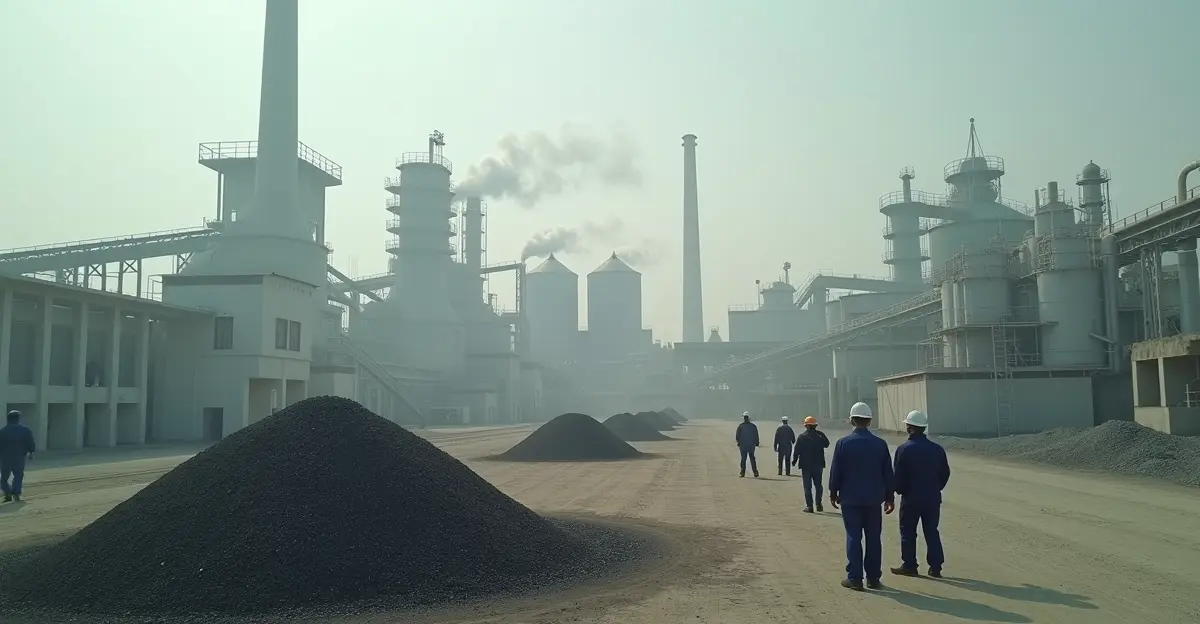
A multi-institutional analysis published in early 2026 argues that China is weaponizing control rather than scarcity. Rare earth elements are not actually rare—cerium is more abundant in the Earth's crust than copper. The strategic bottleneck lies in processing capacity: separating rare earth oxides from ore is chemically complex, energy-intensive, and environmentally challenging. China has invested decades in building this infrastructure, and no other country has matched it.
By using temporary, reversible restrictions, Beijing can maintain pricing power and discourage Western investment in competing supply chains. The message to global markets is clear: any company building processing capacity outside China risks being undercut the moment restrictions are lifted. This strategic supply chain confrontation represents a new era where critical minerals serve as instruments of state power.
The Western Response: FORGE and Project Vault
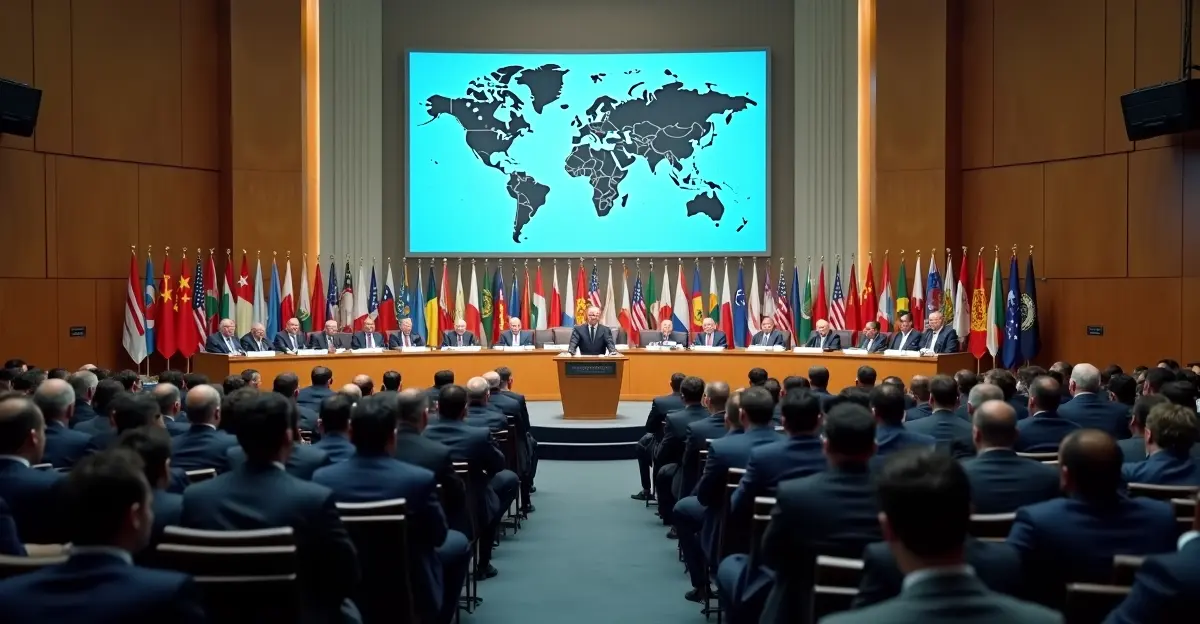
On February 4, 2026, the U.S. Department of State hosted the inaugural Critical Minerals Ministerial, bringing together representatives from 54 countries and the European Commission. Secretary of State Marco Rubio announced the creation of FORGE (Forum on Resource Geostrategic Engagement) as the successor to the Minerals Security Partnership, chaired by the Republic of Korea.
Key announcements included:
- Project Vault: A $10 billion domestic strategic reserve for critical minerals, backed by the largest Export-Import Bank loan in history.
- 11 new bilateral critical minerals frameworks signed at the ministerial, bringing the total to 21 deals in five months, with countries including Argentina, Morocco, the UAE, and the UK.
- Over $30 billion mobilized in letters of interest, investments, and loans over the past six months to secure critical mineral supply chains.
- Price floor coordination: Vice President JD Vance outlined a plurilateral approach involving a preferential trade zone with enforceable price floors for critical minerals at each production stage, reinforced through adjustable tariffs.
FORGE aims to create a preferential trade-and-investment zone covering two-thirds of the global economy. However, the Atlantic Council notes that questions remain about FORGE's operational details and whether its trade-led model will prove sufficient without pooled investment coordination.
The 12-18 Month Window
Analysts warn that Western nations face a narrowing 12- to 18-month window to act decisively. Rebuilding independent rare earth supply chains would take 20-30 years, far exceeding the current geopolitical window. The U.S. critical minerals strategy must overcome several hurdles: permitting delays for new mines, environmental regulations, the lengthy timeline for building processing facilities, and the risk that Chinese price undercutting will render new investments uneconomical.
Three strategic paths have been identified: managed dependence (accepting Chinese dominance while diversifying sources), costly independence (massive investment in domestic and allied processing capacity), or a hybrid model balancing resilience and realism. The hybrid approach—combining strategic stockpiles, allied processing partnerships, and diplomatic engagement—appears most viable but requires unprecedented coordination among Western governments.
Expert Perspectives
"China's export controls are not about scarcity—they are about control," said a senior analyst at the Center for Strategic and International Studies. "By keeping restrictions temporary and reversible, Beijing maintains maximum leverage while preventing the Western investment that would permanently break its monopoly."
The European Central Bank's network analysis confirms the depth of dependency: even indirect suppliers like the US depend heavily on China, with 80% of US rare earth imports originating from China. The manufacturing sector, particularly automotive and energy industries, is most exposed to potential disruptions.
FAQ
What are rare earth elements and why are they important?
Rare earth elements are a set of 17 metals (the 15 lanthanides plus scandium and yttrium) essential for permanent magnets in EVs, wind turbines, defense systems, and consumer electronics. Despite their name, they are relatively abundant but difficult to process.
How much control does China have over rare earth processing?
China controls approximately 90% of global rare earth processing capacity, 80% of tungsten, and 60% of antimony. This processing dominance—not raw material scarcity—gives Beijing its strategic leverage.
What is FORGE?
FORGE (Forum on Resource Geostrategic Engagement) is a U.S.-led plurilateral partnership launched in February 2026 to coordinate critical minerals policy among allied nations, including price floors, investment coordination, and preferential trade arrangements.
How long would it take to build alternative supply chains?
Rebuilding independent rare earth supply chains outside China would take an estimated 20 to 30 years, due to the complexity of permitting, construction, and scaling processing facilities.
What is the 12-18 month window?
Analysts estimate that Western nations have 12 to 18 months to make decisive investments and policy changes before China's dominance becomes structurally irreversible within the current geopolitical timeframe.
Conclusion: A Defining Challenge for 2026
China's rare earth export controls represent the most consequential strategic supply chain confrontation of 2026. With the October 2025 expansion covering the entire value chain and the February 2026 U.S. Critical Minerals Ministerial launching FORGE as a direct response, the battle for critical mineral security has entered a new phase. The outcome will determine not only the future of clean energy and defense supply chains but also the broader balance of economic power between China and the West.



Follow Discussion