


 Deutsch
 English
 Español
 Français
 Nederlands
 Português


 Share
Share




China's 2026 export controls on rare earths, tungsten, and antimony have triggered price spikes of up to sixfold and slashed licensing approval rates for European firms below 25 percent. With Beijing controlling roughly 90 percent of rare earth processing and 80 percent of tungsten refining, Western governments are scrambling to build alternative supply chains through initiatives like the 54-nation Critical Minerals Alliance. This article analyzes how Beijing is weaponizing supply-chain leverage—not scarcity—to extract geopolitical concessions, and whether the US and EU's 12-to-18-month window to diversify can succeed against China's entrenched processing monopoly.
Background: China's Dominance in Critical Minerals
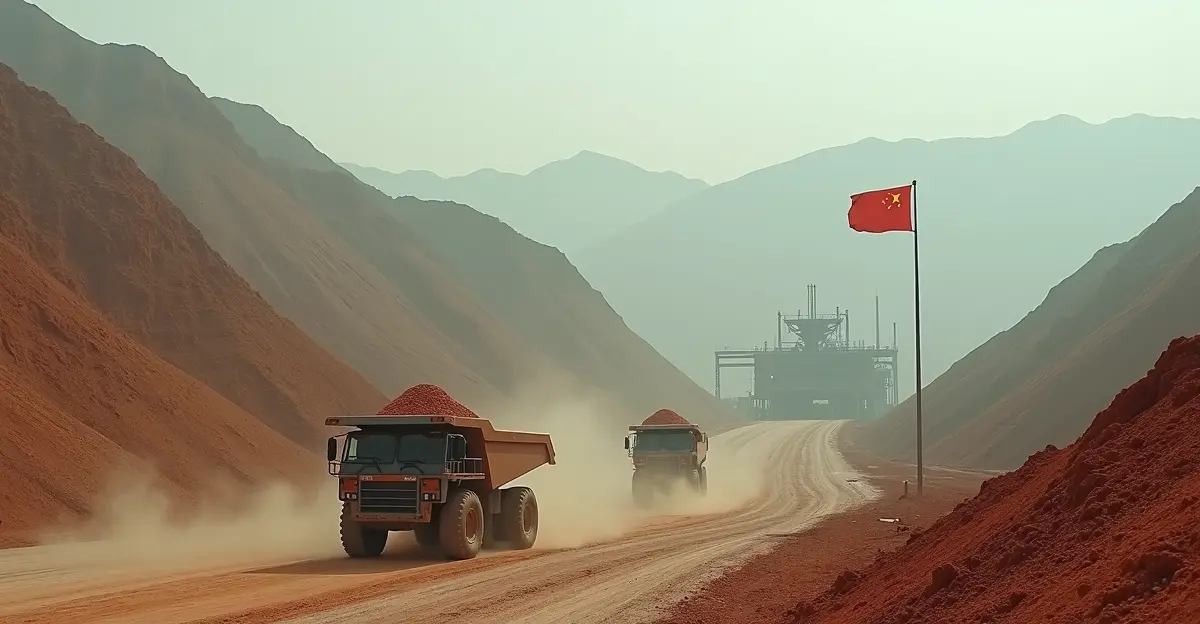
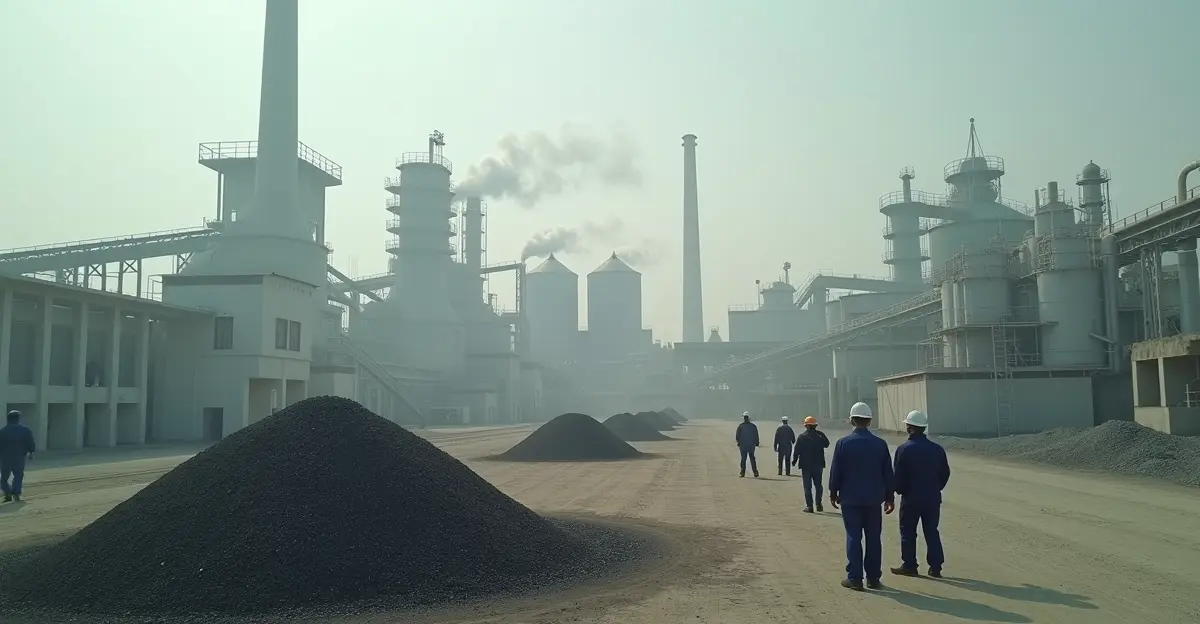
China has long held a commanding position in the global critical minerals market. According to the International Energy Agency, China accounted for about 91% of global rare earth separation and refining production and 94% of sintered permanent magnet production in 2024. The United States Geological Survey reported China's rare earth reserves at 44 million tonnes in its February 2026 Mineral Commodity Summaries. Beyond rare earths, China dominates tungsten refining (80% of global capacity) and antimony production, with most antimony coming from the Xikuangshan Mine in Hunan. This critical minerals supply chain concentration has given Beijing unprecedented leverage.
Since 2016, China has implemented export controls on certain rare earth elements and processing technology. In 2025, it introduced two waves of export controls covering rare earth elements and related products, with the second wave later suspended for one year. However, 2026 saw a dramatic escalation.
The 2026 Export Control Regime
Scope and Impact
China's 2026 export controls cover rare earth elements (including neodymium, praseodymium, dysprosium, and terbium), tungsten, antimony, and related processing technologies. The controls require exporters to obtain licenses for each shipment, with approval rates for European firms plummeting below 25%. The result has been dramatic price increases: neodymium-praseodymium oxide prices surged sixfold, tungsten concentrate prices tripled, and antimony prices doubled between January and June 2026.
Geopolitical Leverage
Beijing is not using these controls to conserve resources—China still holds the world's largest reserves. Instead, analysts argue the controls are designed to extract geopolitical concessions. The timing coincides with heightened tensions over Taiwan, technology transfer disputes, and US-China trade war dynamics. European defense contractors report being unable to secure magnets for missile guidance systems, while electronics manufacturers face production delays.
Western Response: The Critical Minerals Alliance
From MSP to FORGE
In response, Western governments have accelerated efforts to diversify supply chains. The Minerals Security Partnership (MSP), launched in 2022 with 14 countries and the EU, was succeeded on February 4, 2026, by the Forum on Resource Geostrategic Engagement (FORGE), announced by U.S. Secretary of State Marco Rubio. FORGE expands cooperation to 54 nations, including Australia, Canada, Japan, South Korea, and key African mineral producers like the Democratic Republic of Congo and Zambia.
Investment and Timelines
The US and EU have committed over $30 billion combined to develop domestic processing capacity and secure alternative sources. However, analysts at Benchmark Mineral Intelligence estimate that building new rare earth separation facilities takes 12 to 18 months at minimum, and achieving meaningful scale requires 5 to 7 years. The EU Critical Raw Materials Act, which came into effect in May 2024, sets targets for domestic processing but remains far from meeting demand.
Impact on Global Industries
Defense Sector
Rare earth magnets are essential for precision-guided munitions, radar systems, and electronic warfare equipment. NATO officials have warned that stockpiles are sufficient for only 6 to 9 months of high-intensity conflict. European defense firms report that license denials have delayed production of the F-35 fighter jet components and missile systems.
Electronics and EVs
The consumer electronics and electric vehicle industries are equally affected. Permanent magnets in EV motors and wind turbines rely on rare earths. Tesla and Volkswagen have warned of production disruptions, while smartphone manufacturers face component shortages. The price spike has added an estimated $500 to the cost of each EV produced outside China.
Expert Perspectives
China is not creating scarcity; it is creating dependency. The message to the West is clear: access to critical minerals comes at a political price. — Dr. Li Wei, Center for Strategic and International Studies
The 12-to-18-month window is real, but it requires unprecedented cooperation between allies. We are essentially trying to build an industry from scratch that China spent 40 years perfecting. — Sarah O'Connor, Benchmark Mineral Intelligence
FAQ
What are critical minerals?
Critical minerals are raw materials essential for national economies and security, with vulnerable supply chains. They include rare earth elements, tungsten, antimony, lithium, cobalt, and others used in defense, electronics, and green energy technologies.
Why does China dominate critical minerals processing?
China invested heavily in rare earth separation technology since the 1980s, supported by government programs like 863 and 973, export rebates, and decades of infrastructure development. It now controls over 90% of global processing capacity.
How do China's 2026 export controls work?
Exporters must apply for licenses for each shipment of controlled minerals. Approval rates for European firms have fallen below 25%, effectively creating a de facto embargo on many critical materials.
Can the West replace Chinese supply chains?
Analysts estimate a 12-to-18-month window to begin diversification, but full independence would take 5 to 7 years and tens of billions in investment. Initiatives like FORGE aim to accelerate this, but China's entrenched monopoly remains a significant barrier.
What is FORGE?
The Forum on Resource Geostrategic Engagement (FORGE) is a 54-nation alliance launched in February 2026 to replace the Minerals Security Partnership. It aims to strengthen diversified, resilient, and secure critical minerals supply chains through policy and project-level collaboration.
Conclusion
China's 2026 export controls represent a strategic escalation in the global competition for critical minerals. By leveraging its processing monopoly, Beijing is extracting geopolitical concessions while Western allies race to build alternatives. The next 12 to 18 months will determine whether the global critical minerals race can be diversified in time to prevent long-term economic and security vulnerabilities. The outcome will shape not just supply chains, but the balance of power in the 21st century.
Sources
- International Energy Agency, Rare Earths Report, 2024
- U.S. Geological Survey, Mineral Commodity Summaries, February 2026
- U.S. Department of State, FORGE Announcement, February 4, 2026
- Benchmark Mineral Intelligence, Critical Minerals Outlook, 2026
- European Commission, Critical Raw Materials Act, 2024

Follow Discussion