


 Deutsch
 English
 Español
 Français
 Nederlands
 Português


 Share
Share




The New Geopolitical Battleground
In early 2026, the United States convened 54 nations for the inaugural Critical Minerals Ministerial in Washington, D.C., launching a $10 billion Strategic Critical Minerals Reserve (Project Vault) and signing 11 new bilateral frameworks. Simultaneously, China tightened its stranglehold on rare earths, tungsten, and antimony with export controls that have sent prices soaring up to sixfold. This is not merely a supply chain story — it is the critical minerals arms race, a fundamental realignment of global trade, security alliances, and industrial strategy that will define economic sovereignty and military capability for the next decade.
The scramble for lithium, cobalt, rare earths, and uranium is driving a new axis of geopolitical competition. From Australia's price guarantee proposals for neodymium to G7+ coordination on strategic stockpiles and price floors, the outcome is reshaping how nations think about power in the 21st century. As critical minerals supply chains become the new frontline of strategic competition, understanding this shift is essential for policymakers, investors, and citizens alike.
China's Export Control Offensive
China controls approximately 90% of global rare earth processing, 80% of tungsten, and 60% of antimony. In 2025-2026, Beijing escalated its export control regime, imposing restrictive licensing on key materials including samarium, gadolinium, and lutetium — all critical for defense, aerospace, and medical technologies. The results have been dramatic: licensing approval rates for European firms have fallen below 25%, while prices for materials like dysprosium oxide have surged up to sixfold outside China.
A multi-institutional analysis published in early 2026 warns that over 80% of European companies depend on Chinese supply chains for materials essential to defense, electric vehicles, and renewable energy. The report argues that China is weaponizing control rather than scarcity — using temporary, reversible restrictions to maintain pricing power and extract strategic concessions while discouraging Western alternative investment. Rebuilding independent supply chains could take 20-30 years, leaving Western nations with a narrow 12-18 month window to act decisively.
One particularly controversial measure — the so-called "0.1% Rule" threatening extraterritorial enforcement on foreign products containing Chinese-origin rare earths — was temporarily suspended after G7 pushback but remains a looming threat. The China rare earth export controls represent the most aggressive use of mineral leverage since the 2010 rare earth crisis.
The U.S. Response: FORGE and Project Vault
The Critical Minerals Ministerial
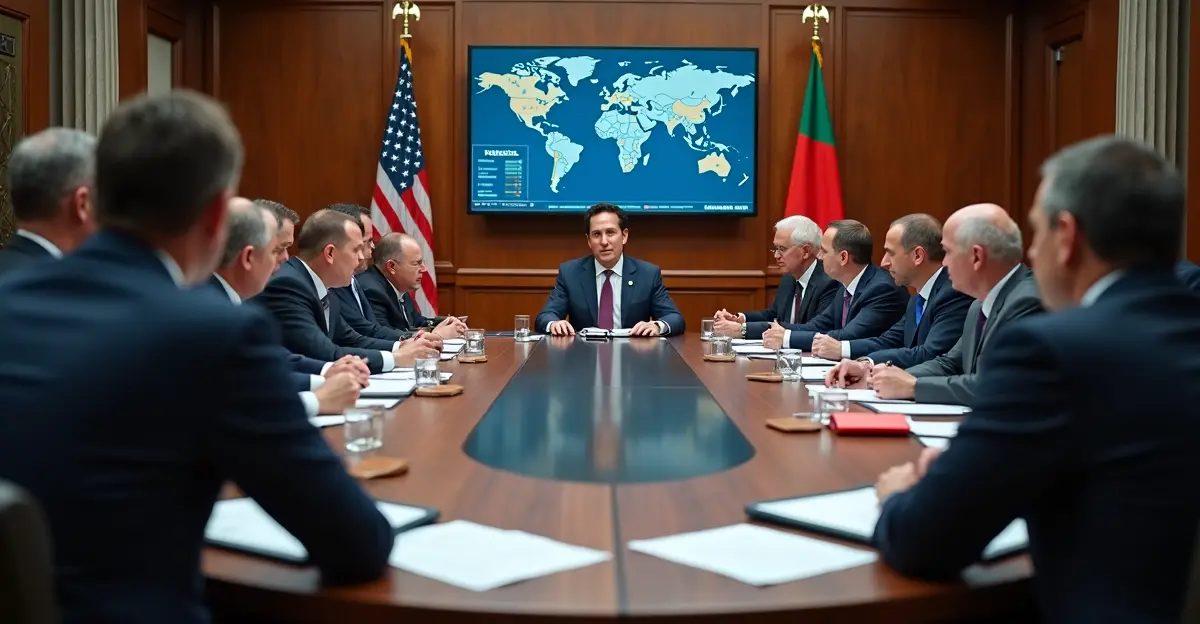
On February 4, 2026, Secretary of State Marco Rubio, joined by Vice President JD Vance and six cabinet members, hosted the 2026 Critical Minerals Ministerial at the State Department. Representatives from 54 countries and the European Commission attended — the largest such gathering in history. The event marked a decisive shift from the "America First" approach toward coordinated international action.
Secretary Rubio announced the creation of FORGE (Forum on Resource Geostrategic Engagement), a new multilateral framework chaired by the Republic of Korea that replaces the Minerals Security Partnership. FORGE aims to create a preferential trade-and-investment zone for critical minerals with coordinated price floors to counter adversarial market manipulation. The U.S. signed 11 new bilateral critical minerals frameworks with countries including Argentina, Morocco, the Philippines, the UAE, and the UK, bringing the total to 21 bilateral agreements in five months.
Project Vault: A $10 Billion Strategic Reserve
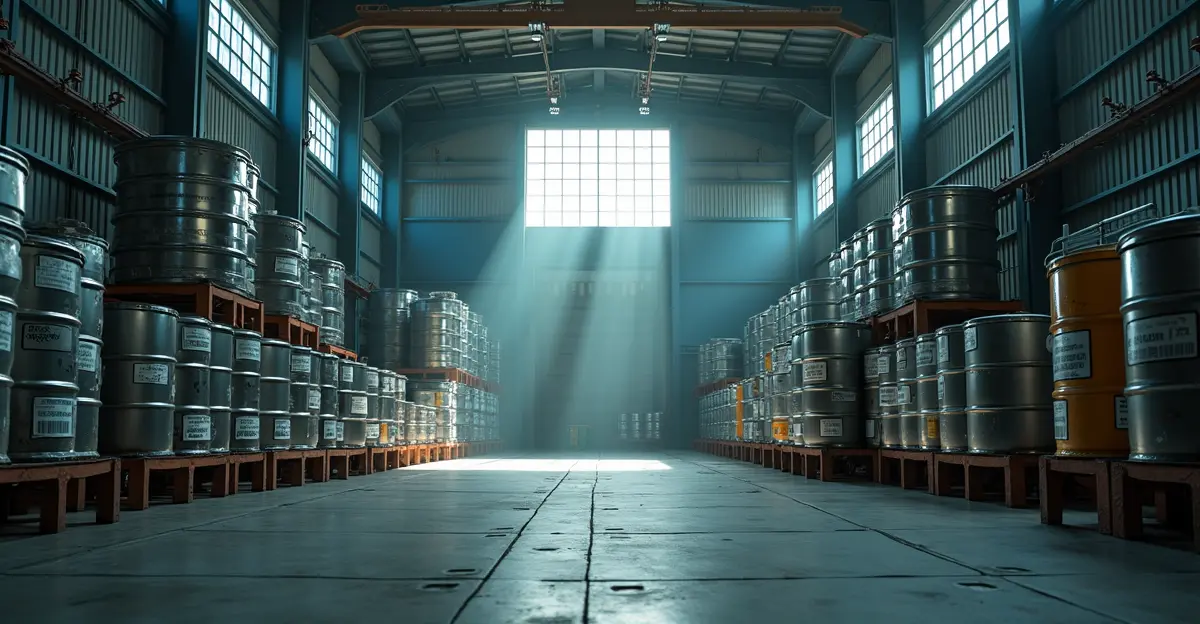
President Trump announced Project Vault on February 2, 2026 — a public-private partnership funded by a $10 billion loan from the U.S. Export-Import Bank (EXIM) and nearly $2 billion in private sector capital. The U.S. Strategic Critical Minerals Reserve will store essential raw materials in secure facilities across the United States, with major OEMs like Boeing, GE Vernova, and General Motors as offtake partners.
The administration has mobilized over $30 billion in letters of interest, investments, and loans for critical mineral projects over the past six months. Vice President Vance announced a Critical Minerals Price Floor system with target reference prices including cobalt at $25.20/lb, lithium at $15,200/tonne, copper at $5.10/lb, and neodymium at $95,000/tonne. These state-backed financial guarantees are designed to protect Western mining companies from Chinese predatory pricing and market flooding.
The US critical minerals policy under FORGE represents an ambitious effort to practice statecraft through markets by aligning trade policy, price signals, and market access across partner economies covering two-thirds of the global economy.
Australia's Price Guarantee Proposals
On January 2, 2026, the Association of Mining and Exploration Companies (AMEC) released a government-commissioned blueprint proposing a rare earth production underwriting scheme. The plan would guarantee floor and ceiling prices for four magnet-critical rare earths: neodymium, praseodymium, dysprosium, and terbium. This mirrors the strategic commodity arrangement between Lynas Rare Earths and Japan, which established a $110 USD/kg floor price for neodymium-praseodymium extending through the late 2030s.
Neodymium-praseodymium (NdPr) oxide prices are forecast to average US$75,000 per tonne in 2026, with global demand growing 12% year-on-year driven by electric vehicles and offshore wind energy. BMI expects the NdPr market to enter a structural deficit as early as 2025, with prices potentially reaching US$90,000 per tonne by 2029. Australia's rare earth price floor proposals are part of a broader AUD 7 billion Critical Minerals Strategy aimed at positioning the country as a reliable supplier to allied nations.
G7+ Coordination on Stockpiles and Price Floors
The G7's focus on critical minerals escalated following the 2025 Kananaskis Summit, where leaders launched a Critical Minerals Action Plan and a Canada-led alliance mobilizing over $6.4 billion across 26 projects. Ahead of the 2026 summit, G7 officials are debating bold measures including price floors, tariffs on Chinese exports, joint stockpiles, and stricter investment screening.
However, the G7 remains divided on how confrontational to be with Beijing. The result is a patchwork of national initiatives rather than a unified strategy. The T7 (Think 7) engagement group produced a Solutions Paper in March 2026 recommending stronger cooperation on minerals value chains, but execution still lags behind rhetoric. Over 30 countries have expressed interest in joining FORGE's 'Preferential Trade Zone' featuring enforceable price protections, shared stockpiles, and unified adjustable tariffs.
The G7 critical minerals coordination efforts highlight the tension between the urgency of collective action and the reality of divergent national interests.
Impact on Global Trade and Security
The critical minerals arms race is already reshaping global trade patterns. According to UNCTAD, lithium demand is projected to rise 353% by 2040, with clean technologies accounting for 87% of that demand. Since 2020, nearly 100 new export measures — licenses, taxes, bans — have been introduced globally. The DRC produces 74% of global cobalt, Indonesia 67% of nickel, and China dominates both rare earth mining (69%) and refining across multiple minerals.
The security implications are equally profound. Rare earths are essential for permanent magnets in wind turbines (600kg per 3MW turbine), EV motors (1-2kg per vehicle), defense systems, and industrial automation. China's leverage over these materials gives Beijing significant geopolitical influence. The RUSI report from June 2026 warns that concentrated supply chains create vulnerabilities that could be exploited during crises.
Western nations face a stark choice: accept managed dependence on Chinese supply chains, pursue costly independence requiring 20-30 years of investment, or adopt a hybrid model combining strategic stockpiles, diversified sourcing, and recycling. The critical minerals trade war is likely to intensify as nations compete for access to these essential resources.
Expert Perspectives
"This is the most strategically significant and underreported development reshaping global power dynamics this quarter," says Evelyn Nakamura, a geopolitical analyst specializing in resource security. "The February 2026 Critical Minerals Ministerial, China's escalating export restrictions, and the G7+ emergency coordination on price floors and stockpiles represent a fundamental shift in how nations understand economic sovereignty."
The Atlantic Council notes that FORGE represents an ambitious effort to practice statecraft through markets, but warns that the key challenge remains whether bilateral leverage can be transformed into genuine plurilateral coordination. The Bipartisan Policy Center emphasizes that Project Vault's success depends on sustained political commitment and private sector participation.
Frequently Asked Questions
What is the critical minerals arms race?
The critical minerals arms race refers to the intensifying geopolitical competition between nations to secure supplies of minerals essential for modern technologies — including lithium, cobalt, rare earths, and uranium. These materials are critical for electric vehicles, renewable energy, defense systems, and electronics.
Why is China's control over rare earths significant?
China controls approximately 90% of global rare earth processing and 60% of mining. This dominance gives Beijing the ability to disrupt supply chains, influence prices, and extract political concessions from importing nations. Export controls introduced in 2025-2026 have caused price spikes of up to sixfold and reduced licensing approvals for European firms below 25%.
What is Project Vault?
Project Vault is a $10 billion U.S. Strategic Critical Minerals Reserve announced in February 2026. Funded by a loan from the U.S. Export-Import Bank and private capital, it will store essential raw materials in secure domestic facilities. Major companies like Boeing, GE Vernova, and General Motors are offtake partners.
What is FORGE?
FORGE (Forum on Resource Geostrategic Engagement) is a new multilateral framework announced at the 2026 Critical Minerals Ministerial. Chaired by the Republic of Korea, it succeeds the Minerals Security Partnership and aims to create a preferential trade-and-investment zone for critical minerals with coordinated price floors.
How are price floors for critical minerals supposed to work?
Price floors are state-backed financial guarantees that protect mining companies from Chinese predatory pricing and market flooding. Target reference prices include cobalt at $25.20/lb, lithium at $15,200/tonne, and neodymium at $95,000/tonne. These are maintained through adjustable tariffs and coordinated among partner nations.
Conclusion: A Decade of Strategic Competition
The critical minerals arms race is not a temporary disruption but a structural shift that will define global power dynamics for the next decade. The U.S. and its allies have made significant strides in 2026 — launching FORGE, Project Vault, and multiple bilateral frameworks — but China's entrenched dominance in processing and refining means the road to supply chain independence will be long and costly.
The 12-18 month window identified by analysts is narrowing. Success will require sustained political commitment, massive capital investment, and unprecedented international coordination. The nations that secure their critical mineral supply chains will be the ones that define the technological, economic, and military landscape of the 21st century.



Follow Discussion