


 Deutsch
 English
 Español
 Français
 Nederlands
 Português


 Share
Share




The global race to stockpile critical minerals has reached a fever pitch in 2026, as the United States, European Union, Australia, South Korea, and other nations scramble to build strategic reserves of rare earths, lithium, cobalt, and other materials essential for AI, defense, and the energy transition. At the heart of this competition is a stark reality: China still controls over 60% of global refining capacity for these critical minerals, and has weaponized export controls, triggering a geopolitical scramble for supply chain independence. The critical minerals stockpile race is reshaping global power dynamics, replacing free-market principles with resource nationalism.
Project Vault: America's $12 Billion Bet on Mineral Independence
In February 2026, President Donald Trump announced Project Vault, a $12 billion initiative to establish a U.S. strategic reserve of critical minerals. The public-private partnership combines $10 billion in loans from the U.S. Export-Import Bank with $2 billion in private-sector financing. Companies including General Motors, Boeing, Stellantis, Google, and Corning have joined, committing to buy materials at fixed inventory prices. The reserve will stockpile cobalt, graphite, silicon, copper, nickel, titanium, lithium, and rare earth elements — materials vital for electric vehicle batteries, semiconductors, jet engines, and smartphones.
"Project Vault mirrors the Strategic Petroleum Reserve but focuses on minerals essential for modern technology," a senior administration official said. The initiative aims to shield American companies from supply chain vulnerabilities exposed by China's export controls. In 2024, the U.S. was entirely reliant on imports for 12 critical minerals and imported 50% or more of 29 others.
RESourceEU: Europe's Joint Stockpile Strategy
The European Union is advancing its own response through RESourceEU, a joint stockpile initiative adopted by the European Commission in December 2025. Led by Italy, France, and Germany, the plan involves joint purchasing mechanisms, storage infrastructure investments, and stronger recycling targets. The EU's Critical Raw Materials Act provides the framework, with €3 billion in funding allocated under the broader European Green Deal.
"Europe must fight for its place in a changing global order," European Commission President Ursula von der Leyen stated. The EU has proposed a Critical Raw Materials Center to monitor, jointly purchase, and stockpile minerals essential for defense, automotive, and clean energy industries. The urgency is driven by China's April 2025 export controls on seven rare earth elements, expanded in October 2025 to include five additional elements plus processing equipment and technologies. European rare earth prices have already reached up to six times those in China, according to the International Energy Agency.
The FORGE Alliance and the February 2026 Ministerial
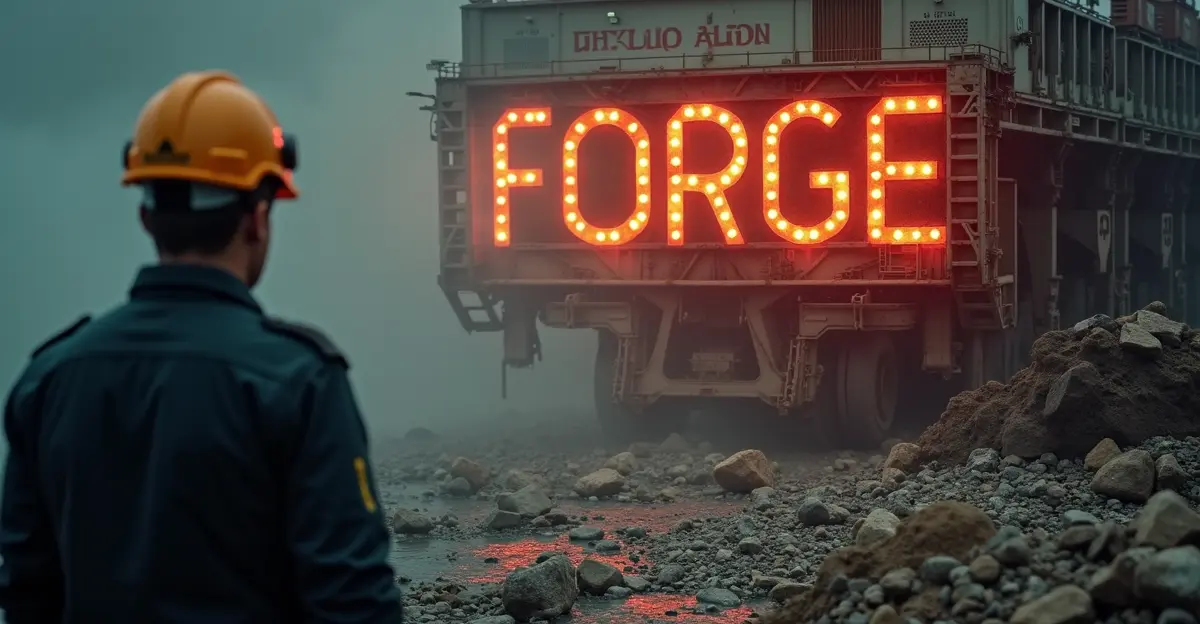
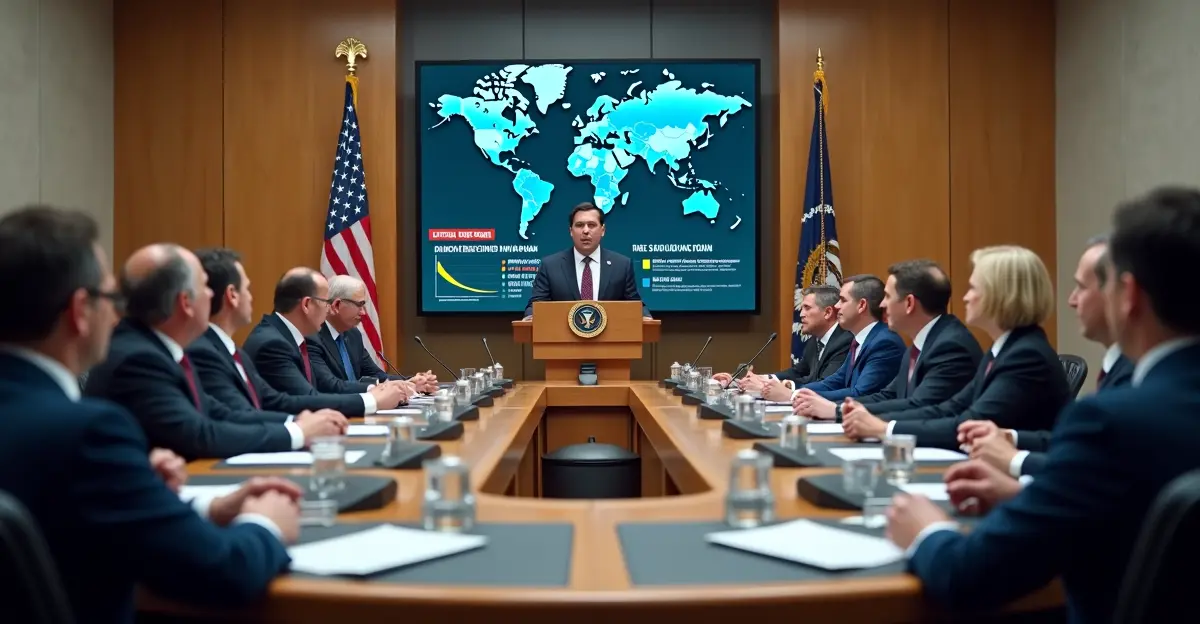
On February 4, 2026, the U.S. Department of State hosted the 2026 Critical Minerals Ministerial, gathering representatives from 54 countries and the European Commission. Secretary of State Marco Rubio and Vice President JD Vance led the event, which marked an inflection point in strategic competition for raw materials. Key outcomes included the launch of the Forum on Resource Geostrategic Engagement (FORGE), the successor to the Minerals Security Partnership, chaired by the Republic of Korea. FORGE creates a preferential trade-and-investment zone for critical minerals, using coordinated price floors and adjustable tariffs to counter adversarial market manipulation.
The U.S. signed 11 new bilateral critical minerals frameworks or MOUs at the ministerial, bringing the total to 21 deals in five months, with 17 more countries reportedly having completed negotiations. Countries signing new agreements included Argentina, Morocco, the UAE, the Philippines, and the United Kingdom. The U.S. mobilized over $30 billion in letters of interest, investments, and loans over six months for critical mineral supply chain projects. The FORGE alliance critical minerals framework aims to link these bilateral deals into a coherent plurilateral system covering two-thirds of the global economy.
Australia and South Korea: Regional Stockpile Builders
Australia announced a Critical Minerals Strategic Reserve in April 2025, allocating $1.2 billion in the 2025-26 federal budget. The reserve focuses on four rare earth elements — neodymium, praseodymium, dysprosium, and terbium — which represent over 80% of global rare earth market value. Operations are set to begin in the second half of 2026, with financial tools including offtake agreements, stockpiling, contracts-for-difference, and supply aggregation.
South Korea rolled out a 250 billion won ($172 million) critical minerals strategy, designating 17 minerals as critical to national security. Seoul is pursuing a dual-track approach: joining FORGE while simultaneously establishing a hotline and joint committee with Chinese authorities to import rare earths more quickly. "South Korea lacks a complete domestic supply chain for these minerals," a trade ministry official acknowledged, explaining the hedging strategy. The South Korea critical minerals strategy includes cooperation with the U.S., Vietnam, and Laos to diversify sourcing.
China's Dominance and Export Control Weaponization
China's stranglehold on critical mineral refining remains the central driver of the stockpile race. According to the IEA, China accounts for approximately 60% of rare earth mining, 91% of refining, and 94% of permanent magnet production. For lithium, China controls 60.86% of global refining; for cobalt, 71.42%; for synthetic graphite, 85.16%; and for natural graphite, 70.50%. China has invested over $120 billion in overseas mining and upstream processing since 2023, targeting lithium, copper, nickel, rare earths, and bauxite.
In April 2025, China imposed export controls on seven rare earth elements, expanded in October to include five additional elements plus equipment and technologies. The controls require foreign companies to obtain licenses for products containing Chinese-sourced rare earth materials, even internationally made goods. Licensing approval rates for European firms have fallen below 25%. The China export controls critical minerals have triggered sixfold price spikes for some materials, threatening strategic sectors including energy, automotive, defense, semiconductors, aerospace, and AI data centers.
Resource Nationalism Goes Global
The stockpile race is part of a broader wave of resource nationalism. Indonesia, which controls 71% of refined nickel, has imposed export bans to force domestic processing. Chile, Mexico, Zimbabwe, and Namibia have also introduced export controls or state ownership requirements for strategic minerals. The World Economic Forum's Global Risks Report 2026 ranks geoeconomic confrontation as the top global risk, with critical mineral supply chains at the center of U.S.-China strategic confrontation. Half of surveyed experts expect a turbulent or stormy world over the next two years, while only 1% anticipate calm.
"This marks a structural shift," said an analyst at the Atlantic Council. "Stockpiling is no longer just for emergency buffers — it is driven by geopolitical factors and national security concerns. Governments are treating supply chains as national security infrastructure rather than purely commercial flows."
Can Strategic Dependencies Be Reduced by 2030?
Despite the unprecedented mobilization of capital and diplomatic energy, experts remain skeptical about the feasibility of reducing strategic dependencies by 2030. China's decades-long investment in refining infrastructure, coupled with its cost advantages and vertical integration, creates formidable barriers. The U.S. struggles to compete partly due to permitting issues — it takes an average of 29 years to open a domestic mine. While new mines are opening in the U.S., Australia, Brazil, and Africa, most concentrates must still be shipped to Chinese refineries.
However, the critical minerals supply chain independence push is gaining momentum. FORGE's goal of covering two-thirds of the global economy, combined with $30 billion in U.S.-led financing and coordinated stockpiling by allies, could gradually erode China's monopoly. The key question is whether political will and investment can outpace the deepening entrenchment of Chinese processing capacity.
FAQ
What is Project Vault?
Project Vault is a $12 billion U.S. government initiative announced in February 2026 to establish a strategic reserve of critical minerals and rare earth elements, reducing America's dependence on China. It combines $10 billion from the Export-Import Bank with $2 billion in private-sector financing.
What is FORGE?
The Forum on Resource Geostrategic Engagement (FORGE) is a plurilateral coalition launched at the February 2026 U.S. Critical Minerals Ministerial. It creates a preferential trade-and-investment zone for critical minerals with coordinated price floors and adjustable tariffs, succeeding the Minerals Security Partnership.
How much of global critical mineral refining does China control?
China controls over 60% of global refining capacity for critical minerals, including approximately 91% of rare earth refining, 60% of lithium processing, and 71% of cobalt refining, according to the IEA and Benchmark Mineral Intelligence.
What is RESourceEU?
RESourceEU is a European Commission initiative adopted in December 2025 to secure the EU's supply of critical raw materials through joint stockpiling, purchasing mechanisms, and stronger recycling targets, backed by €3 billion in funding under the Critical Raw Materials Act.
Can the U.S. and its allies reduce dependence on China by 2030?
Experts are skeptical. While $30 billion in U.S.-led financing and new bilateral frameworks are significant, China's decades-long infrastructure investment, cost advantages, and vertical integration create major barriers. The U.S. permitting process averaging 29 years further complicates domestic production.
Conclusion
The great critical minerals stockpile race of 2026 represents a fundamental shift in global economic governance. Resource nationalism is replacing free-market dynamics as governments treat mineral supply chains as national security infrastructure. The February 2026 Critical Minerals Ministerial, Project Vault, RESourceEU, and FORGE collectively represent the most ambitious coordinated effort to challenge China's dominance since the dawn of the modern rare earth industry. Whether these initiatives can achieve supply chain independence by 2030 remains uncertain, but the trajectory is clear: the era of cheap, reliable, and geopolitically neutral critical mineral supply is over.




Follow Discussion