


 Deutsch
 English
 Español
 Français
 Nederlands
 Português


 Share
Share




The New Geopolitical Battlefield: Critical Minerals in 2026
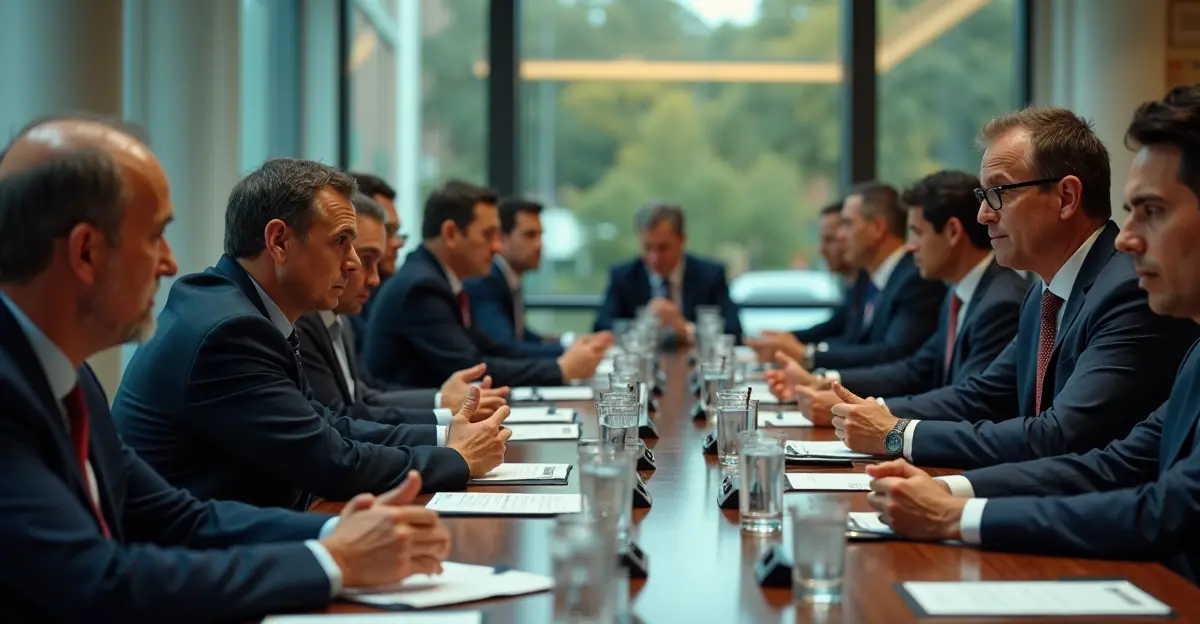
In February 2026, the United States hosted the 2026 Critical Minerals Ministerial with representatives from 54 nations, launching the Forum on Resource Geostrategic Engagement (FORGE) and announcing Project Vault — a $10 billion strategic reserve backed by the Export-Import Bank. These moves come as China tightens its grip on global critical mineral supply chains, controlling 90% of rare earth processing and using export controls that have triggered sixfold price spikes and licensing approval rates below 25% for European firms. The critical mineral arms race is now the defining geostrategic supply chain story of the year.
China's Stranglehold on Critical Minerals
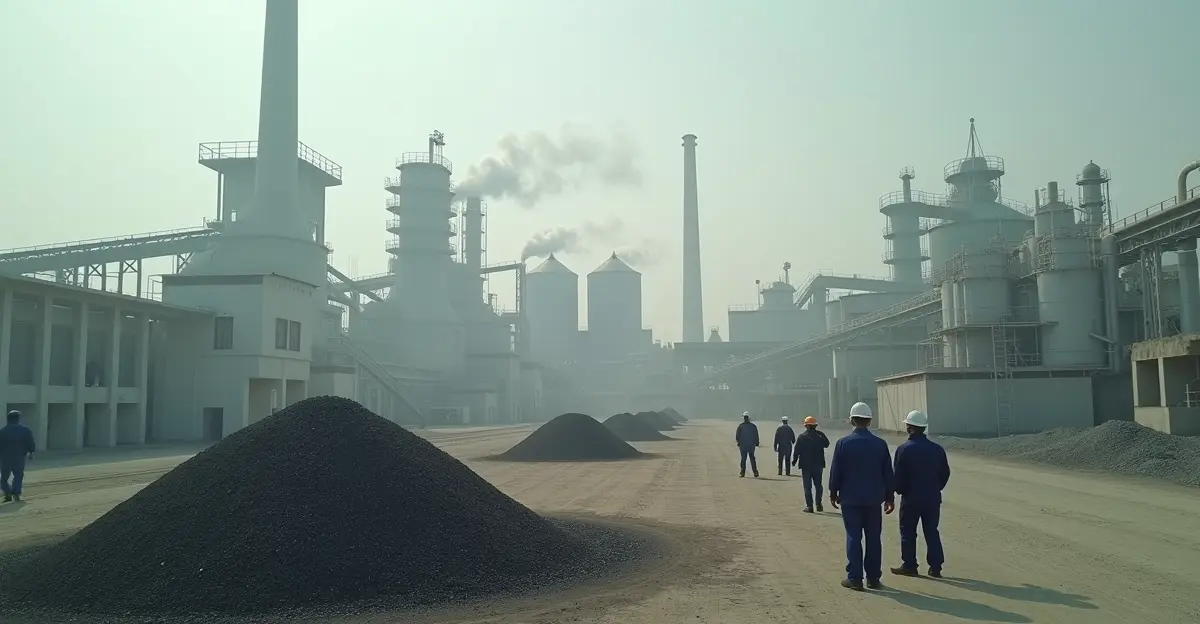
China dominates the global critical minerals landscape with an iron grip. According to a multi-institutional analysis published in early 2026, Beijing controls 90% of rare earth processing, 80% of tungsten refining, and 60% of antimony production. These materials are essential for defense systems, electric vehicles, wind turbines, semiconductors, and advanced robotics. Over 80% of European companies depend on Chinese supply chains for these inputs, and rebuilding independent alternatives would take an estimated 20 to 30 years.
China's export controls, introduced in 2025 and tightened through 2026, have proven devastating for Western manufacturers. Prices for neodymium-praseodymium (NdPr) jumped 37% in April 2026 alone. The controls are not about scarcity but about leverage — Beijing uses temporary, reversible restrictions to maintain pricing power, extract strategic concessions, and prevent large-scale Western investment in alternative capacity. The China export controls 2026 have created a 12- to 18-month window for Western nations to act decisively before becoming locked into prolonged vulnerability.
The US Response: FORGE and Project Vault
FORGE: A New Multilateral Framework
On February 4, 2026, Secretary of State Marco Rubio, alongside Vice President JD Vance and six cabinet-level officials, announced FORGE (Forum on Resource Geostrategic Engagement) as the successor to the Minerals Security Partnership (MSP). Chaired initially by the Republic of Korea, FORGE brings together 54 countries representing roughly two-thirds of global GDP. The initiative marks a shift from an 'America First' focus on domestic production toward broader international coordination, though managing a coalition of this scale will require sustained governance.
The United States signed 11 new bilateral critical minerals frameworks or MOUs with countries including Argentina, Morocco, the Philippines, the United Arab Emirates, and the United Kingdom. These agreements cover investment, trade, stockpiling, and rapid response mechanisms. The U.S. government has mobilized over $30 billion in loans and investments over the past six months toward securing critical mineral supply chains.
Project Vault: A $10 Billion Strategic Reserve
Project Vault, announced by President Trump on February 2, 2026, establishes the U.S. Strategic Critical Minerals Reserve — a public-private partnership funded by a $10 billion loan from the Export-Import Bank (EXIM) and nearly $2 billion in private-sector capital. The reserve will store essential raw materials in secure facilities across the country, protecting domestic manufacturers from supply shocks and supporting American production and processing of critical raw materials. EXIM Chairman Jovanovic highlighted the project on CNBC and Bloomberg, noting that it received praise from industry leaders including GE Vernova, Boeing, and Mercuria Energy Americas.
The European Union's Critical Raw Materials Act
The European Union is pursuing its own parallel strategy under the Critical Raw Materials Act (CRMA). The European Commission has selected 60 Strategic Projects to strengthen the bloc's capacity to extract, process, and recycle strategic raw materials. The second cut-off date for applications closed on January 15, 2026, with 161 bids submitted — a surge reflecting industry urgency. The EU has also announced funding of up to €3 billion ($3.5 billion) for 2026 under its new ReSourceEU Action Plan.
Key measures include regulatory fast-tracking for strategic projects, support for Vulcan Energy's German lithium extraction (€250 million from the EIB), new export restrictions on scrapped permanent magnets and aluminum from early 2026, and a ban on lithium-ion battery waste exports to non-OECD countries from September 2026. The European Commission also plans to establish a European Critical Raw Materials Centre, modeled on Japan's JOGMEC, to help stockpile and jointly purchase critical raw materials. The EU Critical Raw Materials Act is deepening international partnerships, targeting agreements with Brazil, Ukraine, the western Balkans, and North Africa.
Can the West Reduce Dependency on China?
Despite these ambitious initiatives, experts remain skeptical about the West's ability to reduce dependency on China within the next decade. China has invested billions in government-led subsidies since the 1980s to dominate the supply chain, and it controls specialized processing technology that cannot be easily replicated. A report from the Institute for Energy Research finds that China will remain the world's dominant supplier of processed critical minerals through 2030, with over 80% market share in rare earths and synthetic graphite.
Mining executive Mick McMullen told Fortune in March 2026: 'China is the leader, and the U.S. is far behind.' The United States, despite efforts to onshore refining, will gain only small market shares. While some diversification is expected — 55% of refined copper is forecast outside China by 2030 and Indonesia dominates nickel refining — Chinese companies own about 80% of Indonesian nickel production, complicating the picture.
The Western critical mineral strategy faces three strategic paths, according to analysts: accept managed dependence on China, pursue costly independence, or adopt a hybrid model balancing resilience and realism. The 12- to 18-month window for decisive action is narrowing, and the outcome will shape global power dynamics for decades.
Expert Perspectives
Secretary of State Marco Rubio stated at the Ministerial: 'We are reshaping the global market for critical minerals and rare earths to reduce overconcentration that enables political coercion and supply disruptions.' However, the Atlantic Council noted in a February 2026 dispatch that FORGE is a step forward but warned that 'managing a coalition of this scale will require sustained governance and discipline.'
The Bipartisan Policy Center highlighted that Project Vault's public-private partnership model is innovative but untested, and its success depends on consistent political support across administrations. Meanwhile, the Rare Earth Exchanges analysis concluded that China is 'weaponizing control, not scarcity,' using temporary restrictions to maintain leverage without triggering irreversible Western investment.
Frequently Asked Questions
What is FORGE?
FORGE (Forum on Resource Geostrategic Engagement) is a multilateral framework launched by the United States in February 2026 to coordinate critical mineral supply chain security among 54 partner nations. It replaces the Minerals Security Partnership and is chaired by the Republic of Korea.
What is Project Vault?
Project Vault is a $10 billion U.S. Strategic Critical Minerals Reserve, funded by the Export-Import Bank and private capital, designed to stockpile essential raw materials for civilian use and protect against supply disruptions.
How much does China control global rare earth processing?
China controls approximately 90% of global rare earth processing and refining capacity, along with 80% of tungsten and 60% of antimony production.
How many strategic projects has the EU selected under the CRMA?
The European Commission has selected 60 Strategic Projects under the Critical Raw Materials Act, with 161 bids submitted by the January 2026 deadline.
Can the West reduce dependence on China within a decade?
Most experts doubt it. Rebuilding independent supply chains would take 20-30 years, and China's control over processing technology and its decades of investment make rapid diversification extremely challenging.
Conclusion: A Long Road Ahead
The 2026 Critical Minerals Ministerial, FORGE, Project Vault, and the EU's 60 Strategic Projects represent the most ambitious Western effort yet to break China's stranglehold on critical minerals. With $30 billion in U.S. financing mobilized and transatlantic coordination at unprecedented levels, the structural shift is real. But the gap between ambition and reality remains vast. China's 90% processing dominance, its sophisticated use of export controls as geopolitical leverage, and the 20- to 30-year timeline for building alternatives suggest that the West faces a prolonged strategic vulnerability — not a quick fix. The next 12 to 18 months will determine whether these initiatives become the foundation of a new supply chain architecture or a footnote in the history of resource geopolitics.


Follow Discussion