


 Deutsch
 English
 Español
 Français
 Nederlands
 Português


 Share
Share




How China's Stranglehold on Critical Minerals Triggered a Western Counterstrategy
In 2026, the global scramble for lithium, cobalt, and rare earths has escalated into what experts call the new mineral cold war. China's stranglehold on critical mineral supply chains — controlling over 90% of rare earth refining and 60% of key battery inputs — has triggered a coordinated Western counterstrategy. The February 2026 Critical Minerals Ministerial launched FORGE (Forum on Resource Geostrategic Engagement), a 54-nation alliance backed by $30 billion in project support and 21 new bilateral framework agreements. This article analyzes how the scramble for critical minerals is redrawing geopolitical fault lines, creating new security dependencies, and reshaping industrial policy from Washington to Brussels.
Context: China's Escalating Export Controls
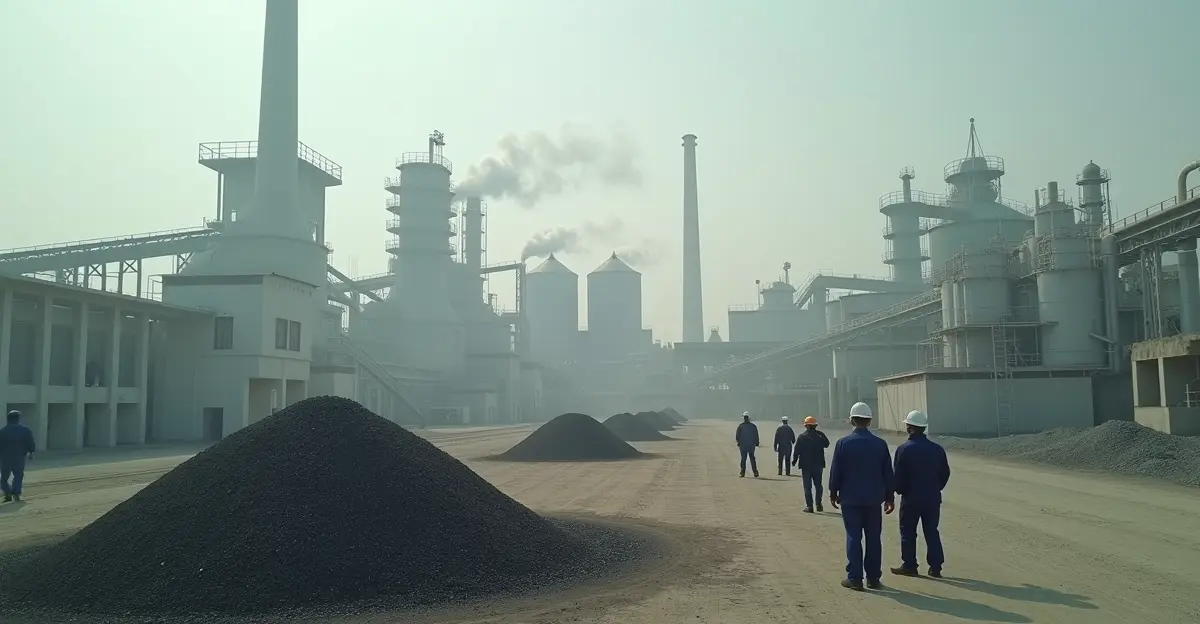
China escalated export controls on rare earths in October 2025, imposing licensing requirements that slashed approval rates for European firms below 25% and triggered price spikes of up to sixfold outside China. The rare earth export restrictions targeted heavy rare earths like dysprosium and terbium, essential for EV motors, wind turbines, F-35 avionics, and missile guidance systems. By March 2026, China controlled approximately 70% of global rare earth mining and 90% of refining capacity, along with 94% of permanent magnet production. The controls extended to tungsten, antimony, and graphite, impacting 35% of global EV production. According to a multi-institutional analysis, China is weaponizing control rather than scarcity — using temporary, reversible restrictions to maintain pricing power and extract strategic concessions while preventing large-scale Western alternative investment.
The FORGE Alliance: A New Framework for Mineral Security
Launch and Structure
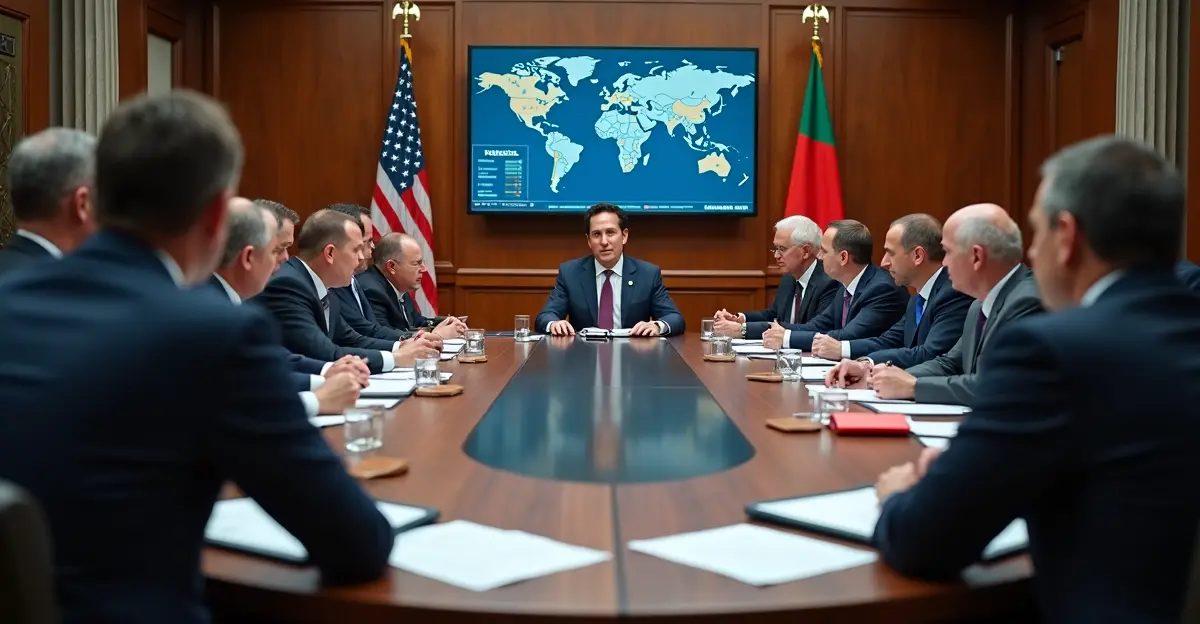
On February 4, 2026, the United States hosted the 2026 Critical Minerals Ministerial, convening representatives from 54 countries and the European Commission. Led by Secretary of State Marco Rubio alongside Vice President JD Vance, the event launched FORGE (Forum on Resource Geostrategic Engagement) as the successor to the Minerals Security Partnership (MSP), chaired by the Republic of Korea. Unlike traditional multilateral forums, FORGE uses a 'membership by trade' model where participation hinges on shared trade rules, creating a preferential trade-and-investment zone for critical minerals with coordinated price floors to counter adversarial market manipulation.
$30 Billion in Commitments
The U.S. government mobilized over $30 billion in letters of interest, investments, and loans, including a $10 billion EXIM loan for Project Vault — a domestic strategic reserve for critical minerals. Private sector partnerships through Pax Silica and initiatives like the Glencore-Orion Consortium MOU for DRC assets were also highlighted. The administration signed 21 bilateral framework agreements in five months with countries including Argentina, Morocco, Peru, the Philippines, and the UK. The FORGE alliance critical minerals initiative represents the most significant attempt to reshape global mineral markets since the 1970s OPEC oil embargoes.
Impact on Global Supply Chains and Geopolitics
Redrawing Geopolitical Fault Lines
The critical minerals race is redrawing the map of global power. China's processing dominance, Western alliance-building through FORGE and the EU's Critical Raw Materials Act (CRMA), and the rise of resource nationalism in producing countries are creating a fragmented, multipolar landscape. The EU critical minerals strategy aims to reduce dependency, but Europe remains nearly 100% dependent on imports for lithium, cobalt, nickel, and manganese. A Fraunhofer FFB study reveals China produces over 98% of lithium iron phosphate active materials, making Europe directly dependent on this battery chemistry.
New Security Dependencies
Defense systems are particularly vulnerable. Less than 5% of rare earths are recycled despite 90%+ recovery potential. The Concordia University review warns that without stable access to NdFeB and SmCo magnets, advanced military platforms and clean-energy deployment face unacceptable risks. Rebuilding independent processing capacity outside China could take 20 to 30 years, with a geopolitical window for action of only 12 to 18 months, according to the Griffith Asia Institute.
Expert Perspectives
"This is the most significant attempt to reshape global mineral markets since the 1970s OPEC oil embargoes," said a senior Atlantic Council analyst. "FORGE reflects a strategic shift from purely bilateral dealmaking toward plurilateral coordination, aiming to create stable conditions for mining projects requiring decades to deliver returns." The critical minerals geopolitics 2026 landscape is defined by four dynamics: US project finance, EU strategic autonomy, China's 15th Five-Year Plan, and the global race for mineral supply chains.
FAQ
What is FORGE?
FORGE (Forum on Resource Geostrategic Engagement) is a 54-nation alliance launched in February 2026 to counter China's dominance in critical minerals. It succeeds the Minerals Security Partnership and creates a preferential trade-and-investment zone with coordinated price floors.
Why are rare earths critical?
Rare earths are essential for defense technologies (F-35 avionics, missile guidance), clean energy (EV motors, wind turbines), and electronics (permanent magnets, batteries). China controls over 90% of global refining capacity.
How much has the West committed?
The U.S. mobilized over $30 billion in government support, including a $10 billion EXIM loan for Project Vault, plus 21 bilateral framework agreements with resource-rich nations.
Can the West break China's grip?
Experts warn rebuilding independent processing capacity could take 20-30 years, with a 12-18 month window for decisive action. Recycling and AI-enabled separation technologies offer partial solutions.
What are the risks of supply chain fragmentation?
The mineral cold war risks splitting global supply chains into competing blocs, increasing costs, delaying the energy transition, and creating new security dependencies for nations caught between China and the West.
Conclusion: A New Map of Power
The critical minerals race is redrawing global alliances and industrial policy. With China's export controls tightening and the West's FORGE alliance mobilizing unprecedented resources, 2026 marks the most active period of mineral geopolitics in decades. The outcome will determine not only the future of clean energy and defense technology but also the balance of power in the 21st century. As the US China rare earth competition intensifies, nations must navigate a fragmented landscape where resource security is viewed through a national security lens.
Follow Discussion