


 Deutsch
 English
 Español
 Français
 Nederlands
 Português


 Share
Share




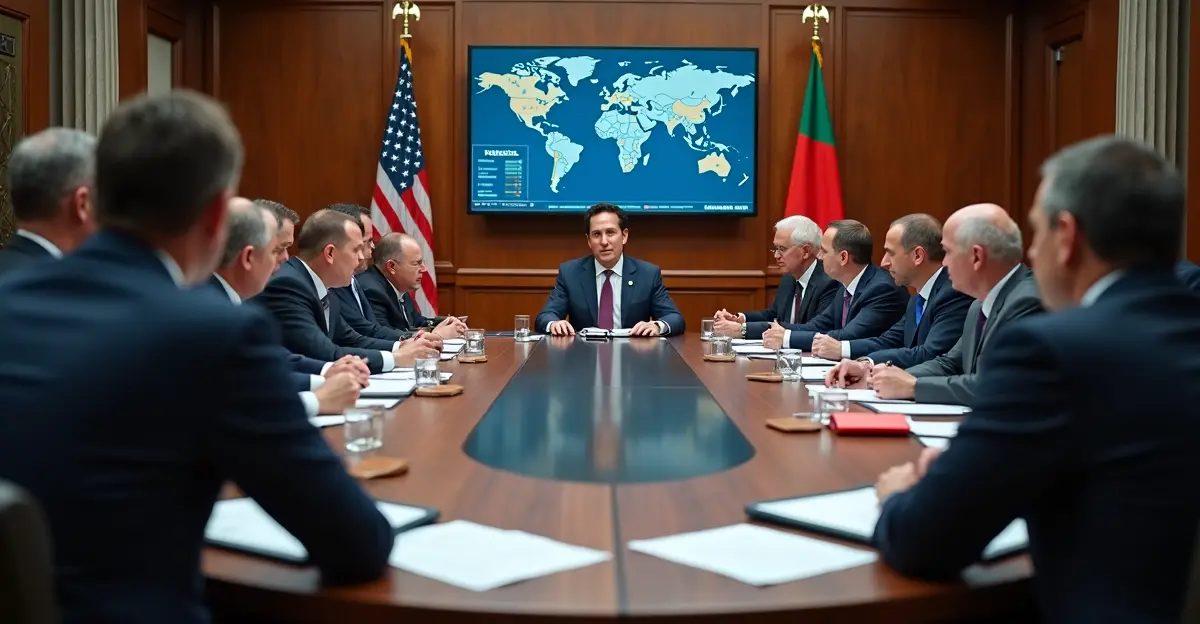
The global contest for critical minerals entered a decisive new phase on February 4, 2026, when the United States convened 54 nations and the European Commission for the inaugural Critical Minerals Ministerial in Washington, D.C. The event marked the launch of FORGE (Forum on Resource Geostrategic Engagement), the signing of 11 new bilateral critical minerals frameworks, and the mobilization of over $30 billion in supply chain investments. This escalation reflects a stark reality: China controls roughly 70% of global rare earth production and 80–90% of processing capacity, giving Beijing unprecedented leverage over the materials essential for electric vehicles, wind turbines, semiconductors, AI data centers, and advanced defense systems.
The Strategic Context: China's Near-Monopoly
China's dominance in critical minerals is not accidental but the result of decades of strategic investment. Since the 1980s, Beijing has poured billions into building an integrated supply chain from mining to high-value magnet production. Today, China accounts for 94% of global sintered permanent magnet production, up from 50% two decades ago, and controls 85% of rare earth separation capacity and 99% of heavy rare earth separation. The Bayan Obo mine in Inner Mongolia alone contributes over 50% of China's output.
This concentration creates acute vulnerabilities for Western economies. According to the IEA's Global Critical Minerals Outlook 2025, for 19 out of 20 strategic minerals, China is the leading refiner with an average 70% market share. Over 80% of European companies depend on Chinese supply chains for materials essential to defense, EVs, and renewable energy. The geopolitical risks of supply concentration have become a central concern for policymakers worldwide.
Export Controls as a Weapon
Beginning in 2025, China systematically tightened export controls on rare earth elements, gallium, germanium, and antimony. On April 4, 2025, Beijing introduced controls on seven heavy rare earth elements, causing immediate supply disruptions for carmakers in the U.S. and Europe. On October 9, 2025, controls expanded to include parts, components, and assemblies containing Chinese-sourced rare earths, plus five additional elements. Licensing approval rates for European firms fell below 25%, while prices outside China spiked up to sixfold—antimony reaching $59,750 per tonne from roughly $10,000.
Rather than outright bans, Beijing employs temporary, reversible restrictions to maintain pricing power and extract strategic concessions. This was demonstrated in November 2025, when China suspended expanded export bans in exchange for U.S. tariff reductions. The approach is designed to discourage large-scale Western alternative investment while keeping China's leverage intact.
FORGE: A New Western Coalition
The centerpiece of the Western response is FORGE (Forum on Resource Geostrategic Engagement), which succeeds the Biden-era Minerals Security Partnership. Chaired by South Korea through June 2026, FORGE is a plurilateral coalition that introduces coordinated price floors, sovereign purchasing frameworks, and bilateral supply agreements. Vice President JD Vance described the mechanism as creating "reference prices for critical minerals at each stage of production" maintained through adjustable tariffs, effectively establishing a preferential trade-and-investment zone for critical minerals covering two-thirds of the global economy.
FORGE's 11 new bilateral frameworks include agreements with Argentina, Morocco, Peru, the Philippines, the UAE, and the United Kingdom. These frameworks aim to link into a functioning system that can compete with China's integrated supply chain. The U.S. critical minerals strategy under FORGE represents the most ambitious effort yet to counter Beijing's dominance.
Project Vault: A Strategic Reserve
Alongside FORGE, the U.S. Export-Import Bank launched Project Vault on February 2, 2026—a $12 billion public-private partnership to establish the U.S. Strategic Critical Minerals Reserve. Backed by a $10 billion EXIM loan and nearly $2 billion in private investment, the reserve will store essential raw materials in secure facilities nationwide, protecting domestic manufacturers from supply shocks. Companies participating can lock in fixed purchase rates, hedging against the price volatility that has characterized markets since China's export controls.
EXIM Chairman Jovanovic highlighted the initiative on CNBC and Bloomberg, noting support from corporate leaders including GE Vernova, Boeing, and Clarios. The reserve is designed for civilian use, complementing existing defense stockpiles.
Building Alternative Supply Lines
Western nations are scrambling to develop alternative supply sources across South America, Africa, and the Middle East. Latin America holds significant lithium reserves, with the so-called "Lithium Triangle" spanning Argentina, Bolivia, and Chile. Argentina signed a critical minerals framework with the U.S. at the February ministerial. However, the region remains largely peripheral in the battery value chain, exporting raw materials while importing high-value technologies.
In Africa, the Democratic Republic of Congo dominates cobalt production, while Morocco—which also signed a bilateral framework—has emerged as a potential processing hub. Gulf states are entering the arena: Saudi Arabia's Maaden has a $110 billion investment plan, and the UAE signed a framework agreement at the ministerial, adding new complexity to the critical minerals race in the Middle East.
The EU's Critical Raw Materials Act sets 2030 benchmarks for domestic processing, with 47 projects identified and five already funded. Australia and Canada are ramping up exploration and processing capacity, while Japan and South Korea leverage their manufacturing expertise.
The Long Road Ahead
Despite the flurry of diplomatic activity, experts caution that rebuilding independent processing capacity will take 20–30 years. China's decades-long head start, specialized processing technology, and cost advantages remain formidable. The challenges of rare earth processing outside China include high capital costs, environmental concerns, and a shortage of skilled engineers.
Analysts warn of a narrowing 12–18 month geopolitical window for Western nations to act decisively before China's dominance becomes structurally entrenched. A hybrid approach combining targeted investment, international partnerships, and recycling is seen as the most realistic path forward. The stakes could not be higher: critical minerals are the foundation of the green and digital transitions, and the race to secure them is redefining global power alignments.
Expert Perspectives
"China is weaponizing control rather than scarcity," notes a multi-institutional analysis drawing on data from the European Parliament Research Service, OECD, and CSIS. "Temporary, reversible restrictions maintain pricing power and extract concessions while discouraging Western alternative investment."
Vice President JD Vance framed the U.S. approach at the ministerial: "We are building a coalition of nations that believe in free markets, fair trade, and secure supply chains. FORGE will ensure that no single country can hold the global economy hostage."
South Korean Foreign Minister Cho Hyun, whose country chairs FORGE, emphasized the urgency: "The window for action is narrow. We must move from framework agreements to operational mines and processing facilities within this decade."
FAQ
What are critical minerals?
Critical minerals are materials of strategic economic importance, including lithium, cobalt, graphite, nickel, and rare earth elements (17 metals including neodymium, dysprosium, and terbium). They are essential for batteries, electric vehicles, wind turbines, semiconductors, defense systems, and AI infrastructure.
Why does China dominate critical mineral processing?
China invested heavily since the 1980s to build an integrated supply chain, from mining to high-value magnet production. It now controls 80–90% of global rare earth processing, 94% of permanent magnet production, and 85% of separation capacity, benefiting from lower environmental standards, state subsidies, and decades of technological expertise.
What is FORGE and how does it differ from the MSP?
FORGE (Forum on Resource Geostrategic Engagement) succeeds the Minerals Security Partnership (MSP) as a plurilateral coalition chaired by South Korea. It introduces coordinated price floors, sovereign purchasing frameworks, and adjustable tariffs to create a preferential trade zone for critical minerals, whereas the MSP focused primarily on investment coordination.
How much money has been mobilized for Western critical mineral projects?
The U.S. has mobilized over $30 billion, including $10 billion for Project Vault's strategic reserve, plus additional EXIM loans and private investment. The EU has funded five of 47 identified projects under the Critical Raw Materials Act, while Saudi Arabia's Maaden has a $110 billion investment plan.
How long will it take to break China's monopoly?
Experts estimate 20–30 years to build independent processing capacity matching China's scale and cost efficiency. The geopolitical window for decisive action is estimated at 12–18 months before China's structural advantages become entrenched.
Conclusion
The February 2026 Critical Minerals Ministerial and the launch of FORGE represent a major escalation in the West's effort to counter China's near-monopoly on critical minerals. While the diplomatic momentum is unprecedented, the gap between ambition and execution remains vast. The race for rare earths and critical minerals is not merely an economic competition—it is the defining geopolitical struggle of the energy transition, one that will shape global power dynamics for decades to come.



Follow Discussion