


 Deutsch
 English
 Español
 Français
 Nederlands
 Português


 Share
Share




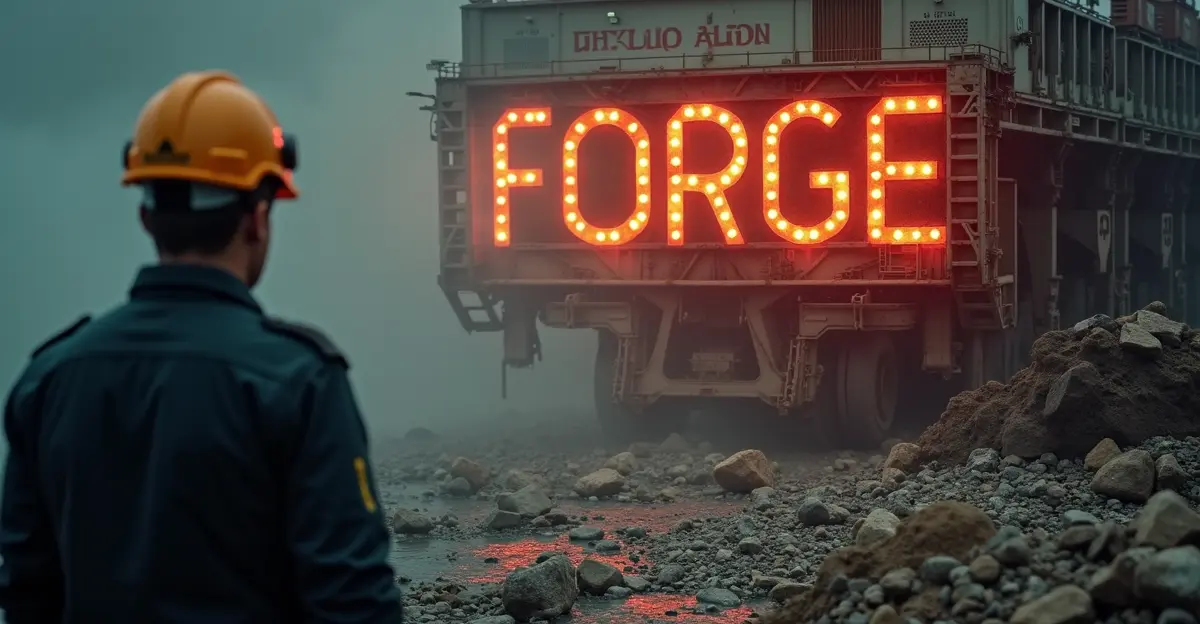
In February 2026, the United States launched the Forum on Resource Geostrategic Engagement (FORGE), a 54-nation coalition backed by over $30 billion in financing, to build an alternative critical minerals supply chain — directly challenging China's near-total dominance over rare earth processing. With Beijing imposing export controls on samarium, gadolinium, and lutetium in 2025–2026, causing price spikes of up to sixfold, and its 15th Five-Year Plan doubling down on processing supremacy, the West faces a structural dependency that may take decades to unwind. This article examines FORGE's strategy, the role of Gulf-state entrants like Saudi Arabia, and whether the 12-to-18-month window to act before dependencies become entrenched is already closing.
What Is FORGE and Why Now?
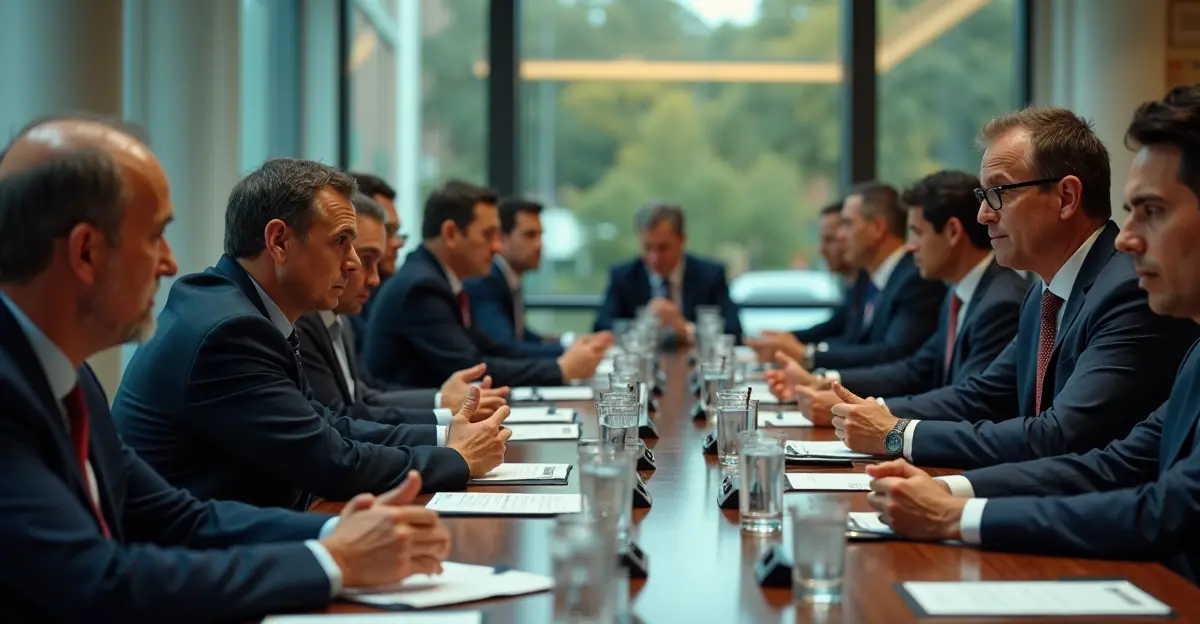
FORGE, announced at the U.S. State Department's inaugural Critical Minerals Ministerial on February 4, 2026, replaces the Minerals Security Partnership (MSP) as the primary multilateral vehicle for coordinating Western critical minerals policy. Chaired by the Republic of Korea, FORGE aims to create a preferential trade-and-investment zone for critical minerals, complete with coordinated price floors to counter adversarial market manipulation. The initiative signed 11 new bilateral framework agreements at the ministerial — including with Argentina, Morocco, Peru, the Philippines, the UAE, and the UK — bringing the total to 21 deals in five months.
The timing is no coincidence. In April 2025, China introduced new export licensing requirements for seven rare earth elements, including samarium, gadolinium, and lutetium, requiring detailed end-use certificates from foreign buyers. By early 2026, dysprosium oxide prices had surged 212% year-on-year, while praseodymium-neodymium oxide rose 27.7%. The U.S. critical minerals strategy has shifted from passive reliance to active coalition-building, with FORGE representing the most ambitious attempt yet to break China's grip.
China's 15th Five-Year Plan: Doubling Down on Processing Supremacy
China's 15th Five-Year Plan (2026–2030), unveiled during the National People's Congress in March 2026, explicitly emphasizes global leadership in rare earth elements. Beijing controls 60–70% of global rare earth production and roughly 90% of processing capacity. The plan calls for expanded domestic exploration of industrial metals, upgraded export controls on critical minerals, and consolidation of industrial chain autonomy. Analysts describe the document as a state instrument of direction that treats minerals and strategic resources as part of China's core industrial capability and strategic resilience.
The plan also references the controversial '0.1% Rule' — a proposed regulation that would allow China to control foreign-made products containing over 0.1% Chinese-origin rare earths by value. While enforcement is suspended until November 2026 following G7 pushback, the threat alone has sent shockwaves through global supply chains. The China export controls 2026 have created what experts call a 'soft blockade,' with licensing processing times of up to 45 working days disrupting defense, aerospace, and medical technology sectors.
Price Spikes and Supply Chain Disruption
The impact of China's controls has been immediate and severe. Dysprosium oxide — critical for permanent magnets in EVs and wind turbines — surged 212% in 2025. Samarium, used in precision-guided munitions and radar systems, saw prices rise sixfold. Lutetium, essential for medical imaging and cancer therapy, became nearly unobtainable for non-Chinese buyers. A June 2026 market update shows neodymium-praseodymium (NdPr) prices corrected ~21% then recovered, while dysprosium and terbium remain over 100% higher year-to-date.
The $30 Billion Answer: FORGE's Strategy and Gulf-State Entrants
FORGE's financial backbone includes over $30 billion in mobilized support, led by the U.S. Export-Import Bank's Project Vault — a $10 billion initiative to establish a domestic Strategic Critical Minerals Reserve. The administration also announced a trade zone with price floors for critical minerals, enforced through Section 232 tariffs, to ensure stable returns for investors in new mines and refineries.
A wildcard in this race is Saudi Arabia. The kingdom claims $2.5 trillion in mineral reserves, including critical and rare earth minerals like lithium, dysprosium, terbium, neodymium, and praseodymium. Its mining exploration budget increased 595% between 2021 and 2025, and state-owned Maaden plans to invest $110 billion in metals and mining over the next decade. In a significant development, U.S.-based MP Materials has partnered with Maaden and the Pentagon to build a new rare earth refinery in Saudi Arabia, aiming to process materials outside China's orbit. The Saudi Arabia critical minerals hub ambition aligns with Vision 2030 but faces challenges including regional instability, water scarcity, and the long lead times of mining projects.
The 12-to-18-Month Window: Is It Already Closing?
Analysts at the Atlantic Council and other institutions warn of a narrow 12-to-18-month window to build independent alternatives before China's processing dominance becomes structurally entrenched. With the 15th Five-Year Plan now in effect and China's export control regime expanding, the window may already be closing. FORGE's success depends on translating 21 bilateral MOUs into operational reality — securing permits, financing, and community acceptance for new mines and processing facilities. The history of Western mining projects suggests this timeline is optimistic: the Mountain Pass mine in California took years to restart, and new rare earth refineries in Australia and Europe remain years from completion.
Furthermore, the crowded multilateral landscape — including the G7's Production Alliance, the EU's Critical Raw Materials Act, and now FORGE — risks duplication and coordination failures. As one State Department official noted, 'We have the money, we have the partners, but we need the political will to move at wartime speed.' The critical minerals supply chain race is as much a test of Western governance as it is of industrial policy.
Expert Perspectives
Morgan Bazilian, a critical minerals expert at the Colorado School of Mines, told reporters: 'FORGE is a significant step forward, but we must be realistic. Building a mine takes 10–15 years; building a refinery takes 5–7. China didn't achieve dominance overnight, and we won't break it overnight.' Meanwhile, a Chinese Ministry of Foreign Affairs spokesperson dismissed FORGE as 'an attempt to politicize normal trade,' warning that 'China will take necessary measures to protect its legitimate rights and interests.'
The European Commission, which participated in the FORGE launch, has its own Critical Raw Materials Act targeting 10% domestic extraction and 40% processing capacity by 2030. However, Europe remains heavily dependent on Chinese rare earths for its defense and green transition industries.
FAQ
What is FORGE in the context of critical minerals?
FORGE (Forum on Resource Geostrategic Engagement) is a 54-nation coalition launched by the U.S. in February 2026 to create an alternative critical minerals supply chain, replacing the Minerals Security Partnership. It includes over $30 billion in financing and aims to counter China's dominance in rare earth processing.
What rare earth elements did China put under export controls in 2025–2026?
China imposed export licensing requirements on samarium, gadolinium, lutetium, terbium, dysprosium, scandium, and yttrium in April 2025, with further tightening in 2026. These elements are critical for defense, aerospace, medical, and green energy technologies.
How much has Saudi Arabia invested in critical minerals?
Saudi Arabia's state-owned Maaden plans to invest $110 billion in metals and mining over the next decade. The kingdom's mining exploration budget increased 595% between 2021 and 2025, and it claims $2.5 trillion in mineral reserves, including rare earths.
What is China's 15th Five-Year Plan's stance on critical minerals?
China's 15th Five-Year Plan (2026–2030) explicitly emphasizes global leadership in rare earth elements, expanded domestic exploration, upgraded export controls, and consolidation of industrial chain autonomy. It treats critical minerals as core to national security and strategic resilience.
Is the 12-to-18-month window to break China's grip realistic?
Analysts warn the window is narrow and may already be closing due to long lead times for mining and refining projects. While FORGE mobilizes significant resources, historical timelines suggest 5–15 years for new capacity, making the window highly optimistic without accelerated permitting and investment.
Conclusion: A Defining Geopolitical-Economic Story of 2026
The FORGE offensive represents the West's most coordinated attempt to date to break China's stranglehold on critical minerals. With $30 billion on the table, 21 bilateral agreements signed, and new entrants like Saudi Arabia joining the race, the foundation for an alternative supply chain is being laid. Yet the structural advantages China has built over two decades — 90% processing share, a comprehensive industrial policy, and now export controls — will not be easily overcome. The next 12 to 18 months will determine whether FORGE becomes a historic turning point or another well-intentioned initiative that falls short. For now, the race is on, and the stakes have never been higher.



Follow Discussion