


 Deutsch
 English
 Español
 Français
 Nederlands
 Português


 Share
Share




China's 2025–2026 export controls on rare earths and critical minerals have triggered sixfold price spikes outside China, with licensing approval rates for European firms falling below 25%. As Beijing controls 90% of global rare earth processing and 80% of tungsten refining, Western nations face a narrowing 12- to 18-month window to build alternative supply chains or risk prolonged strategic vulnerability in defense, EV production, and renewable energy. This article analyzes the geopolitical chess match among the US, EU, China, and emerging players like Saudi Arabia and the UAE in the race to secure critical mineral independence.
China's Dominance and the Export Control Regime
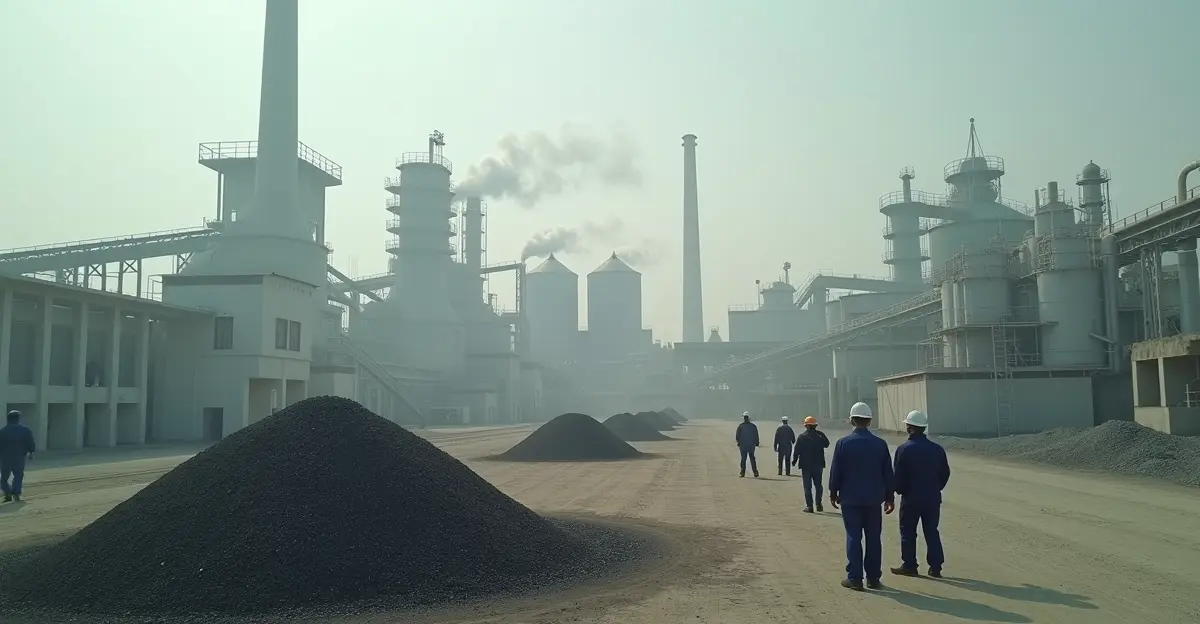
China has long dominated the critical minerals value chain. According to the International Energy Agency, China accounted for roughly 91% of global rare earth separation and refining production and 94% of sintered permanent magnet manufacturing in 2024. The country also controls 80% of tungsten processing and 60% of antimony refining. This dominance is not accidental—decades of state investment under programs like 863 and 973 built an integrated industrial ecosystem that no other nation has replicated.
In April 2025, China imposed export restrictions on heavy rare earths and permanent magnets, citing national security. A second wave in October 2025 expanded controls to include rare earth production equipment, medium and heavy rare earths, lithium battery materials, and extraterritorial provisions applying controls to foreign goods containing Chinese inputs. However, on November 7, 2025, Beijing suspended these measures until November 2026, a move analysts interpret as a tactical pause rather than a policy reversal. The suspension allows China to maintain maximum flexibility—tightening or loosening supply as geopolitical circumstances dictate.
The 2025 rare earth export restrictions have already demonstrated China's ability to disrupt markets. A multi-institutional report released in early 2026 confirms that export controls triggered sixfold price spikes for rare earth magnets and critical minerals outside China. European firms report licensing approval rates below 25%, and over 80% of European companies remain dependent on Chinese supply chains for minerals essential to defense, EVs, and renewable energy.
The West's Response: FORGE, Project Vault, and Bilateral Deals
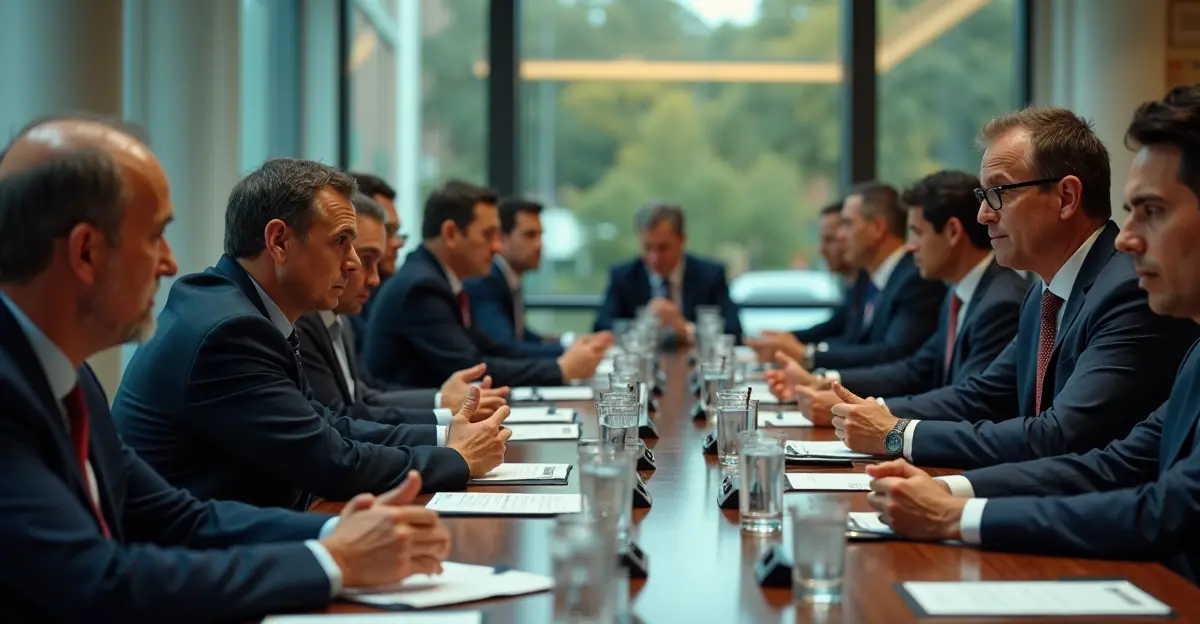
The United States has led the Western response. In February 2026, the Trump administration launched the Forum on Resource Geostrategic Engagement (FORGE), a 54-country alliance succeeding the Minerals Security Partnership. FORGE aims to create a preferential trade-and-investment zone for critical minerals with coordinated price floors to counter adversarial market manipulation. Vice President JD Vance described "reference prices" maintained through "adjustable tariffs" to uphold pricing integrity. The US has mobilized over $30 billion in investments, loans, and letters of interest for supply-chain security, including eleven new bilateral framework agreements at the inaugural Critical Minerals Ministerial.
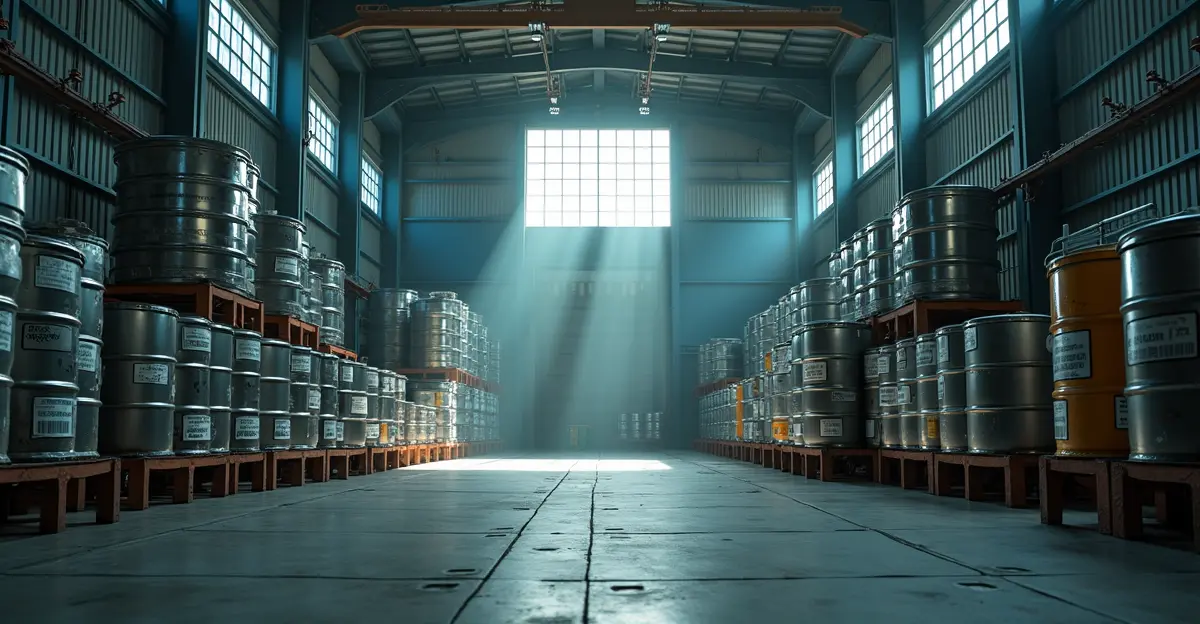
Complementing FORGE is Project Vault, a $12 billion public-private partnership to establish a US Strategic Critical Minerals Reserve. Backed by a $10 billion Export-Import Bank loan and $2 billion in private capital, the project will stockpile 60 critical minerals in secure domestic facilities. Unlike the Strategic Petroleum Reserve, Project Vault relies on private firms paying subscription fees for access during disruptions. The Project Vault critical minerals stockpile represents a significant shift in US industrial policy, though experts caution that voluntary participation and the complexity of storing highly differentiated minerals pose implementation challenges.
The EU has also accelerated efforts. Under the Critical Raw Materials Act, Brussels selected 60 Strategic Projects and is pursuing a transatlantic critical minerals partnership with the US, formalized through a memorandum of understanding and Action Plan in April 2026. However, the ODI and multiple reports note that EU financing remains far below what is needed, and unclear demand signals hamper investment. The EU Critical Raw Materials Act 2026 aims to reduce dependence, but scaling domestic processing capacity will take years.
Emerging Players: Saudi Arabia and the UAE
Gulf states are emerging as wild cards in the critical minerals race. Saudi Arabia and the UAE are deploying over $100 billion in investments to secure lithium, copper, and rare earth assets globally. Saudi Arabia's Vision 2030 includes a $2.5 trillion mineral reserve estimate and aggressive exploration programs. The UAE is investing in processing facilities and strategic partnerships with African and Australian miners. These moves could provide alternative supply routes for Western nations, but also introduce new geopolitical complexities as Gulf states maintain ties with China.
Impact on Defense and Energy Transition
The stakes are existential for Western defense. A single F-35 fighter jet requires over 400 kg of rare earth elements for its sensors, avionics, and guidance systems. China's controls directly impact missile guidance magnets, precision-guided munitions, and radar systems. NATO released a list of 12 critical raw materials in December 2024, and the EU's rare earth demand is projected to increase sixfold by 2030. The critical minerals defense supply chain vulnerability has prompted European defense spending increases of 9.4% between 2023 and 2024, with Denmark targeting 5% of GDP on defense by 2035 and Germany establishing a €500 billion fund.
For the energy transition, each non-Chinese EV now costs an estimated $500 more due to rare earth price spikes. Wind turbines, which use permanent magnets in their generators, face similar cost pressures. The International Energy Agency projects that China will supply over 60% of refined lithium and cobalt, and 80% of battery-grade graphite and rare earths by 2035, even with current diversification efforts.
Expert Perspectives
"China is weaponizing control—not scarcity," states a multi-institutional report released in early 2026. "By using temporary, reversible restrictions, Beijing maintains pricing power and extracts strategic concessions while discouraging large-scale Western alternative investment." The report estimates that rebuilding independent supply chains would take 20–30 years, far exceeding the current geopolitical window.
Cullen S. Hendrix of the Peterson Institute for International Economics notes that Project Vault's voluntary participation model may exclude self-insuring firms and small unaware enterprises. "Storing 60 highly differentiated minerals is far more complex than stockpiling oil," he writes. "The program should require mandatory participation, prioritize processed materials, and invest in US and allied processing capacity."
FAQ
What critical minerals does China control?
China controls approximately 90% of rare earth processing, 80% of tungsten refining, and 60% of antimony production. It also dominates processing of lithium, cobalt, and graphite used in batteries.
How have China's 2026 export controls affected prices?
Export controls triggered sixfold price spikes for rare earth magnets and critical minerals outside China. European firms face licensing approval rates below 25%.
What is FORGE?
FORGE (Forum on Resource Geostrategic Engagement) is a 54-country alliance launched by the US in February 2026 to create a preferential trade-and-investment zone for critical minerals, backed by over $30 billion in commitments.
Can the West achieve critical mineral independence?
Analysts estimate 12–18 months to begin diversification and 5–7 years for meaningful scale. Full independence would require 20–30 years of sustained investment across the entire mine-to-magnet supply chain.
What role are Saudi Arabia and the UAE playing?
Gulf states are deploying over $100 billion to secure lithium, copper, and rare earth assets, potentially offering alternative supply routes while maintaining ties with China.
Conclusion
The 12- to 18-month window for Western nations to build alternative critical mineral supply chains is closing rapidly. China's tactical suspension of export controls until November 2026 provides a temporary reprieve, but the underlying leverage remains intact. FORGE, Project Vault, and EU initiatives represent significant steps, but the gap between ambition and execution remains wide. The race for critical mineral independence will define geopolitical alignments, defense capabilities, and the pace of the global energy transition for decades to come.



Follow Discussion