


 Deutsch
 English
 Español
 Français
 Nederlands
 Português


 Share
Share




In February 2026, the United States launched the Forum on Resource Geostrategic Engagement (FORGE), a 54-nation coalition backed by over $30 billion in government financing, marking the West's most ambitious response yet to China's weaponization of critical mineral supply chains. Beijing's tightened export controls on rare earths, tungsten, and antimony—implemented in 2025 and further restricted in January 2026—have triggered price surges of up to sixfold for neodymium-praseodymium (NdPr) oxide and slashed European license approval rates below 25%. With China controlling roughly 90% of global rare earth processing, 80% of tungsten refining, and 60% of antimony production, the strategic implications for defense production, electric vehicle (EV) supply chains, and the energy transition are profound.
China's Leverage: Control, Not Scarcity
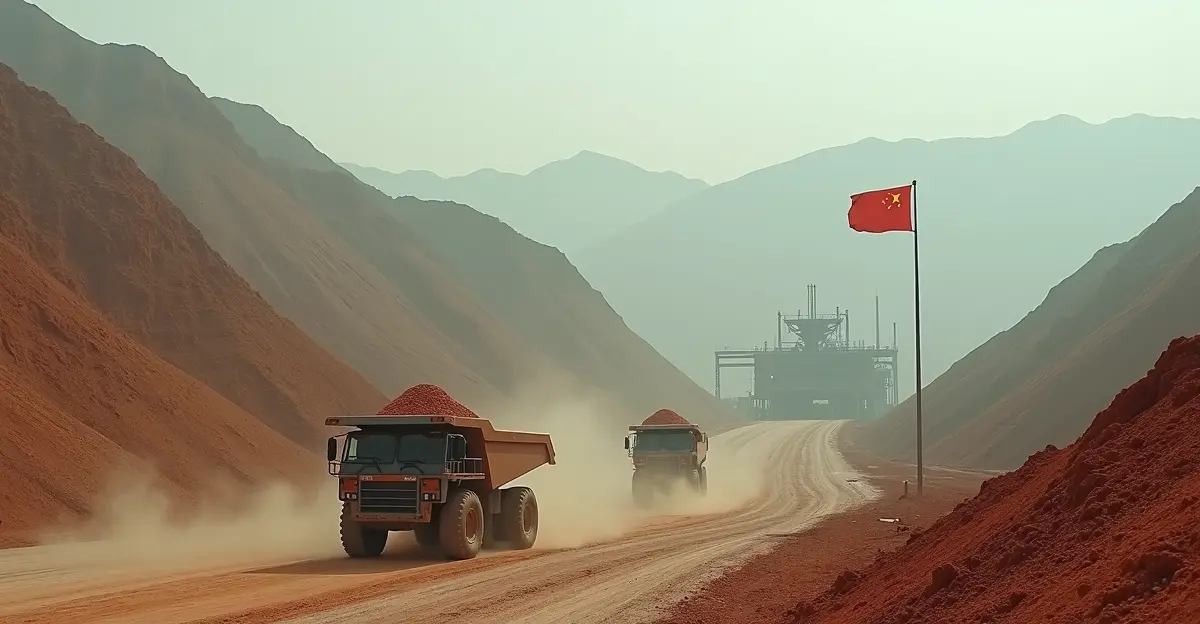
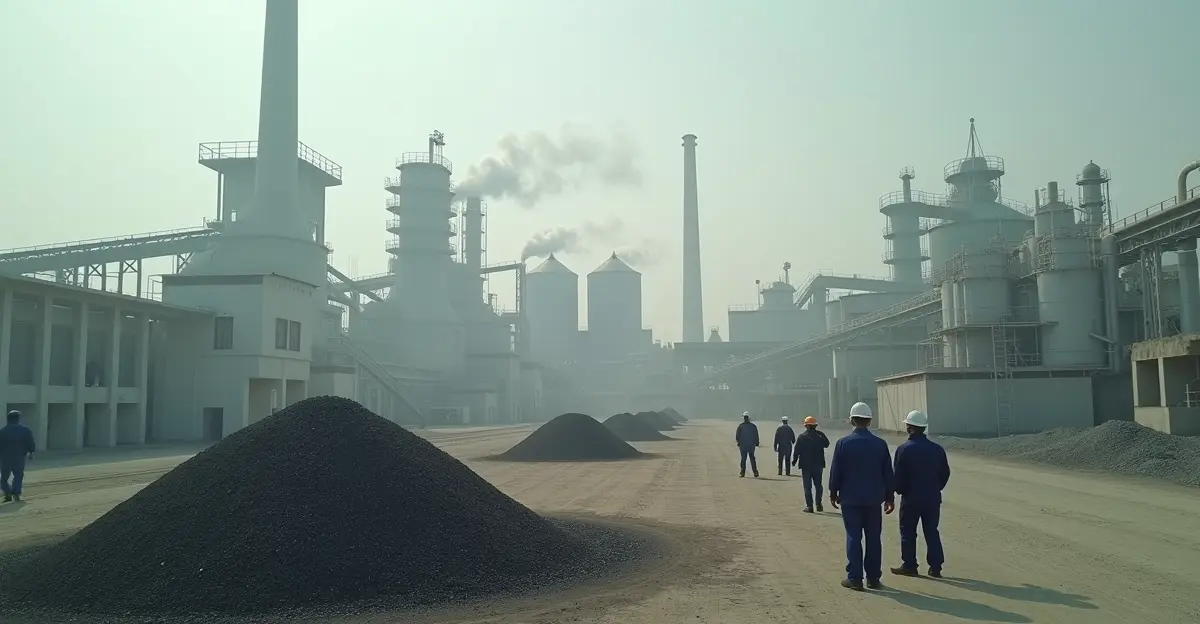
Beijing's dominance in critical minerals stems not from resource abundance—China holds only 35% of global rare earth reserves—but from decades of strategic investment in processing infrastructure. The rare earth processing monopoly allows China to impose temporary, reversible export restrictions that maintain pricing power while extracting strategic concessions. According to a multi-institutional analysis published in early 2026, these controls are designed to prevent large-scale Western alternative investment while keeping Chinese industry competitive.
The April 2025 MOFCOM rules (Announcement No. 18) require licenses for NdFeB magnets containing dysprosium (Dy) or terbium (Tb), covering most high-performance magnet grades used in EVs, robotics, and industrial motors. Although China suspended six rare earth export controls in November 2025 for one year, the underlying licensing regime remains in force. NdPr prices jumped 37% in April 2026 to approximately USD 126/kg—roughly 2.4 times the January level—with structural supply deficits expected to persist. Over 80% of European companies depend on Chinese supply chains for materials essential to defense, EVs, and renewable energy.
The FORGE Alliance: A $30 Billion Countermove
On February 4, 2026, the U.S. Department of State convened the inaugural Critical Minerals Ministerial in Washington, D.C., announcing FORGE as a plurilateral coalition creating a preferential trade-and-investment zone for critical minerals. The initiative succeeds the Minerals Security Partnership with binding mechanisms and coordinated price floors to counter adversarial market manipulation. The ministerial produced eleven new bilateral framework agreements, bringing the total to 21 deals in five months, with countries including Argentina (lithium), Morocco (phosphates/cobalt), the Philippines, Peru, the UAE, and the UK.
FORGE is chaired by South Korea through June 2026 and aims to link disparate bilateral deals into a functioning plurilateral system covering two-thirds of the global economy. The U.S. government has mobilized over $30 billion in letters of interest, investments, loans, and other support over the past six months. A key component is Project Vault, a $10 billion public-private initiative to establish a U.S. Strategic Critical Minerals Reserve. However, analysts warn that full supply chain independence remains 5–7 years away, with Western competitors facing 2–4 times cost disadvantages and defense stockpiles covering only 6–9 months of high-intensity conflict.
Price Shockwaves and Supply Chain Disruption
The impact of China's controls is already materializing in real-time. Neodymium-praseodymium oxide prices have surged sixfold since late 2024, while tungsten prices have more than doubled. Antimony—critical for flame retardants and military applications—has seen similar spikes. The critical minerals price volatility is forcing downstream industries to scramble for alternatives.
European defense contractors report that license approval rates for rare earth exports from China have fallen below 25%, with processing times stretching to 10–16 weeks. The EU has responded by identifying 60 Strategic Projects under the Critical Raw Materials Act, aiming to build domestic processing capacity by 2030. Yet the timeline for meaningful diversification remains daunting: analysts estimate that rebuilding independent supply chains could take 20–30 years, far exceeding the current geopolitical window.
Defense and Energy Transition at Risk
The stakes extend far beyond economics. Rare earths are essential for permanent magnets in EV motors, wind turbines, and precision-guided munitions. Tungsten is used in armor-piercing projectiles and cutting tools, while antimony is critical for infrared sensors and night-vision equipment. The defense supply chain vulnerabilities exposed by China's controls have prompted NATO to review stockpile requirements.
China's export controls also threaten the global energy transition. The International Energy Agency projects that demand for rare earths could quadruple by 2040 under net-zero scenarios. With China controlling 60–80% of global processing for lithium, cobalt, and rare earths, the FORGE alliance faces an uphill battle. Analysts warn of a narrowing 12–18 month window for action before Chinese dominance becomes entrenched.
Expert Perspectives
"China is not restricting exports because it lacks resources—it is doing so to maintain strategic leverage and prevent the West from building alternative supply chains," said Dr. Emily Chen, a senior fellow at the Atlantic Council's Global Energy Center. "The 12–18 month window is critical. If the West does not act decisively now, it will face a decade or more of vulnerability."
Morgan Bazilian, director of the Payne Institute at the Colorado School of Mines, noted: "FORGE is a significant step, but coordinated price floors and binding commitments are difficult to implement across diverse minerals and jurisdictions. The real test will be whether the alliance can move from bilateral deals to genuine multilateral coordination."
FAQ
What are China's 2026 export controls on critical minerals?
China's export controls, tightened in 2025 and January 2026, require licenses for rare earths, tungsten, antimony, and related products. The April 2025 MOFCOM rules specifically target high-performance NdFeB magnets containing dysprosium or terbium. While some controls were suspended in November 2025 for one year, the licensing regime remains in force, with approval rates for European firms below 25%.
What is the FORGE alliance?
The Forum on Resource Geostrategic Engagement (FORGE) is a 54-nation coalition launched by the U.S. in February 2026 to counter China's critical mineral dominance. Backed by over $30 billion in government financing, it includes 21 bilateral framework agreements and aims to create a preferential trade-and-investment zone with coordinated price floors.
How much have rare earth prices increased?
Neodymium-praseodymium oxide prices have surged up to sixfold since late 2024. In April 2026, NdPr prices jumped 37% to approximately USD 126/kg, roughly 2.4 times the January 2026 level. Tungsten and antimony prices have also more than doubled.
How long will it take to build alternative supply chains?
Analysts estimate that full supply chain independence for critical minerals could take 5–7 years under optimistic scenarios, but rebuilding independent processing capacity may require 20–30 years. Western competitors face 2–4 times cost disadvantages compared to Chinese processors.
What is Project Vault?
Project Vault is a $10 billion public-private initiative to establish a U.S. Strategic Critical Minerals Reserve. It is part of the broader FORGE alliance effort to stockpile materials essential for defense and clean energy technologies.
Conclusion
The critical minerals chessboard is being redrawn in real-time. China's export controls have exposed deep vulnerabilities in Western supply chains, while the FORGE alliance represents the most ambitious multilateral response to date. Yet the gap between ambition and execution remains wide. With a narrowing 12–18 month window for decisive action, the coming months will determine whether the West can break free from resource dependency or remain locked in a strategic vice. The geopolitics of critical minerals will define global trade alliances, defense readiness, and the pace of the energy transition for decades to come.
Follow Discussion