


 Deutsch
 English
 Español
 Français
 Nederlands
 Português


 Share
Share




China's 2026 export controls on rare earths, tungsten, and antimony have triggered price spikes of up to sixfold and slashed licensing approval rates for European firms below 25%, exposing acute Western vulnerability in defense, EV, and renewable energy supply chains. With NATO holding only 6–9 months of defense stockpiles and independent processing capacity requiring 5–7 years to build, the West faces a strategic trilemma: accept managed dependence, pursue costly independence, or adopt a hybrid resilience model. This article analyzes the geopolitical calculus behind Beijing's calibrated restrictions, the $30 billion FORGE alliance response, and whether the 12–18 month decision window is already closing.
Context: China's Dominance and the 2026 Export Controls
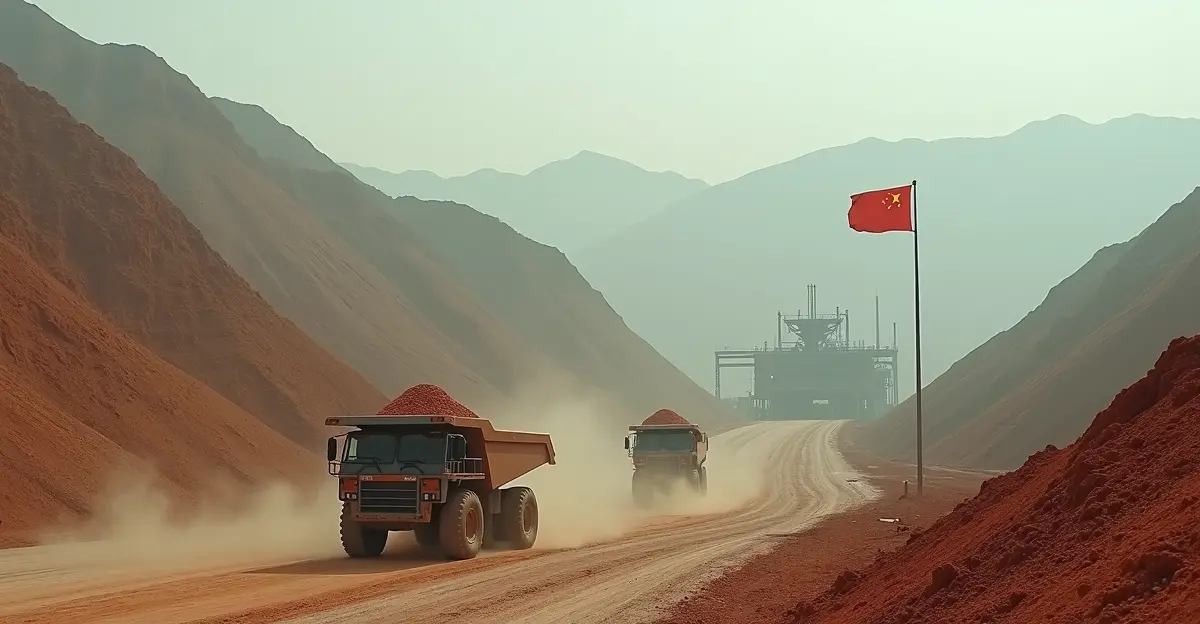
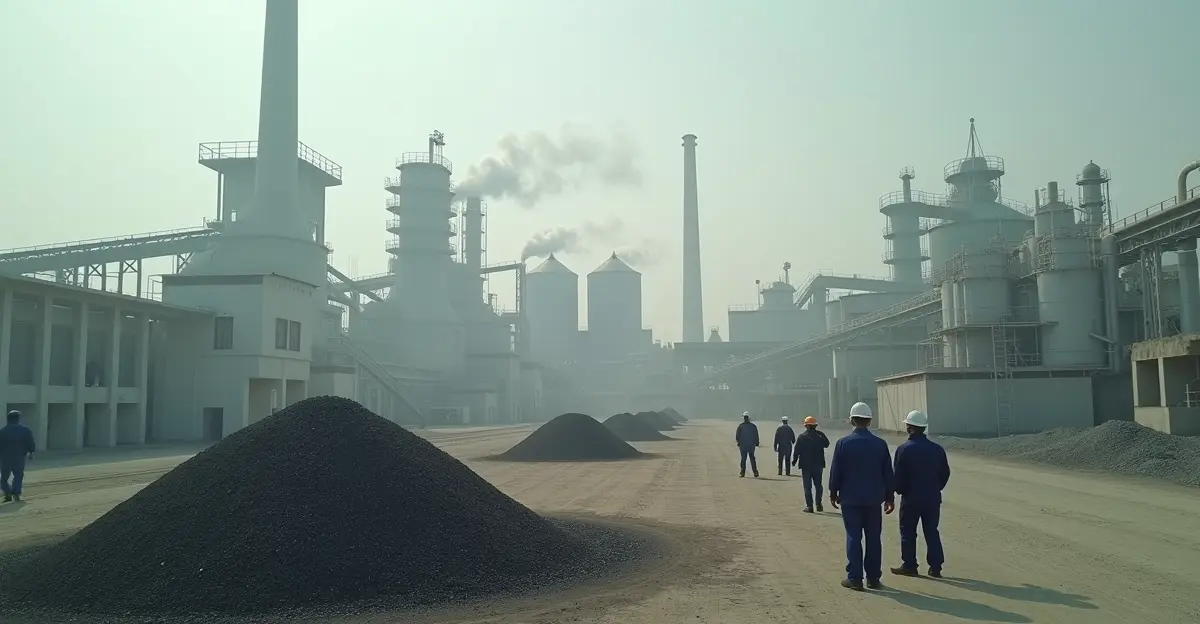
China controls approximately 90% of global rare earth processing, 80% of tungsten refining, and 60% of antimony production — materials essential for everything from F-35 fighter jet magnets to missile guidance systems and EV batteries. In April 2025, Beijing introduced a strict licensing regime under Announcement No. 18, covering seven rare earth elements including samarium, gadolinium, terbium, dysprosium, lutetium, scandium, and yttrium. By early 2026, the controls expanded to include neodymium, praseodymium, tungsten, and antimony, requiring per-shipment licenses with processing times of up to 45 working days.
The impact has been dramatic. Prices for neodymium-praseodymium oxide surged sixfold outside China, while antimony metal prices rose from $14,000 per ton in July 2024 to $38,000 per ton by December 2024, and have climbed further since. European companies now face licensing approval rates below 25%, according to a multi-institutional analysis published in early 2026. Over 80% of European firms remain dependent on Chinese supply chains for these critical inputs.
The geopolitical calculus behind China's restrictions is deliberate. Analysts argue Beijing is weaponizing control rather than scarcity — using temporary, reversible restrictions to maintain pricing power and extract strategic concessions while simultaneously discouraging large-scale Western investment in alternative supply chains. The message is clear: dependence on Chinese processing capacity is a strategic vulnerability that Beijing is willing to exploit.
The Strategic Trilemma Facing the West
Western policymakers now confront what experts call a strategic trilemma with three unpalatable options.
Option 1: Accept Managed Dependence
This path acknowledges that breaking Chinese dominance within a decade is unrealistic. Instead, the West would negotiate supply guarantees, stockpile strategically, and accept higher costs while gradually building alternative capacity. The advantage is lower short-term costs, but the risk is that Beijing continues tightening the screws, especially during a Taiwan contingency or other geopolitical crisis.
Option 2: Pursue Costly Independence
A full decoupling strategy would require $30–50 billion in investment over 5–7 years to build independent processing capacity for rare earths, tungsten, and antimony. The U.S. and EU have already committed over $30 billion through the FORGE alliance and Project Vault, but analysts estimate that meaningful scale remains 5–7 years away. The Pentagon's Defense Logistics Agency has launched a $1.5 billion stockpiling spree, but NATO's combined stockpiles cover only 6–9 months of high-intensity conflict consumption.
Option 3: Hybrid Resilience Model
The most pragmatic approach combines stockpiling, allied diversification, and innovation in substitute materials. The Council on Foreign Relations' leapfrog strategy recommends scaling rare-earth-free magnets, waste-based recovery from mine tailings, advanced recycling of e-waste, and AI-enabled materials research. This approach reduces dependence without requiring full decoupling, but still demands sustained investment and political will over a decade or more.
The FORGE Alliance: A $30 Billion Response
On February 4, 2026, the United States hosted the inaugural Critical Minerals Ministerial in Washington, D.C., led by Secretary of State Marco Rubio and Vice President JD Vance. Representatives from 54 nations and the European Commission launched the Forum on Resource Geostrategic Engagement (FORGE), the successor to the Minerals Security Partnership. Chaired by South Korea, FORGE aims to create a preferential trade-and-investment zone for critical minerals with coordinated price floors to counter Chinese market manipulation.
The ministerial produced 11 new bilateral critical minerals framework agreements with countries including Argentina, Morocco, Peru, the Philippines, the UAE, and the UK, bringing the total to 21 deals in five months. The U.S. government mobilized over $30 billion in financing support, including the Export-Import Bank's Project Vault — a $10 billion initiative to establish a domestic strategic reserve for critical minerals. Vice President Vance described 'reference prices for critical minerals at each stage of production' maintained through adjustable tariffs, a mechanism designed to stabilize investment conditions for Western mining and processing projects.
However, the FORGE alliance's effectiveness remains unproven. Building new processing facilities takes 12–18 months minimum, with meaningful scale requiring 5–7 years. China's 15th Five-Year Plan, covering 2026–2030, is expected to reinforce its dominance in processing and refining, with projections showing China supplying over 60% of refined lithium and cobalt through 2035.
Impact on Defense and Industrial Supply Chains
The real-world consequences are already visible. European defense contractors face delays in producing F-35 components, missile guidance systems, and precision munitions due to shortages of rare earth magnets. The Atlantic Council's stress-test analysis found that a Chinese export ban on neodymium, dysprosium, and refined manganese would cripple Western defense production within months. EV production costs outside China have risen by an estimated $500 per vehicle, while wind turbine manufacturers struggle to source permanent magnets.
The defense-critical raw materials list published by NATO in December 2024 identified 12 materials essential for Allied defense manufacturing, including aluminum, beryllium, cobalt, gallium, germanium, graphite, lithium, manganese, platinum, rare earth elements, titanium, and tungsten. China dominates the supply of most of these materials, creating a vulnerability that NATO's 2025 commitment to spend 1.5% of GDP on critical infrastructure and supply chain security aims to address.
Expert Perspectives
'China is weaponizing control, not scarcity,' said a lead analyst at the multi-institutional study published in early 2026. 'The restrictions are calibrated to maintain pricing power and extract strategic concessions while making Western alternative investment appear prohibitively expensive and slow.'
Vice President JD Vance, speaking at the February 2026 ministerial, framed the challenge starkly: 'We cannot allow a single adversary to hold a knife to the throat of our defense industrial base and our clean energy future. FORGE is about building a coalition of the willing that covers two-thirds of the global economy.'
However, critics warn that FORGE risks creating new dependencies on U.S.-led frameworks and could accelerate or delay the global energy transition depending on how supply chains develop. The ODI analysis notes that the entry of new financing actors like the UAE and Saudi Arabia increases competitive pressure on Western diversification efforts.
FAQ
What are China's 2026 export controls on critical minerals?
China's 2026 export controls impose strict licensing requirements on rare earths (neodymium, praseodymium, dysprosium, terbium, and others), tungsten, and antimony. All exports require a MOFCOM license with processing times up to 45 working days, and approval rates for European firms have fallen below 25%.
Why are critical minerals important for defense?
Critical minerals like rare earths are essential for permanent magnets in F-35 fighter jets, missile guidance systems, precision munitions, night vision goggles, and radar systems. Tungsten is used in armor-piercing projectiles, and antimony in flame retardants for military equipment.
What is the FORGE alliance?
FORGE (Forum on Resource Geostrategic Engagement) is a 54-nation coalition launched in February 2026 to counter China's dominance in critical minerals. It creates a preferential trade-and-investment zone with coordinated price floors and has mobilized over $30 billion in U.S. government financing.
How long would it take the West to build independent processing capacity?
Building new processing facilities takes 12–18 months minimum, but achieving meaningful scale requires 5–7 years. Analysts estimate that full independence from Chinese processing could take 20–30 years under current investment trajectories.
What is the 12–18 month decision window?
Experts warn that Western nations have a narrowing 12–18 month window to make decisive investments and policy changes before China's dominance becomes entrenched through its 15th Five-Year Plan and before alternative supply chain projects lose momentum. After 2027–2028, the geopolitical landscape is expected to harden further.
Conclusion: A Closing Window
The evidence is clear: China's calibrated export controls are actively reshaping global supply chains in real time, while NATO and European policymakers face an urgent and narrowing window to secure defense-critical material independence before the 2027–2028 geopolitical landscape hardens further. The FORGE alliance and $30 billion in commitments represent a serious response, but the gap between political ambition and industrial reality remains vast. Whether the West can navigate the strategic trilemma — accepting managed dependence, pursuing costly independence, or adopting a hybrid model — will determine not only its economic competitiveness but its ability to defend itself in an increasingly contested world.

Follow Discussion