


 Deutsch
 English
 Español
 Français
 Nederlands
 Português


 Share
Share




China's stranglehold on critical minerals processing has become the defining geoeconomic flashpoint of 2026, with Beijing controlling roughly 90% of global rare earth processing and systematically tightening export controls on gallium, germanium, and antimony. Licensing approval rates for European firms have fallen below 25%, while prices outside China have spiked sixfold, triggering a multi-continent scramble for alternative supply chains. This analysis examines how Beijing is weaponizing processing dominance—not outright scarcity—to extract strategic concessions, and why Western nations face a narrowing 12-18 month window to build independent processing capacity before vulnerability becomes structurally entrenched.
China's Processing Dominance by the Numbers
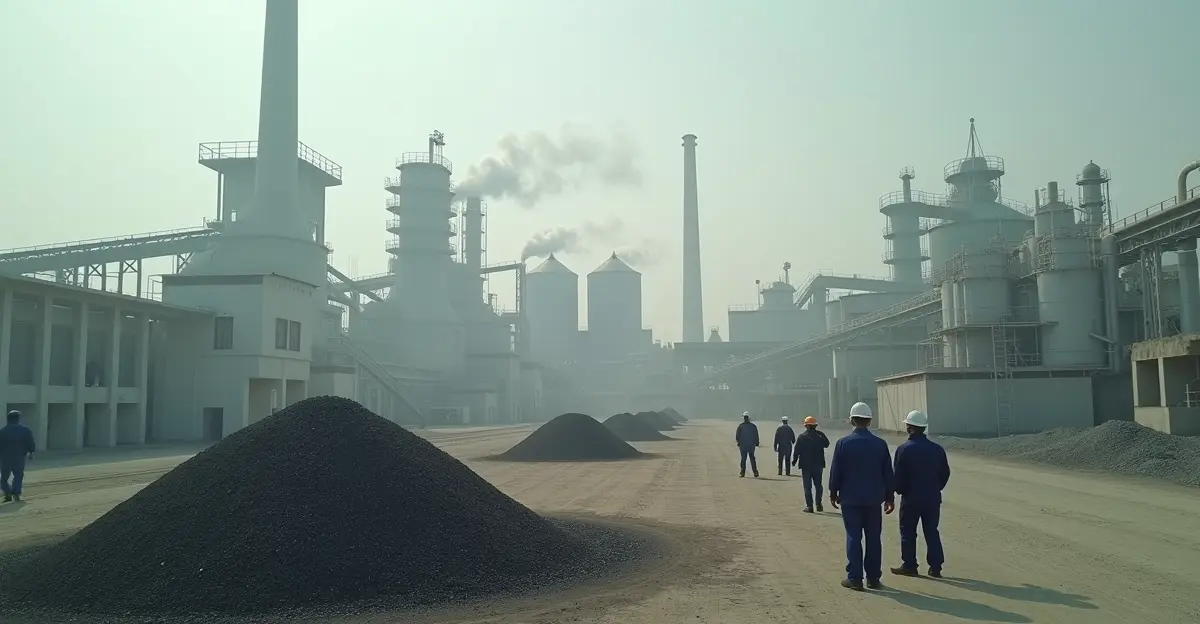
China's control extends far beyond rare earths. According to a multi-institutional analysis published in early 2026, Beijing controls 90% of rare earth processing, 80% of tungsten, and 60% of antimony. The global critical minerals supply chain remains heavily dependent on Chinese refining capacity, with over 80% of European companies relying on Chinese inputs for materials essential to defense, electric vehicles, and renewable energy technologies.
The 2025-2026 export control regime has been particularly punishing. Export restrictions on gallium, germanium, and antimony—critical for semiconductors, fiber optics, and defense applications—triggered sixfold price spikes in international markets. Antimony prices peaked at $59,750 per tonne in July 2025, up from roughly $10,000 before controls were tightened. European firms report that fewer than one in four license applications are now approved by Chinese authorities, creating severe supply uncertainty.
Weaponizing Control, Not Scarcity
Beijing's strategy is calibrated to maintain maximum leverage. Rather than imposing outright bans, China uses temporary, reversible restrictions that keep Western companies guessing and discourage long-term investment in alternative processing capacity. The China export control strategy relies on what analysts call "managed dependence"—keeping prices high enough to extract economic rents and political concessions, but not so high as to trigger a unified Western response.
In November 2025, China suspended a planned ban on exports of gallium, germanium, and antimony to the United States for one year, following a meeting between President Xi Jinping and President Donald Trump in Busan, South Korea. In return, the U.S. agreed to lower tariffs on Chinese imports by 10 percentage points. This temporary truce, set to expire in November 2026, exemplifies Beijing's tactical approach: using the threat of supply disruption as a bargaining chip.
Western Response: FORGE, Project Vault, and the Critical Minerals Ministerial
The Western response has been unprecedented in scale but faces daunting timelines. On February 4, 2026, the U.S. State Department hosted the Critical Minerals Ministerial, bringing together representatives from 54 countries and the European Commission. Secretary of State Marco Rubio and Vice President JD Vance announced the creation of FORGE (Forum on Resource Geostrategic Engagement), the successor to the Minerals Security Partnership, and signed eleven new bilateral critical minerals frameworks with countries including Argentina, Morocco, the Philippines, and the UAE.
The U.S. is mobilizing over $30 billion in support for critical mineral supply chain projects, including Project Vault, a $10 billion Export-Import Bank initiative to establish a domestic strategic reserve for critical minerals. The EU Critical Raw Materials Act designated 47 Strategic Projects, though only five are fully funded. Japan has joined the EU and U.S. in a trilateral cooperation framework on critical raw materials, announced jointly on February 4, 2026.
The 12-18 Month Window
Experts warn that the window for meaningful action is closing rapidly. Building independent processing capacity would normally take 20-30 years, but Western nations face a critical 12-18 month window to take decisive action before Chinese dominance becomes structurally irreversible. The temporary U.S.-China truce expires in November 2026, and Beijing's 15th Five-Year Plan is expected to further entrench its processing advantages.
"The challenge is not just about mining more—it's about building the complex chemical processing infrastructure that China has spent decades perfecting," said one industry analyst. "You can't replicate that in 18 months, but you can start the process and signal to markets that alternatives are coming."
Strategic Paths Forward
Analysts outline three strategic paths for Western nations: managed dependence, costly independence, or a hybrid balance of resilience and realism. Managed dependence would accept Chinese dominance while building emergency stockpiles and diplomatic safeguards. Costly independence would pursue full domestic processing capacity at enormous expense over decades. The hybrid approach—likely the most realistic—would combine targeted investment in strategic processing capacity with diversified international partnerships and recycling technologies.
The global rare earth market concentration remains extreme, and the World Economic Forum ranks geoeconomic confrontation as the top global threat for 2026. Emerging players like Saudi Arabia and the UAE are entering the market, potentially increasing competitive pressure on Western nations to move beyond policy planning toward actionable investment.
FAQ
What critical minerals does China control?
China controls approximately 90% of global rare earth processing, 80% of tungsten, and 60% of antimony. It also dominates processing of gallium and germanium, essential for semiconductors and defense technologies.
How have China's export controls affected prices?
Prices for critical minerals outside China have spiked sixfold since 2025. Antimony prices reached $59,750 per tonne in July 2025, up from roughly $10,000 before controls were tightened.
What is the FORGE initiative?
FORGE (Forum on Resource Geostrategic Engagement) is a U.S.-led multilateral initiative announced in February 2026 to replace the Minerals Security Partnership, aiming to coordinate critical mineral supply chain diversification among 54 partner countries.
How long would it take to build independent processing capacity?
Building independent processing capacity would normally take 20-30 years, but Western nations face a critical 12-18 month window to take decisive action before Chinese dominance becomes structurally entrenched.
Will the U.S.-China truce on mineral exports hold?
The temporary 12-month suspension of expanded controls, agreed in November 2025, expires in November 2026. Its renewal depends on broader trade negotiations and geopolitical dynamics.
Conclusion
China's critical minerals stranglehold represents the defining strategic resource contest of 2026. With a narrowing 12-18 month window for Western action, the race to build alternative processing capacity will determine the balance of economic and military power for decades to come. Whether through FORGE, Project Vault, or the EU's Critical Raw Materials Act, the response must move from policy planning to tangible investment—before the window closes.



Follow Discussion