


 Deutsch
 English
 Español
 Français
 Nederlands
 Português


 Share
Share




China's tightened export controls on rare earths, tungsten, and antimony, which took full effect in early 2026, have triggered price spikes of up to sixfold and slashed European licensing approval rates below 25%, creating an unfolding strategic crisis for Western defense, electric vehicle (EV), and clean energy industries. With Beijing controlling roughly 90% of global rare earth processing, 80% of tungsten refining, and 60% of antimony production, the West faces a narrowing 12-to-18-month window to diversify supply chains before vulnerabilities become structural. In February 2026, the United States launched the FORGE alliance—a 54-nation coalition with over $30 billion in commitments—to counter Beijing's dominance, but analysts warn that building independent processing capacity will take five to seven years.
Background: China's Strategic Weaponization of Mineral Supply
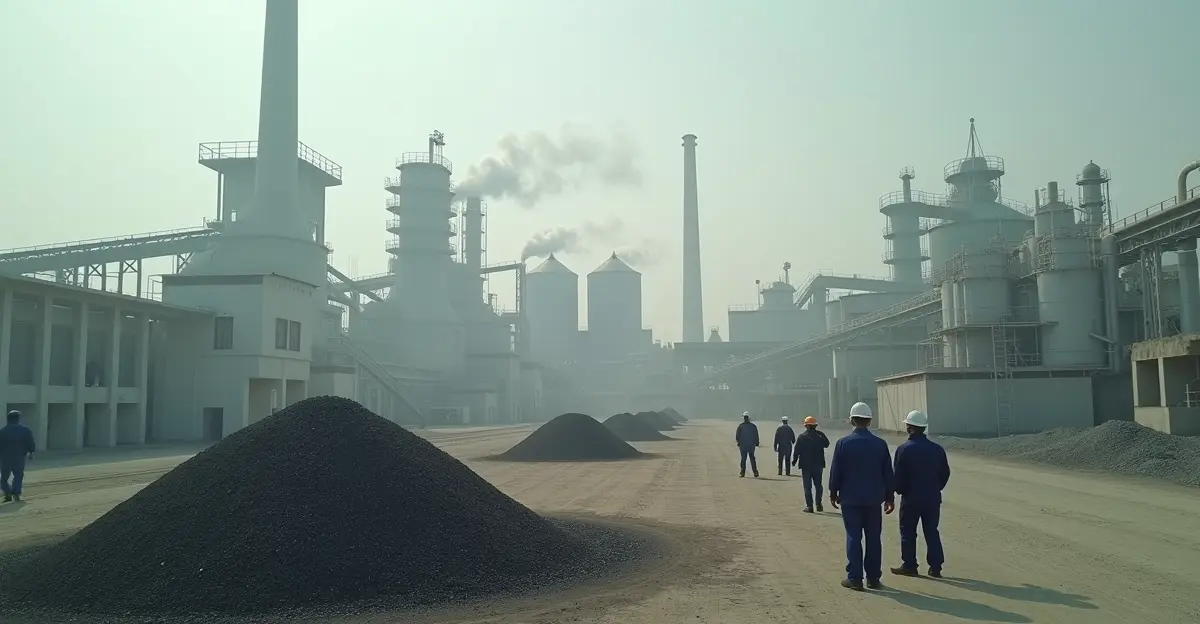
China's dominance in critical minerals is not accidental but the result of decades of strategic industrial policy. The country controls approximately 90% of rare earth processing, 85% of separation capacity, and 92% of neodymium-iron-boron (NdFeB) magnet production—materials essential for F-35 fighter jets, missile guidance systems, EV motors, and wind turbines. According to a multi-institutional analysis drawing on data from the European Parliament Research Service, OECD, and CSIS, China's 2025-2026 export controls are designed not to create scarcity but to weaponize control through temporary, reversible restrictions that maintain pricing power and extract strategic concessions while slowing Western investment in alternative supply chains.
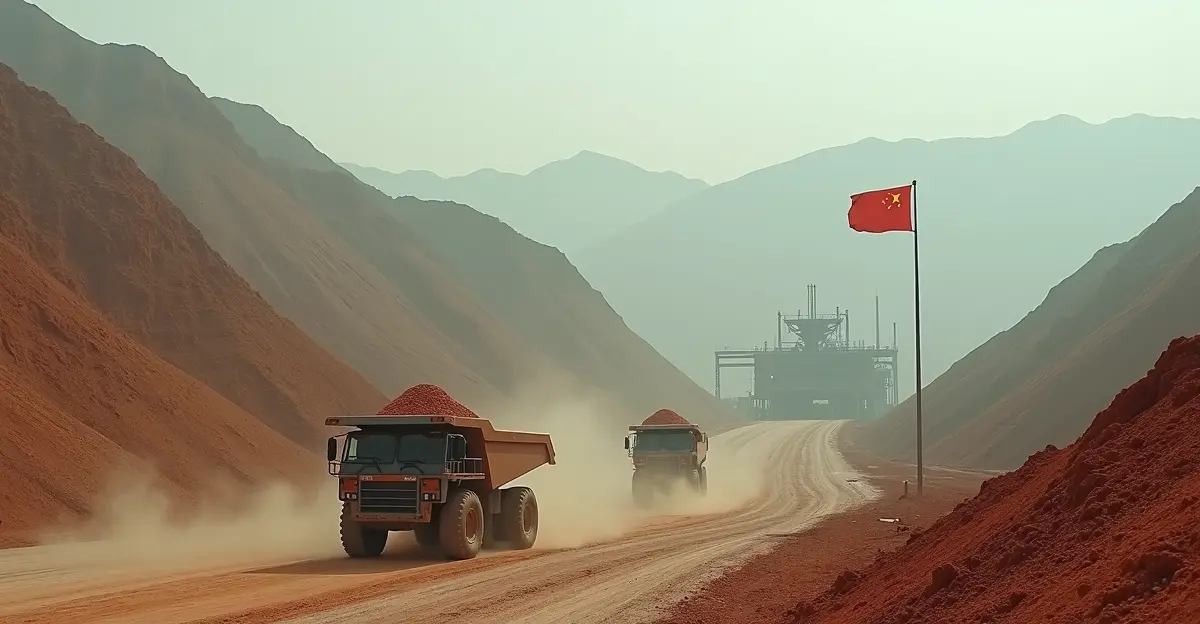
The rare earth supply chain concentration has been decades in the making. China's Bayan Obo mine in Inner Mongolia remains the world's largest rare earth deposit, and six state-owned enterprises control 70% of the country's rare earth output. In 2023, China exported approximately 55,000 tons of rare earth oxide equivalent, with major buyers including Japan, the United States, and Europe. The 2026 controls build on earlier restrictions imposed during the US-China trade war escalation in 2025, creating a layered system of whitelists, categorical prohibitions on exports to US military end-users, and new restrictions on unprocessed rare earths that took effect January 1, 2026.
Price Spikes and Supply Disruptions
The impact of China's export controls has been immediate and severe. Neodymium-praseodymium oxide prices surged up to sixfold outside China, while antimony peaked at $59,750 per tonne—a record high. Tungsten prices have also skyrocketed, driven by restrictions that limit supply to just 15 to 44 approved companies per mineral. European firms have been hit hardest: licensing approval rates for critical mineral exports from China dropped below 25% in early 2026, and over 80% of European companies remain dependent on Chinese supply chains for materials essential to defense, EVs, and renewable energy.
The impact on EV production costs has been significant. Industry analysts estimate that EV production costs have risen by approximately $500 per vehicle due to rare earth price increases, threatening the economics of the energy transition. For the defense sector, the situation is even more dire: NATO defense stockpiles of critical minerals are sufficient for only six to nine months of high-intensity conflict, according to informedclearly.com analysis. Materials like neodymium, dysprosium, and samarium-cobalt are essential for precision-guided munitions, radar systems, and electronic warfare capabilities.
Antimony: The Overlooked Crisis
While rare earths dominate headlines, antimony—a critical mineral used in flame retardants, lead-acid batteries, and night-vision equipment—has experienced some of the most dramatic price movements. China controls 60% of global antimony production, and export restrictions have sent prices to historic highs. The mineral is classified as critical by both the US and EU, yet Western alternatives remain virtually nonexistent in the short term.
The West's Response: FORGE Alliance and Project Vault
In February 2026, the US Department of State hosted the 2026 Critical Minerals Ministerial, led by Secretary of State Marco Rubio and Vice President JD Vance, with representatives from 54 countries and the European Commission. The centerpiece of the event was the launch of FORGE (Forum on Resource Geostrategic Engagement), a plurilateral successor to the Minerals Security Partnership chaired by South Korea. FORGE aims to create a preferential trade-and-investment zone with coordinated price floors to counter adversarial market manipulation.
The ministerial produced 11 new bilateral critical minerals framework agreements with countries including Argentina, Morocco, Peru, the Philippines, the United Arab Emirates, and the United Kingdom, bringing the total to 21 deals in five months. The US also announced Project Vault, a $10 billion Export-Import Bank-backed initiative to establish a domestic strategic reserve for critical minerals, with participating OEMs including Boeing, General Motors, and GE Vernova securing guaranteed material access during disruptions. Overall, the US has mobilized over $30 billion in letters of interest, investments, and loans for critical mineral projects.
The FORGE alliance structure covers approximately two-thirds of the global economy, but operational details and membership criteria are still being clarified. The initiative represents a significant shift from the previous Minerals Security Partnership, which critics said lacked enforcement mechanisms and sufficient financial backing.
Can the West Build Independent Capacity?
The central question facing Western policymakers is whether independent processing capacity can be built within the critical 12-to-18-month window before China's dominance becomes entrenched for at least a decade. The analysis from multiple sources paints a sobering picture: rebuilding full independent rare earth supply chains would take 20 to 30 years under normal circumstances, while building basic separation facilities requires a minimum of 12 to 18 months. Full supply chain independence—from mining through processing to magnet manufacturing—is estimated to take five to seven years and cost $30 to $50 billion.
China's 15th Five-Year Plan, running through 2035, reinforces its strategic commitment to maintaining dominance in critical minerals. The plan includes provisions for further consolidation of state-owned enterprises, increased investment in processing technology, and expanded overseas mining investments in Africa, South America, and Southeast Asia. This creates a strategic trilemma for the West: accept managed dependence on Chinese supply chains, pursue costly independence with uncertain timelines, or adopt a hybrid resilience model that combines strategic stockpiling, allied production, and targeted domestic processing.
The US critical minerals stockpile strategy under Project Vault represents a step toward the hybrid model, but experts caution that stockpiles alone cannot substitute for processing capacity. The US remains fully import-dependent for 12 critical minerals and relies on imports for over 50% of 29 others, according to the US Geological Survey's 2025 Critical Minerals List, which expanded to 60 minerals.
Implications for Defense, EVs, and Clean Energy
The strategic weaponization of critical minerals has immediate and far-reaching implications across multiple sectors. In defense, the six-to-nine-month NATO stockpile gap raises urgent questions about alliance readiness. The F-35 fighter jet alone requires 920 pounds of rare earth materials, while a single Arleigh Burke-class destroyer uses over 5,000 pounds. Missile guidance systems, laser targeting pods, and submarine sonar arrays all depend on rare earth magnets and specialized alloys.
For the EV industry, which is central to global climate goals, the cost increases and supply uncertainty threaten to slow the energy transition. Rare earth permanent magnets are essential for EV traction motors, and while some manufacturers are exploring magnet-free motor designs, these alternatives typically sacrifice efficiency and power density. The wind energy sector faces similar challenges, with direct-drive wind turbines requiring large quantities of neodymium and dysprosium magnets.
The energy transition mineral dependency creates a paradox: the very technologies needed to combat climate change are dependent on supply chains controlled by a single geopolitical competitor. The International Energy Agency has warned that critical mineral supply constraints could delay the global energy transition by a decade or more if not addressed urgently.
Expert Perspectives
"China is not trying to starve the West of minerals—it is trying to control the terms on which they are available," said a senior analyst at the Center for Strategic and International Studies (CSIS) who contributed to the multi-institutional analysis. "By maintaining plausible deniability through temporary, reversible restrictions, Beijing can extract strategic concessions without triggering a unified Western response. The 12-to-18-month window is real, but it requires political will and financial commitment that has been lacking."
Other experts emphasize that the FORGE alliance, while promising, faces significant hurdles. "FORGE covers two-thirds of the global economy on paper, but translating bilateral frameworks into operational plurilateral coordination is a monumental challenge," noted a trade policy specialist at the Atlantic Council. "Price floors, investment guarantees, and technology transfer mechanisms all need to be negotiated, and China will not stand still while the West builds alternatives."
Frequently Asked Questions
What are China's 2026 export controls on critical minerals?
China's 2026 export controls include new restrictions on unprocessed rare earths that took effect January 1, 2026, categorical prohibitions on exports to US military end-users, and a whitelist system for tungsten, antimony, and silver that limits supply to 15-44 approved companies per mineral. These controls build on restrictions introduced during the 2025 US-China trade war escalation.
How much does China control global rare earth processing?
China controls approximately 90% of global rare earth processing, 85% of separation capacity, 80% of tungsten refining, 60% of antimony production, and 92% of NdFeB magnet production. Six state-owned enterprises control 70% of China's rare earth output.
What is the FORGE alliance?
FORGE (Forum on Resource Geostrategic Engagement) is a 54-nation alliance launched by the United States in February 2026 to counter China's dominance in critical minerals. It succeeds the Minerals Security Partnership and aims to create a preferential trade-and-investment zone with coordinated price floors. The US has committed over $30 billion in financing support for strategic mineral projects.
How long will it take the West to build independent rare earth processing capacity?
Building basic separation facilities requires a minimum of 12 to 18 months, while full supply chain independence—from mining through processing to magnet manufacturing—is estimated to take five to seven years and cost $30 to $50 billion. Rebuilding complete independent supply chains could take 20 to 30 years under normal circumstances.
What is Project Vault?
Project Vault is a $10 billion Export-Import Bank-backed initiative announced in February 2026 to establish a US domestic strategic reserve for critical minerals. It operates as a public-private partnership with participating OEMs including Boeing, General Motors, and GE Vernova, and is the most aggressive US strategic stockpiling initiative since the Korean War.
Conclusion: The Window Is Narrowing
China's 2026 export controls represent a strategic inflection point for global supply chains. The West's response—led by the FORGE alliance and Project Vault—demonstrates growing recognition of the threat, but the gap between ambition and execution remains wide. With NATO stockpiles sufficient for only six to nine months of high-intensity conflict, EV production costs rising, and China's 15th Five-Year Plan reinforcing its dominance through 2035, the 12-to-18-month window for decisive action is narrowing rapidly. Whether the West can translate $30 billion in commitments and 54-nation diplomacy into operational supply chain resilience will determine not only economic competitiveness but also strategic autonomy for decades to come.

Follow Discussion