


 Deutsch
 English
 Español
 Français
 Nederlands
 Português


 Share
Share




In 2026, China's tightened export controls on rare earths, tungsten, and antimony have triggered sixfold price spikes outside the country and exposed a systemic Western dependency that will take decades to unwind. With over 80% of European firms reliant on Chinese supply chains for defense, EV, and renewable energy inputs, the strategic question is whether the West can build independent processing capacity within the shrinking geopolitical window before China fully weaponizes its dominance. This article analyzes the three strategic paths ahead: managed dependence, costly independence, or a hybrid resilience model.
The 2026 Export Control Framework: From Border Restrictions to Industrial Governance
China's 2026 export control regime represents a fundamental escalation from previous policies. Unlike the 2010 rare earth embargo or the 2023 gallium and germanium restrictions, the current framework operates as a comprehensive industrial governance system. According to a multi-institutional analysis drawing from the European Parliament Research Service, OECD, and CSIS, China now controls 90% of global rare earth processing, 80% of tungsten, and 60% of antimony. Export licensing approval rates for European firms have fallen below 25% in critical sectors.
The rare earth supply chain is particularly vulnerable. Neodymium prices reached $205/kg outside China (up 37% year-to-date), dysprosium hit $931/kg (+105%), and terbium surged to $4,029/kg (+103%), according to Discovery Alert data from February 2026. Meanwhile, Chinese domestic prices remain significantly lower—neodymium at roughly $125/kg—creating a dual pricing structure that penalizes foreign buyers while protecting Chinese industry.
Weaponizing Control, Not Scarcity
The core insight from analysts is that China is weaponizing control rather than scarcity. The restrictions are temporary and reversible, designed to maintain pricing power and extract strategic concessions while discouraging large-scale Western investment in alternative supply chains. As one European trade official put it: "They don't need to cut us off completely. They just need to keep us uncertain, keep us paying a premium, and keep us from building our own capacity."
China's permit-based export control system, operated by MOFCOM, imposes 30-60 day processing times and includes complete bans on U.S. military applications while allowing conditional permits for civilian semiconductor and commercial uses. This creates asymmetric leverage: alternative supply development requires 5-15 years, while China can adjust restrictions quickly based on diplomatic objectives.
The Western Vulnerability: A 12-18 Month Window
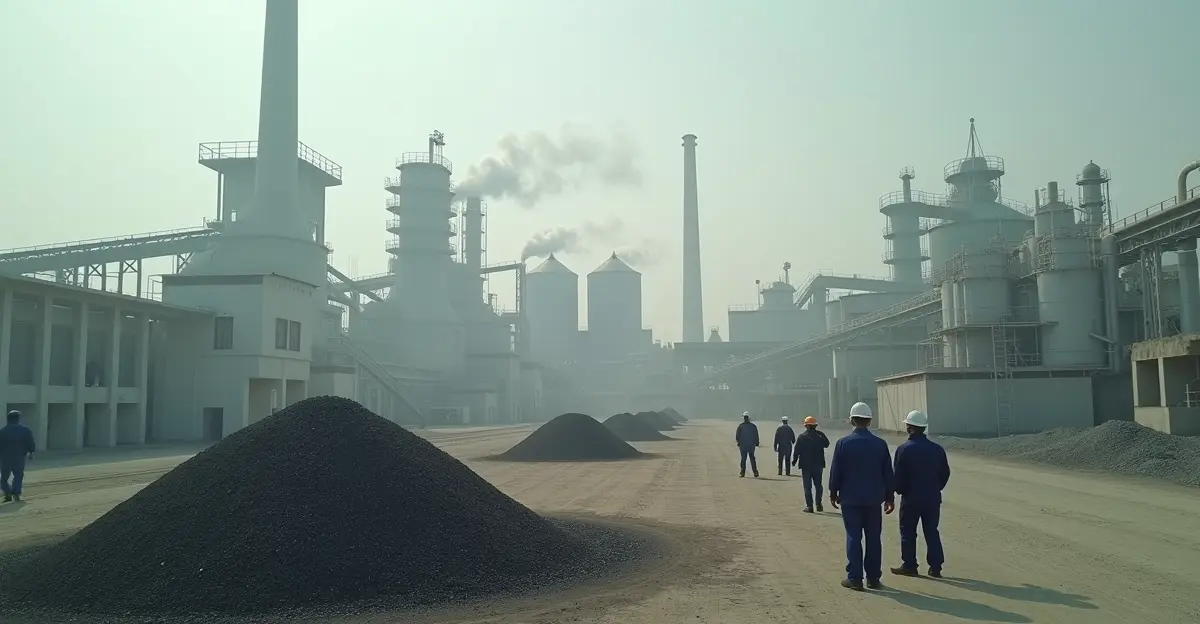
The critical minerals processing gap is the most acute vulnerability. While the United States and Australia produce the second- and third-highest amounts of rare earth ores, virtually all midstream processing—separating, refining, and metal-making—remains in China. Rebuilding independent processing capacity would take 20-30 years, far exceeding the current geopolitical window for decisive action.
On February 4, 2026, the United States hosted the Critical Minerals Ministerial in Washington, D.C., bringing together 54 countries and the European Commission. Secretary of State Marco Rubio announced FORGE (Forum on Resource Geostrategic Engagement) as the successor to the Minerals Security Partnership, chaired by the Republic of Korea. The U.S. government has mobilized over $30 billion for critical mineral projects, including EXIM's $10 billion Project Vault for a domestic strategic reserve.
Europe faces steeper challenges. The EU's Critical Raw Materials Act sets ambitious targets—10% domestic extraction, 40% domestic processing, and 25% recycling of annual consumption by 2030—but longer permitting timelines, higher energy costs, and fragmented supply chains across member states hamper progress. A Stockholm School of Economics policy brief from 2026 warns that Europe's green transition risks replacing dependence on fossil fuels with new reliance on critical minerals.
Three Strategic Paths Forward
Path 1: Managed Dependence
This approach accepts continued reliance on Chinese supply while building strategic stockpiles and negotiating bilateral agreements. The advantage is lower short-term costs and avoided trade conflict. The risk is that China can tighten the screws at any moment, and stockpiles only buy months, not years. For many European firms, this is the default path—but it leaves them exposed to the next round of restrictions.
Path 2: Costly Independence
Full decoupling would require massive public investment in domestic mining, processing, and recycling infrastructure. The U.S. has made progress through the Inflation Reduction Act and Defense Production Act, but even with $30 billion committed, independent processing remains years away. The EU critical minerals strategy faces even greater hurdles. A full independence scenario would likely take 20-30 years and cost trillions globally.
Path 3: Hybrid Resilience Model
The most realistic path combines strategic stockpiles, allied processing partnerships, and targeted domestic capacity in the most critical areas. This includes deepening cooperation with Australia, Canada, Brazil, and resource-rich African nations. The U.S.-led FORGE initiative and the 11 new bilateral frameworks signed at the 2026 Ministerial represent steps in this direction. However, the hybrid model requires sustained political will across multiple election cycles—a rare commodity in Western democracies.
Impact on Defense, EVs, and Renewable Energy
The most immediate consequences are felt in defense. Tungsten is critical for armor-piercing munitions and aerospace turbine components used in F-15, F-22, and F-35 fighters. Antimony is essential for flame retardants in aircraft materials and defense electronics. Rare earth magnets power precision-guided munitions and radar systems. The Pentagon has identified critical minerals as a national security priority, but military demand represents only a fraction of total consumption—meaning defense needs must compete with commercial markets.
Electric vehicle manufacturers face a different challenge. Each EV requires 1-2 kg of rare earth magnets for its drivetrain. With global EV sales projected to reach 25 million units by 2026, the demand for neodymium and dysprosium is soaring. Automakers are exploring magnet-free motor designs, but these alternatives typically sacrifice efficiency or power density.
Renewable energy is similarly exposed. Wind turbines, particularly direct-drive models, require substantial rare earth magnets. Solar panels depend on indium and tellurium for thin-film technologies. The energy transition mineral dependency is a structural vulnerability that policymakers are only beginning to address.
Expert Perspectives
Professor Weihuan Zhou of the University of New South Wales argues in a World Economic Forum analysis that China's critical mineral strategy should be understood beyond a purely geopolitical lens. "China's policies evolved from nurturing its rare earth industry in the 1970s to addressing problems like illegal mining and pollution through systemic reforms," he writes. The Council on Foreign Relations, however, warns that the Trump administration's policies to counter China's weaponization of critical minerals may not be sufficient without a coordinated allied strategy.
FAQ
What are critical minerals and why do they matter?
Critical minerals are materials essential for advanced technologies, defense systems, and clean energy infrastructure. They include rare earth elements (neodymium, dysprosium, terbium), tungsten, antimony, lithium, cobalt, and graphite. China dominates the processing of most critical minerals, creating strategic vulnerabilities for Western economies.
How much does China control global critical mineral processing?
China controls approximately 90% of rare earth processing, 80% of tungsten, and 60% of antimony. This midstream processing bottleneck is the most difficult part of the supply chain to replicate, requiring 5-15 years and billions of dollars to build new facilities.
What caused the sixfold price spikes in 2026?
China's tightened export controls, implemented in phases from 2024 through 2026, reduced licensing approvals for foreign buyers and created a dual pricing structure. Combined with growing demand from EVs, defense, and renewable energy, prices for key rare earths surged 37-105% year-to-date outside China.
Can the West build independent supply chains?
Yes, but it will take 20-30 years and trillions of dollars. The U.S. has committed $30 billion through various programs, and the EU's Critical Raw Materials Act sets 2030 targets. However, permitting, environmental reviews, and community opposition slow progress. The hybrid resilience model—combining stockpiles, allied partnerships, and targeted domestic capacity—is the most realistic near-term approach.
What happens if the 12-18 month window closes without action?
If Western nations fail to make decisive progress within the current geopolitical window, vulnerabilities become effectively irreversible for a generation. China would cement its dominance, and the cost of eventual decoupling would be exponentially higher. Strategic stockpiles would buy only months, not years, of breathing room.
Conclusion: The Reckoning Has Arrived
The 2026 critical minerals crisis is not a future risk—it is the present reality. China's export control framework has escalated from border restrictions to full industrial governance, and Western nations face a narrowing window to act. The three paths—managed dependence, costly independence, or hybrid resilience—each carry profound economic and security implications. What is clear is that the era of cheap, reliable Chinese critical mineral supply is over. The question is whether the West can build a new system before the old one is fully weaponized.

Follow Discussion