


 Deutsch
 English
 Español
 Français
 Nederlands
 Português


 Share
Share




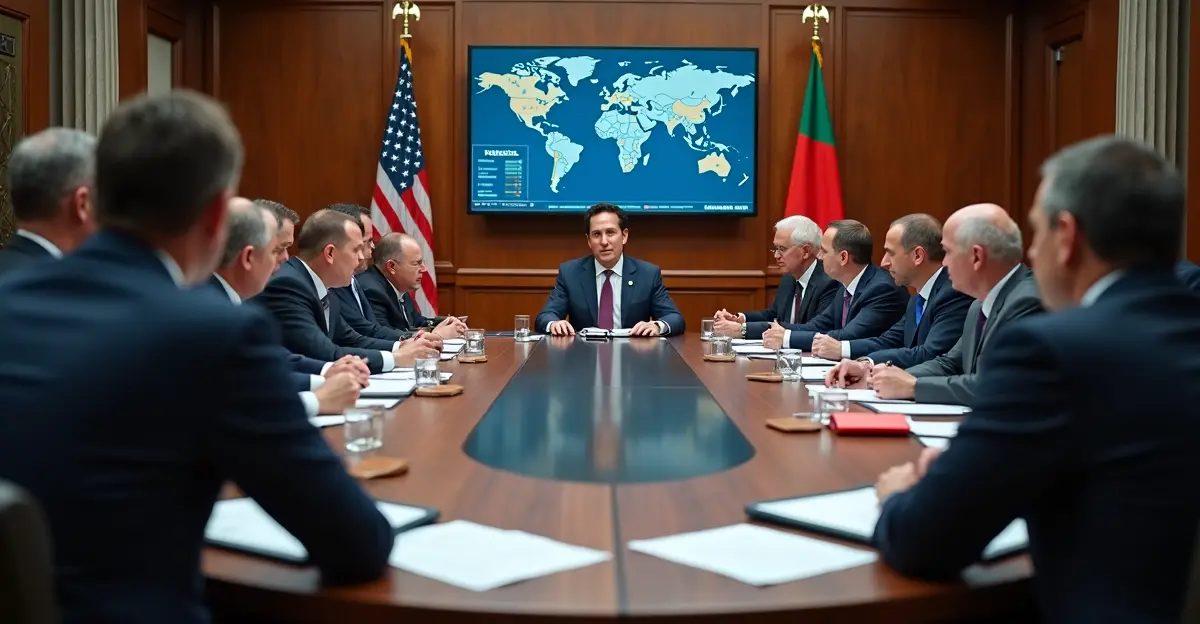
In February 2026, the United States launched FORGE (Forum on Resource Geostrategic Engagement), a 54-nation coalition backed by over $30 billion in joint US-EU financing, to counter China's near-total dominance over rare earth processing (90%) and tungsten refining (80%). This coordinated Western response follows China's 2025-2026 export controls that triggered sixfold price spikes in critical minerals essential for AI hardware, defense systems, EVs, and renewable energy. The G7 summit in Evian (June 2026) finalized the critical minerals crisis platform, cementing FORGE as the most strategically significant geopolitical-economic realignment of the year.
Background: China's Critical Minerals Stranglehold
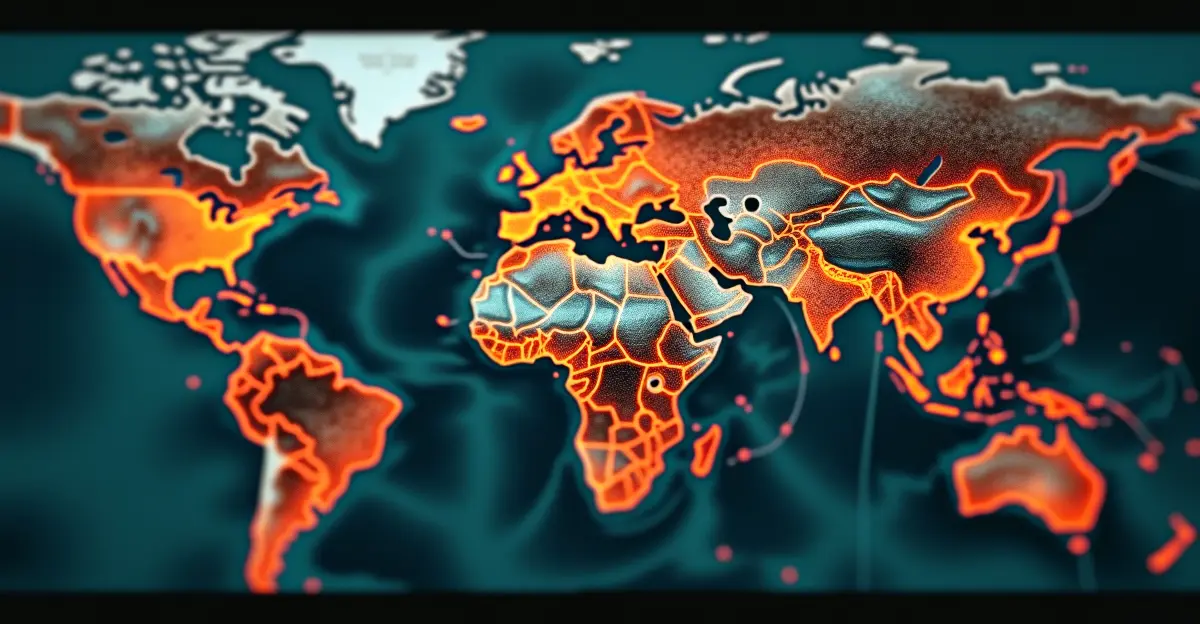
China controls 60-70% of global rare earth production and 90% of processing capacity. Its 15th Five-Year Plan (2026-2030) doubles down on processing supremacy. Export controls introduced in phases throughout late 2025 and early 2026 on elements like samarium, dysprosium, and lutetium caused price spikes of up to 600% outside China. Over 80% of European firms depend on Chinese supply chains for materials essential to defense, EVs, and renewable energy. The rare earth supply chain vulnerability has become a central geopolitical concern.
According to a multi-institutional analysis, China is weaponizing control—not scarcity—by using temporary, reversible restrictions that maintain pricing power and extract strategic concessions while discouraging Western investment in alternative supply chains. Rebuilding independent supply chains could take 20-30 years, far exceeding the current 12-18 month geopolitical window for Western nations to act decisively.
The FORGE Alliance: Structure and Goals
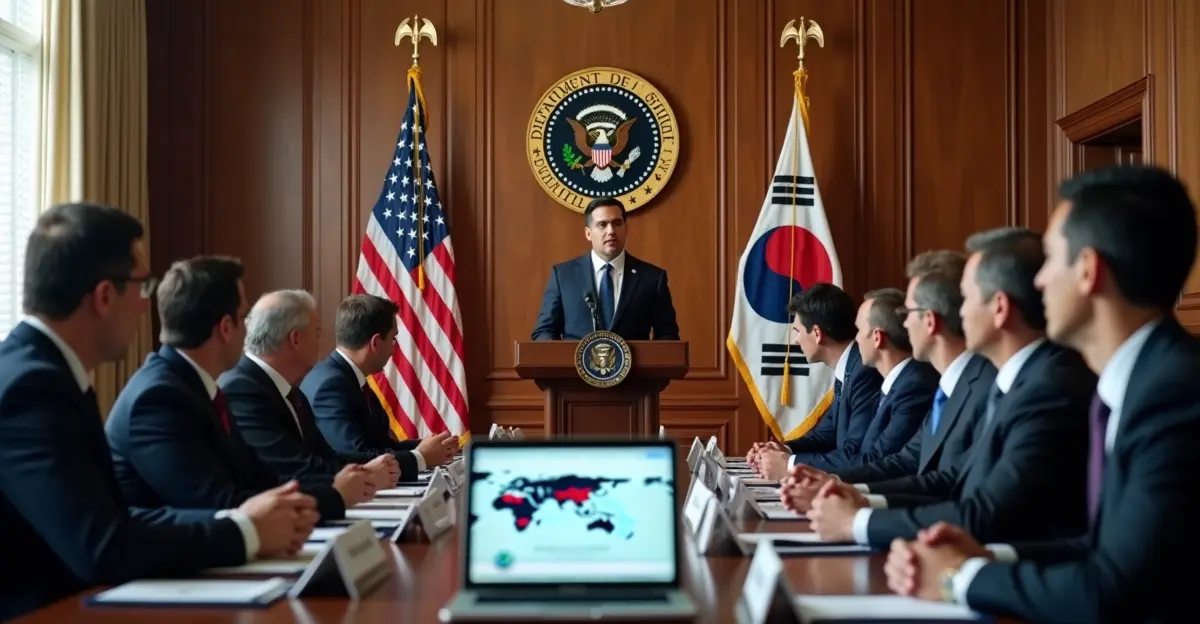
FORGE replaces the Minerals Security Partnership (MSP) and is chaired by South Korea. Saudi Arabia is a major new entrant, claiming $2.5 trillion in mineral reserves and partnering with MP Materials and the Pentagon to build a rare earth refinery. The alliance includes 54 nations and the European Commission, with over $30 billion in U.S. government financing support for strategic minerals projects.
Key Outcomes from the February 2026 Ministerial
- 11 new bilateral frameworks or MOUs with countries like Argentina, Morocco, and the Philippines
- Launch of FORGE as successor to the MSP
- Over $30 billion in committed financing
- Project Vault: a $12 billion EXIM-backed domestic strategic reserve for critical minerals
- Coordinated price floors to stabilize markets and incentivize new production
The U.S. State Department, led by Secretary of State Marco Rubio and Vice President JD Vance, hosted the 2026 Critical Minerals Ministerial on February 4, 2026. The event aimed to reduce market concentration that has made these resources a tool of political coercion. The critical minerals crisis platform established at the G7 Evian summit further coordinates monitoring and crisis response.
Project Vault: $12 Billion Strategic Reserve
The U.S. launched Project Vault, a $12 billion critical minerals reserve backed by the Export-Import Bank (EXIM). This strategic stockpile is designed to buffer against supply disruptions and price volatility. The G7 also committed to boosting domestic stockpiling, increasing recycling capacity, and exploring joint procurement and trade instruments. Countries have already announced 195 projects since early 2026 with €64 billion ($74 billion) in investment.
Analysts warn of a 12-to-18-month window to build alternatives before China's dominance becomes entrenched, though Western mining projects typically take 5-15 years to complete. The energy transition mineral supply chains remain strategically vulnerable to Beijing's leverage through 2030.
G7 Evian Summit: Crisis Platform Finalized
In June 2026, G7 leaders agreed to step up coordination to reduce reliance on China for critical minerals, setting a target to lower dependence on any single non-G7 supplier for rare earths and permanent magnets to below 60% by 2030. They established a new critical minerals alliance and crisis platform working with the International Energy Agency (IEA) to monitor markets, share data, and coordinate crisis response. The initiative starts with lithium and nickel as pilot minerals, expanding to five new minerals annually with a focus on rare earth elements.
Impact and Implications
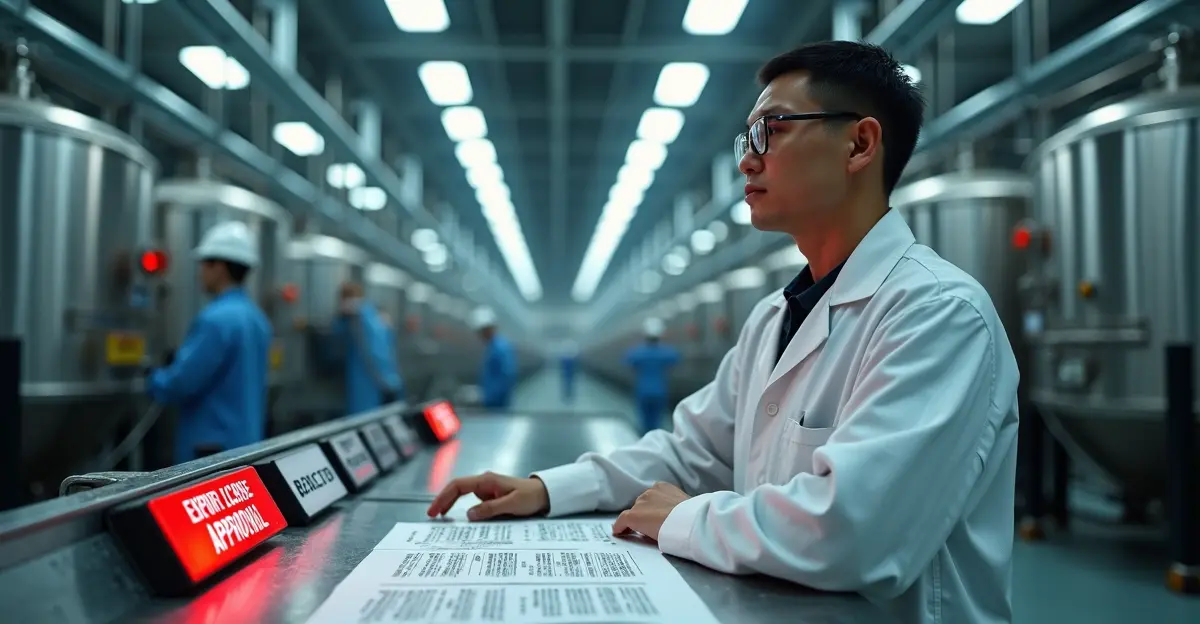
The FORGE alliance and G7 platform represent the most significant Western effort to decouple from Chinese critical minerals. However, challenges remain immense. China's export controls on NdFeB magnets containing dysprosium or terbium remain in force through 2026, with MOFCOM licensing timelines stretching 10-16 weeks. NdPr prices surged 37% in April 2026 to ~USD 126/kg, roughly 2.4x January levels. The US-China technology decoupling in critical minerals mirrors broader tensions in AI hardware, defense, and clean energy.
Experts question whether the 5-7 year timeline for building alternative supply chains is realistic given permitting, infrastructure, and geopolitical hurdles. The window for decisive action may close by 2028 as China's new processing capacity comes online under its 15th Five-Year Plan.
Expert Perspectives
"The FORGE alliance is a historic step, but we must be realistic about timelines. Western mining projects typically take a decade or more. We need aggressive permitting reform and sustained investment," said a senior U.S. administration official. "China's export controls are designed to maximize leverage while we remain dependent. Every month of delay costs us strategic ground."
Analysts at the IEA note that the G7 crisis platform will provide early warning mechanisms and coordinated stockpile releases, but the fundamental challenge remains building new processing capacity outside China. The critical minerals investment trends show promising signs but require sustained political will.
FAQ
What is the FORGE alliance?
FORGE (Forum on Resource Geostrategic Engagement) is a 54-nation coalition launched by the U.S. in February 2026 to build an alternative critical minerals supply chain and counter China's dominance in rare earth processing.
How much funding is behind FORGE?
Over $30 billion in joint US-EU financing has been committed, with additional billions from private investment and partner nations.
What is Project Vault?
Project Vault is a $12 billion U.S. strategic reserve for critical minerals, backed by the Export-Import Bank, designed to buffer against supply disruptions and price volatility.
How long will it take to break China's rare earth monopoly?
Analysts estimate 5-15 years for new mining and processing projects, though the geopolitical window for action may close within 12-18 months. The G7 targets reducing dependence on any single non-G7 supplier to below 60% by 2030.
What minerals are most affected by China's export controls?
Seven heavy/medium-heavy rare earths (samarium, gadolinium, terbium, dysprosium, lutetium, scandium, yttrium) are controlled, along with tungsten and antimony. NdFeB magnets containing dysprosium or terbium require export licenses.
Conclusion
The FORGE alliance and G7 critical minerals crisis platform mark a decisive shift in Western strategy to counter China's rare earth stranglehold. With over $30 billion in financing, 54 nations coordinated, and a $12 billion strategic reserve, the infrastructure for decoupling is being built. Yet the timeline for tangible results remains uncertain. The energy transition, AI hardware, and defense systems will remain strategically vulnerable to Beijing's leverage through 2030 unless the West accelerates permitting, investment, and international cooperation. The next 12-18 months will determine whether this ambitious realignment succeeds or falters.


Follow Discussion