


 Deutsch
 English
 Español
 Français
 Nederlands
 Português


 Share
Share




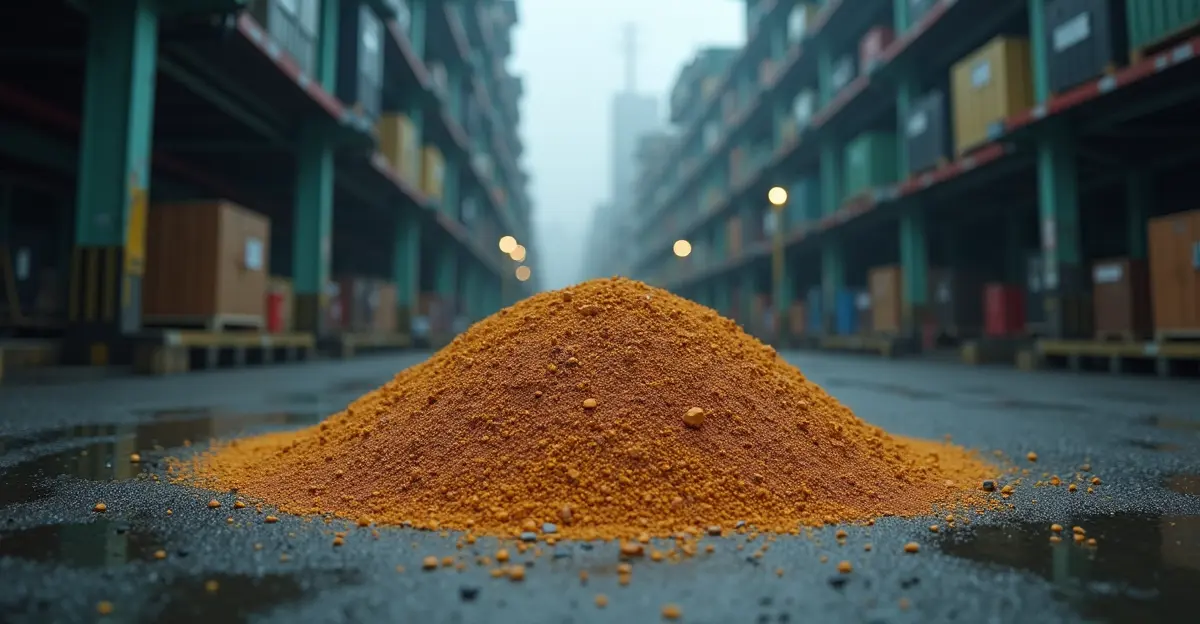
China's tightening grip on rare earth exports has triggered a seismic shift in global supply chains, with 2026 emerging as the decisive year for Western nations to break free from Beijing's near-total monopoly. China now controls approximately 90% of global rare earth processing and 70% of mining, and its 2025-2026 export licensing regime has slashed approval rates for European firms to below 25%, sending prices skyrocketing as much as sixfold outside China. The crisis has galvanized an unprecedented Western response, led by the U.S.-hosted 54-nation Critical Minerals Ministerial in February 2026 and the launch of Project Vault—a $10 billion strategic reserve—but analysts warn that the window for action may be closing fast.
China's Export Control Escalation
In April 2025, China imposed strict licensing requirements on seven heavy rare earth elements, including yttrium—critical for jet engine coatings—and scandium, essential for semiconductors. After a brief 90-day truce, Beijing reimposed even tighter restrictions in October 2025, expanding controls to include processing technology and know-how, effectively targeting capabilities rather than just commodities. The measures were framed under national security licensing frameworks, making them a permanent regulatory fixture rather than a temporary trade dispute tool.
According to a multi-institutional analysis published in early 2026, the approval rate for European firms seeking export licenses has fallen below 25%, while over 80% of European companies remain dependent on Chinese supply chains for minerals essential to defense, electric vehicles (EVs), and renewable energy. The price of neodymium-praseodymium oxide—a key ingredient for permanent magnets used in EV motors and wind turbines—surged from $80 per kilogram in 2024 to over $480 per kilogram in early 2026.
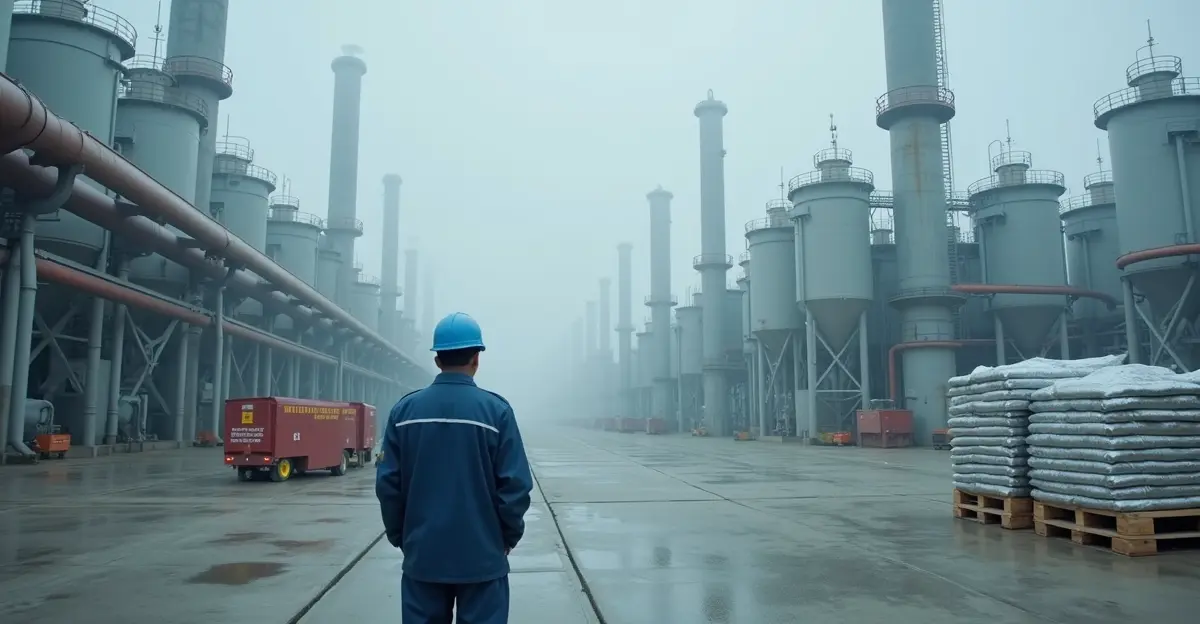
The China rare earth monopoly is not accidental. Beijing has spent three decades building an integrated supply chain that combines mining, refining, and manufacturing. The October 2025 controls specifically targeted processing technology, meaning that even if Western nations secure raw ore, they lack the know-how to refine it. As one industry analyst noted, 'China is weaponizing control, not scarcity. The restrictions are temporary and reversible, designed to maintain pricing power and extract strategic concessions while discouraging Western investment in alternatives.'
The Western Response: Project Vault and FORGE
The United States has responded with an unprecedented mobilization of resources. On February 2, 2026, the Export-Import Bank (EXIM) approved Project Vault, a $10 billion public-private partnership to establish the U.S. Strategic Critical Minerals Reserve. The initiative, supported by companies including GE Vernova, Boeing, Clarios, and Western Digital, will store 60 critical minerals in secure facilities across the United States. Unlike the National Defense Stockpile, Project Vault is demand-led: manufacturers identify critical materials, commit financially, and pay a fee for access during shortages.
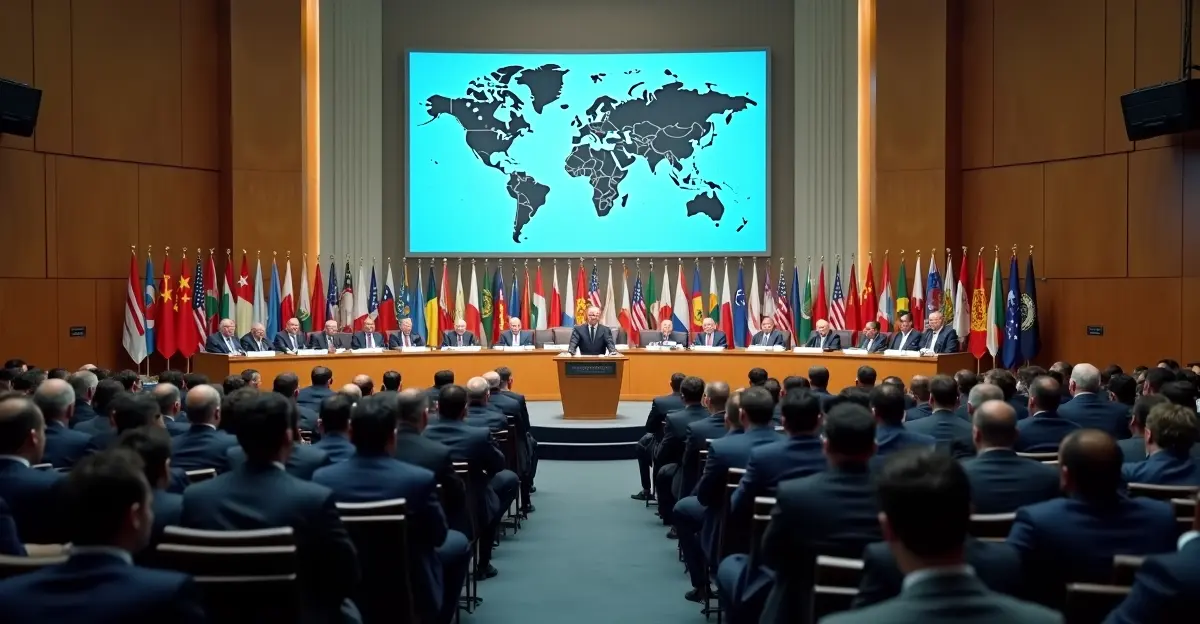
Two days later, on February 4, 2026, Secretary of State Marco Rubio and Vice President JD Vance hosted the 2026 Critical Minerals Ministerial, bringing together representatives from 54 countries and the European Commission. The ministerial launched FORGE (Forum on Resource Geostrategic Engagement), chaired by the Republic of Korea, as the successor to the Minerals Security Partnership. The U.S. signed 11 new bilateral critical minerals frameworks with countries including Argentina, Morocco, the Philippines, and the United Arab Emirates, and mobilized over $30 billion in letters of interest, investments, and loans for critical mineral supply chain projects.
The US critical minerals strategy represents a sharp departure from previous approaches. The Trump administration has committed over $7.3 billion across federal agencies, including a $400 million Department of Defense equity investment in MP Materials with a $110 per kilogram price floor for rare earth magnets. However, despite resumed exports following a Trump-Xi agreement that suspended restrictions for one year, flows remain volatile and unreliable, with U.S. imports of key materials like yttrium still far below pre-restriction levels.
The 12-18 Month Window
Analysts across multiple institutions warn that Western nations face a narrowing window of 12 to 18 months to build independent supply chains before strategic vulnerability becomes locked in. The challenge is daunting: rebuilding rare earth processing capacity outside China could take 20 to 30 years, according to experts from the Griffith Asia Institute, because Beijing's dominance stems from decades of strategic investment in infrastructure, technology, and skilled labor.
The rare earth supply chain independence debate has produced three strategic paths: accepting managed dependence on China, pursuing costly full independence, or adopting a hybrid model that balances resilience with realism. The hybrid approach would involve stockpiling critical materials (as Project Vault does), diversifying sources through bilateral agreements, and investing in recycling technologies. China's GEM Co. has already achieved a 95.2% recovery rate in rare earth recycling, highlighting the technological gap Western firms must close.
Impact on Defense, EVs, and Renewables
The rare earth crisis has direct implications for national security and the green energy transition. Rare earth magnets are essential for precision-guided munitions, fighter jet engines, and submarine sonar systems. The Pentagon has warned that current stockpiles of key materials like dysprosium and terbium are insufficient for a prolonged conflict. Meanwhile, the EV industry—which relies on neodymium magnets for motor efficiency—faces production bottlenecks, with global neodymium-praseodymium supply projected to fall short of demand by 5.8% in 2025 and 4.6% in 2026.
The EV battery supply chain is particularly exposed. China controls not only rare earth processing but also the production of permanent magnets, with an estimated 90% of global magnet manufacturing capacity. Western efforts to build magnet factories in the U.S. and Europe are underway but remain years from reaching commercial scale. The International Monetary Fund has warned that the weaponization of mineral supply chains poses a significant risk to global economic growth, potentially fragmenting trade into competing blocs.
Expert Perspectives
Gracelin Baskaran and Meredith Schwartz of the Center for Strategic and International Studies (CSIS) noted in an April 2026 analysis that 'true resilience requires sustained output, diversified supply, and private investment—not just government stockpiles.' They pointed out that despite over $7.3 billion in U.S. government commitments, private sector participation remains limited due to high upfront costs and long payback periods.
EXIM Chairman John Jovanovic defended Project Vault as a market-driven solution: 'This program will help U.S. manufacturers compete globally while creating domestic jobs and delivering a net positive return for taxpayers.' However, critics argue that stockpiling alone does not address the fundamental problem of processing capacity. As one European trade official put it, 'We can stockpile all we want, but if we cannot refine the ore, we remain dependent on China for the most value-added stage of the supply chain.'
FAQ
What are rare earth elements and why are they important?
Rare earth elements are a set of 17 metals essential for manufacturing high-tech products including EV motors, wind turbines, smartphones, lasers, and defense systems. Despite their name, they are relatively abundant in the Earth's crust but difficult and costly to extract and refine.
How much control does China have over rare earths?
China controls approximately 90% of global rare earth processing and 70% of mining. It also dominates permanent magnet production, with an estimated 90% of global manufacturing capacity. This concentration creates significant strategic vulnerabilities for importing nations.
What is Project Vault?
Project Vault is a $10 billion U.S. public-private partnership announced in February 2026 to establish the Strategic Critical Minerals Reserve. Backed by EXIM Bank financing, it will store 60 critical minerals in secure U.S. facilities for use during supply disruptions, with participating manufacturers paying fees for access.
Can the West build independent rare earth supply chains?
Analysts say rebuilding independent processing capacity could take 20-30 years due to China's decades-long head start in infrastructure, technology, and skilled labor. However, a hybrid approach combining stockpiling, diversification, recycling, and bilateral agreements could reduce vulnerability within 12-18 months.
What happened at the 2026 Critical Minerals Ministerial?
On February 4, 2026, the U.S. hosted representatives from 54 countries and the European Commission. The ministerial launched FORGE (Forum on Resource Geostrategic Engagement), signed 11 new bilateral critical minerals frameworks, and mobilized over $30 billion in support for critical mineral projects.
Conclusion: A Defining Challenge
The rare earth crisis of 2026 represents the most consequential geopolitical-economic challenge of the year. China's export controls have demonstrated that supply chain dependence is a strategic vulnerability that can be weaponized at will. The Western response—embodied by Project Vault, FORGE, and the Critical Minerals Ministerial—represents an unprecedented coordinated effort, but the gap between ambition and capability remains vast. The next 12 to 18 months will determine whether the West can build the foundations of independent supply chains or must accept a future of managed dependence on Beijing. As the global critical minerals race intensifies, one thing is clear: the era of cheap, reliable rare earth supplies from China is over.



Follow Discussion