


 Deutsch
 English
 Español
 Français
 Nederlands
 Português


 Share
Share




China's 2026 export controls on rare earths and critical minerals have triggered a seismic shift in global supply chains, with neodymium-praseodymium (NdPr) oxide prices surging from $80/kg to over $480/kg outside China and European licensing approval rates plummeting below 25%. As Beijing controls roughly 90% of global rare earth processing, the weaponization of critical mineral supply chains is reshaping defense manufacturing, electric vehicle (EV) production, and renewable energy deployment worldwide. This article analyzes how reversible Chinese restrictions are extracting strategic concessions while Western nations face a rapidly closing window to build independent alternatives.
Background: China's Critical Mineral Dominance
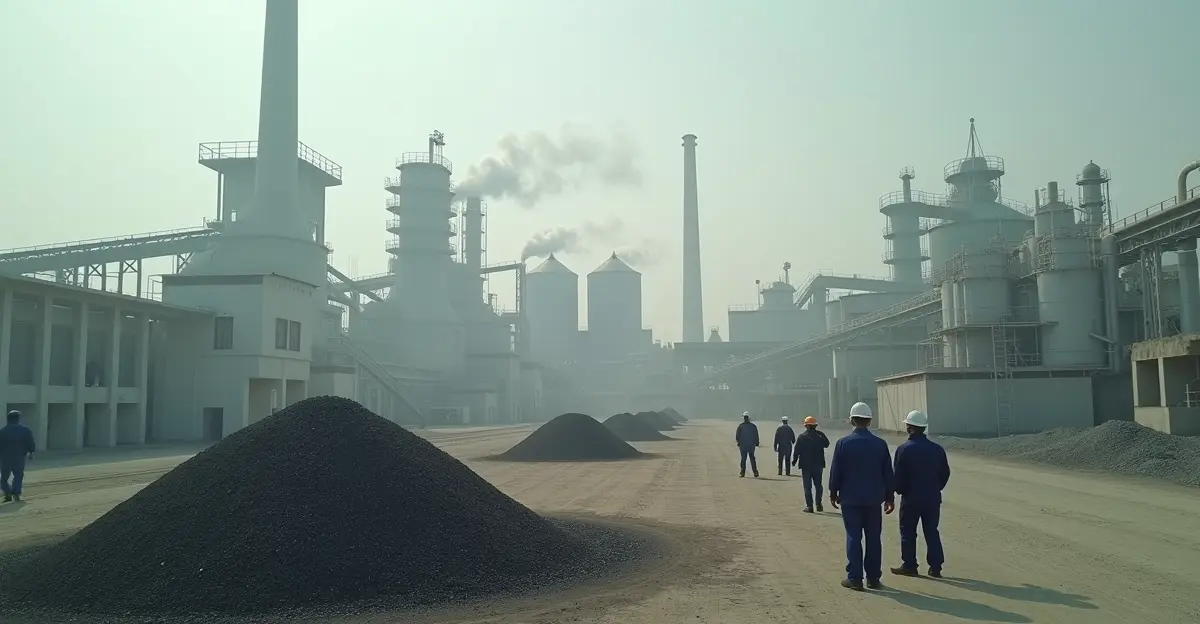
China's stranglehold on critical minerals is not accidental. Through decades of strategic investment, Beijing has secured control over 90% of global rare earth processing, 80% of tungsten, and 60% of antimony—materials essential for permanent magnets, semiconductors, defense systems, and green technologies. The rare earth supply chain is heavily concentrated: while mining occurs in multiple countries, China dominates the complex, energy-intensive separation and refining stages. According to the European Parliamentary Research Service, the EU relies on China for over 80% of its critical mineral supply, creating acute strategic vulnerabilities.
The 2025-2026 export control regime represents an escalation of China's long-standing 'managed dependence' strategy. Rather than outright bans, Beijing employs temporary, reversible restrictions that maintain pricing power and extract geopolitical concessions. In November 2025, China suspended certain export controls on rare earths to the United States in exchange for tariff reductions, demonstrating how these levers can be deployed tactically. However, the underlying regulatory framework remains in place, allowing rapid reimposition of restrictions.
Price Shock: Sixfold Surges Reshape Markets
The impact of China's export controls has been dramatic. NdPr oxide—the key input for neodymium magnets used in EV motors and wind turbines—soared from approximately $80/kg in early 2025 to over $480/kg by early 2026 in markets outside China. Antimony, critical for flame retardants and defense applications, peaked at $59,750 per tonne in July 2025, a nearly fourfold increase from early 2024 levels. Benchmark Minerals reported that rare earth prices surged roughly 30% in Q1 2026 alone, driven by tight mining quotas, higher raw material costs, and aggressive Japanese procurement.
These price spikes have cascading effects across industries. European automakers face soaring costs for EV motors, while wind turbine manufacturers struggle with magnet supply. Defense contractors reliant on samarium-cobalt and NdFeB magnets for precision-guided munitions and radar systems confront both price volatility and availability constraints. The impact on EV manufacturing is particularly acute, as neodymium magnets are irreplaceable in most high-efficiency electric drivetrains.
European Licensing Crisis
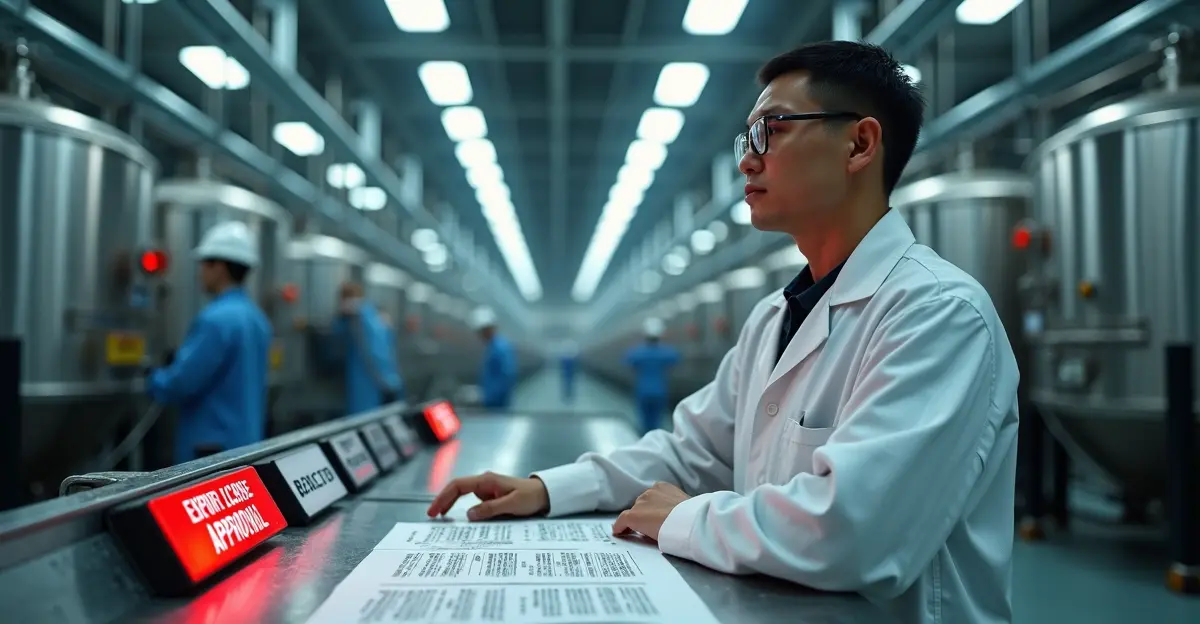
Perhaps the most alarming indicator of China's stranglehold is the collapse in export licensing approval rates for European firms. According to the European Union Chamber of Commerce in China, less than 25% of approximately 140 export license applications linked to EU companies have been approved since the tightened controls took effect. This de facto denial of access has forced European manufacturers to draw down strategic stockpiles, with some facing production shutdowns. The EU Critical Raw Materials Act sets ambitious targets—10% domestic extraction, 40% processing, and 25% recycling by 2030—but these goals remain distant amid current supply constraints.
Western Response: FORGE, Project Vault, and the Race for Independence
The Western response to China's mineral weaponization has accelerated dramatically. In February 2026, the United States hosted the Critical Minerals Ministerial, bringing together 54 countries and the European Commission. Secretary of State Marco Rubio announced the creation of FORGE (Forum on Resource Geostrategic Engagement), the successor to the Minerals Security Partnership, chaired by South Korea. The initiative aims to create a preferential trade-and-investment zone with coordinated price floors to counter Chinese market manipulation.
Simultaneously, the U.S. Export-Import Bank launched Project Vault, a $12 billion public-private partnership ($10 billion EXIM loan plus nearly $2 billion in private investment) to establish a domestic Strategic Critical Minerals Reserve. The U.S. government has mobilized over $30 billion in letters of interest, investments, and loans for critical mineral projects over six months. Eleven new bilateral critical minerals frameworks were signed with countries including Argentina, Morocco, the Philippines, the UAE, and the UK, bringing the total to 21 deals in five months.
Industry Leaders: Lynas and MP Materials
Two companies form the backbone of non-Chinese rare earth supply chains. Lynas Rare Earths operates an integrated system spanning mining in Western Australia, separation in Malaysia, and a U.S. Department of Defense-funded heavy rare earth facility in Texas. For 2026, Lynas projects approximately 16,100 tonnes of rare earth oxide production (a 53% year-on-year increase), including about 8,800 tonnes of NdPr oxide. MP Materials is transitioning from a concentrate exporter to a fully integrated U.S. magnet supply chain at Mountain Pass, California. However, both face significant challenges: Lynas's multi-jurisdictional chain is vulnerable to shipping disruptions and Malaysian regulatory scrutiny over radioactive thorium waste, while MP Materials grapples with commissioning delays.
Analysts warn that the non-Chinese NdPr deficit remains structurally brittle. Delays at even one or two facilities could cascade into constraints for EVs, wind energy, and defense. Emerging projects—such as Arafura Resources' Nolans Project in Australia, the Maaden-MP Materials joint venture in Saudi Arabia, and Northern Minerals' Browns Range project—face permitting friction, infrastructure limitations, and schedule risk. The Western rare earth processing gap could take 20-30 years to fully close, far exceeding the current geopolitical window.
Strategic Implications: A 12-18 Month Window
Multiple analyses, including reports from the European Parliament Research Service, OECD, and CSIS, converge on a sobering conclusion: Western nations face a narrowing 12-18 month window to act decisively before Chinese dominance becomes structurally entrenched. China's strategy of 'managed dependence' uses temporary restrictions to prevent large-scale Western investment in alternative capacity while maintaining the ability to extract concessions at will.
The most realistic path forward, experts argue, is a hybrid approach combining targeted investment in domestic processing, diversified international partnerships (including with Australia, Canada, Brazil, and African nations), and accelerated recycling technologies. The geopolitics of critical minerals will define the next decade of great-power competition, with implications extending far beyond raw materials into the core of industrial competitiveness and national security.
'We are witnessing the weaponization of control rather than scarcity,' said a senior analyst at the Center for Strategic and International Studies. 'China does not need to ban exports—it simply needs to make supply unpredictable enough to deter Western investment while extracting maximum strategic value.'
FAQ
What are rare earth elements and why are they critical?
Rare earth elements (REEs) are 17 metallic elements essential for permanent magnets, EV motors, wind turbines, defense systems, and consumer electronics. Despite their name, they are relatively abundant but difficult and costly to separate and purify.
How much does China control global rare earth processing?
China controls approximately 90% of global rare earth processing, 80% of tungsten, and 60% of antimony. This dominance extends across mining, separation, refining, and magnet manufacturing.
What triggered the 2026 price surge in rare earths?
China's tightened export controls on rare earths and critical minerals, combined with reduced mining quotas, higher raw material costs, and aggressive procurement by Japan and other nations, drove NdPr oxide prices from $80/kg to over $480/kg outside China.
What is FORGE and how does it aim to counter China?
FORGE (Forum on Resource Geostrategic Engagement) is a U.S.-led initiative launched in February 2026 with 54 countries. It aims to create a preferential trade-and-investment zone for critical minerals, with coordinated price floors and joint standards to reduce dependence on Chinese supply chains.
Can the West build independent rare earth supply chains?
Building fully independent supply chains could take 20-30 years, but targeted investments in domestic processing, international partnerships, and recycling technologies offer a more realistic hybrid path. The next 12-18 months are critical for decisive action.
Conclusion: The New Geoeconomic Frontline
China's 2026 export controls on rare earths and critical minerals have opened a new frontline in geoeconomic competition. With prices surging sixfold, European licensing approvals below 25%, and Western alternatives years away from maturity, the crisis demands immediate and coordinated action. The FORGE initiative, Project Vault, and the EU Critical Raw Materials Act represent important steps, but their success depends on execution speed and political will. As the 12-18 month window narrows, the question is no longer whether the West should reduce dependence on Chinese critical minerals—but whether it can do so in time.


Follow Discussion