


 Deutsch
 English
 Español
 Français
 Nederlands
 Português


 Share
Share




China's Critical Minerals Stranglehold Tightens in 2026
China's escalation of export controls on rare earths and critical minerals in late 2025 and early 2026 has triggered price spikes of up to sixfold outside the country, with European licensing approval rates falling below 25%. Beijing now controls roughly 90% of global rare earth processing, 80% of tungsten refining, and 60% of antimony production, creating a strategic crisis for Western defense, electric vehicle (EV), and renewable energy industries. A newly released multi-institutional analysis warns that the window for Western nations to rebuild independent supply chains is narrowing to just 12-18 months, while full independence could take 20 to 30 years—far exceeding the geopolitical timeline for action.
Background: How China Captured the Critical Minerals Bottleneck
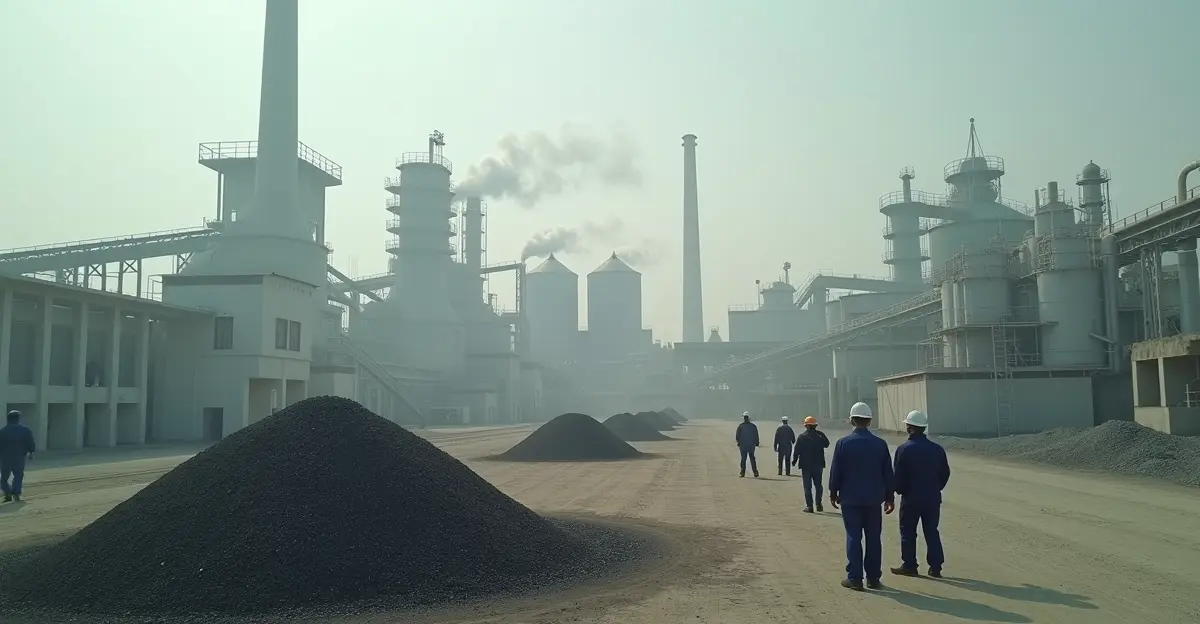
China's dominance in critical minerals did not happen overnight. Since the 1980s, Beijing pursued deliberate industrial policies to capture the processing bottleneck—the complex, capital-intensive separation stage that transforms raw ore into usable oxides and metals. While rare earth reserves are distributed globally (Australia holds 22%, Brazil 18%, the U.S. 13%), China invested heavily in separation expertise, integrated supply chains, and cost advantages, systematically displacing competitors. By 2025, China supplied around 90% of global demand for rare earth powders, according to industry data.
The U.S. critical minerals strategy has struggled to reverse this dependency. After the Cold War, the U.S. dismantled its strategic mineral stockpile, which declined from approximately $24 billion (inflation-adjusted) in 1990 to under $2 billion by 2024, as noted in Congressional testimony by Dr. Gracelin Baskaran of CSIS. This policy vacuum left Western nations exposed as China began weaponizing its control.
Export Controls and Price Spikes: The 2025-2026 Shockwave
Rare Earths: Sixfold Surge in Neodymium-Praseodymium Oxide
China's export controls, first tightened in 2025 and further escalated in early 2026, triggered immediate price shocks. Neodymium-praseodymium (NdPr) oxide—essential for permanent magnets in EVs, wind turbines, and defense systems—saw prices surge up to sixfold outside China. Antimony, used in flame retardants and military applications, quadrupled to $59,750 per tonne by mid-2025. Tungsten prices also spiked sharply, compounding cost pressures across multiple industries.
Licensing Approvals Plummet Below 25%
European firms seeking export licenses for critical minerals from China faced approval rates falling below 25% in 2026, according to the multi-institutional analysis. This de facto embargo has forced companies to scramble for alternative sources, often at significantly higher costs. Over 80% of European firms remain dependent on Chinese supply chains for materials essential to defense, EVs, and renewable energy, the analysis found.
The EU critical minerals dependency is particularly acute in the defense sector. NATO stockpiles of rare earth magnets and related materials are sufficient for only 6-9 months of high-intensity conflict, raising urgent questions about alliance readiness.
Strategic Implications: Weaponizing Control, Not Scarcity
The analysis argues that China is weaponizing control rather than scarcity. Beijing uses temporary, reversible restrictions to maintain pricing power and extract strategic concessions while simultaneously discouraging large-scale Western investment in alternative supply chains. By keeping restrictions calibrated—not a full embargo—China avoids triggering an immediate crisis that would galvanize Western action, instead creating a slow-burn dependency that becomes harder to break over time.
For Western automakers, the impact is already measurable. EV production costs have risen by approximately $500 per vehicle due to higher rare earth magnet prices, threatening the economics of the green transition. Renewable energy projects, particularly wind turbines that rely on NdPr magnets, face similar headwinds.
Western Response: FORGE Alliance and $30 Billion Commitment
In response to the escalating crisis, the United States launched FORGE (Friends of Resource and Geopolitical Energy), a 54-nation alliance committing over $30 billion to diversify critical mineral supply chains. The initiative aims to fund new mining projects, processing facilities, and recycling technologies across allied nations, including Australia, Canada, Japan, and EU member states.
However, analysts caution that FORGE faces significant hurdles. New rare earth processing facilities typically take 10-15 years to reach commercial production, and the technical expertise required for separation remains concentrated in China. The rare earth processing bottleneck is the most difficult link in the chain to replicate, requiring complex chemistry and proprietary knowledge accumulated over decades.
Expert Perspectives: A Closing Window
"The window for meaningful Western action is 12 to 18 months, not the 20 to 30 years needed for full independence," said a lead author of the multi-institutional analysis. "China's strategy is to keep us perpetually dependent by never fully cutting off supply, just making it expensive and uncertain enough to deter investment in alternatives."
Dr. Baskaran of CSIS emphasized that supply-side interventions alone are insufficient. "We need parallel demand-side attention across the full mine-to-manufactured-goods supply chain. Without addressing the entire ecosystem, new mines will simply feed Chinese processing facilities."
FAQ: Critical Minerals and Supply Chain Independence
What are critical minerals?
Critical minerals are materials of strategic economic importance, including rare earth elements (17 metals like neodymium, dysprosium), tungsten, antimony, lithium, and cobalt. They are essential for defense systems, EVs, renewable energy, and electronics.
Why does China dominate critical mineral processing?
China invested heavily in separation technology and integrated supply chains since the 1980s, capturing the processing bottleneck. While reserves are globally distributed, China controls ~90% of rare earth processing through cost advantages, proprietary expertise, and industrial policy.
How long would it take the West to build independent supply chains?
Analysts estimate 20-30 years to fully replicate China's processing infrastructure, including mining, separation, magnet manufacturing, and recycling. The geopolitical window for decisive action is narrowing to 12-18 months.
What is the FORGE alliance?
FORGE (Friends of Resource and Geopolitical Energy) is a 54-nation U.S.-led alliance committing over $30 billion to diversify critical mineral supply chains through new mining, processing, and recycling projects in allied countries.
How do China's export controls affect EV prices?
Rare earth magnet prices have added approximately $500 per vehicle to EV production costs, impacting affordability and the pace of the green transition.
Conclusion: The Urgency of Now
The convergence of China's escalating export controls, price spikes, and the multi-institutional analysis's stark timeline creates the most strategically urgent supply chain story of 2026. Western governments face a stark choice: invest decisively now in alternative supply chains, accepting high upfront costs and long timelines, or accept prolonged vulnerability to Beijing's weaponized resource control. The global critical minerals race is no longer a future challenge—it is a present crisis demanding immediate action.

Follow Discussion