


 Deutsch
 English
 Español
 Français
 Nederlands
 Português


 Share
Share




China's tightened export controls on rare earths and critical minerals have pushed licensing approval rates for European firms below 25% in 2026, triggering price spikes of up to sixfold for materials essential to defense, electric vehicles, and renewable energy. With China controlling 90% of global rare earth processing and Western alternatives requiring 20–30 years to build, the United States and European Union are racing to forge a joint critical minerals pact and explore border-adjusted price floors. This strategic bottleneck represents one of the most consequential supply chain vulnerabilities of the decade, with direct implications for energy transition timelines, defense manufacturing, and transatlantic industrial competitiveness.
China's Dominance and the 2026 Export Control Regime
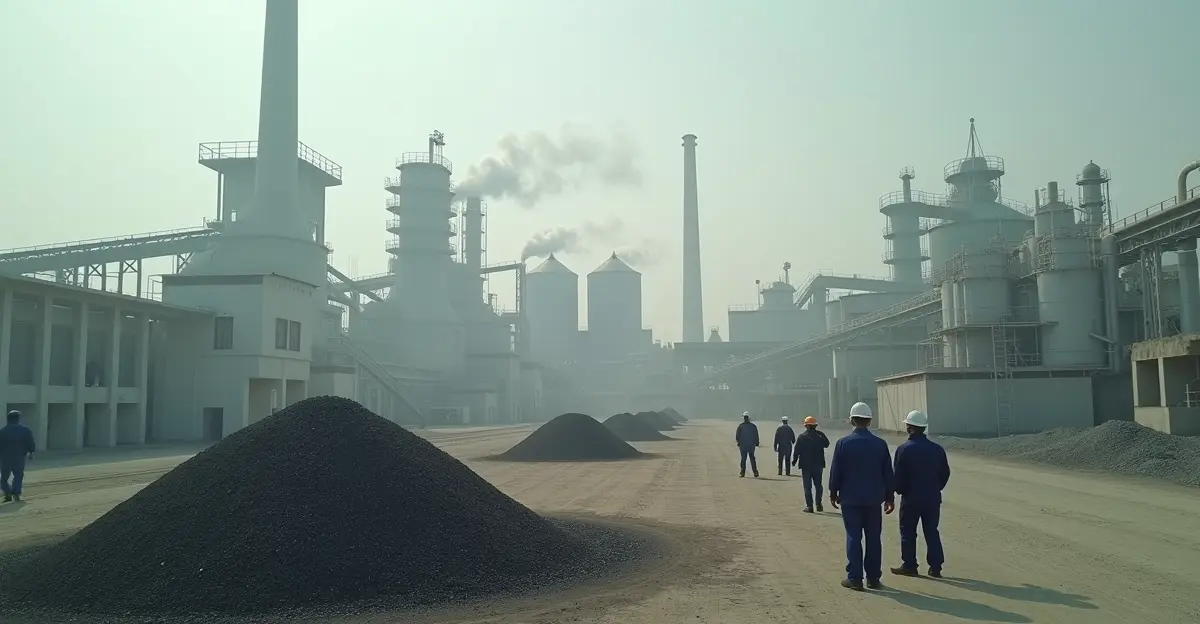
China's stranglehold on critical minerals is not accidental but the result of three decades of deliberate industrial policy. According to the International Energy Agency, China accounted for approximately 91% of global rare earth separation and refining production and 94% of sintered permanent magnet manufacturing in 2024. The country also controls 80% of tungsten and 60% of antimony processing. This dominance extends beyond mining into patents: a 2026 patent landscape report found China accounted for 81% of global rare-earth-related patent filings between 2014 and 2024.
In 2025, Beijing introduced two waves of export controls covering rare earth elements and related technologies, with the second wave later suspended for one year following the November 2025 Xi-Trump summit in Busan. That suspension is set to expire on November 10, 2026, creating a narrowing 12–18 month window for Western action. The 2025 Xi-Trump summit temporarily eased tensions, but the underlying structural vulnerability remains.
The 2026 controls have been described by analysts as a flexible regulatory escalation rather than a blunt export ban. The Ministry of Industry and Information Technology published a draft framework covering mining, smelting, separation, and sales of illegally produced material, with penalties including fines up to five times illegal gains and business license revocation. Crucially, extraterritorial provisions introduced in October 2025—with enforcement delayed to November 2026—allow China to regulate downstream use of controlled materials even after they leave Chinese territory.
Price Spikes and Supply Chain Disruption
The impact on global markets has been severe. Neodymium-praseodymium (NdPr) oxide prices on China's domestic market stood at $103,758 per tonne in March 2026, approximately double the December 2024 level of ~$49/kg. Outside China, prices have surged even more dramatically, with a 45–55% premium over Chinese domestic prices for NdPr. The multi-institutional analysis from Rare Earth Exchanges reports sixfold price spikes for certain materials outside China since the controls were tightened.
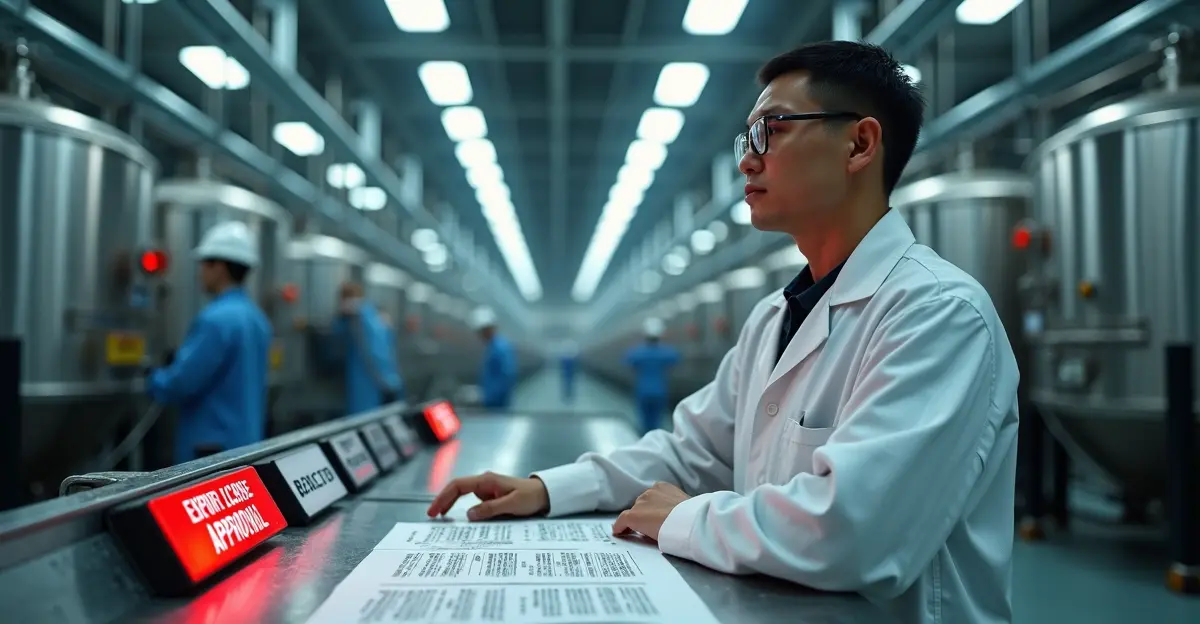
Over 80% of European companies depend on Chinese supply chains for materials essential to defense, EVs, and renewable energy. The licensing approval rate for European firms has fallen below 25%, creating severe bottlenecks. Western stockpiles can sustain defense production for only 6–12 months, according to industry estimates. The global rare earth supply chain is now under unprecedented strain.
Defense and Industrial Vulnerabilities
The defense sector is particularly exposed. Rare earth permanent magnets are critical for precision-guided munitions, radar systems, electronic warfare, and next-generation fighter jets. Companies tied to foreign military end-users face automatic export license rejection under China's layered control system. The U.S. Department of Defense has identified rare earths as among the most critical supply chain vulnerabilities, with no strategic reserve for processed metals.
The electric vehicle and renewable energy sectors are equally affected. Permanent magnets are essential for EV traction motors and wind turbine generators. With global EV sales projected to reach 30 million units annually by 2030, demand for NdPr is expected to outstrip non-Chinese supply for at least a decade.
The U.S.-EU Critical Minerals Action Plan
On April 24, 2026, U.S. Trade Representative Ambassador Jamieson Greer announced the United States-European Union Action Plan for Critical Minerals Supply Chain Resilience. The plan will serve as the primary U.S.-EU mechanism to coordinate trade policies on critical minerals, with the goal of reaching a binding plurilateral agreement. EU Trade Commissioner Maroš Šefčovič and U.S. Secretary of State Marco Rubio signed a Memorandum of Understanding alongside the Action Plan.
The agreement covers the full mineral value chain—from exploration and extraction through processing, refining, recycling, and recovery. Critically, it explores trade policy instruments including border-adjusted price floors, standards-based markets, price gap subsidies, and offtake agreements to protect non-Chinese producers from market distortion. The US-EU Critical Minerals Action Plan represents the most ambitious transatlantic industrial cooperation effort in decades.
Border-Adjusted Price Floors: A New Trade Weapon
The concept of border-adjusted price floors is particularly noteworthy. Under this mechanism, imports of critical minerals would face a charge equivalent to the difference between the domestic production cost and the import price, effectively neutralizing China's cost advantage derived from state subsidies and environmental dumping. This mirrors the carbon border adjustment mechanism concept but applied to strategic minerals. The mechanism faces significant WTO compatibility questions, but proponents argue it is necessary to counter China's non-market policies.
Western Alternatives: A 20–30 Year Challenge
Rebuilding independent rare earth supply chains outside China is a generational undertaking. The U.S. has invested over $7.3 billion in government financing, including price floors at $110/kg for NdPr, guaranteed government offtake, and Project Vault for stockpiling. The EU's Critical Raw Materials Act has identified 47 strategic projects, but only five are fully funded.
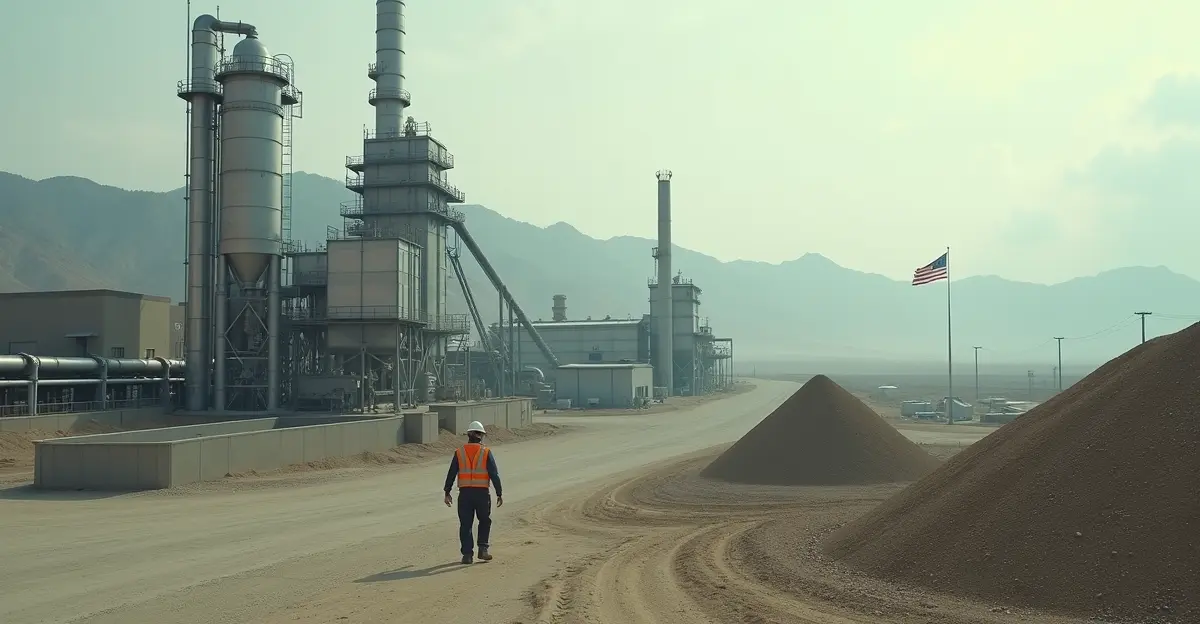
Major projects include MP Materials' Mountain Pass facility in California, Lynas Rare Earths' Kalgoorlie processing plant in Australia, and the Tanbreez project in Greenland. However, even optimistic timelines suggest that fully integrated mine-to-magnet supply chains outside China will take 20–30 years to reach meaningful scale. The Western rare earth mining projects face permitting delays, technical challenges, and high capital costs.
The World Economic Forum's Global Risks Report 2026 ranks geoeconomic confrontation as the top short-term global risk, with 50% of respondents anticipating a turbulent or stormy global outlook over the next two years. The report warns of an 'age of competition' where confrontation replaces collaboration and trust erodes.
Expert Perspectives
China is weaponizing control, not scarcity, using temporary, reversible restrictions to maintain pricing power and extract strategic concessions while discouraging large-scale Western investment, notes the Rare Earth Exchanges multi-institutional analysis. For Western nations, a 12–18 month window exists to act decisively or accept prolonged vulnerability.
Ambassador Greer emphasized a shared commitment with the EU to addressing non-market policies and practices that have distorted critical minerals supply chains. The Action Plan represents a recognition that the status quo is unsustainable.
FAQ
What are critical minerals and why are they important?
Critical minerals are raw materials essential for defense technologies, clean energy systems (EVs, wind turbines), electronics, and advanced manufacturing. They include rare earth elements, lithium, cobalt, graphite, and tungsten. China dominates their processing, creating strategic vulnerabilities for Western economies.
How much does China control rare earth processing?
China controls approximately 90% of global rare earth separation and refining, 94% of permanent magnet manufacturing, 80% of tungsten processing, and 60% of antimony processing. This dominance extends across the entire value chain from mining to patent ownership.
What is the U.S.-EU Critical Minerals Action Plan?
Announced on April 24, 2026, the plan is a joint framework to coordinate trade policies on critical minerals, explore border-adjusted price floors, align standards, enhance investment coordination, and promote responsible mining. It aims to reduce dependence on Chinese supply chains and reach a binding plurilateral agreement.
How long will it take to build alternative supply chains?
Industry estimates suggest 20–30 years to build fully integrated mine-to-magnet supply chains outside China. The U.S. and EU have launched initiatives, but only 5 of 47 EU strategic projects are fully funded. The window for decisive action is narrowing to 12–18 months.
What are border-adjusted price floors?
Border-adjusted price floors are trade policy instruments that would charge imports a fee equal to the difference between domestic production costs and import prices. This mechanism aims to neutralize China's cost advantage from state subsidies and environmental dumping, similar to carbon border adjustments.
Conclusion: A Defining Geoeconomic Challenge
China's critical minerals stranglehold represents one of the most consequential supply chain vulnerabilities of the decade. The combination of dominant processing capacity, strategic export controls, and extraterritorial regulatory reach gives Beijing unprecedented leverage over global defense, energy, and industrial supply chains. The U.S.-EU Critical Minerals Action Plan marks a significant step toward collective resilience, but the gap between ambition and execution remains vast. With the November 2026 deadline approaching and geoeconomic confrontation ranked as the top global risk, the next 12–18 months will determine whether the West can break free from dependence or accept prolonged strategic vulnerability.


Follow Discussion