


 Deutsch
 English
 Español
 Français
 Nederlands
 Português


 Share
Share




What is the Shield of the Americas Summit?
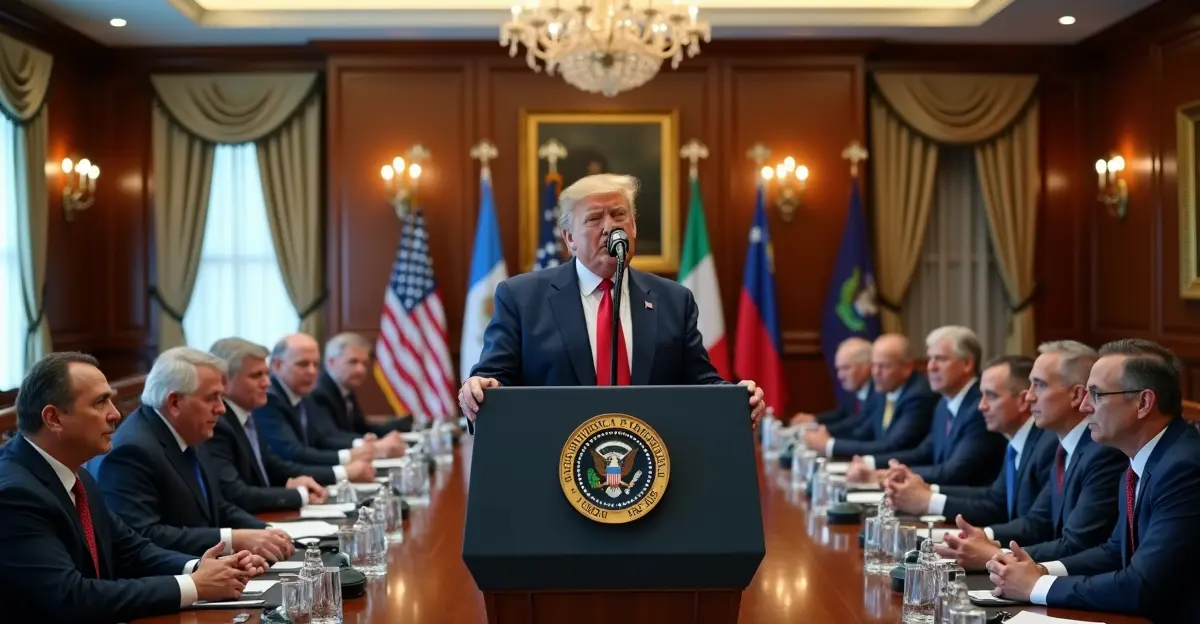
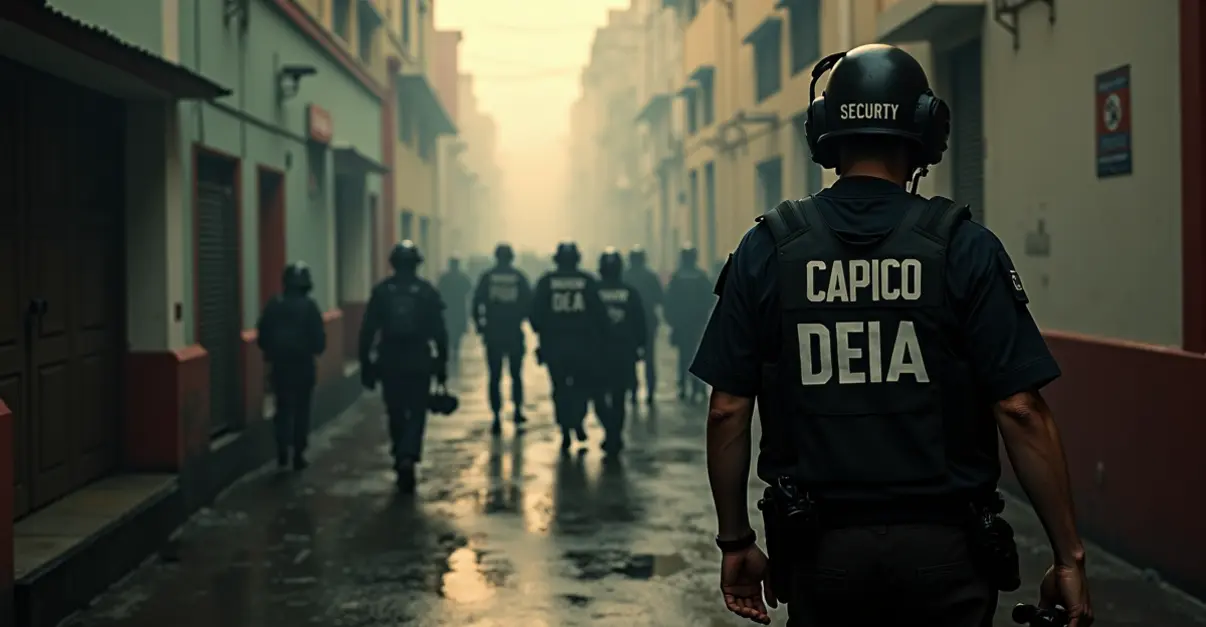
President Donald Trump hosted the inaugural 'Shield of the Americas' summit on March 7, 2026, at his Trump National Doral resort in Miami, Florida, bringing together approximately a dozen Latin American and Caribbean leaders to coordinate a military-focused strategy against drug cartels and transnational criminal organizations. The summit represents a significant escalation in U.S. counter-narcotics policy, moving beyond traditional law enforcement cooperation to direct military intervention against cartel operations throughout the Western Hemisphere.
Trump's Military Strategy Against Drug Cartels
During the summit, President Trump emphasized that 'the only way to defeat these enemies is by unleashing the power of our militaries' and cited the U.S.-led coalition against ISIS as a model for combating drug cartels. The gathering included leaders from 12 countries: Argentina, Bolivia, Chile, Costa Rica, Dominican Republic, Ecuador, El Salvador, Honduras, Panama, Paraguay, and Trinidad and Tobago. Notably absent were major regional powers Brazil, Mexico, and Colombia, whose left-leaning governments declined participation.
Key Summit Objectives
The summit aimed to establish an Americas counter-cartel coalition focused on three primary objectives: deploying military force against cartel infrastructure, coordinating intelligence sharing among participating nations, and developing joint operational strategies. Trump signed a proclamation establishing the formal coalition framework, which administration officials described as a 'hemispheric security partnership' against what the president called 'unacceptable threats to our collective security.'
Mexico as Primary Target
Trump specifically targeted Mexico during the summit, stating 'the cartels run Mexico' and criticizing Mexican President Claudia Sheinbaum for rejecting his proposal for U.S. military operations against cartels operating in Mexican territory. This approach represents a significant departure from previous bilateral cooperation models and raises questions about sovereignty implications similar to the US-Mexico border security tensions that have characterized recent relations.
Geopolitical Context: The Trump Corollary to Monroe Doctrine
The summit occurs within the broader context of what analysts call the 'Trump Corollary' to the Monroe Doctrine, a 21st-century revival of U.S. hemispheric dominance that treats migration, cartels, and Chinese influence as primary security threats. This policy represents a significant shift from the original 1823 Monroe Doctrine and subsequent interpretations, deliberately pressuring Latin American nations to embrace Washington over Beijing in their foreign policy alignments.
Countering Chinese Influence
Administration officials acknowledge the summit serves as part of a broader effort to counter China's growing economic and political influence in Latin America, where Beijing has established significant trade relationships and infrastructure investments. The timing is particularly strategic, coming just weeks before Trump's scheduled meeting with Chinese President Xi Jinping in April 2026 in Beijing.
Regional Implications and Controversies
The summit has drawn criticism from multiple quarters, including human rights organizations warning about potential militarization of counter-narcotics efforts and regional experts expressing concerns about sovereignty violations. Amnesty International issued a statement cautioning that 'the summit risks promoting militarization over migrant protections and human rights considerations.'
Exclusion of Major Powers
The absence of Mexico, Brazil, and Colombia - representing approximately 60% of Latin America's population and economic output - raises questions about the coalition's effectiveness. These countries have historically played central roles in regional security initiatives, and their exclusion suggests the summit represents an ideologically aligned coalition rather than comprehensive regional cooperation.
Iran Conflict Shadow
The ongoing U.S.-Israel military action against Iran cast a significant shadow over the summit, with Trump shortening his appearance and attending only briefly for photo opportunities with individual leaders. The conflict has already disrupted global energy markets, with oil prices spiking due to disruptions in the Strait of Hormuz - a development that particularly affects oil-importing Latin American nations like Chile and the Dominican Republic.
Personnel Changes and Implementation
Just days before the summit, Trump reassigned Homeland Security Secretary Kristi Noem as special envoy for the Shield of the Americas initiative, nominating Senator Markwayne Mullin to replace her at DHS. This personnel shakeup raised questions about implementation continuity, with one Carnegie Endowment researcher noting: 'It doesn't give the sense that Trump is really prioritizing this, because it was more likely that he had to remove Kristi Noem from that position and come up with something else for her.'
Future Implications for Latin America
The summit's outcomes will likely shape U.S.-Latin American relations for years to come, potentially establishing new precedents for military intervention in counter-narcotics operations. The coalition is expected to develop strategies addressing both narcoterrorism and mass migration, though officials provided few specific details about operational plans beyond general security cooperation frameworks.
Cuba as Next Target
Trump hinted at future actions against Cuba during the summit, stating 'Cuba is living its last moments as it is now' while noting that current focus remains on the Iran conflict. This suggests the administration views the Shield initiative as part of a broader regional strategy that could expand to include additional targets beyond drug cartels.
FAQ: Shield of the Americas Summit
What countries participated in the Shield of the Americas summit?
Twelve countries participated: Argentina, Bolivia, Chile, Costa Rica, Dominican Republic, Ecuador, El Salvador, Honduras, Panama, Paraguay, and Trinidad and Tobago.
Why were Mexico, Brazil, and Colombia excluded?
These countries have left-leaning governments that declined participation, reflecting ideological divisions within the region and concerns about sovereignty implications of U.S.-led military operations.
What is the Trump Corollary to the Monroe Doctrine?
The Trump Corollary represents a 21st-century revival of U.S. hemispheric dominance, treating migration, cartels, and Chinese influence as primary security threats and emphasizing military solutions over diplomatic approaches.
How does the Iran conflict affect the summit?
The ongoing U.S.-Israel military action against Iran diverted attention and resources, with Trump shortening his summit appearance and the conflict disrupting global energy markets that affect Latin American economies.
What are the human rights concerns about the summit?
Human rights organizations warn about potential militarization of counter-narcotics efforts, reduced protections for migrants, and sovereignty violations in countries where U.S. military operations might occur.
Follow Discussion