


 Deutsch
 English
 Español
 Français
 Nederlands
 Português


 Share
Share




China's tightening grip on global critical mineral supply chains has triggered a geoeconomic crisis that Western leaders can no longer ignore. With Beijing controlling 90% of rare earth processing, 80% of tungsten, and 60% of antimony, export controls imposed in late 2025 have sent prices soaring by up to sixfold outside China, while European licensing approval rates have plummeted below 25%. Analysts warn that the West faces a narrowing 12-to-18-month window to coordinate a response before strategic dependencies become irreversible.
The Scale of China's Dominance
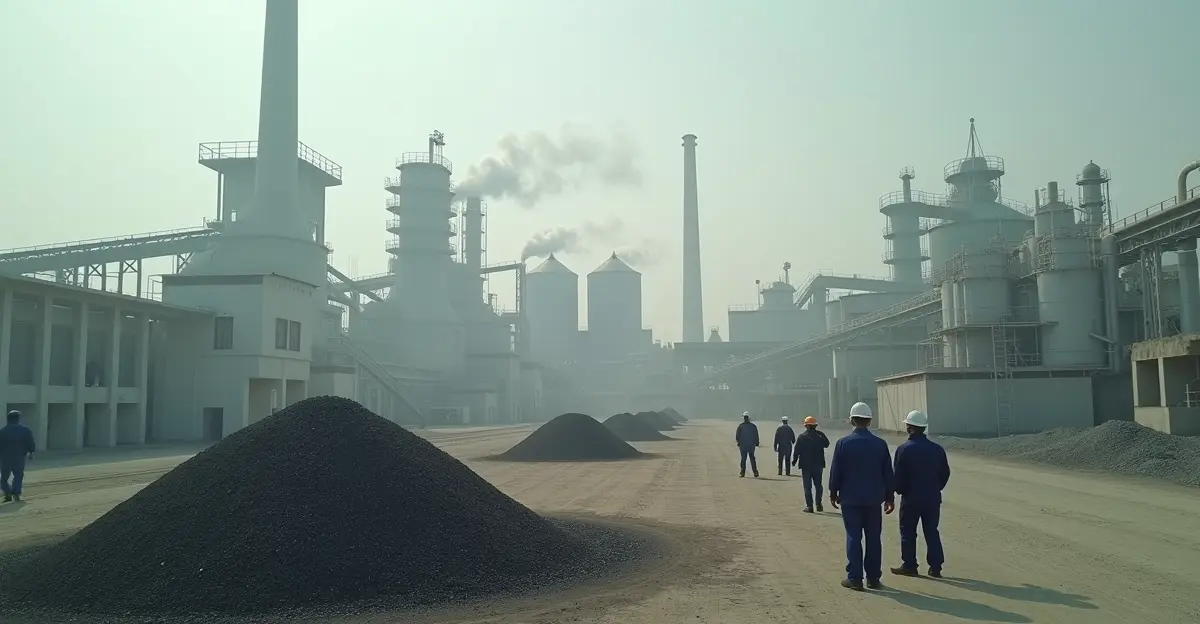
China's monopoly over critical minerals is not accidental but the result of decades of state-led industrial policy. According to a multi-institutional analysis published in early 2026, Beijing controls roughly 90% of global rare earth processing capacity, 80% of tungsten refining, and 60% of antimony production. These materials are essential for defense systems, electric vehicle batteries, wind turbines, semiconductors, and consumer electronics.
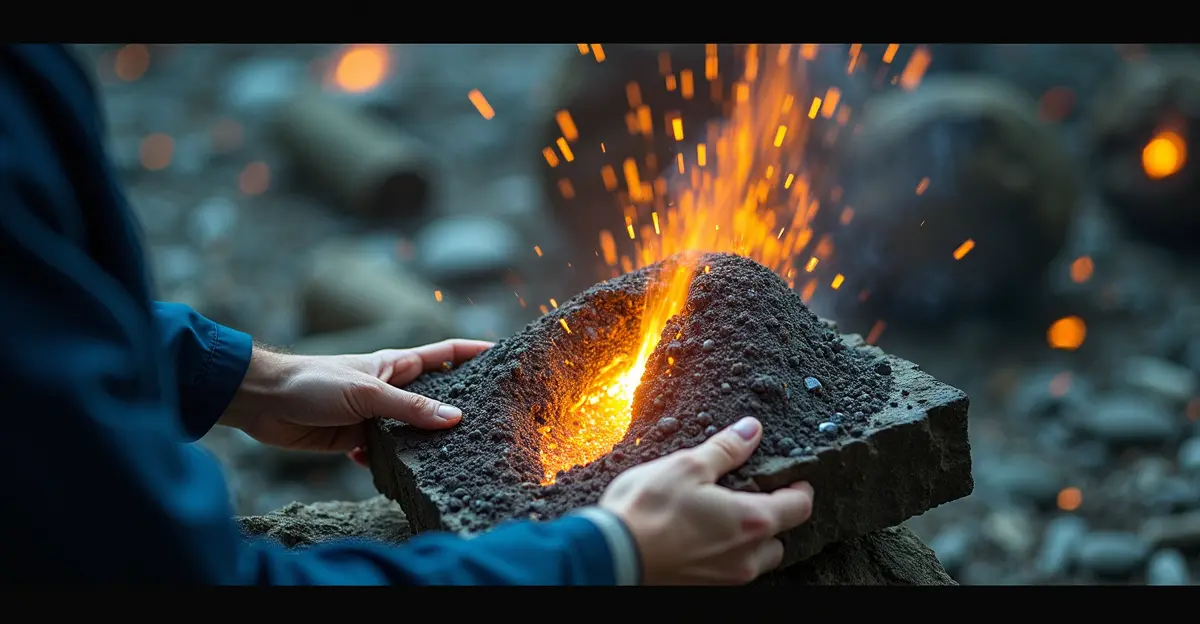
The rare earth supply chain is particularly concentrated. While other nations possess significant mineral reserves, the processing infrastructure required to convert raw ore into usable metals remains overwhelmingly Chinese. This bottleneck means that even countries that mine their own rare earths must often send them to China for refining.
Export Controls as a Strategic Weapon
In October 2025, China's Ministry of Commerce issued Announcement 61, imposing sweeping export controls on rare earth elements, magnet materials, and related technologies. A second wave of restrictions was announced but suspended until November 2026, creating a Sword of Damocles over global markets. The measures require foreign producers using Chinese-origin materials or processing technology to obtain licenses, and bar Chinese nationals from providing on-site mining or magnet-making services abroad without permission.
The impact has been dramatic. Tungsten prices surged more than 200% in 2025 alone, with ammonium paratungstate (APT) in Rotterdam rising over 200% since the start of 2026. Antimony prices have similarly spiked, with European buyers reporting sixfold cost increases. The critical minerals price crisis has forced manufacturers to scramble for alternatives or absorb crushing cost increases.
Licensing as a Control Mechanism
Rather than imposing outright bans, China has weaponized its licensing system. Approval rates for European firms have fallen below 25%, creating uncertainty that discourages long-term investment. The restrictions are temporary and reversible, allowing Beijing to extract strategic concessions while maintaining pricing power. This calibrated approach prevents the kind of shock that might trigger massive Western investment in alternatives, while keeping dependent economies on a short leash.
The West's Narrow Window for Action
Rebuilding independent critical mineral supply chains would take an estimated 20 to 30 years, according to industry analysts. This timeline far exceeds the current geopolitical window, leaving Western nations with a stark choice: accept managed dependence, pursue costly independence, or adopt a hybrid approach balancing resilience and realism.
The Minerals Security Partnership (MSP), launched by the United States and key allies, has been a central coordinating mechanism. In February 2026, the U.S. State Department hosted the 2026 Critical Minerals Ministerial, with representatives from 54 countries and the European Commission. Key outcomes included 11 new bilateral critical minerals frameworks, the launch of FORGE (Forum on Resource Geostrategic Engagement) as the MSP's successor, and over $30 billion in U.S. government financing support for strategic mineral projects. The U.S. also announced Project Vault, a $10 billion EXIM initiative to establish a domestic strategic reserve.
G7 Coordination Efforts
France, holding the G7 presidency in 2026, convened an online meeting of G7 finance ministers in May 2026 to discuss breaking China's stranglehold. A proposed critical minerals secretariat, potentially hosted by the IEA or OECD, aims to ensure policy continuity beyond annual presidency rotations. However, internal tensions have emerged: European governments rejected a single shared stockpile, preferring nationally controlled reserves. The G7 critical minerals strategy remains a work in progress, with unity tested by U.S. tariff threats on European cars.
Impact on Key Industries
The defense sector is particularly exposed. Tungsten is critical for armor-piercing munitions, missile components, and aircraft counterweights. Military-related tungsten consumption, currently 12% of global demand, is growing at 8% annually and could reach 15% by 2027-2028. The United States has not mined tungsten commercially since 2015, relying entirely on imports. Chinese shipments of restricted tungsten products fell approximately 40% in 2025, compounding vulnerabilities.
Rare earth elements are indispensable for permanent magnets used in electric vehicles and wind turbines. Supply bottlenecks persisted into 2026, according to S&P Global Commodity Insights, with implications for clean energy transitions. Over 80% of European companies depend on Chinese supply chains for materials essential to these sectors.
Expert Perspectives
"China is not weaponizing scarcity; it is weaponizing control," said a lead analyst at the Atlantic Council, which published a detailed issue brief mapping Beijing's rare earth strategy. "Temporary, reversible restrictions maintain pricing power and extract strategic concessions while discouraging large-scale Western investment in alternatives."
Craig Hart, author of the Atlantic Council report, noted that the Communist Party, state apparatus, military, industry, and research institutions collaborate through coordinated policies including price controls, tax policy, environmental regulations, standards setting, and foreign policy. "Understanding these interconnected systems is essential for developing effective Western counterstrategies."
FAQ: Critical Minerals and China's Export Controls
What are critical minerals?
Critical minerals are materials of strategic economic and national security importance. They include rare earth elements (17 metals like neodymium and dysprosium), tungsten, antimony, lithium, cobalt, and others essential for defense, clean energy, and advanced manufacturing.
Why does China dominate critical mineral processing?
Through decades of state-led industrial policy, including subsidies, environmental regulations favoring domestic processors, and strategic investments, China built the world's most advanced refining infrastructure. It now controls ~90% of rare earth processing and ~80% of tungsten refining.
What did China's 2025 export controls do?
Announcement 61 (October 2025) imposed licensing requirements on rare earths, magnet materials, and related technologies. It restricted foreign access to Chinese processing and barred Chinese nationals from providing mining services abroad without permission. A second wave was suspended until November 2026.
How much time does the West have to respond?
Analysts estimate a 12-to-18-month window to coordinate a response through mechanisms like the Minerals Security Partnership, sovereign purchasing pools, and domestic processing incentives. Rebuilding independent supply chains would take 20-30 years.
What is being done to reduce dependence?
The U.S. launched Project Vault ($10 billion strategic reserve), the G7 is coordinating through a proposed secretariat, and countries like Australia, South Korea, and Portugal are developing new mines and processing facilities. However, progress remains slow relative to the urgency.
Conclusion: A Defining Geoeconomic Confrontation
The critical minerals standoff represents the defining geoeconomic confrontation of 2026. With the G7 urgently convening and China holding a suspended second wave of restrictions as leverage, the next 18 months will determine whether the West can break its dependency or faces decades of strategic vulnerability. The path forward requires unprecedented coordination, investment, and political will — commodities that, unlike rare earths, remain in critically short supply.


Follow Discussion