


 Deutsch
 English
 Español
 Français
 Nederlands
 Português


 Share
Share




China's stranglehold on global rare earth processing has reached a critical inflection point. With Beijing controlling approximately 90% of the world's rare earth refining capacity and tightening export controls on strategic elements like samarium and gadolinium, prices outside China have surged sixfold, triggering the most significant Western counter-coordination effort in a generation. The February 2026 Critical Minerals Ministerial, which brought together 54 nations under the new FORGE initiative backed by over $30 billion in U.S. financing, represents a decisive moment—but analysts warn that the window to break China's grip may be as narrow as 12 to 18 months before structural dependence becomes irreversible.
The Context: China's Export Control Escalation
On April 4, 2025, China's Ministry of Commerce issued Announcement No. 18, imposing strict export licensing requirements on seven medium and heavy rare earth elements: samarium, gadolinium, terbium, dysprosium, lutetium, scandium, and yttrium, along with their oxides, alloys, and compounds. Citing national security concerns, the regulation requires exporters to obtain licenses from MOFCOM, with processing times extending up to 45 working days. The impact of China's rare earth export controls has been immediate and severe. By May 2026, yttrium oxide prices outside China had skyrocketed roughly 140-fold to nearly $1,100 per kilogram, dysprosium oxide climbed to approximately $1,450 per kilogram (a 4-5x increase), and terbium oxide reached around $4,500 per kilogram. Shipments of these critical materials remain about 50% below pre-control levels, with licensing approval rates for European firms reportedly falling below 25%.
These controls build on a longer trajectory of Chinese strategic leverage. China's dominance is not merely in mining—where it accounts for roughly 70% of global production—but critically in processing, where it controls an estimated 90% of global refining capacity and 99% of heavy rare earth processing. This midstream bottleneck means that even countries with substantial rare earth reserves, such as the United States, Brazil, and Australia, have historically shipped their ore to China for final processing.
The Western Response: FORGE and Project Vault
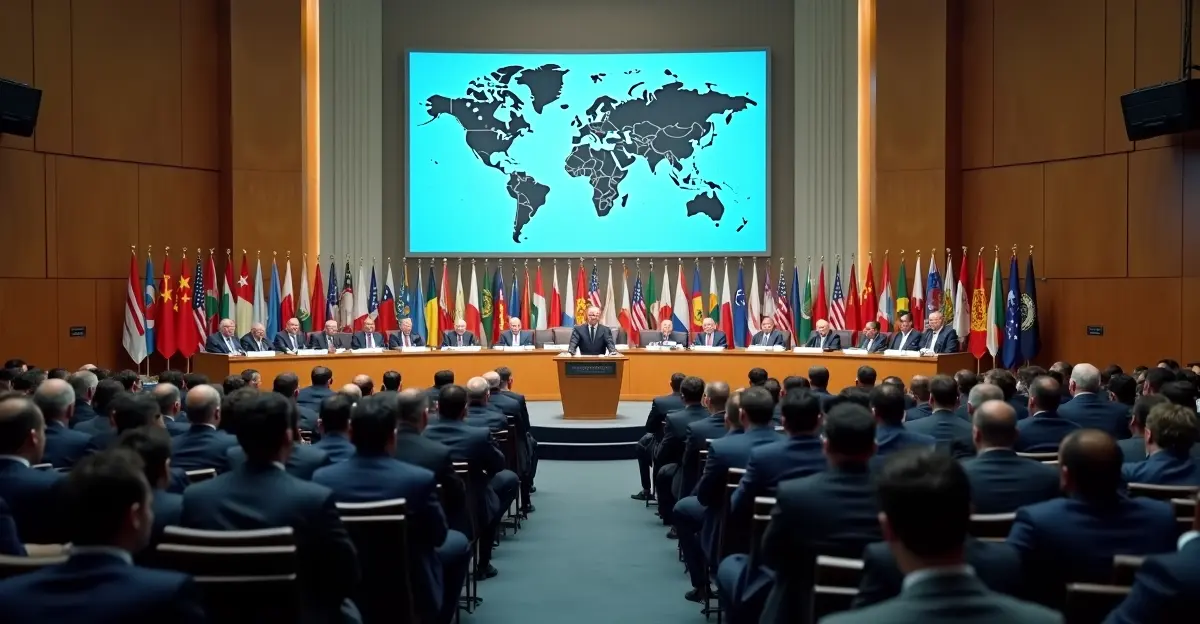
The February 4, 2026 Critical Minerals Ministerial in Washington, D.C., marked the most ambitious Western institutional response to date. The centerpiece was the launch of the Forum on Resource Geostrategic Engagement (FORGE), a 54-nation multilateral framework creating a preferential trade zone with coordinated price floors for critical minerals, initially chaired by South Korea. The U.S. government announced it had mobilized more than $30 billion in letters of interest, investments, loans, and other support for critical mineral projects over the preceding six months, in partnership with the private sector.
Alongside FORGE, the Export-Import Bank of the United States approved Project Vault on February 2, 2026—a landmark $10 billion direct loan to establish the U.S. Strategic Critical Minerals Reserve. This public-private partnership, more than double the largest financing in EXIM's history, involves original equipment manufacturers including Clarios, GE Vernova, Western Digital, and Boeing, along with private capital providers such as Hartree Partners, Mercuria Americas, and Traxys. The reserve aims to shield domestic manufacturers from supply shocks, expand U.S. production and processing of critical raw materials, and fundamentally strengthen America's critical minerals sector.
The FORGE initiative and Project Vault details represent a paradigm shift in Western critical mineral strategy. Bilateral critical minerals memorandums of understanding were signed with multiple partner nations during the ministerial, creating a web of supply chain agreements designed to circumvent Chinese dominance.
The 12-to-18-Month Window
Despite these ambitious initiatives, the fundamental challenge remains time. Independent rare earth processing capacity outside China requires an estimated 20 to 30 years to build at scale, according to industry analysts. The technical complexity of rare earth separation—which involves dozens of chemically similar elements requiring sophisticated solvent extraction processes—combined with environmental regulations, high capital costs, and a severe shortage of specialized engineering talent, means that new processing hubs cannot be rapidly deployed.
This timeline creates what experts describe as a decisive 12-to-18-month window beginning in early 2026. During this period, the Western alliance must achieve sufficient supply chain resilience—through a combination of strategic stockpiling, accelerated processing projects, and coordinated purchasing mechanisms—to withstand further Chinese export restrictions. If the window closes without meaningful progress, structural dependence on Chinese processing could become irreversible, with profound implications for defense, electric vehicle production, and renewable energy deployment.
The challenges of building rare earth processing capacity are exemplified by current non-Chinese producers. Lynas Rare Earths, the largest non-Chinese producer, projects 53% production growth to approximately 16,100 tonnes of rare earth oxide in fiscal year 2026, but continues to face power disruptions at its Kalgoorlie facility and relies on complex multi-jurisdictional processing chains. MP Materials, which secured a $400 million Department of Defense investment and is evaluating a $1.2 billion magnet campus in Texas, has halted rare earth exports to China to build domestic processing—but full separation capacity remains years away.
Strategic Implications for Defense, EVs, and Renewables
The stakes extend far beyond commodity markets. Rare earth elements are essential for permanent magnets used in F-35 fighter jets, submarines, missile guidance systems, and advanced radar. In the civilian sector, neodymium and dysprosium are critical for electric vehicle motors and wind turbine generators—both central to the global energy transition. A sustained supply disruption would cripple defense production pipelines and derail climate commitments simultaneously.
The price spikes have already had real-world consequences. Magnet manufacturers are reportedly paying up to three times more than before the restrictions. Japan, a key U.S. ally, has seen dysprosium imports from China fall to just 4% of previous levels, while Germany has received none. The impact on EV and defense supply chains is forcing companies to reconsider production timelines and sourcing strategies.
Expert Perspectives
This is the highest-stakes moment for critical mineral geopolitics in a generation, said Gracelin Baskaran, co-author of a July 2025 CSIS report on rare earth processing hubs. China has demonstrated it is willing to weaponize its processing dominance. The 2026 ministerial shows the West is finally coordinating, but the gap between ambition and operational capacity remains vast.
EXIM Chairman John Jovanovic emphasized the urgency: Project Vault will help U.S. manufacturers compete globally while creating jobs and advancing national security objectives. We cannot afford to wait another decade to build resilience.
Frequently Asked Questions
What are rare earth elements and why are they important?
Rare earth elements are a set of 17 metals—including neodymium, dysprosium, terbium, and yttrium—essential for permanent magnets in electric vehicles, wind turbines, defense systems, and consumer electronics. Despite the name, they are relatively abundant in the Earth's crust but difficult and costly to process into usable form.
How much does China control rare earth processing?
China controls approximately 90% of global rare earth refining capacity and 99% of heavy rare earth processing. This midstream monopoly means that even countries with significant mining operations often send their ore to China for final separation and purification.
What is the FORGE initiative?
The Forum on Resource Geostrategic Engagement (FORGE) is a 54-nation multilateral framework launched at the February 2026 Critical Minerals Ministerial. It creates a preferential trade zone with coordinated price floors for critical minerals, initially chaired by South Korea, and is backed by over $30 billion in U.S. financing.
What is Project Vault?
Project Vault is a $10 billion U.S. Export-Import Bank initiative to establish the Strategic Critical Minerals Reserve—a public-private partnership storing essential raw materials in secure domestic facilities to shield manufacturers from supply shocks.
Can the West build independent processing capacity in time?
Industry analysts estimate that building independent rare earth processing capacity at scale requires 20-30 years. The current 12-to-18-month window represents the period during which strategic stockpiling, accelerated projects, and coordinated purchasing must achieve sufficient resilience to prevent irreversible dependence.
Conclusion: A Race Against Time
The February 2026 Critical Minerals Ministerial and the launch of FORGE and Project Vault represent an unprecedented Western response to China's rare earth dominance. However, the fundamental arithmetic of processing capacity timelines means that success is far from assured. The next 12 to 18 months will determine whether the Western alliance can achieve supply chain resilience or whether structural dependence on Chinese processing becomes a permanent feature of the global economy. For defense, energy, and technology sectors alike, the rare earth reckoning has arrived—and the window for action is narrowing by the day.
Sources
- U.S. Department of State, 2026 Critical Minerals Ministerial press release, February 2026
- Export-Import Bank of the United States, Project Vault announcement, February 2, 2026
- China Ministry of Commerce, Announcement No. 18, April 4, 2025
- CSIS, Developing Rare Earth Processing Hubs: An Analytical Approach, July 2025
- The Oregon Group, Rare Earth Prices Surge as China Keeps Export Restrictions, May 2026
- RUSI, China and Rare Earth Supply Chains, June 2026
- Taylor Wessing, Key Changes in China's Export Control Landscape for Rare Earths, April 2026



Follow Discussion