


 Deutsch
 English
 Español
 Français
 Nederlands
 Português


 Share
Share




In early 2026, China's sweeping export controls on rare earths, tungsten, and antimony have triggered sixfold price spikes outside the country and exposed a critical strategic vulnerability in Western defense and green energy supply chains. With Beijing controlling roughly 90% of global rare earth processing, 80% of tungsten, and 60% of antimony, the race to secure critical minerals has emerged as the defining geopolitical struggle of the decade. The Forum on Resource Geostrategic Engagement (FORGE), a 54-nation alliance with over $30 billion in committed financing, is scrambling to build alternative capacity within a narrowing 12-18 month window.
China's Export Control Regime: A Timeline of Escalation
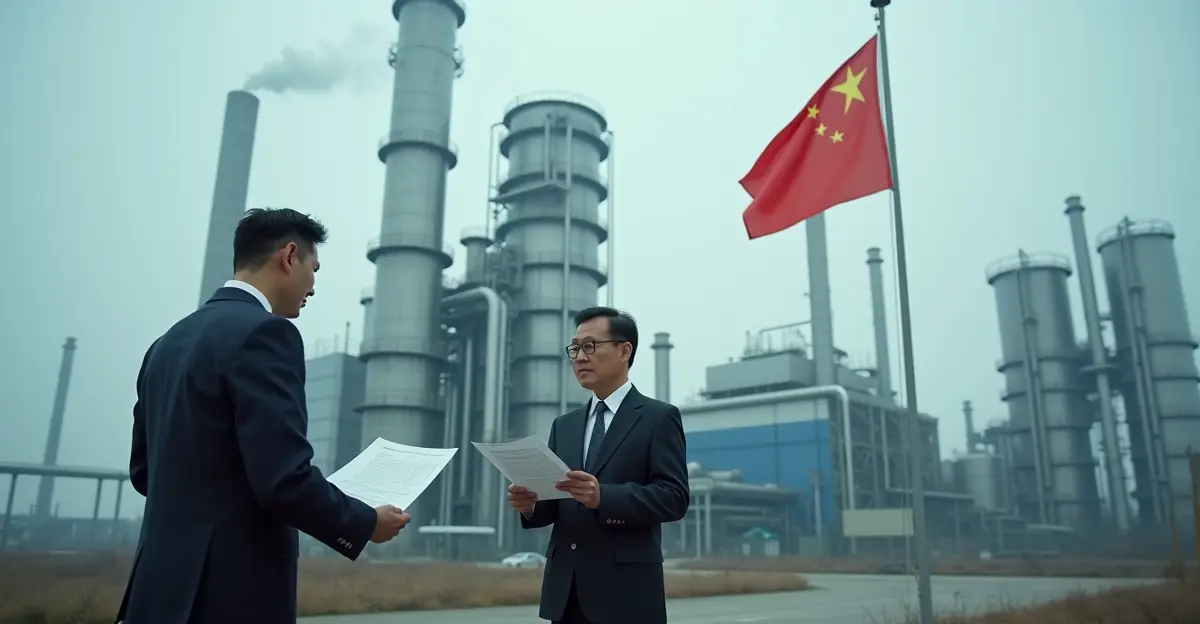
China introduced its first wave of rare earth export controls in April 2025, citing national security interests in response to U.S. tariffs. A second wave followed in October 2025, targeting tungsten and antimony alongside additional rare earth elements. The second wave was later suspended until November 2026, but the damage to global supply chains was already done. By early 2026, automated real-time controls and penalties were introduced across China's rare earth industry, cementing Beijing's ability to modulate supply with surgical precision.
The China rare earth export licensing system requires end-user certificates, application declarations, destination verification, and security reviews, with processing taking 30-60 days. European firms have reported licensing approval rates below 25% in some sectors, while U.S. military applications face complete bans. Civilian semiconductor and commercial applications may receive conditional permits, but the uncertainty has frozen investment and driven prices to historic highs.
Price Shock: The Sixfold Surge
Rare earth prices outside China have surged dramatically. As of February 2026, neodymium reached $205/kg (up 37% year-to-date), praseodymium hit $202/kg (+40%), dysprosium soared to $931/kg (+105%), and terbium reached $4,029/kg (+103%). A striking dual pricing structure has emerged, with Western markets paying premiums of 62-366% compared to Chinese domestic prices. This bifurcation stems directly from China's strategic export licensing, which targets seven rare earth elements critical to defense and high-tech applications.
The rare earth price surge 2026 has hit the electric vehicle and defense sectors hardest. Modern EV drivetrains require 1-2 kg of rare earth materials per vehicle, while each F-35 fighter jet uses over 400 kg of rare earth elements for magnets, radar, and stealth coatings. The Pentagon has identified rare earths as essential for Tomahawk missiles, Virginia-class submarines, Predator drones, and JDAM smart bombs.
The FORGE Alliance: A $30 Billion Response
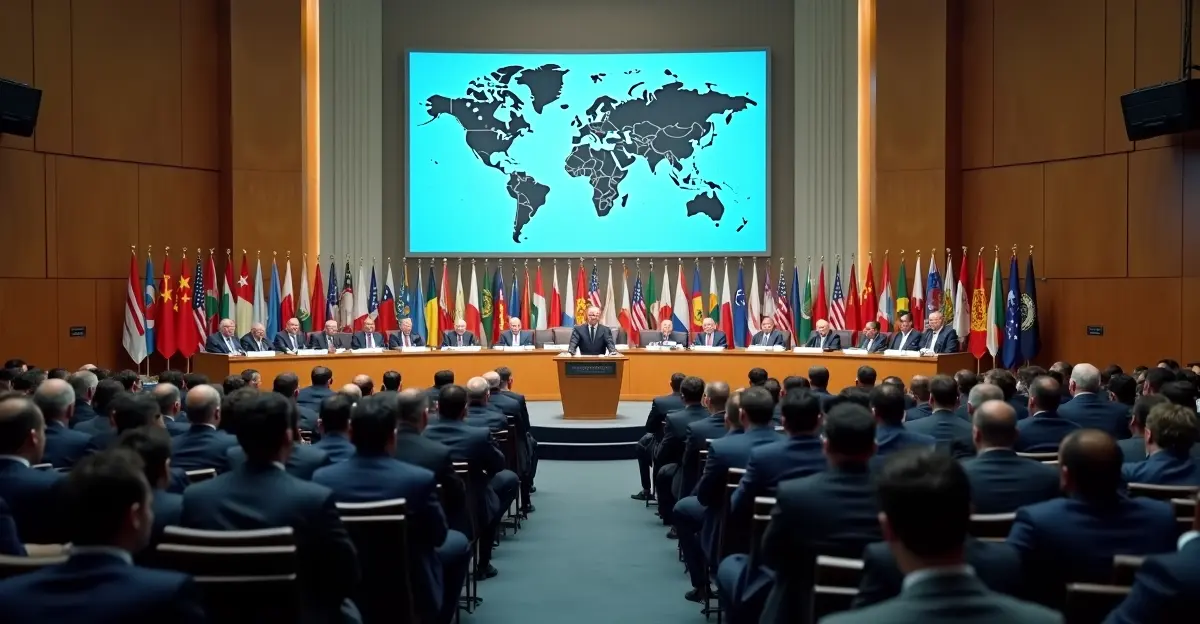
In February 2026, the United States launched FORGE at the inaugural Critical Minerals Ministerial in Washington, D.C. The alliance, chaired by South Korea through June, includes 54 nations and has mobilized over $30 billion through letters of interest, investments, and loans. FORGE is positioned as a successor to the Minerals Security Partnership, designed as a plurilateral coalition creating a preferential trade-and-investment zone for critical minerals with coordinated price floors to counter adversarial market manipulation.
The ministerial produced eleven new bilateral framework agreements, totaling twenty-one deals in five months, with countries including Argentina, Morocco, Peru, the Philippines, UAE, and the UK. The administration aims to link these disparate agreements into a functioning system covering two-thirds of the global economy, though operational details and membership remain to be clarified.
Alongside FORGE, the U.S. announced Project Vault, a $12 billion public-private program to stockpile critical minerals. Funded by a $10 billion Export-Import Bank loan and $2 billion in private capital, Project Vault uses a subscription model where private firms pay fees for access during disruptions. However, analysts at the Peterson Institute for International Economics warn that voluntary participation could hollow out the risk pool, and storing 60 highly differentiated minerals is far more complex than oil stockpiling.
Can the West Break China's Monopoly?
The central question facing Western policymakers is whether alternative supply chains can be built within the 12-18 month window before vulnerability becomes entrenched. The answer, according to multiple analyses, is sobering: full supply chain independence remains 5-7 years away at best, and rebuilding independent alternatives could take 20-30 years.
Western Processing Projects: Progress and Gaps
Several Western projects are advancing. MP Materials operates the Mountain Pass mine in California and is building a processing facility to separate rare earth oxides. Lynas Rare Earths, the largest non-Chinese producer, is expanding its Mount Weld mine in Western Australia and developing a new processing facility in Kalgoorlie, with plans to expand into the United States with Department of Defense support. USA Rare Earth has accelerated commercial production at its Round Top project in Texas to late 2028, following promising solvent-extraction pilot results.
However, none of these projects yet matches China's scale in separated oxide output. The Western rare earth processing capacity bottleneck remains the midstream separation and refining stage, where China's 91% dominance is most entrenched. Chemical separation and refining capabilities require years of operational expertise that cannot be easily replicated.
A multi-institutional report from early 2026 argues that China is weaponizing control, not scarcity—using temporary, reversible restrictions to maintain pricing power and extract strategic concessions while discouraging Western alternative investment. The report outlines three paths for Western nations: managed dependence, costly independence, or a hybrid model—with only a 12-18 month window to act decisively.
Impact on Defense and Energy Transition
The stakes could not be higher. Rare earths are essential for permanent magnets used in EV motors, wind turbine generators, and virtually every advanced weapons system. Tungsten is critical for military armor, aerospace turbine components (F-15, F-22, F-35 platforms), and semiconductor manufacturing at advanced nodes. Antimony serves in fire safety systems, defense electronics, and infrared detectors.
Over 80% of European companies depend on Chinese supply chains for these materials. The critical minerals defense vulnerability has prompted NATO to classify rare earths as strategic materials, while the European Union has launched its own Critical Raw Materials Act to reduce dependency.
"We are facing a supply chain crisis that threatens both our security and our climate goals," said a senior U.S. administration official speaking on condition of anonymity. "The 12-18 month window is real. If we don't move now, we will be locked into dependence for a generation."
FAQ
What are rare earth elements and why are they important?
Rare earth elements (REEs) are 17 metallic elements essential for permanent magnets, electric vehicles, wind turbines, consumer electronics, and defense systems. Despite their name, they are relatively abundant but difficult to process.
How much of the global rare earth supply does China control?
China controls approximately 90% of global rare earth processing and refining, 80% of tungsten production, and 60% of antimony. It also holds 94% of sintered permanent magnet production capacity.
What is the FORGE alliance?
The Forum on Resource Geostrategic Engagement (FORGE) is a 54-nation alliance launched by the United States in February 2026 to coordinate critical minerals trade, investment, and price stability. It has over $30 billion in committed financing.
How long will it take the West to build independent rare earth supply chains?
Most analysts estimate 5-7 years for meaningful processing capacity, with full independence potentially taking 20-30 years. The current 12-18 month window is critical for making irreversible investment decisions.
What is Project Vault?
Project Vault is a $12 billion U.S. public-private program to stockpile critical minerals, including rare earths. It uses a subscription model where private firms pay fees for access during supply disruptions.
Conclusion: The Window Is Closing
The rare earths reckoning is not a future threat—it is happening now. China's export controls have already reshaped global markets, and the FORGE alliance's response, while ambitious, faces daunting timelines. The next 12-18 months will determine whether the West can break China's monopoly or accept a future of strategic dependence. For defense planners, energy executives, and policymakers alike, the message is clear: the race for critical minerals is the defining geopolitical struggle of this decade, and the starting gun has already fired.
Follow Discussion