


 Deutsch
 English
 Español
 Français
 Nederlands
 Português


 Share
Share




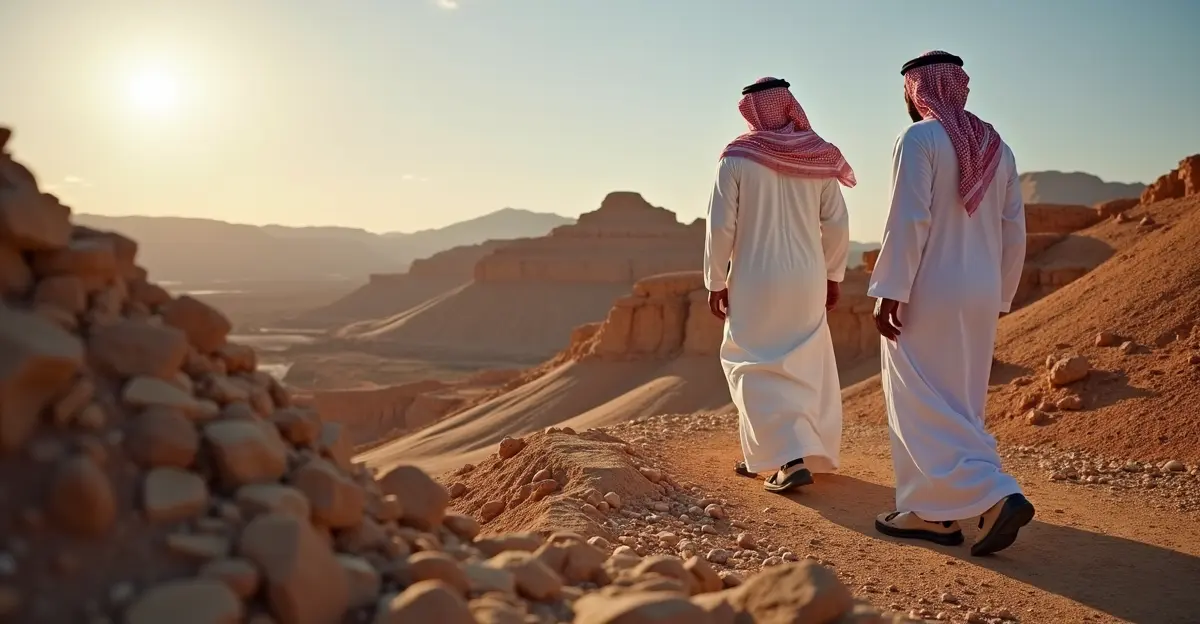
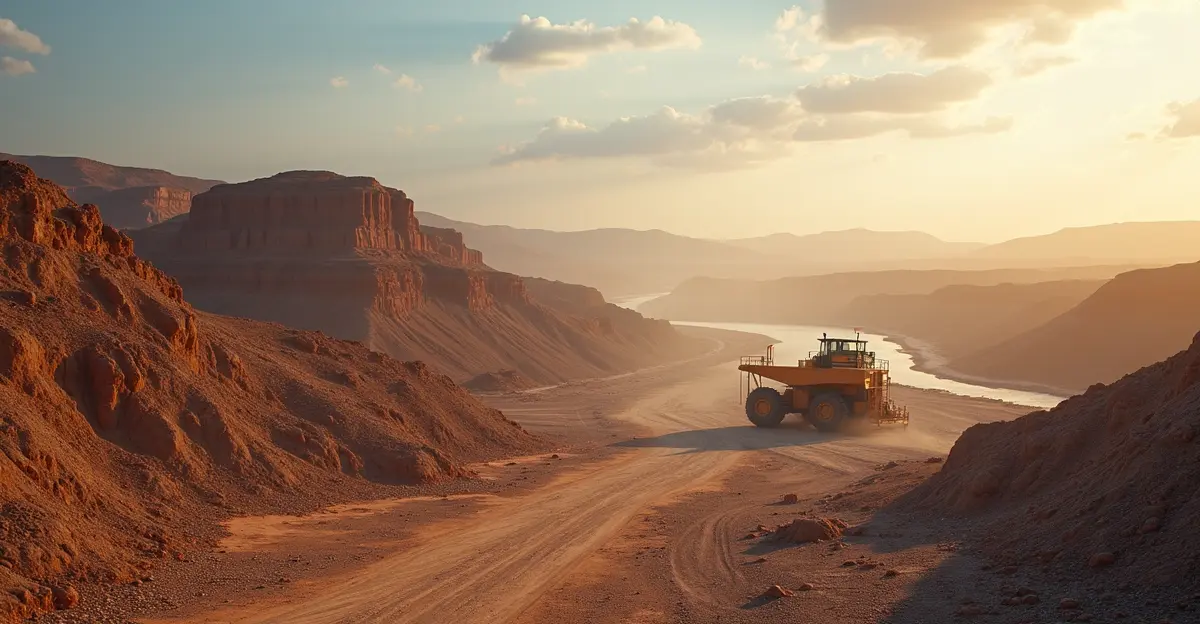
In 2026, as the European Union's Critical Raw Materials Act targets come due and China tightens its stranglehold on rare earth exports, Saudi Arabia and the United Arab Emirates are executing a historic pivot from petro-state dependency to dominant players in the global critical minerals race. Deploying over $100 billion through sovereign wealth funds, the Gulf duo is aggressively acquiring lithium, copper, and rare earth assets across Africa, Latin America, and Central Asia — positioning themselves as geopolitically neutral processing hubs that offer Western markets a viable alternative to Chinese-dominated supply chains. This strategic recalibration, led by Saudi Arabia's Manara Minerals and the UAE's Orion Critical Mineral Consortium, threatens to permanently rewire the architecture of global mineral supply chains at a moment of maximum geopolitical tension.
Context: The Critical Minerals Crisis of 2025–2026
The world's scramble for critical minerals has reached an inflection point. China currently controls 60–90% of global processing for lithium, cobalt, and rare earths — materials essential for electric vehicles, wind turbines, defense systems, and AI infrastructure. In 2025, Beijing tightened export controls on rare earths, tungsten, and antimony, triggering price spikes of up to sixfold outside China and exposing Western vulnerabilities. Export license approvals for European firms fell below 25%, according to a multi-institutional analysis. The EU Critical Raw Materials Act, adopted in 2024, set 2030 benchmarks of 10% domestic extraction, 40% processing, and 25% recycling — but with independent supply chains requiring 20–30 years to rebuild, the bloc faces an urgent need for intermediate partners.
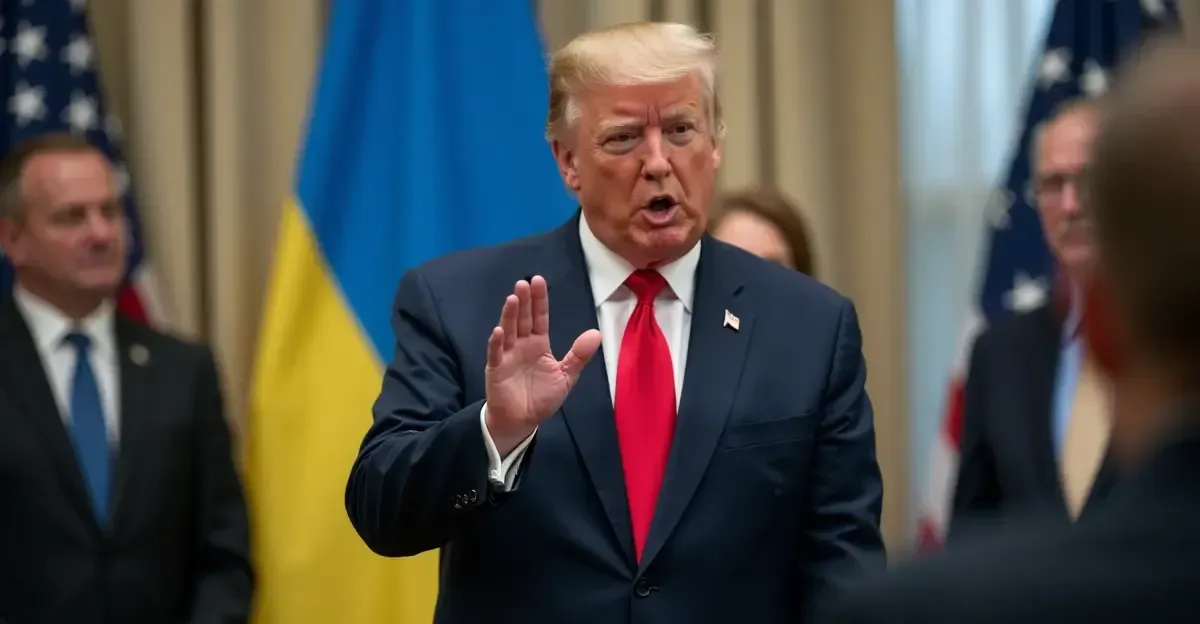
In February 2026, the United States launched FORGE (Forum on Resource Geostrategic Engagement), a 54-nation coalition backed by over $30 billion in financing, including a $10 billion strategic minerals reserve called Project Vault. Yet analysts warn that rebuilding independent supply chains could take decades, creating a narrow 12–18 month window for decisive action. Into this vacuum step the Gulf states.
Saudi Arabia's Manara Minerals: $100 Billion Ambition
Saudi Arabia has upgraded its estimated mineral wealth to $2.5 trillion and aims to mobilize $100 billion in mining investments by 2035 under Vision 2030. The kingdom's primary vehicle is Manara Minerals, a joint venture between the Public Investment Fund (PIF) and state miner Ma'aden, launched in 2023. Manara focuses on acquiring stakes in copper, nickel, lithium, and rare earth projects globally, securing offtake agreements that connect mines with end markets.
In January 2026, Reuters reported that the PIF plans to spin off Manara as an independent entity to accelerate its dealmaking. The fund has already targeted assets in Africa — including copper in Zambia and lithium in Zimbabwe — and is exploring opportunities in Latin America's Lithium Triangle. Saudi Arabia's domestic reserves also include significant deposits of phosphate, bauxite, and gold, but the kingdom's real leverage lies in its financial firepower and strategic location as a logistics hub between East and West.
The Geopolitical Calculus
Saudi Arabia is walking a diplomatic tightrope. China remains the kingdom's largest oil customer, while the United States is its primary security guarantor. By positioning Manara as a geopolitically neutral intermediary, Riyadh hopes to attract Western capital and technology without alienating Beijing. The strategy appears to be working: in 2025, Saudi Arabia signed a rare earth refinery deal with U.S.-based MP Materials, Ma'aden, and the Pentagon, signaling deep integration with Western supply chains even as Chinese firms continue to operate in the kingdom.
The UAE's Orion Consortium: A $1.8 Billion Bridge
The United Arab Emirates has moved even faster. In October 2025, the U.S. International Development Finance Corporation (DFC) and Abu Dhabi's ADQ sovereign fund jointly invested $1.8 billion alongside Orion Resource Partners to form the Orion Critical Mineral Consortium. The deal, announced at the U.S.-UAE Economic Forum, targets copper, nickel, cobalt, and rare earth projects globally, with a focus on Africa and Latin America.
The UAE's approach is more diversified than Saudi Arabia's. Abu Dhabi's Mubadala Investment Company has also deployed capital into lithium and rare earth ventures, while Dubai has positioned itself as a trading and logistics hub for mineral flows. The UAE's critical minerals strategy leverages its existing infrastructure — ports, free zones, and energy-intensive processing capabilities — to attract downstream refining operations that would otherwise go to China.
Neutrality as a Value Proposition
Both Gulf states are marketing themselves as "safe pairs of hands" in a polarized world. Unlike China, which uses export controls as geopolitical leverage, or the United States, which ties mineral deals to broader alliance obligations, the Gulf offers patient capital with fewer strings attached. This appeals to resource-rich nations in Africa and Central Asia that are wary of great-power competition. According to the International Institute for Strategic Studies (IISS), the Gulf's "strategic geography, financial depth, and diplomatic agility give them a unique advantage in reshaping energy transition supply chains."
Impact on Global Supply Chains and Alliance Structures
The Gulf pivot has profound implications. First, it introduces a third pole in the critical minerals landscape, breaking the binary U.S.-China dynamic. Second, it offers Western nations a faster route to supply diversification than building domestic mines and refineries from scratch. Third, it gives Gulf states leverage over both mineral pricing and alliance structures — they can reward partners with access to processing capacity or punish adversaries by redirecting supply.
The FORGE mineral alliance 2026 has already signed framework agreements with the UAE, and Saudi Arabia is expected to join as a formal partner. Yet the Gulf states are careful not to alienate China. The ORF Middle East notes that Gulf nations pursue "diversification rather than decoupling," maintaining China as their largest trading partner even as they deepen ties with Washington. This hedging strategy preserves their long-term agency in a multipolar world.
Expert Perspectives
"The GCC can step to the fore thanks to cheap energy, domestic reserves in Saudi Arabia, and plenty of capital to chase sourcing deals in Africa, Latin America, and Central Asia," said Gracelin Baskaran, who heads the critical minerals security program at the Center for Strategic and International Studies in Washington.
"Gulf states are positioning themselves as geopolitically neutral intermediaries, offering an alternative to Chinese-dominated supply chains," noted an IISS analysis published in July 2025. "Their patient capital, strategic geography, and diplomatic agility give them a unique advantage."
Ahmed Aboudouh of the ORF Middle East wrote in February 2026 that the Gulf's balancing act is deliberate: "Despite deepening US partnerships, Gulf states pursue diversification rather than decoupling, maintaining China as their largest trading partner. These states are hedging to preserve their long-term agency."
FAQ: The Gulf's Critical Minerals Pivot
What is Manara Minerals?
Manara Minerals is a joint venture between Saudi Arabia's Public Investment Fund (PIF) and Ma'aden, the state mining company. Launched in 2023, it invests in global copper, nickel, lithium, and rare earth assets to secure supply chains for the energy transition.
What is the Orion Critical Mineral Consortium?
The Orion Critical Mineral Consortium is a $1.8 billion partnership between the U.S. DFC, Abu Dhabi's ADQ, and Orion Resource Partners, announced in October 2025. It invests in critical mineral projects worldwide to reduce dependence on Chinese supply chains.
Why are Gulf states pivoting to critical minerals?
Gulf states are diversifying their economies away from oil dependence under long-term plans like Saudi Vision 2030. Critical minerals offer a path to economic resilience and geopolitical influence in the energy transition era.
How does this affect China's dominance?
The Gulf pivot introduces a third pole in critical mineral supply chains, offering Western nations alternatives to Chinese processing. However, Gulf states maintain strong ties with Beijing, pursuing hedging rather than decoupling.
What is FORGE?
FORGE (Forum on Resource Geostrategic Engagement) is a 54-nation U.S.-led coalition launched in February 2026 to secure critical mineral supply chains. It succeeds the Minerals Security Partnership and is backed by over $30 billion in financing.
Conclusion: A New Swing Arbiter
As the energy transition accelerates and great-power competition intensifies, Saudi Arabia and the UAE are emerging as swing arbiters in the global critical minerals order. Their ability to deploy massive capital, offer neutral processing hubs, and navigate between Washington and Beijing gives them outsized influence over both mineral pricing and alliance structures. For Western nations racing to break China's grip on critical supply chains, the Gulf may prove to be the most consequential partner — and the most strategically agile — in the years ahead.


Follow Discussion