


 Deutsch
 English
 Español
 Français
 Nederlands
 Português


 Share
Share




Massive Funeral Procession Underway for Iran's Supreme Leader
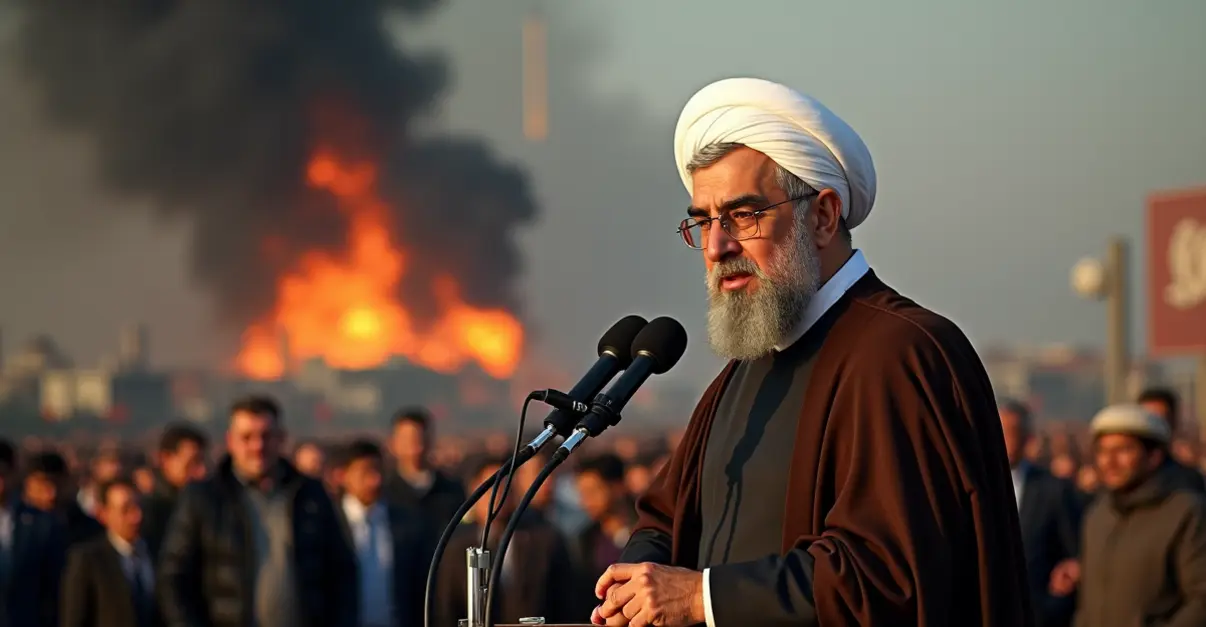
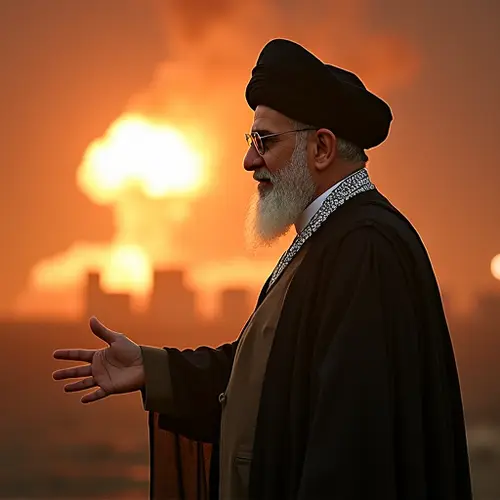
Thousands of mourners have gathered at the Mosalla Mosque in Tehran as the six-day state funeral for Ayatollah Ali Khamenei, Iran's supreme leader, officially began on Saturday. Khamenei was killed in late February during coordinated American and Israeli airstrikes that marked the start of a broader conflict. The elaborate funeral, heavily stage-managed by the Iranian authorities, is expected to draw between 15 and 20 million people over its duration, making it one of the largest public gatherings in the country's history.
Background: The Death of a Decades-Long Ruler
Ayatollah Ali Khamenei, who ruled Iran with an iron fist for nearly 37 years, was the most powerful figure in the Islamic Republic. As supreme leader, he held authority above the president and all elected officials, commanding the military, judiciary, and media. His death came amid a fragile ceasefire between Iran, Israel, and the United States, a truce that remains tenuous. The US-Iran ceasefire negotiations have been given a one-week pause out of respect for the funeral, according to US President Donald Trump.
Funeral Details: A Six-Day National Event
Day-by-Day Schedule
The funeral program spans nearly a week, with events across multiple cities:
- Day 1-2 (Weekend): Khamenei's body lies in a glass vitrine at the Mosalla Mosque in Tehran, alongside the coffins of several family members killed in the airstrike, including a 14-month-old granddaughter.
- Day 3 (Monday): A massive funeral procession will wind through the streets of Tehran.
- Day 4 (Tuesday): The coffin will be transferred to Qom, the holy city for Shia Muslims.
- Day 5 (Wednesday): Ceremonies will be held in Iraq, home to a large Shia population.
- Day 6 (Thursday): Khamenei will be buried in his birthplace, Mashhad, in northeastern Iran.
Security and Logistics
Authorities have locked down large parts of Tehran, closing streets and the airspace. Daily life has been suspended. Similar measures are in place for Mashhad. To combat an expected heatwave reaching 37°C (99°F), officials have deployed additional sprinkler systems for the crowds. The Iranian Revolutionary Guard security measures are highly visible, with thousands of security personnel deployed.
Mourning and Political Symbolism
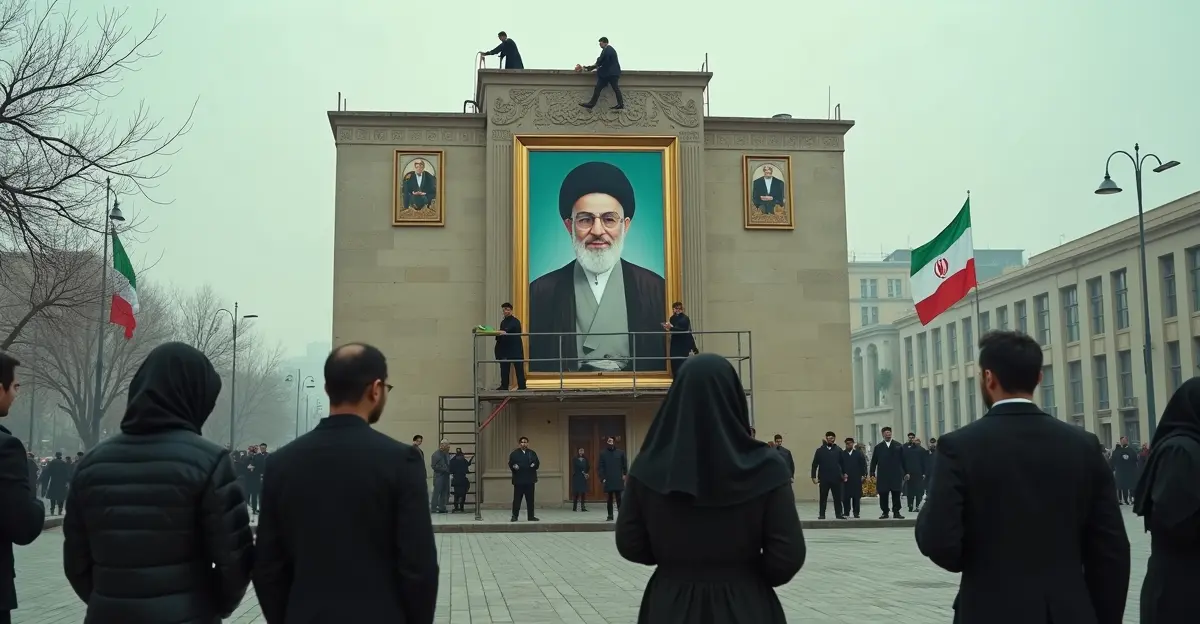
At the Mosalla Mosque, mourners carry red banners and placards, chanting traditional slogans such as 'Death to America' and 'Revenge, Revenge.' Groups of men rhythmically beat their chests in a Shia funeral ritual. Outside the mosque, a replica podium has been erected, resembling the original husseiniya (a Shia gathering hall) where Khamenei once delivered speeches—destroyed in the airstrike that killed him.
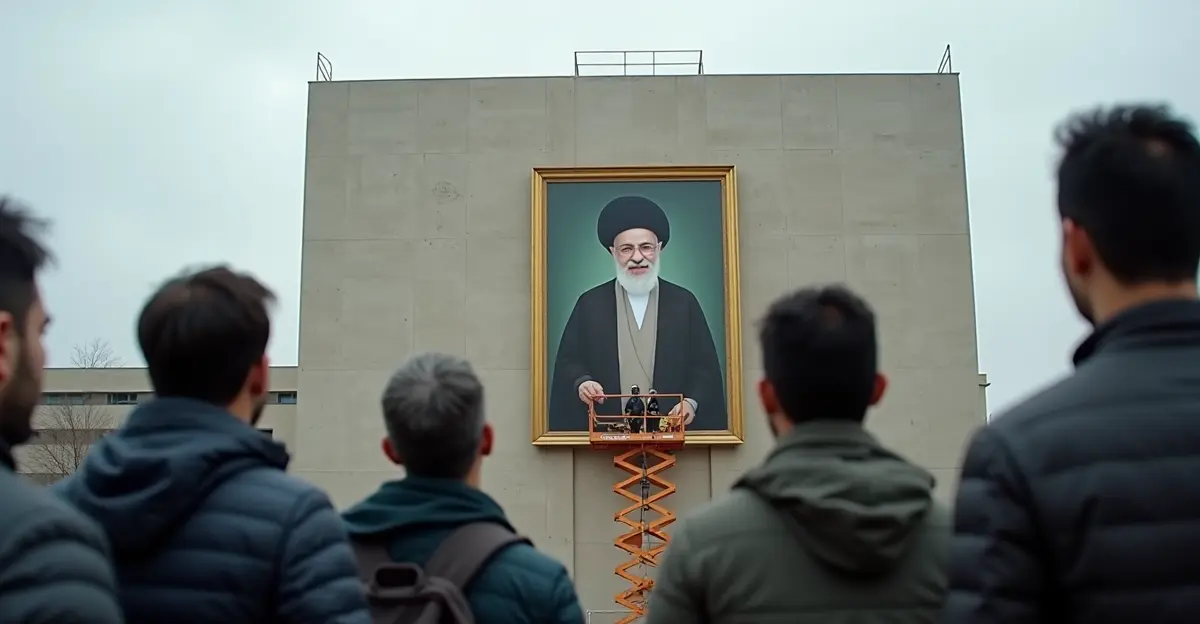
The funeral coincides with the US's 250th anniversary celebrations, a timing not lost on the crowd. Some mourners displayed a large banner reading '#KillTrump,' and billboards across Tehran feature Khamenei's image with raised fists, under the funeral's slogan: 'We must rise.'
International Attendance and Reactions
Several foreign leaders and delegations have arrived in Tehran, including Pakistani Prime Minister Shehbaz Sharif, former Russian President Dmitry Medvedev, and representatives from Hamas, Hezbollah, the Taliban, Belarus, Iraq, Turkey, and China. The presence of these groups highlights Khamenei's role as a linchpin of the 'Axis of Resistance.'
President Donald Trump commented on the funeral pause, stating: 'We gave them a week off for a funeral, because we're nice.' According to Qatari mediators, progress has been made in refining the memorandum of understanding signed in June between the US and Iran, though the situation remains fragile.
Legacy of Repression
Khamenei's nearly four-decade rule was marked by brutal repression. Under his command, the Islamic Revolutionary Guard Corps (IRGC) crushed protests in 2019 and 2022, and an estimated 7,000 people were killed during the January 2026 demonstrations alone. Political opponents faced imprisonment, torture, and execution. Women's rights were severely curtailed. The Iran human rights abuses under Khamenei have drawn widespread international condemnation.
Succession and Uncertainty
Khamenei's son, Mojtaba Khamenei, who was designated as his successor, has not been seen in public since the airstrike. Reports indicate he was seriously wounded in the attack. His absence from the funeral has fueled speculation about power struggles within the regime. The question of Iran leadership succession after Khamenei remains a critical unknown for the region.
FAQ
When did Ayatollah Khamenei die?
Ayatollah Ali Khamenei was killed in late February 2026 during US-Israeli airstrikes on Tehran.
How long will the funeral last?
The state funeral is a six-day event, running from Saturday through Thursday.
Where will Khamenei be buried?
He will be buried in his birthplace, Mashhad, in northeastern Iran, on the final day of the funeral.
Why is the funeral so large?
The Iranian regime has mobilized millions to demonstrate national unity and the enduring influence of Khamenei's ideology.
Who is attending the funeral?
Delegations from Pakistan, Russia, Iraq, Turkey, China, Hamas, Hezbollah, and the Taliban are present.
Sources
This article is based on reporting from NOS, AFP, AP, and Al Jazeera.
Follow Discussion