


 Deutsch
 English
 Español
 Français
 Nederlands
 Português


 Share
Share




Vice President Vance Lands in Switzerland for High-Stakes Iran Negotiations
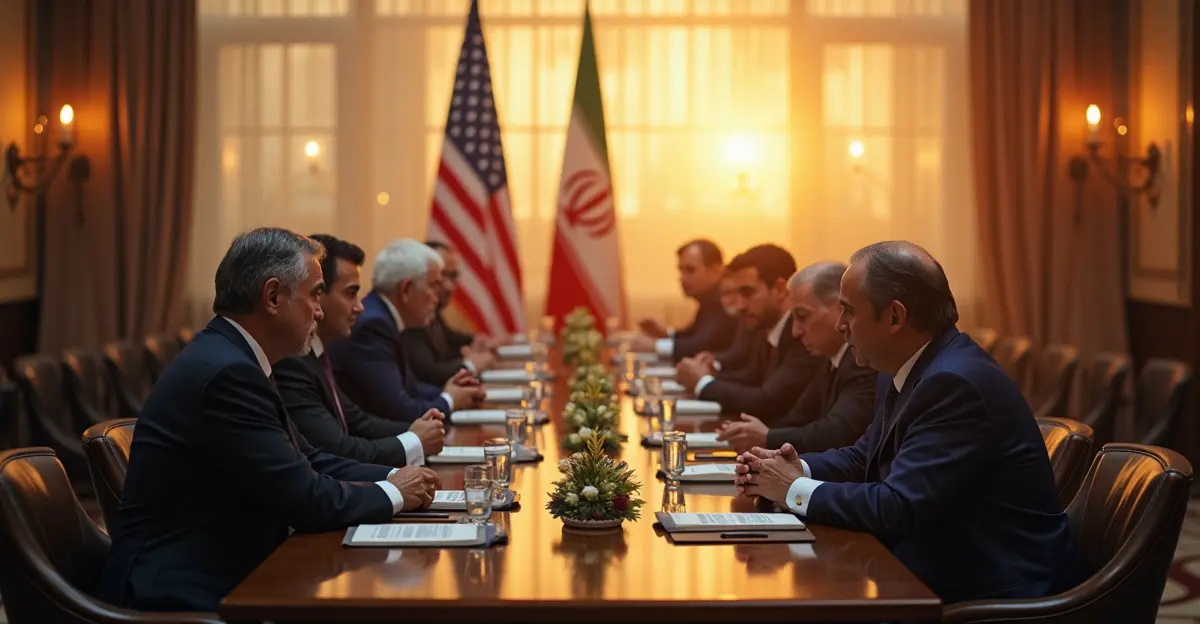
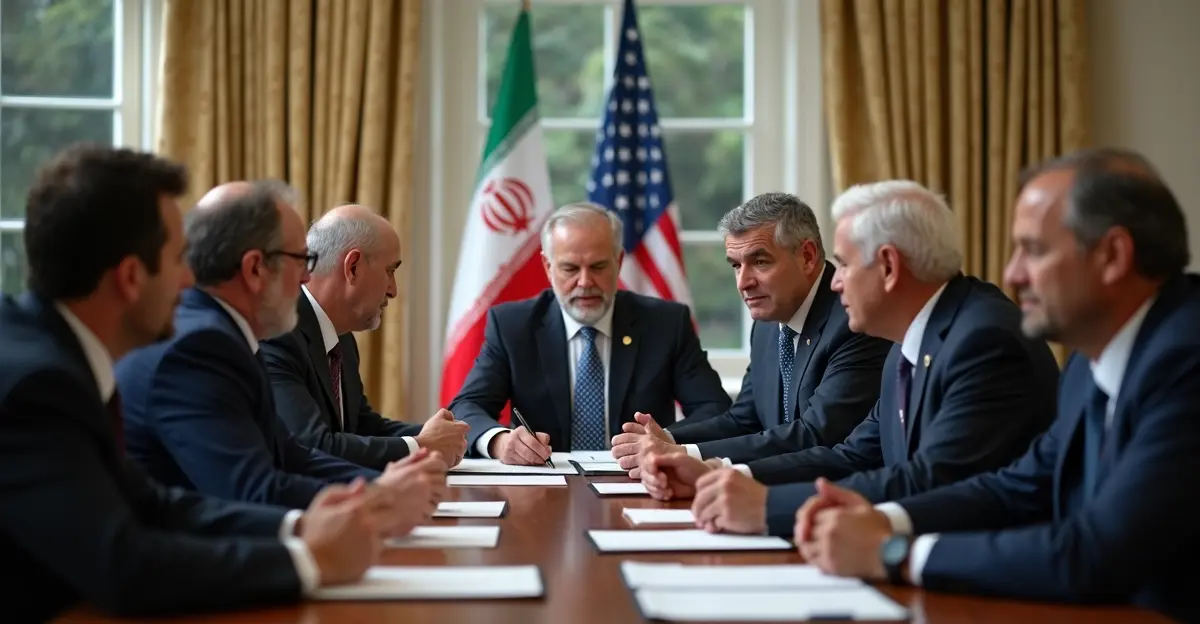
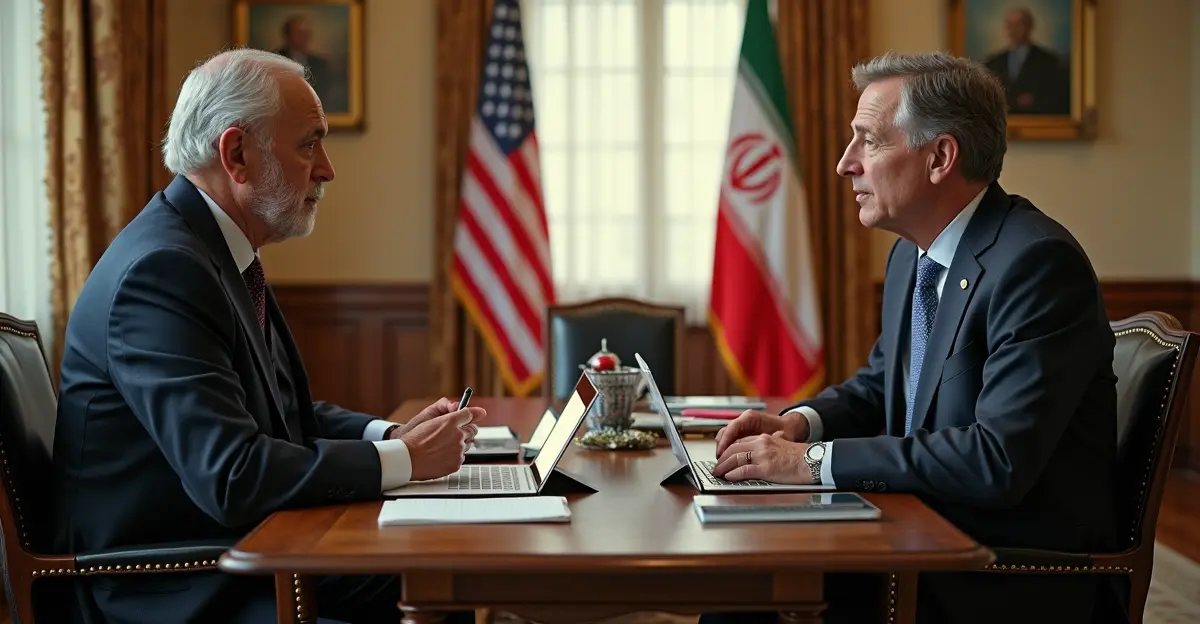
US Vice President JD Vance arrived in Switzerland on June 21, 2026, to formally launch 60-day negotiations with Iran aimed at curbing Tehran's nuclear program and stabilizing the fragile ceasefire in Lebanon. The talks, held at the Bürgenstock resort near Lucerne, come just days after President Donald Trump and Iranian President Masoud Pezeshkian signed a preliminary 14-point Memorandum of Understanding (MoU) in Islamabad, Pakistan. The interim agreement, brokered by Pakistan and Qatar, aims to end the devastating US-Iran conflict that has claimed an estimated 8,000 to 18,000 lives since February 2026.
Vance, accompanied by Second Lady Usha Vance and a high-level delegation including special envoy Steve Witkoff and Jared Kushner, landed at Emmen Air Base and expressed cautious optimism. "I'm hopeful we can make real progress on the nuclear issue and the question of the ceasefire in Lebanon," Vance told reporters before departure. The Iranian delegation is led by Parliament Speaker Mohammad Bagher Qalibaf and Foreign Minister Abbas Araghchi.
Background: The Path to the Bargaining Table
The current diplomatic push follows months of devastating military conflict. In February 2026, the US and Israel launched Operation Epic Fury, a large-scale campaign targeting Iran's nuclear and ballistic missile infrastructure. The strikes, which included the assassination of Supreme Leader Ali Khamenei and other senior officials, were justified as preemptive measures to prevent a nuclear breakout. Iran responded with retaliatory attacks, escalating into a regional conflagration that drew in Hezbollah and other proxies.
A Pakistan-mediated ceasefire in April 2026 halted major combat operations, but tensions remained high. The 2025 Iran nuclear deal collapse had already unraveled diplomatic guardrails, leaving both sides entrenched. The Islamabad MoU, signed June 17, 2026, established a framework for a final agreement within 60 days, extendable by mutual consent. Key provisions include an immediate end to military operations on all fronts, US removal of its naval blockade within 30 days, safe passage through the Strait of Hormuz, and a $300 billion reconstruction fund for Iran.
Core Issues at Stake
Iran's Nuclear Program
At the heart of the negotiations is Iran's nuclear enrichment program. According to IAEA Director General Rafael Grossi, who is attending the talks, Iran currently holds 440.9 kilograms of uranium enriched to 60% — just short of weapons-grade 90%. This stockpile is theoretically enough for approximately 10 nuclear weapons if further enriched. The interim deal requires Iran to reaffirm its commitment not to develop nuclear weapons and to allow IAEA-supervised down-blending of enriched material on site.
The talks aim to restore comprehensive IAEA inspections, which have been severely limited since the 2025 strikes damaged key facilities at Fordow and Natanz. Iran's uranium enrichment timeline remains a critical flashpoint, with breakout time estimated at just 1-3 months under current conditions. Technical working groups are expected to hash out verification protocols and timelines for sanctions relief.
The Strait of Hormuz Flashpoint
Hours before Vance's arrival, Iran's Islamic Revolutionary Guard Corps (IRGC) announced the closure of the Strait of Hormuz, citing Israeli violations of the Lebanon ceasefire. The IRGC warned commercial vessels to avoid the waterway, through which approximately 20% of global oil passes. However, US Central Command disputed the claim, reporting that 55 merchant ships transited the strait on Saturday carrying over 17 million barrels of oil.
President Trump responded with a stark warning: "If a final deal is not reached within 60 days, the US will begin charging tolls for ships transiting the strait." Vance downplayed the closure announcement, noting that a record 16 million barrels of oil passed through the waterway in a single day recently. The strait has become a key test case for Iran's compliance with the interim agreement.
Lebanon Ceasefire and Hezbollah
The situation in Lebanon remains the most volatile element of the talks. A ceasefire between Israel and Hezbollah, brokered by the US and Qatar, took effect on June 19 but immediately began to fray. Israel launched over 150 strikes on southern Lebanon, killing at least 32 people, after four Israeli soldiers were killed by a drone strike. Hezbollah responded with projectiles, claiming the right to resist Israeli forces that remain on Lebanese soil.
The Israel-Hezbollah ceasefire violations 2026 have become a major obstacle. Iran has linked progress on the nuclear track to a stabilization of the Lebanon situation. Vance acknowledged the challenge but stated that "despite the headlines, the tension is actually decreasing somewhat." An emergency session on Lebanon has been added to the first day of negotiations.
Mediators and International Reaction
Pakistani Prime Minister Shehbaz Sharif and a senior military commander have arrived in Zurich to participate in the talks. Qatar is also playing a key mediating role, maintaining communication channels with Hezbollah and Iran. The IAEA's Grossi is overseeing technical nuclear discussions.
The interim deal has drawn criticism from Republican hardliners who compare it unfavorably to the 2015 Joint Comprehensive Plan of Action (JCPOA), which Trump withdrew from in 2018. Critics argue the 60-day timeline is insufficient for a comprehensive agreement and that Iran cannot be trusted. Supporters counter that the deal includes robust verification mechanisms and that the alternative is a return to full-scale war.
Impact and Implications
The outcome of the Bürgenstock talks will have far-reaching consequences. A successful agreement could reshape Middle Eastern geopolitics, potentially leading to a normalization of US-Iran relations and a reduction in regional proxy conflicts. Failure, however, could trigger a resumption of hostilities, with the US and Israel potentially launching new strikes on Iran's nuclear facilities.
Global energy markets remain on edge. Oil prices have fluctuated wildly with each twist in the negotiations. The Strait of Hormuz oil price impact has been particularly acute, with traders closely monitoring any disruption to the vital waterway. A final deal could unlock Iranian oil exports and help stabilize prices, while a breakdown could send them soaring.
Humanitarian concerns also loom large. The conflict has displaced hundreds of thousands in Iran and Lebanon, and the $300 billion reconstruction fund is seen as essential for rebuilding devastated infrastructure. The talks represent perhaps the best chance for a durable peace in a region scarred by decades of confrontation.
Frequently Asked Questions
What is the purpose of the Vance-Iran talks in Switzerland?
The talks aim to implement a 14-point interim agreement signed June 17, 2026, which includes a 60-day window to negotiate a final deal on Iran's nuclear program, a ceasefire in Lebanon, and reopening of the Strait of Hormuz. The goal is to end the US-Iran war that began in February 2026.
How much enriched uranium does Iran have?
As of June 2026, Iran holds approximately 440.9 kg of uranium enriched to 60%, enough for about 10 nuclear weapons if further enriched to 90% weapons-grade. The IAEA is supervising on-site down-blending as part of the interim agreement.
Why did Iran close the Strait of Hormuz?
Iran's IRGC announced the closure on June 20, 2026, citing Israeli violations of the Lebanon ceasefire and US "bad faith." The US military disputes the closure, stating the strait remains open to commercial shipping.
What is the role of Pakistan and Qatar?
Pakistan mediated the original ceasefire in April 2026 and helped broker the Islamabad MoU. Both Pakistan and Qatar are serving as mediators at the Bürgenstock talks, with Qatar maintaining communication with Hezbollah.
What happens if the 60-day deadline is not met?
The deadline can be extended by mutual consent. If no final deal is reached, President Trump has threatened to impose US tolls on ships transiting the Strait of Hormuz or potentially resume military operations against Iran.

Follow Discussion