


 Deutsch
 English
 Español
 Français
 Nederlands
 Português


 Share
Share




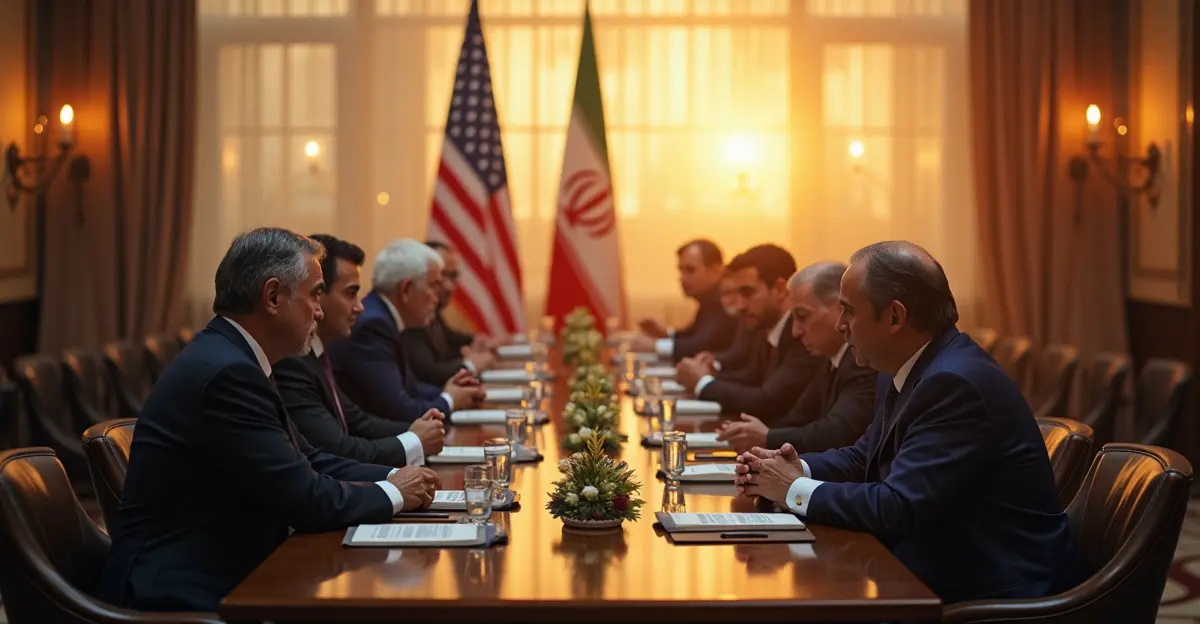
The United States and Iran have finalized a memorandum of understanding (MOU) aimed at ending their devastating four-month war, with formal signing scheduled for June 19, 2026, in Geneva, Switzerland. The agreement, brokered by Pakistan and Qatar, establishes an immediate and permanent cessation of hostilities on all fronts — including the parallel conflict in Lebanon — and paves the way for reopening the strategic Strait of Hormuz. While hailed as a diplomatic breakthrough, experts caution that the MOU is primarily a framework for further negotiations rather than a final peace settlement.
What Is in the US-Iran Memorandum of Understanding?
The 14-point MOU, sometimes called the Islamabad Memorandum, was drafted on May 28, 2026, after months of shuttle diplomacy. Key provisions include:
- Immediate ceasefire: Both sides agree to an "immediate and permanent" end to military operations, including all aerial and missile attacks. This formalizes the shaky truce that has been in place since early April but was repeatedly violated.
- Reopening of the Strait of Hormuz: Iran must immediately reopen the waterway to commercial shipping. The strait, through which about 20% of the world's oil passes, was effectively closed by Iran on February 28, 2026, triggering a global energy crisis.
- U.S. naval blockade lifted: The United States will remove its naval blockade of Iranian ports, allowing Iranian oil exports to resume.
- Sanctions relief and asset release: The U.S. will ease sanctions and release up to $24 billion in frozen Iranian assets, with initial tranches expected within weeks.
- Nuclear commitments: Iran reaffirms its long-standing position that it will never seek, develop, or possess nuclear weapons. Detailed nuclear dismantlement talks are deferred to a 60-day negotiation period.
- Lebanon ceasefire: The MOU explicitly calls for an end to hostilities between Israel and Hezbollah in southern Lebanon, though the details remain contentious.
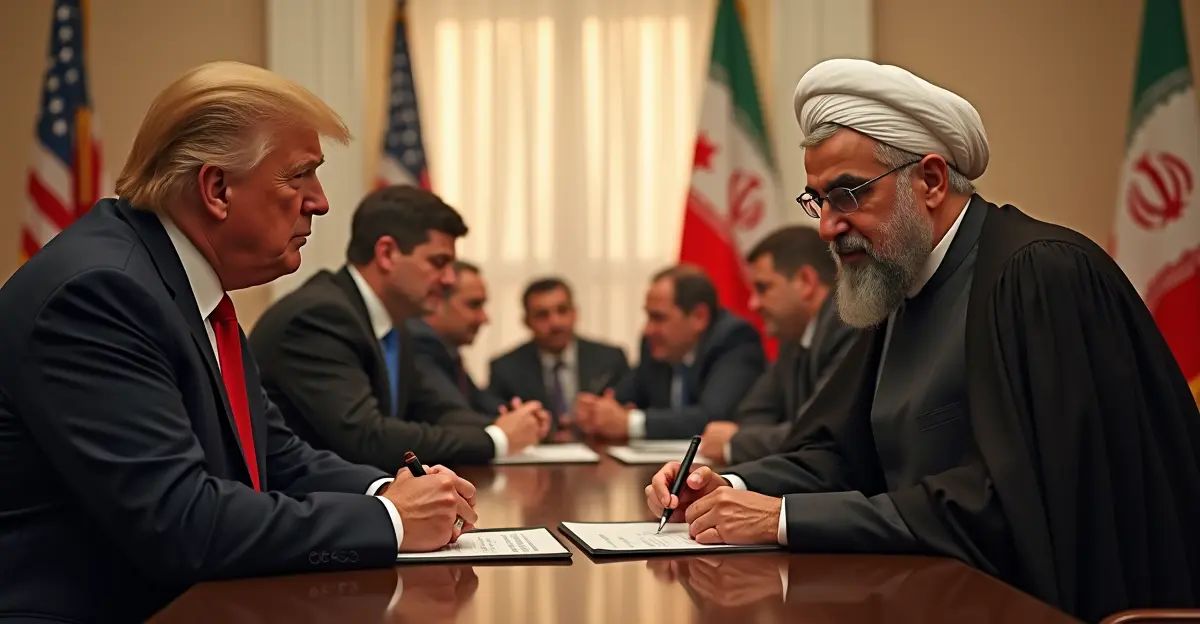
President Donald Trump confirmed the deal on social media, writing: "Let the oil flow!" Vice President JD Vance, who is expected to sign the MOU alongside Iranian Parliament Speaker Mohammad Bagher Ghalibaf, called it a potential "new era for the region."
How Did the 2026 US-Iran War Begin?
The conflict erupted on February 28, 2026, when the U.S. and Israel launched coordinated airstrikes — code-named Operation Epic Fury — against Iranian military installations, nuclear facilities, and command centers. The strikes killed Supreme Leader Ali Khamenei, dozens of senior IRGC commanders, and hundreds of civilians. Iran retaliated with a barrage of missiles and drones targeting Israel, U.S. bases across the Middle East, and all six Gulf Cooperation Council nations, including Saudi Arabia, the UAE, and Qatar. In a decisive move, Iran closed the Strait of Hormuz, sending global oil prices soaring.
The war caused catastrophic human and economic tolls. According to estimates, thousands of people have been killed and tens of thousands wounded across Iran, Lebanon, Iraq, Israel, and the Gulf states. The Pentagon reported the cost of the first six days alone at roughly $1.88 billion per day, with 42 U.S. aircraft lost or damaged. The conflict also displaced over 1.2 million people in Lebanon alone.
A Pakistan-brokered ceasefire took effect on April 8, 2026, but was violated within hours. Trump extended the cessation indefinitely on April 21 and declared hostilities terminated on May 1, though intermittent skirmishes continued. The 2026 Iran war ceasefire remained fragile until the current MOU was finalized.
What Does the Deal Mean for Global Markets?
The announcement triggered immediate market reactions. Oil prices tumbled more than 4% on June 15, reaching their lowest level in months, as traders priced in the resumption of Iranian crude exports and the reopening of the Strait of Hormuz. Global stock markets rallied, with major indices in Asia, Europe, and the U.S. posting gains. The S&P 500 rose 1.8% on the news, while European bourses climbed 2–3%.
However, energy experts caution that it could take months for oil and gas supplies to fully normalize. The global energy market impact of the strait's closure was severe: shipping insurance premiums skyrocketed, alternative routes added weeks to transit times, and natural gas prices in Europe and Asia surged. Analysts at Goldman Sachs estimated that the disruption removed roughly 3 million barrels per day from global supply.
What Are the Major Obstacles Ahead?
Despite the optimism, significant hurdles remain. The MOU is explicitly a starting point, not a final settlement. Both sides have 60 days to negotiate a comprehensive peace deal addressing the most contentious issues:
- Iran's nuclear program: The MOU defers all substantive nuclear talks. Iran insists on its right to civilian enrichment, while the U.S. demands full dismantlement of suspect facilities. How to verify and monitor any agreement remains a sticking point.
- Iran's missile program and regional proxies: The draft MOU reportedly excludes Iran's ballistic missile program and its support for groups like Hezbollah, Hamas, and Yemen's Houthis from immediate discussion. The U.S. and Israel view these as existential threats.
- Israel and Lebanon: Israel has rejected any requirement to withdraw from southern Lebanon, where it established a security zone during the war. Defense Minister Israel Katz said: "We will not retreat from Lebanon despite all the pressure." Hezbollah, meanwhile, demands full Israeli withdrawal as a precondition for disarmament. The Israel Lebanon ceasefire 2026 remains extremely fragile, with daily violations reported.
- Iranian hardliners: Within Iran, hardliners have protested the deal, arguing that negotiations with the U.S. betray the legacy of the late Supreme Leader Khamenei, who weeks before his death said talks with Washington would not solve Iran's problems.
What Are Experts Saying?
Middle East analysts emphasize that the MOU is a fragile first step. NOS Middle East correspondent Daisy Mohr noted: "In essence, the fundamental problems have not been solved at all. Between Iran and the U.S., there is a lot of mistrust, and the differences and expectations between the two countries are quite far apart. This is primarily a process toward a possible long-term solution."
Dutch Foreign Minister Berendsen called it "a hopeful step toward a sustainable solution." European nations — including the U.K., Germany, France, and Italy — have signaled willingness to lift their own sanctions on Iran in exchange for verifiable nuclear commitments.
Frequently Asked Questions
When will the US-Iran MOU be signed?
The formal signing ceremony is scheduled for Friday, June 19, 2026, in Geneva, Switzerland. Vice President JD Vance will sign for the U.S., and Parliament Speaker Mohammad Bagher Ghalibaf will sign for Iran.
Will the Strait of Hormuz reopen immediately?
The MOU stipulates that Iran must reopen the strait immediately upon signing. However, practical reopening — including mine clearance, resumption of shipping insurance, and port operations — could take days to weeks.
What happens to Iran's frozen assets?
The U.S. has agreed to release up to $24 billion in frozen Iranian assets. The first tranche is expected to be unfrozen within weeks of the signing, with the remainder tied to progress in nuclear talks.
Does this deal end the war in Lebanon?
The MOU calls for an end to hostilities between Israel and Hezbollah, but no separate Lebanon-specific agreement has been reached. Israel continues to occupy parts of southern Lebanon, and Hezbollah has rejected recent U.S.-mediated truce proposals. The situation remains volatile.
How will Iran's nuclear program be addressed?
Nuclear dismantlement and uranium stockpile issues are deferred to technical talks during the 60-day negotiation period. Iran has agreed to destroy its current nuclear material stockpile on-site, but the details of verification and monitoring have yet to be worked out.


Follow Discussion