


 Deutsch
 English
 Español
 Français
 Nederlands
 Português


 Share
Share




Israel Targets Hezbollah's Radwan Force Commander in Beirut
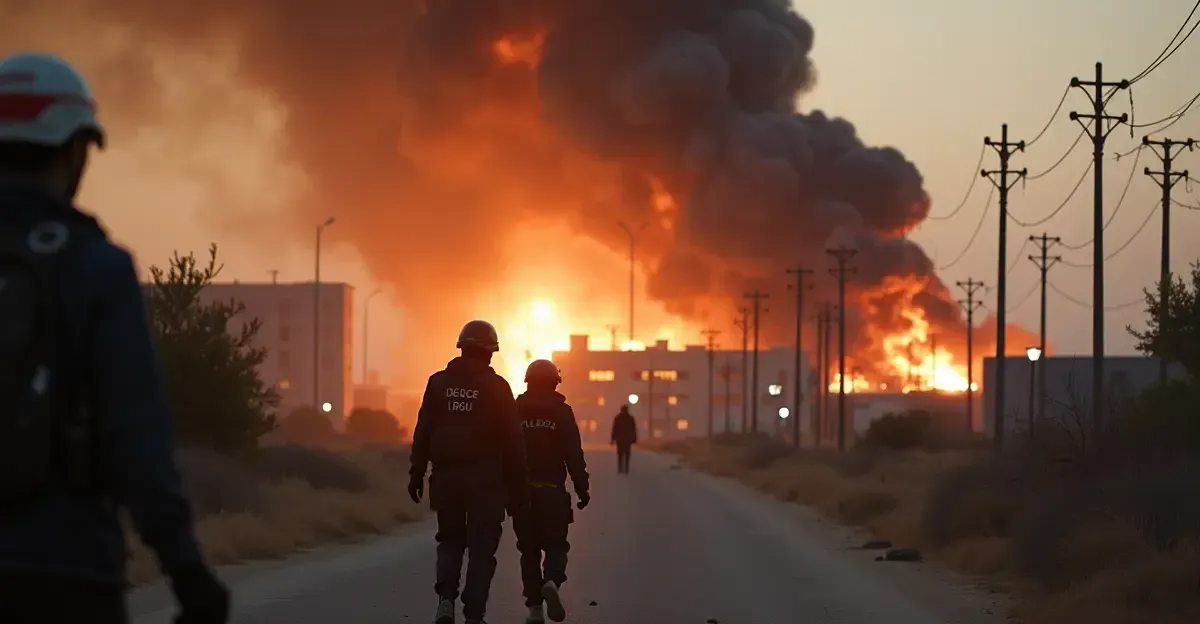
Israel carried out an airstrike on Beirut's southern suburbs on May 6, 2026, the first such attack on the Lebanese capital since a ceasefire took effect on April 17. The strike targeted and killed Malek Ballout, the operations commander of Hezbollah's elite Radwan Force, according to Israeli officials and sources close to Hezbollah. The attack marks a significant escalation in the fragile truce between Israel and Lebanon, raising fears of a return to full-scale hostilities.
Israeli Prime Minister Benjamin Netanyahu and Defense Minister Israel Katz confirmed the operation in a joint statement, saying: "No terrorist has immunity. The Radwan Force commander was responsible for planning and executing attacks against Israeli civilians and soldiers." Israeli media reported that Ballout was killed in the strike on the Ghobeiri neighborhood, a densely populated Hezbollah stronghold in Beirut's Dahiyeh area.
Background: The Fragile Ceasefire
The April 17 ceasefire was brokered by the United States as part of a broader de-escalation effort linked to the 2026 Iran war. The 10-day truce was later extended by three weeks on April 23. Under the terms, Israel retained the right to self-defense against imminent threats while halting offensive operations, and Lebanon committed to preventing Hezbollah and non-state armed groups from attacking Israel. However, violations have been reported by both sides since the truce began.
According to the 2026 Israel–Lebanon ceasefire agreement, Hezbollah was not a formal signatory, which complicated enforcement. Israeli forces remained deployed inside southern Lebanon during the truce, and Hezbollah indicated it would respond to any violations. Since March 2, over 2,700 people have been killed in Lebanon from Israeli strikes, and more than one million have been displaced.
The Radwan Force: Hezbollah's Elite Unit
The Radwan Force (also known as Unit 125) is Hezbollah's premier special operations unit, established in 2006 and renamed after Imad Mughniyeh (alias Hajj Radwan). The unit is estimated to have approximately 2,500 fighters and specializes in infiltration operations into Israeli territory, particularly targeting the Galilee region. Its capabilities include raids, ambushes, sniping, reconnaissance, and deep infiltration missions using advanced weaponry and UAVs.
Malek Ballout served as the operations commander of the Radwan Force, responsible for coordinating tactical operations, recruiting operatives, and managing the unit's supply chains. His killing represents a significant blow to Hezbollah's operational command structure. The strike hit an apartment building where Radwan leaders were meeting, according to sources cited by The Straits Times.
Previous Leadership Losses
The Radwan Force has suffered multiple command losses during the conflict. Earlier in 2026, Israeli forces killed Southern Front commander Haj Youssef Ismail Hashem. In 2024, senior commanders Ibrahim Aqil and Ahmed Wehbe were also eliminated. The ongoing Israel-Hezbollah conflict has seen a relentless Israeli campaign to degrade Hezbollah's military capabilities, with over 1,900 Hezbollah operatives reported killed by the IDF since fighting escalated.
Impact on the Ceasefire
The Beirut strike threatens to unravel the already fragile ceasefire. Hezbollah has not yet issued an official statement on Ballout's death, but the group has previously warned that any attack on Beirut would be met with retaliation. Hours before the strike, seven Israeli soldiers were wounded in Hezbollah explosive drone attacks in southern Lebanon, and the IDF launched a wave of airstrikes on Hezbollah infrastructure across southern Lebanon, issuing evacuation warnings for 12 villages north of the Litani River.
International reactions have been cautious. The United States, which brokered the ceasefire, has not publicly commented on the strike. The UN has expressed concern over the escalating violence, with a UNICEF relief mission finding massive destruction in southern Lebanon's Tebnine hospital on April 23. The humanitarian crisis in Lebanon continues to deepen as displacement and casualties mount.
Analysts warn that the targeted killing could trigger a new cycle of retaliation. "This is a dangerous moment," said Middle East analyst Dr. Sarah al-Rashid. "Both sides have shown willingness to violate the truce, and the killing of a senior commander in Beirut removes a key restraint. We may see Hezbollah respond with long-range rocket fire into central Israel."
FAQ: Israel's Beirut Strike and the Ceasefire
What was the target of the Israeli strike in Beirut?
The strike targeted Malek Ballout, the operations commander of Hezbollah's elite Radwan Force. Israeli officials confirmed he was killed in the attack on the Ghobeiri neighborhood of Beirut's southern suburbs.
When did the Israel-Lebanon ceasefire begin?
The ceasefire took effect on April 17, 2026, following a U.S.-brokered agreement between Israel and Lebanon. It was initially a 10-day truce, later extended by three weeks until mid-May.
Has the ceasefire been violated before this strike?
Yes. Both sides have accused each other of violations since the truce began. Israeli forces remained in southern Lebanon, and Hezbollah launched drones and rockets. Over 100 people have been killed in Lebanon since the ceasefire started, according to Lebanese officials.
What is the Radwan Force?
The Radwan Force is Hezbollah's elite special operations unit, specializing in cross-border infiltration attacks. It has approximately 2,500 fighters and has been a primary target of Israeli military operations.
What happens next?
The strike risks escalating the conflict. Hezbollah may retaliate with rocket fire or drone attacks. Diplomatic efforts by the U.S. and UN to extend the ceasefire face new challenges. The situation remains highly volatile.

Follow Discussion