


 Deutsch
 English
 Español
 Français
 Nederlands
 Português


 Share
Share




What is the Israel-Lebanon Conflict?
The Israel-Lebanon conflict represents a significant escalation in Middle Eastern tensions, with Israeli forces conducting widespread attacks across Lebanon targeting Hezbollah positions. This regional conflict has expanded beyond traditional border skirmishes to include strikes in Beirut's southern suburbs and broader international implications. The Israeli military launched these retaliatory strikes after Hezbollah fired missiles into Israel, marking one of the most intense escalations since the 2006 Lebanon War.
Background and Context of the Regional Conflict
The current Israel-Lebanon conflict has its roots in decades of tension between Israel and Hezbollah, an Iran-backed militant group that controls southern Lebanon. The Hezbollah-Israel proxy war has intensified significantly following recent geopolitical shifts in the region. Hezbollah was established in 1985 with Iranian support and has consistently opposed Israel's existence, with the group's 1985 manifesto stating it seeks to 'obliterate' the Israeli state. The current escalation began on October 8, 2023, when Hezbollah launched rockets at Israeli positions following Hamas' attack on Israel, but the recent developments represent a dangerous new phase.
Key Developments in the Latest Escalation
According to Middle East correspondent Tara Kenkhuis, 'I would call this with justification a regional conflict at this moment.' The Israeli attacks continued until approximately 3-4 AM local time, with particularly intense bombardment in southern Lebanon and South Beirut. Lebanese authorities report at least 31 deaths and 149 injuries from the strikes, with tens of thousands of residents fleeing Beirut's southern suburbs. Among the casualties is the leader of Hezbollah's political faction in Lebanon's parliament, marking a significant blow to the organization's leadership structure.
Regional and International Dimensions
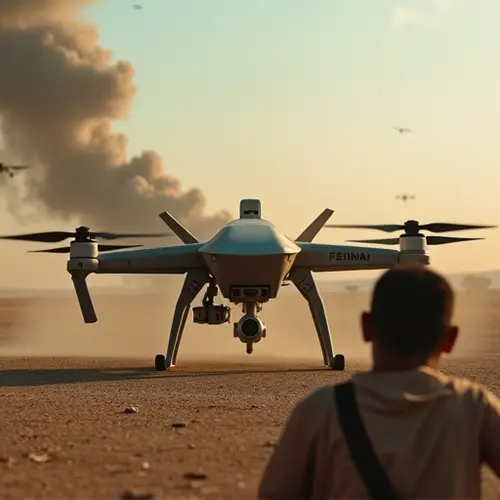
The conflict has expanded beyond Israel and Lebanon to involve multiple regional and international actors. In the same night, the United States conducted 'continuous' bombing raids in Iran, while Iran retaliated against both Israeli and American targets in Gulf states. A drone attack struck a British RAF base in Cyprus, causing limited damage but no casualties. This attack followed British Prime Minister Keir Starmer's announcement that the UK would allow American forces to use British bases for defensive operations against Iran. 'The time for negotiations is really over now,' said Ali Larijani, Iran's top security official, signaling a hardening of positions across the region.
Economic Impact and Global Consequences
The regional conflict has immediate and significant economic implications, particularly for global energy markets. 'It has enormous consequences for the region so far, also for oil prices worldwide,' noted correspondent Tara Kenkhuis. The Strait of Hormuz, through which 21% of global maritime petroleum trade passes daily, represents a critical vulnerability. Historical precedents like the 1973 oil embargo and 1990-1991 Persian Gulf War demonstrate how even minor supply disruptions can trigger dramatic price spikes. The current conflict has already caused Brent crude prices to surge 13% to $75.15 per barrel, their highest level in five months.
Humanitarian Crisis and Displacement
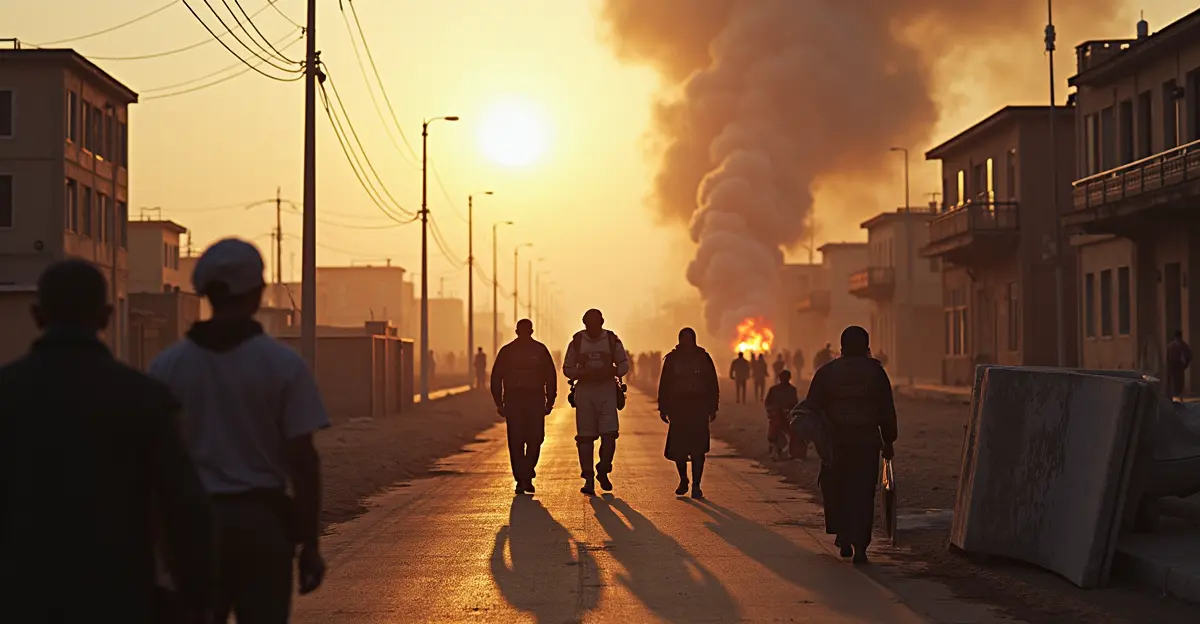
The humanitarian impact of the Israel-Lebanon conflict is severe and growing. Tens of thousands, if not hundreds of thousands, of people in southern Beirut remain displaced, with evacuation routes clogged and basic services disrupted. This mass displacement adds to the approximately 1.4 million individuals already displaced in Lebanon since October 2023. The conflict has forced approximately 96,000 Israelis to leave their homes in northern Israel, creating a bilateral humanitarian crisis that extends across the border.
International Response and Diplomatic Efforts
The United States and several Gulf states have issued a joint statement condemning Iranian attacks and emphasizing their right to self-defense. However, diplomatic channels appear increasingly strained as military actions escalate. The attack on Cyprus, an EU member state though not a NATO member, represents a concerning expansion of the conflict beyond traditional Middle Eastern boundaries. The Iran-Israel proxy dynamics have created a complex web of alliances and retaliations that complicate international mediation efforts.
Future Outlook and Potential Scenarios
The Israeli military has warned that fighting could take 'many' more days and has called for evacuations in Lebanon, suggesting preparations for prolonged conflict. Several potential scenarios could unfold:
- Limited Containment: The conflict remains primarily between Israel and Hezbollah with occasional international incidents
- Regional Expansion: Additional countries become directly involved, potentially including Syria or other Iranian proxies
- Global Economic Shock: Closure of the Strait of Hormuz triggers worldwide energy crisis and economic downturn
- Diplomatic Breakthrough: International pressure leads to ceasefire and renewed negotiations
The most immediate concern remains the potential for miscalculation or accidental escalation that could draw additional regional powers into direct conflict.
Frequently Asked Questions (FAQ)
What triggered the latest Israel-Lebanon escalation?
The immediate trigger was Hezbollah firing missiles into Israel, which Israel described as retaliation for earlier actions. However, the broader context includes the ongoing Middle East proxy conflicts and recent geopolitical shifts following leadership changes in Iran.
How many casualties have resulted from the attacks?
Lebanese authorities report at least 31 deaths and 149 injuries from the Israeli strikes, with additional casualties reported in other regional incidents including attacks on US bases in Iraq and the drone strike in Cyprus.
What is the impact on global oil prices?
Brent crude prices have surged 13% to $75.15 per barrel, their highest level in five months. Further escalation, particularly involving the Strait of Hormuz, could trigger additional price spikes with global economic consequences.
Why was Cyprus attacked?
The drone attack on the British RAF base in Cyprus followed the UK's agreement to allow US forces to use British bases for defensive operations against Iran. The attackers reportedly wanted to demonstrate that participation in the conflict would have consequences.
What is Hezbollah's relationship with Iran?
Hezbollah is a Shia Islamist political party and militant organization established in Lebanon in 1985 with funding, training, and supervision from Iran's Islamic Revolutionary Guard Corps. It serves as Iran's primary proxy in the region.

Follow Discussion