


 Deutsch
 English
 Español
 Français
 Nederlands
 Português


 Share
Share




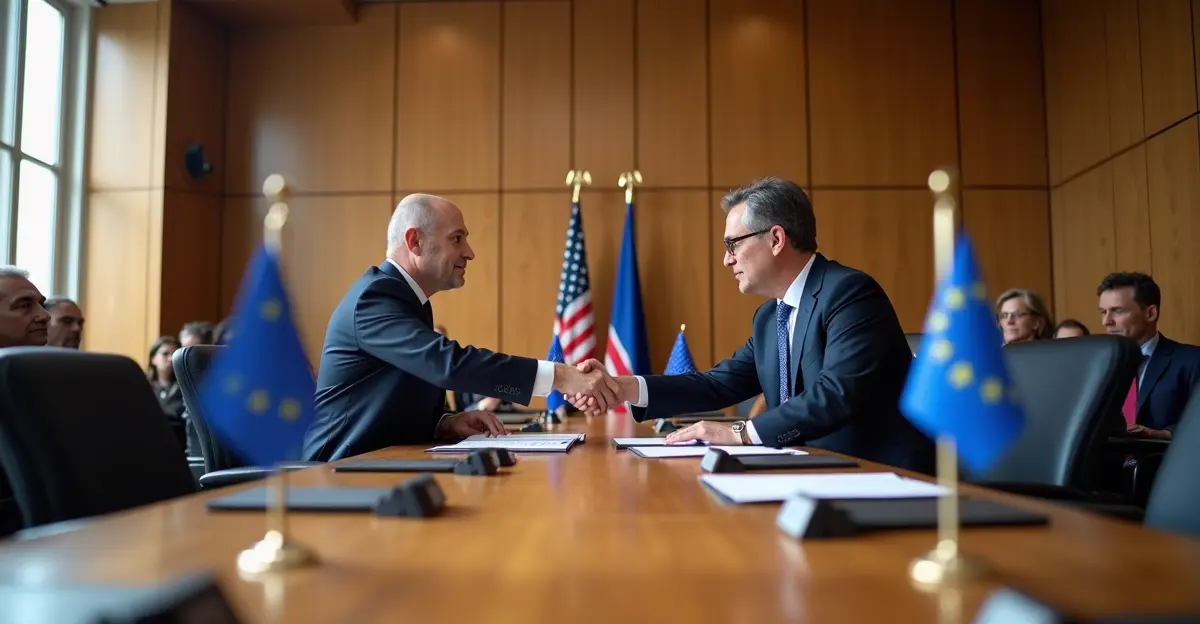
On April 24, 2026, U.S. Trade Representative Ambassador Jamieson Greer and EU Trade Commissioner Maroš Šefčovič signed the U.S.-EU Critical Minerals Action Plan in Washington, D.C., marking a historic transatlantic effort to break China's stranglehold on rare earth and critical mineral supply chains. Backed by over $30 billion in financing and the newly launched FORGE framework (Forum on Resource Geostrategic Engagement) with 54 nations, the initiative targets China's estimated 90% control over global rare earth processing. But can the West achieve meaningful supply chain autonomy by 2030, or will structural bottlenecks and China's entrenched advantages limit the strategy's impact?
What Is the U.S.-EU Critical Minerals Action Plan?
The Action Plan is a binding strategic framework between the United States and the European Union to coordinate trade policies on critical minerals supply chains. Signed by Secretary of State Marco Rubio and Commissioner Šefčovič, the plan aims to develop a plurilateral trade initiative with like-minded partners. Key elements include exploring border-adjusted price floors for critical minerals such as cobalt ($25.20/lb) and lithium ($15,200/tonne), establishing strategic reserves, and securing bilateral sourcing agreements. The plan serves as the primary mechanism for the U.S. and EU to address non-market policies and practices that have distorted global mineral markets, particularly those employed by China.
FORGE: Replacing the Minerals Security Partnership
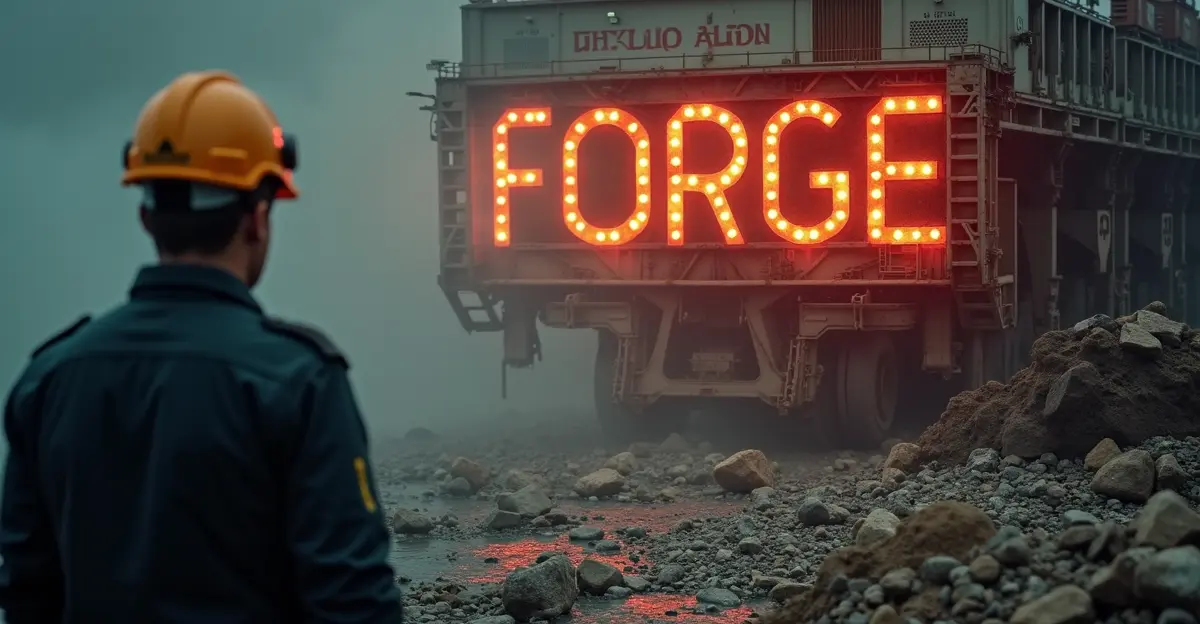
On February 4, 2026, the U.S. State Department hosted the 2026 Critical Minerals Ministerial, where Secretary Rubio announced FORGE (Forum on Resource Geostrategic Engagement) as the successor to the Minerals Security Partnership (MSP). Chaired by South Korea, FORGE brings together 54 nations and the European Commission to reshape the global critical minerals market. The initiative represents a significant escalation in Western coordination, moving from the MSP's project-focused approach to a broader trade-and-investment zone with coordinated policies, including price floors and preferential trade terms. The FORGE framework critical minerals strategy aims to create an alternative ecosystem that can compete with China's integrated supply chain.
Project Vault: A $12 Billion Strategic Reserve
A centerpiece of the U.S. strategy is Project Vault, announced by President Donald Trump in February 2026. The Export-Import Bank (EXIM) approved a Direct Loan of up to $10 billion (later expanded to $12 billion) to establish the U.S. Strategic Critical Minerals Reserve. This independently governed public-private partnership will store essential raw materials—including rare earth elements, lithium, cobalt, and graphite—in facilities across the United States. Participating original equipment manufacturers include Clarios, GE Vernova, Western Digital, and Boeing, with suppliers such as Hartree Partners and Traxys. The reserve is designed to protect domestic manufacturers from supply shocks while delivering a net positive return for U.S. taxpayers.
11 New Bilateral Sourcing Agreements
At the February 2026 Ministerial, the United States signed 11 new bilateral critical minerals frameworks or Memorandums of Understanding with countries including Argentina, Morocco, the Philippines, the United Arab Emirates, the United Kingdom, and the Cook Islands. These agreements aim to diversify sourcing away from China by securing access to raw materials and encouraging investment in processing infrastructure. Argentina, with its vast lithium reserves in the Salar de Atacama and Salinas Grandes, is a key partner for battery minerals. Morocco offers proximity to European markets and existing phosphate infrastructure that can be adapted for rare earth processing. The Philippines holds significant nickel and cobalt resources critical for EV batteries. However, the bilateral critical minerals deals 2025-2026 face challenges: many partner countries lack domestic processing capacity, creating potential new dependencies.
China's 15th Five-Year Plan: Reinforcing Dominance
China's 15th Five-Year Plan (2026-2030) explicitly prioritizes global leadership in rare earth elements, expanded domestic exploration, upgraded export controls, and consolidation of industrial chain autonomy. Since 2025, Beijing has imposed export controls on 12 of 17 rare earth elements, finished magnets, and processing technologies. Licensing approval rates for European firms have fallen below 25%, triggering price spikes of up to sixfold for elements like dysprosium and terbium. China has invested over $57 billion since 2000 in critical minerals, building vertically integrated mine-to-magnet supply chains that Western projects cannot match on cost or scale. The China rare earth export controls 2026 are designed not to cut off supply entirely but to maintain pricing power and extract strategic concessions.
Structural Bottlenecks: Processing Capacity Gap
The most significant obstacle to Western supply chain autonomy is the lack of processing capacity. China controls approximately 90% of global rare earth refining and 99% of heavy rare earth processing. Specialized processing technology—including solvent extraction, ion exchange, and magnet manufacturing—remains largely controlled by Chinese state-owned enterprises. Analysts estimate it will take 5-7 years for meaningful new processing capacity to come online outside China, and 20-30 years to fully replicate the integrated supply chain. Western projects in Australia, the United States, and Europe face permitting delays, high capital costs, and environmental opposition. The U.S. signed an $8.5 billion rare earth pact with Australia and deals with Malaysia and Thailand, but these remain early-stage.
Price Floors: A Double-Edged Sword
The FORGE framework introduces coordinated price floors for critical minerals, with Vice President JD Vance announcing targets of $25.20 per pound for cobalt and $15,200 per tonne for lithium. These floors aim to incentivize domestic production by guaranteeing minimum returns, but they risk raising costs for downstream industries such as EV manufacturing and battery production. Critics argue that price floors could distort markets, invite trade disputes, and ultimately slow the energy transition by making clean technologies more expensive. The critical minerals price floor impact on global markets remains uncertain, particularly if China responds by flooding markets with below-floor supply.
Expert Perspectives
"The rest of Asia probably just has to keep taking it off China for now," said mining executive Mick McMullen, highlighting the depth of China's entrenched advantages. A multi-institutional analysis published in 2026 concludes that China is weaponizing control—not scarcity—by using temporary, reversible restrictions to maintain dominance while discouraging large-scale Western alternative investment. The analysis warns that Western nations face a 12-18 month window to act decisively or face prolonged vulnerability.
EU Trade Commissioner Maroš Šefčovič emphasized that the MOU with the U.S. will deliver "concrete, tangible projects for business operators," strengthening the strategic partnership. Secretary Rubio noted that the over-concentration of critical mineral resources "dominated by one or two places poses an unacceptable risk to economic vibrancy and national security."
Can the West Achieve Autonomy by 2030?
The short answer is likely no—at least not fully. While the U.S.-EU Critical Minerals Action Plan, FORGE, Project Vault, and bilateral agreements represent a significant strategic pivot, structural bottlenecks in processing capacity, China's 15th Five-Year Plan investments, and the sheer scale of China's integrated supply chain mean that meaningful autonomy is unlikely before 2035 at the earliest. However, the initiatives could achieve partial success: diversifying sources of raw materials, building strategic reserves to buffer against supply shocks, and establishing the policy infrastructure for long-term competition. The race is not a sprint but a marathon, and the West has finally started running.
Frequently Asked Questions
What is the U.S.-EU Critical Minerals Action Plan?
It is a strategic framework signed in April 2026 between the United States and the European Union to coordinate trade policies, investment, and standards for critical minerals supply chains, aiming to reduce dependence on China.
What is FORGE and how does it differ from the MSP?
FORGE (Forum on Resource Geostrategic Engagement) is the successor to the Minerals Security Partnership, launched in February 2026 with 54 nations. It establishes a broader trade-and-investment zone with coordinated price floors and preferential trade terms, whereas the MSP focused on individual project support.
What is Project Vault?
Project Vault is a $12 billion U.S. Strategic Critical Minerals Reserve, funded by the Export-Import Bank, that will stockpile rare earths, lithium, cobalt, and other critical materials to protect domestic manufacturers from supply disruptions.
How much control does China have over rare earth processing?
China controls approximately 90% of global rare earth processing and 99% of heavy rare earth refining, giving it near-monopoly power over these essential materials.
Can the West break China's monopoly by 2030?
Most analysts believe full autonomy is unlikely before 2035 due to processing capacity gaps, China's entrenched advantages, and the long lead times required to build integrated supply chains. However, partial diversification and strategic reserves could reduce vulnerability.
Conclusion
The U.S.-EU Critical Minerals Action Plan represents the most ambitious Western effort yet to counter China's rare earth dominance. With over $30 billion in financing, a 54-nation framework, strategic reserves, and bilateral sourcing agreements, the initiative has the potential to reshape global critical mineral markets. However, China's 15th Five-Year Plan, its control over processing technology, and the long timelines required for new capacity mean that the West faces an uphill battle. The next five years will determine whether this strategic pivot can achieve meaningful supply chain resilience or whether China's monopoly will endure.



Follow Discussion