


 Deutsch
 English
 Español
 Français
 Nederlands
 Português


 Share
Share




The global struggle for critical minerals has entered a decisive new phase in early 2026, as the United States and its allies launch a multipronged counter-offensive against China's near-total dominance over rare earth and strategic mineral processing. With Beijing controlling roughly 90% of global rare earth refining and 94% of permanent magnet production, the stakes have never been higher for industries ranging from electric vehicles and wind turbines to defense systems and artificial intelligence hardware.
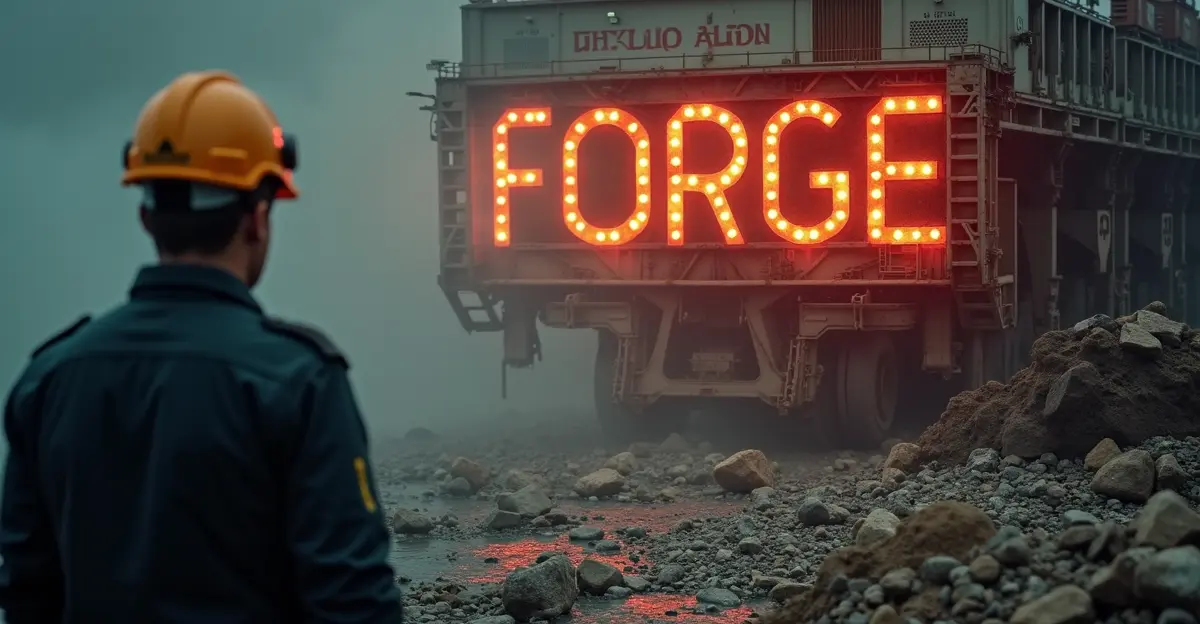
In February 2026, the U.S. government unveiled Project Vault, a $10 billion public-private partnership to establish a Strategic Critical Minerals Reserve, and launched the Forum on Resource Geostrategic Engagement (FORGE), a 54-nation coalition aimed at breaking China's stranglehold. Simultaneously, the European Union is accelerating implementation of its Critical Raw Materials Act (CRMA), which sets binding 2030 targets for domestic extraction, processing, and recycling. The question now is whether these initiatives can achieve meaningful supply chain diversification within a narrowing 12-to-18-month window before China's advantages become strategically irreversible.
China's Strategic Monopoly and the 2025-2026 Export Control Shock
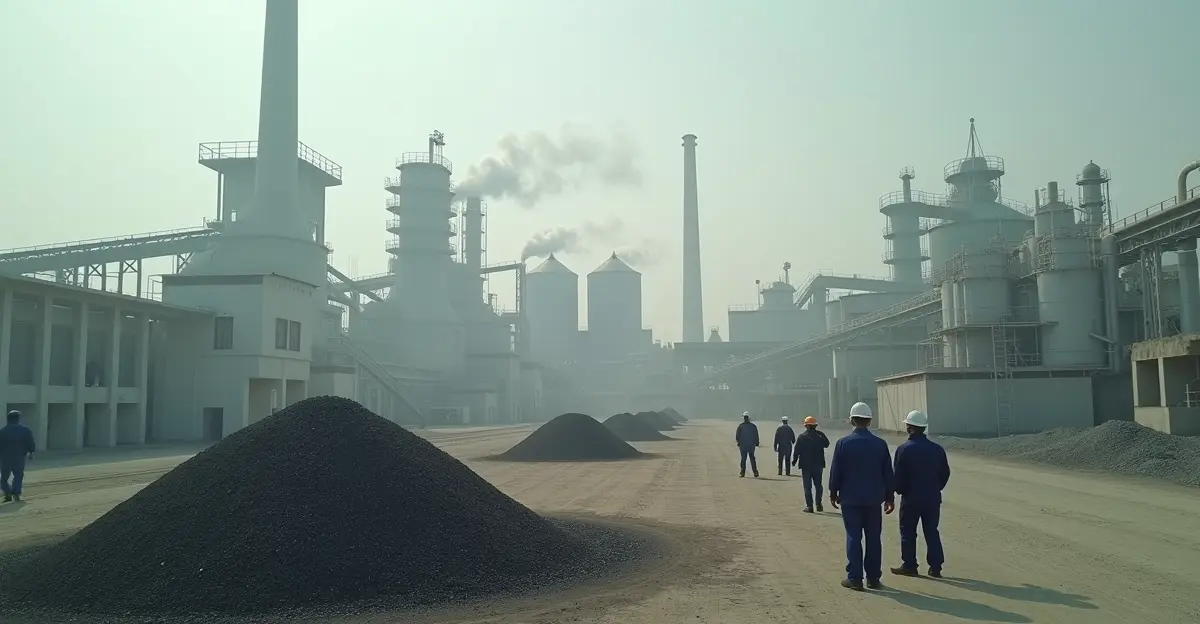
China's dominance in critical minerals is not accidental but the result of a deliberate, decades-long national strategy. According to a 2026 Griffith Asia Institute study, while China mines approximately 70% of global rare earths, its true leverage lies downstream: controlling ~90% of refining and ~94% of permanent magnet manufacturing. This vertically integrated value chain gives Beijing decisive influence over materials essential to modern technology.
In October 2025, China imposed its most sweeping export controls to date, covering rare earth elements, synthetic graphite, high-performance lithium-ion batteries, and associated technologies. The measures, issued via multiple MOFCOM announcements, established a non-automatic licensing system that has slashed approval rates for European firms below 25%. The result has been price spikes of up to sixfold for key materials, with tungsten and antimony prices also surging. Analysts at the European Parliamentary Research Service have described these controls as a deliberate weaponization of supply chains designed to extract geopolitical concessions rather than conserve resources.
The 2025 export control regime has exposed acute vulnerabilities. Over 80% of European companies depend on Chinese supply chains for minerals essential to defense, EVs, and renewable energy. NATO stockpiles are sufficient for only 6-9 months of high-intensity conflict, according to informedclearly.com analysis. The timing of China's actions, coinciding with heightened tensions over Taiwan and technology disputes, underscores the strategic calculus behind Beijing's approach.
Project Vault: America's $10 Billion Stockpile Gambit
Project Vault, announced on February 2, 2026, by the Export-Import Bank of the United States (EXIM), represents the most ambitious U.S. effort to date to secure critical mineral supply chains. The initiative establishes a Strategic Critical Minerals Reserve through a public-private partnership involving original equipment manufacturers including Clarios, GE Vernova, Western Digital, and Boeing, along with commodity suppliers Hartree Partners, Mercuria Americas, and Traxys.
EXIM's Board approved a Direct Loan of up to $10 billion to fund the initiative, which aims to store essential raw materials in facilities across the United States. The program is designed to support domestic manufacturers from supply shocks, strengthen U.S. critical minerals production and processing, and reduce dependence on foreign-controlled supply chains. Leaders from participating companies have praised the initiative as transformative for American manufacturing and national economic security.
However, critics note a fundamental limitation: America currently lacks commercial-scale heavy rare earth separation capability. As Rare Earth Exchanges has pointed out, stockpiling imported oxides does not address the core issue of industrial sovereignty. Without parallel investment in domestic processing infrastructure, Project Vault risks becoming a costly warehouse for materials that still depend on Chinese refining capacity.
FORGE: A 54-Nation Coalition with Teeth
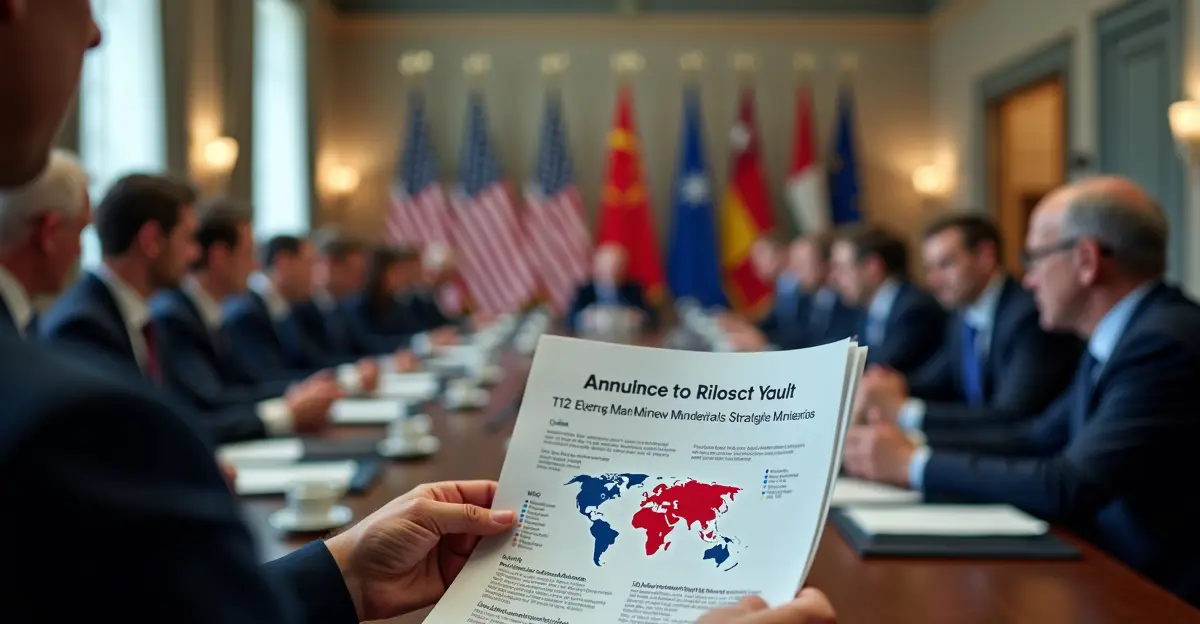
On February 4, 2026, Secretary of State Marco Rubio, Vice President JD Vance, and other top U.S. officials hosted representatives from 54 countries and the European Commission at the 2026 Critical Minerals Ministerial in Washington, D.C. The centerpiece of the event was the launch of FORGE (Forum on Resource Geostrategic Engagement), the successor to the Minerals Security Partnership (MSP).
FORGE represents a significant escalation in ambition. The coalition has mobilized over $30 billion in support for critical mineral projects, including EXIM's $10 billion Project Vault. The U.S. has signed 11 new bilateral critical minerals frameworks at the ministerial, bringing the total to 21 agreements signed in just five months. Partner countries include Argentina, Morocco, the Philippines, the UAE, and the United Kingdom.
A key innovation of FORGE is its system of reference price floors enforced through adjustable tariffs, designed to counter Chinese state-subsidized dumping. The Atlantic Council has described this as a shift toward practicing statecraft through markets, internationalizing price interventions rather than relying solely on U.S. taxpayers. South Korea has been named chair of the forum, signaling the importance of Asian allies in the coalition.
The FORGE critical minerals coalition aims to cover two-thirds of the global economy through its network of bilateral agreements and plurilateral coordination. However, operational details remain sparse, and questions persist about whether bilateral leverage can translate into genuine plurilateral cooperation, especially given rising resource nationalism among producer nations.
EU's Critical Raw Materials Act: Binding Targets and Strategic Projects
The European Union is pursuing its own parallel track through the Critical Raw Materials Act (CRMA), which entered into force in May 2024 but is being accelerated in response to the 2025-2026 crisis. The CRMA sets ambitious 2030 benchmarks: the EU aims to extract 10%, process 40%, and recycle 25% of its annual strategic raw material consumption domestically.
In early 2026, the European Commission announced funding of up to €3 billion ($3.5 billion) under its ReSourceEU Action Plan. The plan includes regulatory fast-tracking for strategic projects, with Vulcan Energy's German lithium project receiving €250 million from the European Investment Bank and Greenland Resources' molybdenum mine also prioritized. A new European Critical Raw Materials Centre, modeled on Japan's JOGMEC, will help finance projects, generate market intelligence, and manage joint purchasing and stockpiling.
Export restrictions on scrapped permanent magnets and aluminum began in early 2026, with battery material exports to non-OECD countries banned from September 2026. The EU has also concluded 15 partnership agreements with resource-rich countries, with Brazil next in line. The EU Critical Raw Materials Act compliance requirements are creating new obligations for companies operating in or supplying the EU market, including enhanced supply chain due diligence and investment in allied-country processing capabilities.
Can Friend-Shoring Break China's Grip?
The core strategy uniting Project Vault, FORGE, and the CRMA is friend-shoring: building diversified supply chains among geopolitically aligned nations. The concept, first systematically applied through the Minerals Security Partnership, aims to reduce dependence on adversarial suppliers while maintaining economic efficiency.
However, experts remain deeply divided on whether this approach can succeed within the available timeframe. A multi-institutional analysis warns that rebuilding independent alternatives could take 20-30 years, far exceeding the current geopolitical window. The report gives Western nations a 12-18 month window to act decisively before supply chain realignment becomes prohibitively expensive or strategically irreversible.
China's advantages are not limited to processing capacity. Beijing has invested over $120 billion in overseas mining projects, securing access to raw materials in Africa, South America, and Southeast Asia. Its extraterritorial export controls require licenses for products containing even trace amounts of Chinese-origin rare earths, effectively extending Beijing's reach into global supply chains. Furthermore, China's new rare earth magnet foreign product rule restricts the use of Chinese-origin materials in foreign-manufactured magnets, creating additional barriers for Western companies.
The friend-shoring critical minerals strategy also faces internal challenges. Rising resource nationalism among producer nations could complicate bilateral agreements, while maintaining political will amid price volatility remains uncertain. The defense sector is particularly vulnerable, with NATO stockpiles sufficient for only 6-9 months of high-intensity conflict, according to informedclearly.com analysis.
Expert Perspectives
"China's dominance in rare earths is not accidental but a deliberate, decades-long national strategy that continues to deepen," states the Griffith Asia Institute study. "Western efforts focused solely on new mines will fail without parallel investment in separation, refining, and magnet manufacturing."
Analysts at the Atlantic Council offer a more optimistic view: "FORGE represents a move toward practicing statecraft through markets. The question is whether bilateral leverage can translate into genuine plurilateral coordination."
The European Commission has emphasized the urgency, with officials noting that "over 80% of European companies depend on Chinese supply chains for minerals essential to defense, EVs, and renewable energy."
FAQ: Critical Minerals and Supply Chain Security
What are critical minerals?
Critical minerals are raw materials essential for modern technologies—including rare earths, lithium, cobalt, graphite, and tungsten—for which there are no viable substitutes and whose supply is dominated by a few producers, creating strategic vulnerabilities.
Why does China dominate critical mineral processing?
China's dominance stems from decades of deliberate state investment in downstream processing infrastructure, environmental regulations that deter competitors, and a vertically integrated supply chain from mining to magnet manufacturing. Beijing controls ~90% of rare earth refining and ~94% of permanent magnet production.
What is Project Vault?
Project Vault is a $10 billion U.S. public-private partnership announced in February 2026 to establish a Strategic Critical Minerals Reserve, storing essential raw materials to protect domestic manufacturers from supply shocks and reduce dependence on foreign-controlled supply chains.
What is FORGE?
The Forum on Resource Geostrategic Engagement (FORGE) is a 54-nation coalition launched in February 2026, chaired by South Korea, that replaces the Minerals Security Partnership. It mobilizes over $30 billion for critical mineral projects and uses reference price floors to counter Chinese market manipulation.
Can the West break China's monopoly on critical minerals?
Experts are divided. While initiatives like Project Vault, FORGE, and the EU's CRMA represent significant steps, China's decades-long head start in processing infrastructure, its $120B+ overseas mining investments, and its extraterritorial export controls create formidable barriers. The window for meaningful diversification is estimated at 12-18 months before costs become prohibitive.
Conclusion: A Race Against Time
The February 2026 Critical Minerals Ministerial marked a turning point in the geopolitical struggle for critical resources. Project Vault, FORGE, and the EU's accelerated CRMA represent the most coordinated Western response to date against China's strategic monopoly. Yet the gap between ambition and capability remains vast.
The next 12 to 18 months will determine whether friend-shoring and diversified sourcing can break China's near-monopoly before supply chain realignment becomes prohibitively expensive or strategically irreversible. Success will require not just stockpiles and agreements, but massive investment in domestic processing capacity, permitting reform, workforce development, and sustained political will across multiple election cycles. The alternative is a world where Beijing's control over critical minerals translates into permanent leverage over the technologies that define the 21st century.
Sources
- U.S. Export-Import Bank, Project Vault Announcement, February 2, 2026
- U.S. Department of State, 2026 Critical Minerals Ministerial Press Release, February 4, 2026
- European Commission, ReSourceEU Action Plan, 2026
- Griffith Asia Institute, "China's Rare Earth Processing Dominance," 2026
- European Parliamentary Research Service, "China's Rare-Earth Export Restrictions," 2025
- Rare Earth Exchanges, "China's 2026 Export Controls Redraw the Global Supply Chain Map"
- Atlantic Council, "US Critical Minerals Policy Goes Collaborative with FORGE"
- Informed Clearly, "FORGE: The 54-Nation Coalition Challenging China's Critical Minerals Dominance"

Follow Discussion