


 Deutsch
 English
 Español
 Français
 Nederlands
 Português


 Share
Share




The Critical Minerals Arms Race: Project Vault, China's Export Controls, and the Battle for 2026 Supply Chains
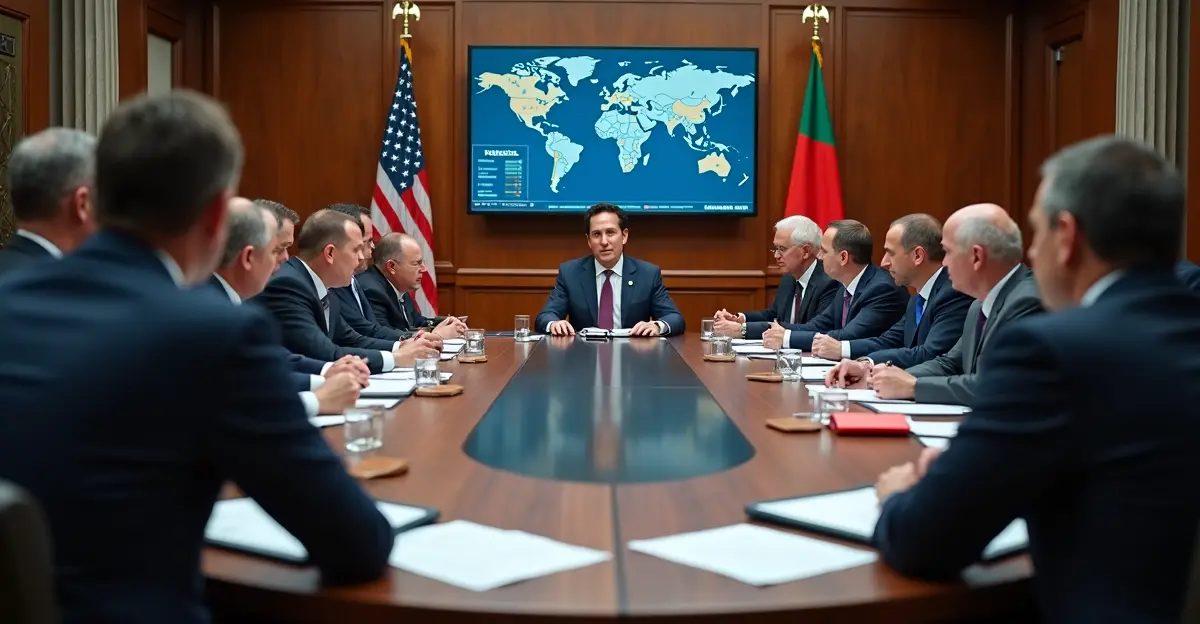
In February 2026, the United States hosted the inaugural Critical Minerals Ministerial in Washington D.C., convening 54 nations and the European Commission to counter China's tightening stranglehold on rare earths and critical minerals. With Beijing controlling roughly 90% of global rare earth processing and 99% of heavy rare earth separation, new export controls imposed in 2025-2026 have sent prices soaring up to sixfold outside China and slashed licensing approval rates for European firms below 25%. The Western response — including the US-led Project Vault, a $12 billion strategic reserve, the 54-nation FORGE alliance, and the EU's RESourceEU plan — represents the most consequential supply chain realignment since the Cold War. But with a narrow 12- to 18-month window before China's structural leverage becomes irreversible, the question remains: can the West rebuild independent critical mineral supply chains in time?
China's Weaponized Leverage: The 0.1% Rule and Sixfold Price Spikes
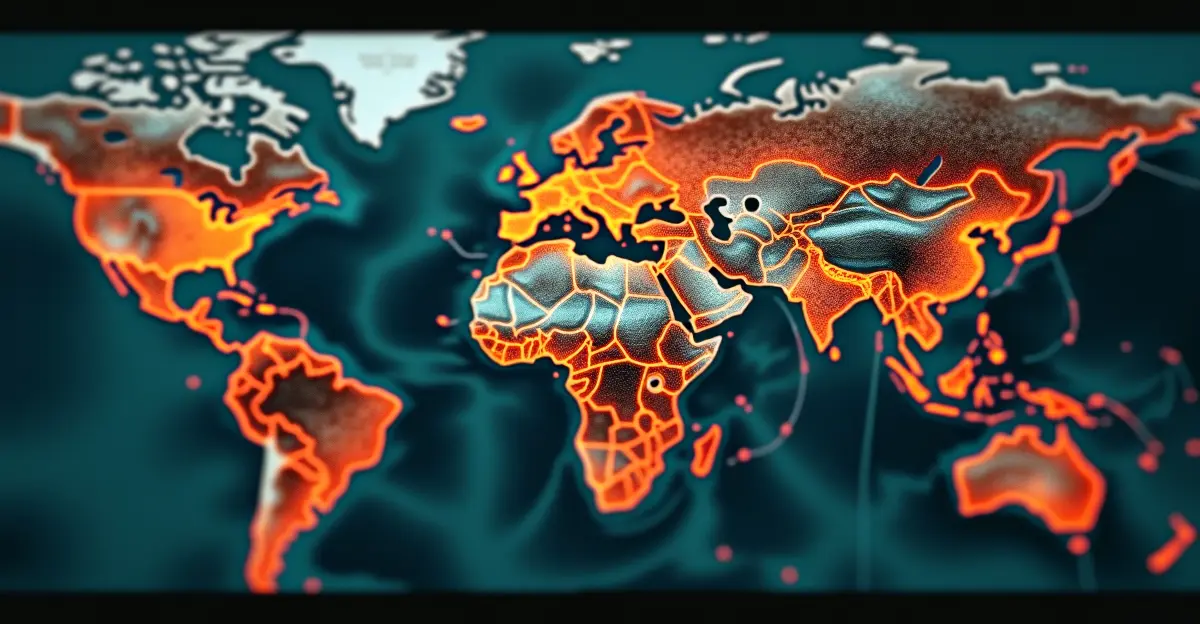
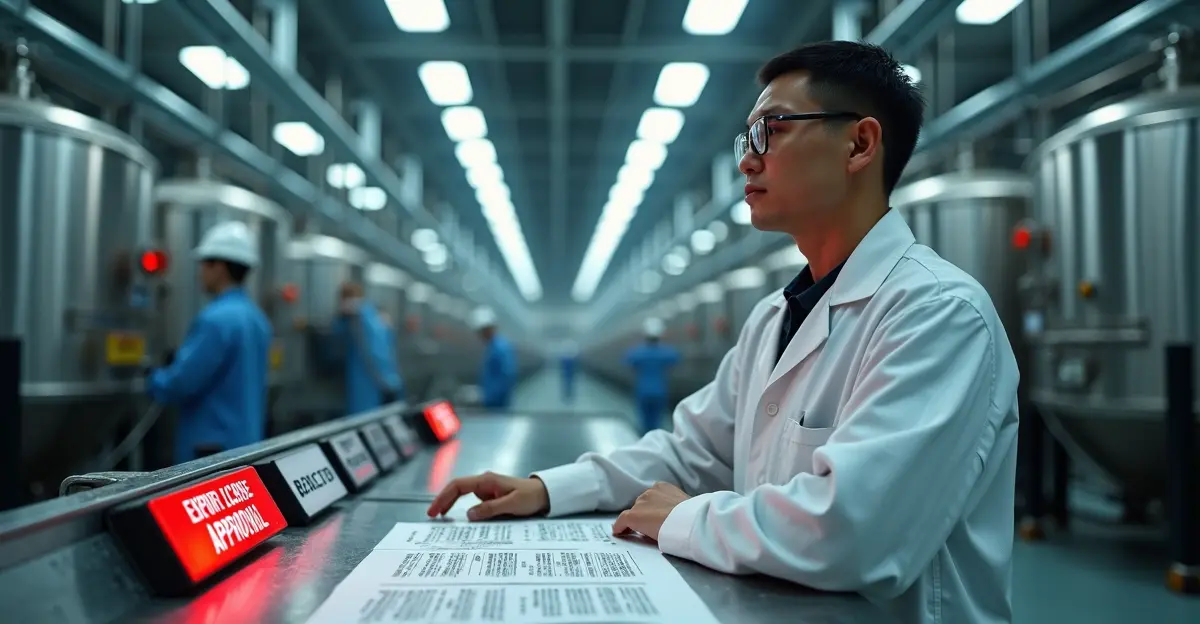
China's dominance in critical minerals is not new, but the scale and sophistication of its 2025-2026 export controls mark a strategic escalation. According to a multi-institutional analysis drawing from the European Parliament Research Service, OECD, and CSIS, China controls 90% of rare earth processing, 80% of tungsten, and 60% of antimony. In October 2025, Beijing introduced the so-called '0.1% Rule' — any product globally containing more than 0.1% Chinese-origin rare earth by value requires a Chinese export license, effectively extending extraterritorial jurisdiction over global supply chains. The result has been dramatic: rare earth prices outside China have surged up to sixfold, while European firms report licensing approval rates below 25% for critical materials. Over 80% of European companies remain dependent on Chinese supply chains for minerals essential to defense, electric vehicles (EVs), and renewable energy.
The China rare earth export controls are designed not to create permanent scarcity but to maintain reversible leverage. As analysts note, Beijing is weaponizing control — not scarcity — using temporary restrictions that preserve pricing power and extract strategic concessions while discouraging long-term Western investment in alternatives.
Project Vault: America's $12 Billion Strategic Reserve
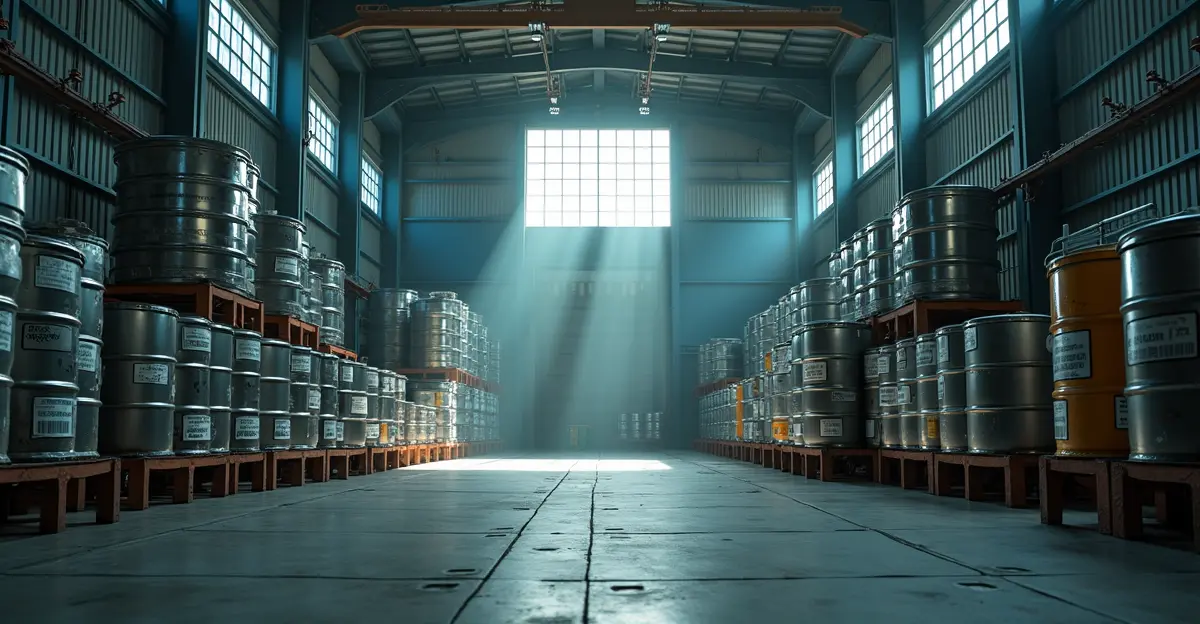
On February 2, 2026, President Trump announced Project Vault, a $12 billion public-private partnership to establish the US Strategic Critical Minerals Reserve. Financed through a $10 billion Export-Import Bank direct loan — the largest in the agency's history — and $2 billion in private capital, the reserve will store all 60 minerals on the USGS 2025 Critical Minerals List, initially emphasizing rare earth elements. Participating manufacturers include Boeing, General Motors, GE Vernova, Clarios, and Western Digital, with suppliers such as Hartree Partners and Traxys committing to long-term purchase agreements in exchange for guaranteed access.
EXIM Chairman John Jovanovic stated at the announcement: 'Project Vault is designed to deliver a net positive return for US taxpayers while shielding American manufacturers from supply shocks and reducing dependence on foreign-controlled supply chains.' However, the initiative faces structural challenges: the United States is 100% import-dependent for minerals like natural graphite and manganese, and domestic mining projects typically take 16 to 29 years to develop. The reserve thus serves as a strategic buffer — covering an estimated 6 to 11 months of high-intensity defense needs — while longer-term alternatives mature.
FORGE and the 54-Nation Alliance
At the February 4, 2026 Critical Minerals Ministerial, Secretary of State Marco Rubio launched FORGE (Forum on Resource Geostrategic Engagement), succeeding the Minerals Security Partnership. Chaired by South Korea until June 2026, FORGE creates a preferential trade-and-investment zone with coordinated price floors and adjustable tariffs to prevent undercutting by non-market actors. The United States signed 11 new bilateral critical minerals frameworks with countries including Argentina, Morocco, the Philippines, the UAE, and the United Kingdom, mobilizing over $30 billion in letters of interest, loans, and investments.
Vice President JD Vance emphasized at the Ministerial: 'We are moving from multilateral talk to bilateral action. FORGE will ensure that nations committed to fair market principles can access the materials they need without coercion.' The FORGE alliance critical minerals strategy marks a shift from broad multilateralism to minilateral and bilateral arrangements, risking fragmented global standards but enabling faster implementation.
RESourceEU: Europe's Countermove
The European Union has not stood idle. On December 3, 2025, the European Commission adopted the RESourceEU Action Plan, building on the 2024 Critical Raw Materials Act (CRMA). The plan sets 2030 targets for 10% domestic extraction, 40% processing, and 25% recycling of strategic raw materials. It mobilizes €3 billion in EU funding within 12 months, creates a European Critical Raw Materials Centre (operational from early 2026) to provide market intelligence and coordinate joint purchasing, and proposes export restrictions on scrap from permanent magnets to bolster recycling capacity.
In February 2026, Italy, France, and Germany announced a joint stockpiling initiative for critical minerals, signaling that Europe is moving toward strategic reserves similar to Project Vault. However, the Oxford Institute for Energy Studies warns that lengthy permitting timelines, high energy costs, and environmental opposition remain significant hurdles. The EU RESourceEU critical raw materials plan represents a necessary but insufficient step given the scale of China's processing dominance.
Defense, EVs, and Renewables at Risk
The implications for key sectors are profound. Each F-35 fighter jet requires over 400 kilograms of rare earth materials — neodymium, samarium, dysprosium, terbium, and yttrium — for magnets, radar, stealth coatings, and guidance systems. Every Tomahawk missile and Virginia-class submarine depends on materials flowing through Chinese facilities. The US National Defense Stockpile would be exhausted within 6 to 11 months for critical systems under high-intensity conflict scenarios, according to ForcedAlpha research.
In the EV sector, permanent magnet motors — used in the vast majority of electric vehicles — rely on neodymium and dysprosium, of which China controls over 90% of global magnet production. Non-Chinese magnet production capacity is projected to reach only 7% of global output by 2028, despite billions in Western onshoring commitments. Similarly, wind turbines and solar panels depend on rare earths and critical minerals that remain overwhelmingly processed in China.
The critical minerals defense supply chain vulnerability has prompted the Pentagon to enter a floor-price arrangement with MP Materials at $110 per kilogram for neodymium-praseodymium oxide, aiming to incentivize domestic production. But analysts warn that full supply chain independence remains 5 to 7 years away — far beyond the 12- to 18-month window before China's structural leverage becomes irreversible.
Expert Perspectives: A Narrow Window
Dr. Jane Nakano, senior fellow at the Center for Strategic and International Studies (CSIS), notes: 'The 2026 Critical Minerals Ministerial represents a genuine paradigm shift in how Western nations approach resource security. But the gap between ambition and execution remains vast. China has spent decades building its processing infrastructure; the West cannot replicate that overnight.'
A multi-institutional report from the European Parliament Research Service, OECD, and CSIS concludes that rebuilding independent Western supply chains could take 20 to 30 years under current trajectories. The report warns that the next 12 to 18 months represent a critical window for decisive action — after which China's structural advantages may become insurmountable.
FAQ: Critical Minerals and Supply Chains
What are critical minerals?
Critical minerals are raw materials essential for advanced technologies, defense systems, renewable energy, and electronics, for which supply chains are vulnerable to disruption. Examples include rare earth elements, lithium, cobalt, graphite, tungsten, and antimony.
Why does China dominate critical mineral processing?
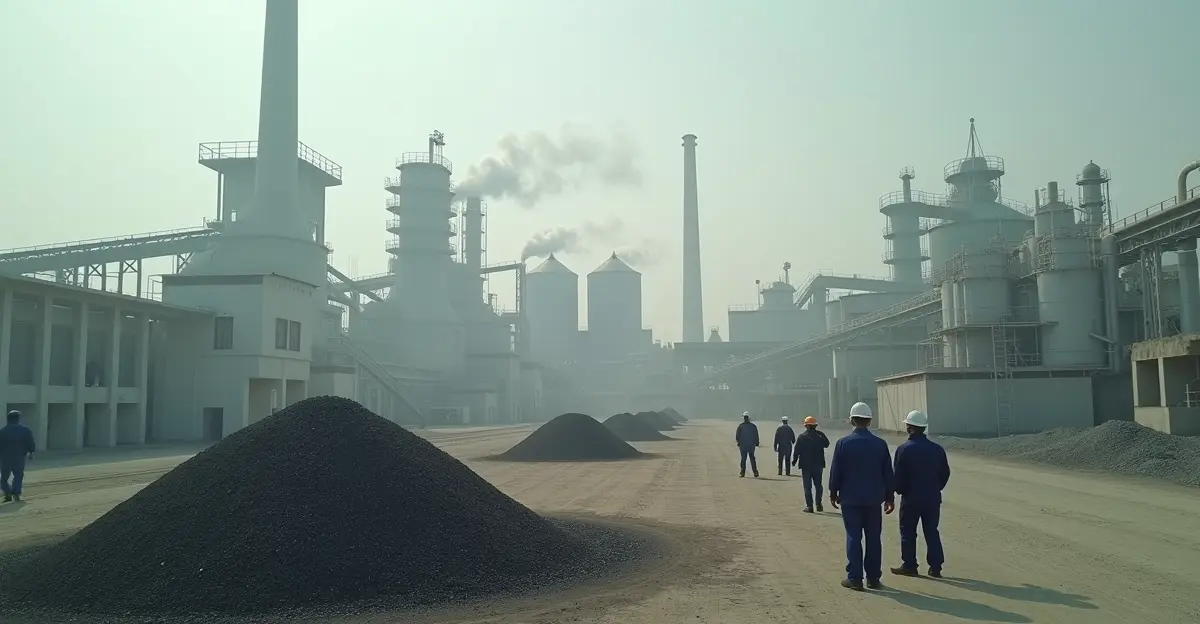
China controls approximately 90% of global rare earth processing and 99% of heavy rare earth separation, despite holding only 35% of global reserves. This dominance stems from decades of strategic investment, lax environmental regulations, and state-directed industrial policy.
What is Project Vault?
Project Vault is a $12 billion US public-private initiative announced in February 2026 to establish a Strategic Critical Minerals Reserve. Financed by a $10 billion EXIM loan and $2 billion in private capital, it aims to shield American manufacturers from supply disruptions and reduce dependence on Chinese-controlled supply chains.
What is the FORGE alliance?
FORGE (Forum on Resource Geostrategic Engagement) is a 54-nation alliance launched in February 2026, succeeding the Minerals Security Partnership. Chaired by South Korea, it creates a preferential trade-and-investment zone with coordinated price floors to counter China's dominance in critical minerals.
Can the West achieve supply chain independence?
Analysts estimate that full supply chain independence for critical minerals would require 5 to 7 years under accelerated scenarios, and 20 to 30 years under current trajectories. The next 12 to 18 months are considered a critical window for decisive action before China's structural leverage becomes irreversible.
Conclusion: The Race Against Time
The February 2026 Critical Minerals Ministerial and the launch of FORGE, Project Vault, and RESourceEU represent the most ambitious Western response to China's critical minerals dominance in decades. Yet the gap between policy announcements and actual processing capacity remains daunting. With rare earth prices spiking sixfold, European licensing approvals below 25%, and defense stockpiles sufficient for only months of high-intensity conflict, the urgency is undeniable. The next 12 to 18 months will determine whether the West can build independent supply chains — or whether China's structural leverage becomes a permanent feature of the global economy. For the F-35, the EV industry, and the renewable energy transition, the stakes could not be higher.
Follow Discussion