


 Deutsch
 English
 Español
 Français
 Nederlands
 Português


 Share
Share




In February 2026, 54 nations launched the Forum on Resource Geostrategic Engagement (FORGE) with over $30 billion in commitments to dismantle China's near-total monopoly on rare earth and critical mineral supply chains. China controls roughly 90% of global rare earth processing and 80% of tungsten refining, and its 2025-2026 export controls have triggered sixfold price spikes, severely impacting NATO defense stockpiles and EV production. This article analyzes whether FORGE's plurilateral framework of reference pricing, bilateral deals, and coordinated investment can achieve supply chain independence within the narrowing 12-18 month window before Western vulnerabilities become acute.
The Critical Minerals Crisis: China's Stranglehold
China's dominance in critical minerals is not accidental but the result of decades of strategic industrial policy. Beijing controls approximately 90% of rare earth processing, 80% of tungsten refining, and 60% of antimony production. These materials are essential for F-35 fighter jets (each requiring over 400 kg of rare earth elements), EV motors, wind turbines, and precision munitions. The rare earth supply chain dependency has become a critical vulnerability for Western economies and defense sectors.
In 2025-2026, China tightened export controls on rare earths, tungsten, and antimony, causing up to sixfold price spikes outside China. European licensing approval rates for critical mineral exports fell below 25%, while over 80% of European companies remain dependent on Chinese supply chains. According to a multi-institutional analysis, China is weaponizing control—not scarcity—using temporary, reversible restrictions to maintain pricing power and extract strategic concessions while preventing large-scale Western alternative investment.
FORGE: A New Plurilateral Framework
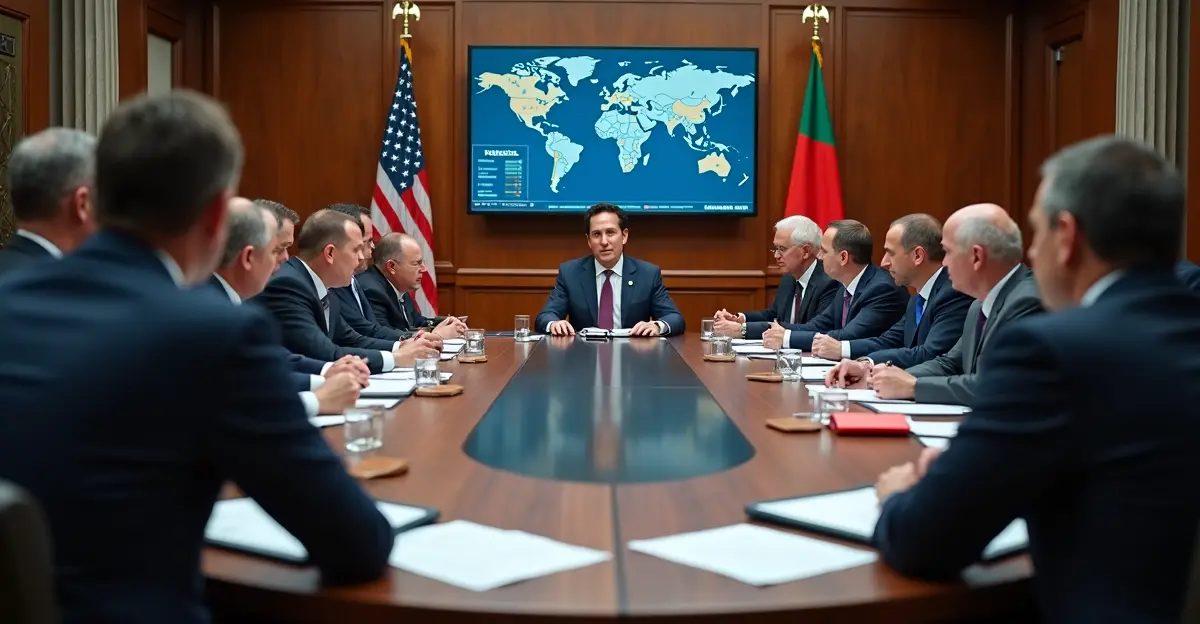
FORGE was launched at the inaugural Critical Minerals Ministerial hosted by the U.S. Department of State on February 4, 2026, led by Secretary of State Marco Rubio alongside Vice President JD Vance. The forum succeeds the Minerals Security Partnership but aims for sharper enforcement and faster action. FORGE is designed as a plurilateral coalition creating a preferential trade-and-investment zone for critical minerals with coordinated price floors to counter adversarial market manipulation.
Key features of FORGE include:
- Coordinated price supports: Vice President JD Vance proposed a preferential trade zone with binding price floors to stabilize markets and protect against non-market distortions. The DoD secured a floor-price deal with MP Materials at $110/kg for neodymium-praseodymium (NdPr) oxide.
- Over $30 billion mobilized in U.S. government financing for strategic minerals projects, including the $10 billion Project Vault—a public-private Strategic Critical Minerals Reserve backed by the Export-Import Bank.
- Eleven new bilateral framework agreements signed at the ministerial, bringing the total to twenty-one deals in five months. FORGE, chaired by South Korea, aims to link these bilateral deals into a functioning system covering two-thirds of the global economy.
- Trade-led model: Participation is conditioned on adherence to shared trade rules rather than joint capital deployment, making it more flexible and scalable than traditional alliances.
Can FORGE Succeed? Challenges Ahead
Despite the ambitious framework, analysts warn that full supply chain independence remains 5-7 years away, far exceeding the current geopolitical window. NATO defense stockpiles cover only 6-9 months of high-intensity conflict, while China holds 99% of heavy rare earth separation capacity—a critical vulnerability for Western defense and green energy sectors.
The critical minerals investment gap remains enormous. Rebuilding independent Western supply chains would take 20-30 years, according to experts, while the window to act decisively is narrowing to 12-18 months. China's export controls are designed to be reversible, allowing Beijing to maintain leverage while preventing Western investment from reaching scale.
Project Vault and Domestic Production
Project Vault, announced by President Trump, is a $10 billion EXIM initiative to establish a domestic strategic reserve for critical minerals. This marks a significant step in U.S. industrial policy, but domestic mining and processing capacity remains limited. The U.S. currently has only one operating rare earth mine (MP Materials' Mountain Pass facility in California) and limited processing capabilities.
Bilateral Deals and the EU Response
The EU accelerated efforts under the Critical Raw Materials Act, selecting 60 Strategic Projects to reduce dependency. Saudi Arabia and the UAE are deploying over $100 billion in mineral investments, positioning themselves as alternative suppliers. However, the EU critical minerals strategy faces challenges in scaling up processing capacity and securing financing.
Impact on Defense and Energy Transition
The stakes are existential for Western defense. A single F-35 requires over 400 kg of rare earth elements, while precision munitions, missile guidance systems, and radar technologies all depend on these materials. The sixfold price spikes have already impacted NATO stockpiles, with some member states reporting critical shortages.
For the energy transition, rare earths are essential for EV motors and wind turbine magnets. The EV battery supply chain remains heavily dependent on Chinese processing, threatening the pace of electrification in Western markets. Tungsten prices hit record highs in April 2026 as China's export restrictions and rising military demand drove a surge in investment, according to Reuters.
Expert Perspectives
"China is weaponizing control—not scarcity," said a senior analyst at the Center for Strategic and International Studies. "The export controls are designed to be temporary and reversible, allowing Beijing to maintain pricing power and extract strategic concessions while preventing large-scale Western alternative investment."
"FORGE represents the most ambitious attempt to date to create a parallel supply chain," noted an Atlantic Council expert. "But the timeline is brutally tight. We have 12-18 months to demonstrate progress before vulnerabilities become acute."
FAQ
What is FORGE?
FORGE (Forum on Resource Geostrategic Engagement) is a plurilateral coalition of 54 nations launched in February 2026 to create a preferential trade-and-investment zone for critical minerals, with coordinated price floors to counter China's market dominance.
How much funding has been committed?
Over $30 billion in U.S. government financing has been mobilized for strategic minerals projects, including the $10 billion Project Vault strategic reserve.
Why is China's control of critical minerals a problem?
China controls roughly 90% of rare earth processing and 80% of tungsten refining. Its 2025-2026 export controls caused sixfold price spikes, threatening NATO defense stockpiles and EV production.
Can FORGE succeed in breaking China's monopoly?
Analysts warn that full supply chain independence remains 5-7 years away, while the window to act is 12-18 months. Significant challenges include limited domestic processing capacity and China's reversible export controls.
What is Project Vault?
Project Vault is a $10 billion public-private Strategic Critical Minerals Reserve announced by President Trump, backed by the Export-Import Bank, to establish a domestic stockpile of critical minerals.
Conclusion: A Race Against Time
FORGE represents the West's most ambitious attempt to break China's grip on critical minerals, but the odds are daunting. With a 12-18 month window before vulnerabilities become acute, and full independence 5-7 years away, the initiative faces an uphill battle. Success will require unprecedented coordination, investment, and political will—and even then, China's deep-rooted advantages in processing and cost may prove difficult to overcome. The next 18 months will determine whether FORGE becomes a historic breakthrough or a costly lesson in the limits of plurilateral action.

Follow Discussion