


 Deutsch
 English
 Español
 Français
 Nederlands
 Português


 Share
Share




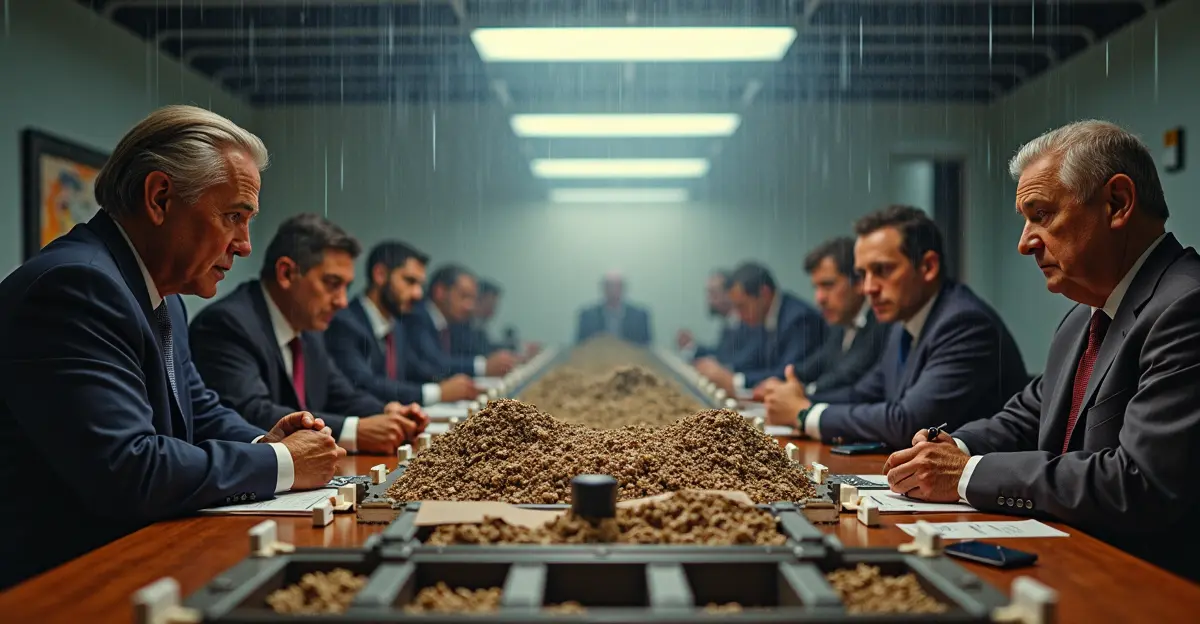
The February 2026 Critical Minerals Ministerial in Washington, D.C., marked a pivotal moment in the global struggle over rare earth elements and critical minerals. With China controlling roughly 90% of global rare earth processing and tightening export controls on samarium, gadolinium, lutetium, and other strategic materials, the United States and its allies are racing to build an alternative supply chain. The ministerial, hosted by Secretary of State Marco Rubio and Vice President JD Vance, brought together 54 nations and the European Commission, resulting in 11 new bilateral frameworks and the launch of the FORGE initiative backed by over $30 billion in government financing. But can this Western push realistically reduce dependency on Beijing within a decade?
China's Stranglehold on Critical Minerals
China's dominance in rare earths is not accidental. Through decades of strategic investment, Beijing has built an integrated processing ecosystem that spans mining, separation, refining, and magnet production. According to a multi-institutional analysis published in early 2026, China controls 90% of global rare earth processing, 80% of tungsten, and 60% of antimony. Over 80% of European firms depend on Chinese supply chains for these materials, which are essential for defense systems, electric vehicles, wind turbines, and advanced electronics.
In April 2025, China imposed export controls on seven medium and heavy rare earth elements, including samarium, gadolinium, terbium, dysprosium, lutetium, scandium, and yttrium. By October 2025, restrictions expanded to include processing equipment, targeting centrifuges, vacuum furnaces, and separation systems. The impact has been severe: licensing approval rates for European firms fell below 25%, while prices for critical minerals outside China spiked up to sixfold. The European Central Bank reported that Chinese rare earth magnet shipments dropped roughly 75% year-on-year, forcing some automakers to pause production.
Beijing's strategy relies on what analysts call 'managed dependence'—temporary, reversible restrictions that maximize leverage without triggering a unified Western response. As seen in the November 2025 truce, China suspended some export bans in exchange for U.S. tariff reductions, demonstrating the transactional nature of its approach. The EU carbon border tax and other trade measures have further complicated the geopolitical landscape.
The Western Response: FORGE, Project Vault, and Bilateral Deals
FORGE: A New Multilateral Framework
The centerpiece of the U.S. response is FORGE (Forum on Resource Geostrategic Engagement), announced at the February 2026 ministerial as the successor to the Minerals Security Partnership. Chaired by South Korea, FORGE aims to create a preferential trade-and-investment zone for critical minerals with coordinated price floors. Vice President Vance described reference prices maintained through adjustable tariffs to create stable investment conditions for mining projects. The initiative seeks to link bilateral agreements into a functioning system covering two-thirds of the global economy, though operational details remain to be clarified.
Project Vault and $30 Billion in Financing
The U.S. government has mobilized over $30 billion in letters of interest, loans, and investments for critical mineral projects over the past six months. A flagship initiative is Project Vault, a $10 billion EXIM-backed domestic strategic reserve for critical minerals. This public-private partnership aims to stockpile essential materials and reduce vulnerability to supply disruptions. Additionally, the U.S. Trade and Development Agency announced five global critical minerals events to showcase American expertise and connect companies with mining projects worldwide.
Bilateral Frameworks: 21 Deals in Five Months
At the ministerial, the U.S. signed 11 new bilateral critical minerals frameworks with Argentina, the Cook Islands, Ecuador, Guinea, Morocco, Paraguay, Peru, the Philippines, the United Arab Emirates, the United Kingdom, and Uzbekistan. Combined with ten earlier agreements, the U.S. has now signed 21 deals in five months. These frameworks typically include joint investment commitments, technology transfer provisions, and streamlined permitting processes. Argentina, for instance, holds significant lithium reserves, while Morocco has substantial phosphate deposits that contain rare earth byproducts. The Philippines is rich in nickel and cobalt, critical for battery production.
The 2025 economic crisis in several developing nations has made them more receptive to Western investment offers, as they seek diversified revenue streams.
Europe's Parallel Push
The European Union is not standing still. The EU Critical Raw Materials Act, adopted in 2024, sets benchmarks for domestic capacities by 2030: 10% of annual needs for extraction, 40% for processing, and 25% for recycling. In December 2025, the Commission adopted the RESourceEU Action Plan, mobilizing €3 billion over 12 months for strategic projects. A European Critical Raw Materials Centre launched in early 2026 to provide market intelligence and manage joint purchasing and stockpiling. The EU also plans export restrictions on scrap from permanent magnets to boost domestic recycling capacity.
However, Europe faces acute supply pressures. The ECB found that over 80% of large European firms are within three intermediaries of a Chinese rare earth producer, with U.S. firms like Microsoft, Apple, and Intel serving as key intermediaries. This indirect exposure means that even when European companies source from non-Chinese countries, they remain vulnerable to Chinese leverage.
Experts in artificial intelligence regulation warn that the chip and rare earth dependencies are interconnected, as advanced AI hardware requires both semiconductors and rare earth magnets.
Can the West Build Independent Supply Chains?
The Structural Challenge
Rebuilding independent processing capacity outside China is a monumental task. According to industry analysts, establishing a fully integrated rare earth supply chain—from mining to magnet production—typically takes 20 to 30 years. China's advantages include not only scale but also accumulated expertise, low-cost energy, and a willingness to tolerate environmental costs that Western nations find unacceptable. Beijing can also manipulate prices to undercut competitors, as it did in 2010 when it cut off exports to Japan, causing prices to spike before flooding the market to punish new entrants.
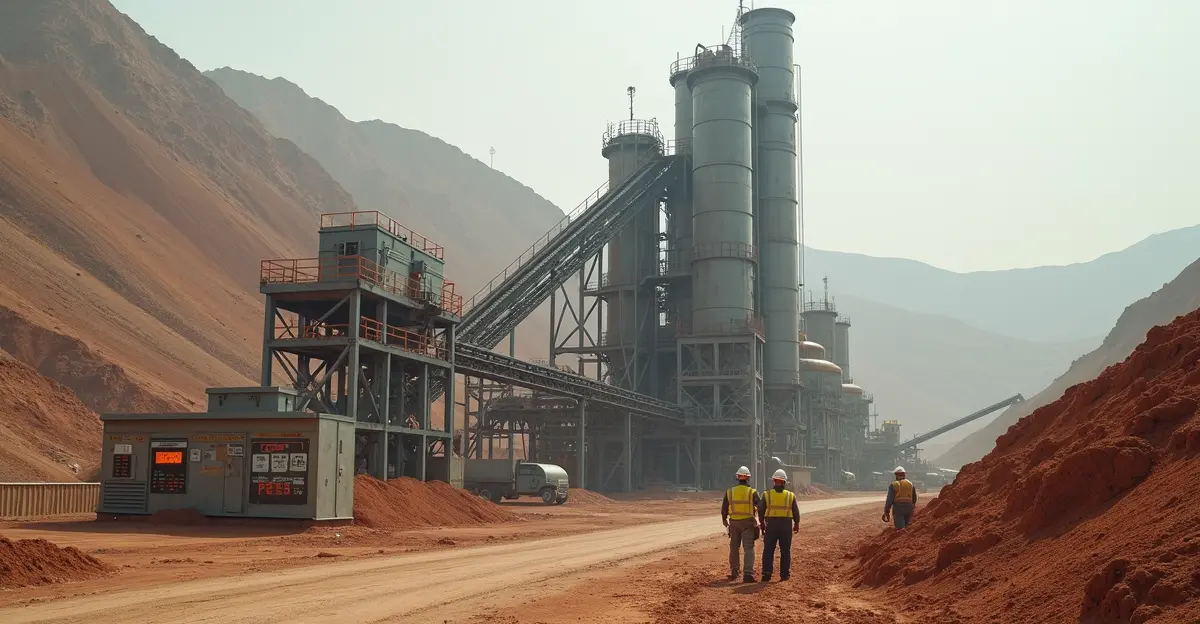
Current non-Chinese production remains thin. Lynas Rare Earths operates the world's largest rare earth refinery outside China, located in Malaysia, and projects 53% production growth in 2026 despite power disruptions at its Kalgoorlie facility. MP Materials, which operates the Mountain Pass mine in California, secured a $400 million Department of Defense investment and is evaluating a $1.2 billion magnet campus in Texas. However, both companies still rely on China for certain processing stages. Midstream capacity is expanding: Energy Fuels operates commercial neodymium-praseodymium refining at White Mesa in Utah, Neo Performance Materials opened Europe's first mass-production magnet facility in Estonia, and France's Carester targets late-2026 commissioning for a new processing plant.
The 12-18 Month Window
Experts warn of a narrowing 12-18 month window to act decisively. If Western nations fail to establish credible alternative capacity by late 2027, Chinese dominance may become structurally entrenched. The S&P Global report from January 2026 confirms that rare earth supply bottlenecks are expected to persist through the year, keeping prices elevated and creating vulnerabilities for industries reliant on these materials.
The Quad Critical Minerals Initiative, launched in July 2025 by Australia, India, Japan, and the U.S., represents another multilateral effort, but faces obstacles including divergent regulations, environmental compliance timelines, and financing challenges.
Expert Perspectives
'China is weaponizing control rather than scarcity,' says a multi-institutional analysis published by Rare Earth Exchanges. 'The temporary, reversible restrictions maintain pricing power while discouraging large-scale Western investment in alternatives.' The analysis presents three strategic paths: managed dependence (accepting Chinese dominance while negotiating better terms), costly independence (pursuing full self-sufficiency regardless of expense), or a hybrid model balancing resilience with realism.
The Atlantic Council notes that FORGE represents a shift from unilateral action to collaborative engagement. However, the TIME magazine analysis from April 2026 questions whether allies will trust relying on the U.S. given ongoing tariff disputes and geopolitical tensions. 'The administration's antagonistic trade policies toward allies complicate collaboration,' the article states.
FAQ
What are rare earth elements and why are they important?
Rare earth elements are a set of 17 metals essential for permanent magnets, electric vehicle motors, wind turbines, defense systems, and consumer electronics. Despite their name, they are relatively abundant in the Earth's crust but difficult to extract and process economically.
How much does China control global rare earth processing?
China controls approximately 90% of global rare earth processing, 80% of tungsten, and 60% of antimony. It also dominates magnet production with 94% of global capacity.
What is FORGE?
FORGE (Forum on Resource Geostrategic Engagement) is a U.S.-led multilateral initiative announced in February 2026, succeeding the Minerals Security Partnership. It aims to create a preferential trade-and-investment zone for critical minerals with coordinated price floors, chaired by South Korea.
Can the West reduce dependence on China within a decade?
Most experts consider full independence within a decade unrealistic. Rebuilding integrated processing capacity typically takes 20-30 years. A more realistic goal is a hybrid approach combining targeted investment, diversified partnerships, and recycling technologies to reduce vulnerability.
What is Project Vault?
Project Vault is a $10 billion public-private initiative backed by the U.S. Export-Import Bank to establish a Strategic Critical Minerals Reserve, stockpiling essential materials to buffer against supply disruptions.
Conclusion: A Long Road Ahead
The 2026 Critical Minerals Ministerial represents an unprecedented level of Western coordination on supply chain security. With 54 nations, $30 billion in financing, and 21 bilateral deals, the momentum is real. However, China's structural advantages—decades of investment, integrated processing, cost advantages, and willingness to use economic coercion—mean that breaking its grip will require sustained commitment over decades, not years. The most realistic path forward is a hybrid approach: building strategic reserves, investing in domestic processing, forging diverse international partnerships, and accelerating recycling technologies. The window for action is narrowing, but the February 2026 ministerial may prove to be the turning point that future historians identify as the moment the West finally began to compete.
Sources
- U.S. Department of State, '2026 Critical Minerals Ministerial,' February 4, 2026
- Rare Earth Exchanges, 'China's 2026 Export Controls Redraw the Global Supply Chain Map,' 2026
- European Central Bank, Economic Bulletin Issue 6/2025
- Atlantic Council, 'US Critical Minerals Policy Goes Collaborative with FORGE,' February 2026
- S&P Global, 'Rare Earth Supply Bottlenecks Set to Persist in 2026,' January 27, 2026
- European Commission, 'RESourceEU Action Plan,' December 2025
- Bipartisan Policy Center, 'Project Vault and FORGE,' 2026
- Perkins Coie, 'Presidential Action on Semiconductors and Critical Minerals,' January 2026


Follow Discussion