


 Deutsch
 English
 Español
 Français
 Nederlands
 Português


 Share
Share




The global race for rare earth elements and critical minerals has entered a new phase of strategic urgency. In April 2025, China's Ministry of Commerce imposed export licensing controls on seven heavy rare earth elements—dysprosium, terbium, samarium, and yttrium—along with permanent magnets, triggering severe disruptions across allied defense, semiconductor, and aerospace supply chains. One year later, the United States has launched its most ambitious countermove: the 2026 Critical Minerals Ministerial, the FORGE initiative, and over $30 billion in financing to build diversified mine-to-magnet supply chains. Yet with the U.S. still importing 90% of its rare earth needs from China and Beijing projected to supply over 60% of refined lithium and cobalt through 2035, the question remains whether the West can truly break free from dependency.
China's 2025 Export Controls: A Strategic Wake-Up Call
On April 4, 2025, China's Ministry of Commerce issued Announcement 18, requiring export licenses for seven heavy rare earth elements and permanent magnet products. The move was widely seen as retaliation for escalating U.S. trade restrictions targeting Chinese semiconductor and EV industries. The impact was immediate: dysprosium oxide prices surged from approximately $90 per kilogram in early 2025 to over $189 per kilogram by early 2026, while terbium prices climbed to around $840 per kilogram. For manufacturers of electric vehicle motors, dysprosium costs per motor nearly doubled.
The vulnerability of allied defense supply chains became starkly apparent. Ford Motor Company was forced to temporarily halt production at multiple factories, including its Chicago plant, due to a critical shortage of rare earth magnets. CEO Jim Farley described the situation as operating "hand-to-mouth," noting that Ford had to seek approval from China's Ministry of Commerce for each export application individually. The F-35 fighter jet, precision-guided munitions, satellites, and naval vessels all rely on rare earth elements that were suddenly subject to Beijing's discretionary licensing.
The 2026 Critical Minerals Ministerial: A New Diplomatic Architecture
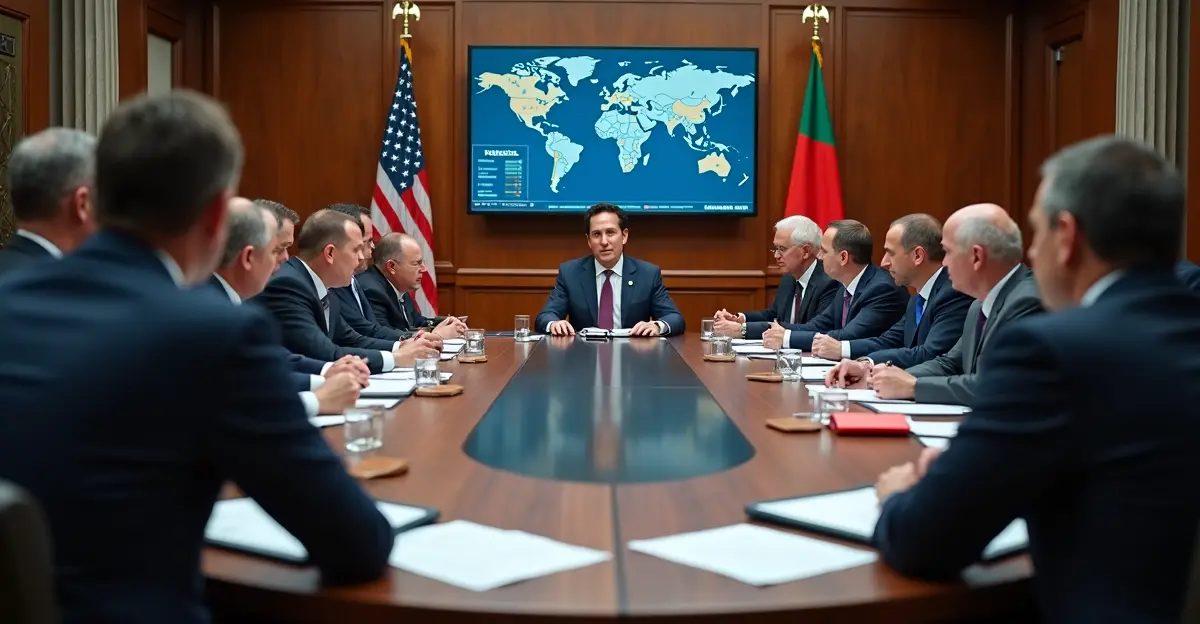
On February 4, 2026, U.S. Secretary of State Marco Rubio, alongside Vice President JD Vance, hosted the inaugural Critical Minerals Ministerial at the State Department. Representatives from 54 countries and the European Commission convened to address the concentrated global critical minerals market. The ministerial produced three landmark outcomes.
11 New Bilateral Frameworks
The United States signed 11 new bilateral critical minerals frameworks or memorandums of understanding with countries including Argentina, Morocco, the Philippines, the United Arab Emirates, and the United Kingdom. These agreements bring the total to 21 bilateral deals forged in just five months, creating a network of preferential trade and investment relationships designed to circumvent Chinese-dominated supply routes.
FORGE: The Successor to the Minerals Security Partnership
Secretary Rubio announced the creation of FORGE—the Forum on Resource Geostrategic Engagement—as the successor to the Minerals Security Partnership. Chaired by South Korea, FORGE is designed as a plurilateral coalition creating a preferential trade-and-investment zone for critical minerals with coordinated price floors to counter adversarial market manipulation. Unlike the MSP, which focused on joint capital deployment, FORGE operates on a "membership by trade" model where participation is conditioned on adherence to shared trade rules.
$30 Billion in Mobilized Financing
The U.S. government mobilized over $30 billion in loans, investments, and support for critical mineral projects over the preceding six months. The centerpiece is EXIM Bank's Project Vault, a $12 billion public-private initiative (backed by a $10 billion EXIM loan and nearly $2 billion in private investment) that establishes the U.S. Strategic Critical Minerals Reserve. This independently governed partnership will store 60 critical minerals in secure facilities across the country, available to manufacturers during supply disruptions.
The Persistent Dependency Problem
Despite these ambitious initiatives, the scale of the challenge remains daunting. China controls approximately 90% of global rare earth processing capacity and 95% of heavy rare earth output. According to the IEA's Global Critical Minerals Outlook 2025, China is projected to supply over 60% of refined lithium and cobalt through 2035, along with around 80% of battery-grade graphite and rare earths. The IEA's "N-1" resilience test, which simulates the removal of the largest supplier, reveals extreme vulnerability across multiple mineral categories.
The geoeconomic confrontation between the US and China has intensified. The World Economic Forum's Global Risks Report 2026 ranks geoeconomic confrontation as the top global risk for the next two years, with 68% of respondents expecting a more fragmented multipolar global environment. State-based armed conflict dropped to second place as trade tensions and economic confrontations escalate.
Building Mine-to-Magnet Supply Chains
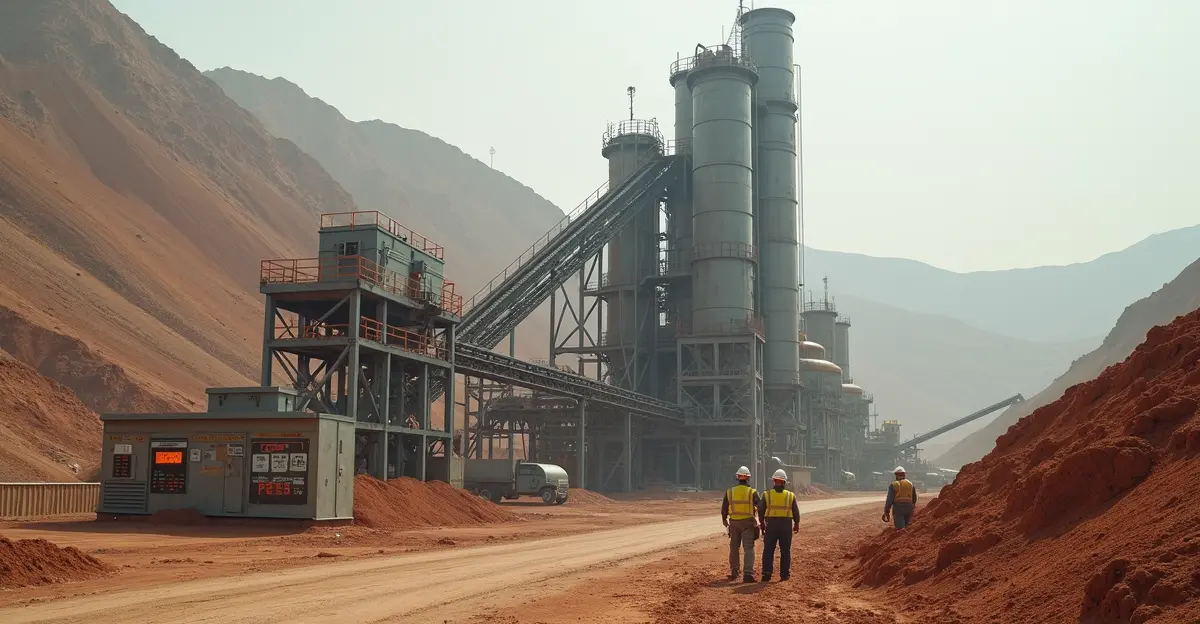
Non-Chinese rare earth suppliers are racing to scale up. Lynas Rare Earths, the world's largest non-Chinese producer, projects approximately 16,100 tonnes of total rare earth oxide in 2026, including about 8,800 tonnes of neodymium-praseodymium (NdPr) from its Mt Weld-Kalgoorlie-Malaysia-Texas supply chain. However, Lynas faces Malaysian regulatory risks over radioactive waste, shipping lane disruptions, and ramp-up challenges across three simultaneous facility expansions. Its proposed heavy rare earth processing plant in Seadrift, Texas, is in jeopardy after offtake negotiations with the U.S. Department of Defense stalled, with CEO Amanda Lacaze warning the project "might not proceed" under current conditions.
MP Materials, the U.S. domestic champion, is transitioning from a concentrate exporter to an integrated magnet supplier via its Mountain Pass mine in California. The company secured a multibillion-dollar deal making Washington its top shareholder, along with a $150 million loan for heavy rare earth expansion. Yet industry analysts describe the current non-Chinese supply as structurally "brittle," with a NdPr deficit and tight heavy rare earth supply where disruptions at one or two facilities can cascade into constraints for EVs, wind energy, and defense.
Emerging projects—including Arafura Resources' Nolans project in Australia, the Maanden-MP joint venture, and Northern Minerals' Browns Range—offer diversification potential but face schedule, permitting, and infrastructure risks. The critical minerals investment landscape is further complicated by falling prices: lithium prices have dropped over 80% since 2023, reducing investment appetite for new mining and processing development.
Project Vault and the Strategic Reserve Concept
Project Vault represents the largest financing in EXIM's 92-year history. Unlike the National Defense Stockpile, which focuses on defense-specific materials, Project Vault is OEM-driven and demand-led: manufacturers identify needed materials, commit financially, and pay a fee for access during market disruptions. Minerals will initially be sourced globally, including potentially from China where alternatives do not exist commercially. The reserve is designed for allied economic cooperation over time, not as a U.S.-only initiative.
The Bipartisan Policy Center notes that Project Vault aims to stabilize supply, catalyze domestic processing, and protect civilian manufacturing. The initiative was highlighted by Ford's experience in 2025, when rare earth shortages forced production halts—a vivid demonstration of how supply chain vulnerabilities translate directly into industrial and economic damage.
Expert Perspectives
Michael P. Cadenazzi Jr., assistant secretary of war for industrial base policy, testified before the Senate Armed Services Committee that securing a resilient supply chain for critical minerals is a "national security imperative." He warned that China's 95% control of global heavy rare earth output creates a strategic vulnerability for F-35 aircraft, precision-guided munitions, satellites, and naval vessels.
"The United States has developed a comprehensive strategy including reshoring mineral production using Defense Production Act funding, partnering with the Office of Strategic Capital for loans, investing in R&D to reduce or eliminate reliance on contested minerals, developing advanced recycling technologies, and modernizing the national defense stockpile," Cadenazzi stated. "Allies and partners will also play a key role in building a resilient supply chain."
The Atlantic Council's analysis of FORGE notes that the initiative represents the administration's attempt to "practice statecraft through markets" by elevating international cooperation as a strategic asset for supply chain security. Coordinated reference prices across production stages and adjustable tariffs to maintain pricing integrity are key features of the new architecture.
FAQ: Critical Minerals and Rare Earth Geopolitics
What are rare earth elements and why are they critical?
Rare earth elements (REEs) are a set of 17 metals essential for permanent magnets, electric vehicle motors, wind turbines, defense systems, electronics, and clean energy technologies. Despite their name, they are relatively abundant in the Earth's crust but difficult and costly to extract and process.
How dependent is the United States on China for rare earths?
The U.S. imports approximately 90% of its rare earth needs from China. China controls about 90% of global rare earth processing and 95% of heavy rare earth output, creating a critical strategic vulnerability for defense and high-tech industries.
What is FORGE and how does it differ from the Minerals Security Partnership?
FORGE (Forum on Resource Geostrategic Engagement) is a plurilateral initiative announced in February 2026 as the successor to the Minerals Security Partnership. Chaired by South Korea, it creates a preferential trade-and-investment zone for critical minerals with coordinated price floors. Unlike the MSP, FORGE operates on a "membership by trade" model rather than joint capital deployment.
What is Project Vault?
Project Vault is a $12 billion public-private initiative backed by EXIM Bank that establishes the U.S. Strategic Critical Minerals Reserve. It will store 60 critical minerals in secure facilities, available to manufacturers during supply disruptions. It is the largest financing in EXIM's 92-year history.
Can the West realistically reduce dependence on Chinese rare earths?
Industry experts caution that breaking China's decades-long supply chain advantage will require sustained commitment across multiple administrations. While initiatives like FORGE, Project Vault, and new mining projects offer hope, the IEA warns that supply concentration is actually increasing, with the top three producers controlling 86% of the market in 2024, up from 82% in 2020.
Conclusion: A Long Road Ahead
The spring 2026 Critical Minerals Ministerial marks a significant escalation in Western efforts to secure critical mineral supply chains, but the gap between ambition and reality remains wide. China's resumed-but-volatile export flows—including large shipments to the U.S. in March 2026—demonstrate that Beijing retains powerful leverage. The future of global economic security will depend on whether the FORGE initiative, Project Vault, and bilateral frameworks can translate diplomatic agreements into operational mine-to-magnet supply chains before the next crisis hits.
As the WEF Global Risks Report 2026 warns, geoeconomic confrontation is now the top global risk. The rare earth scramble is its most tangible manifestation—a test of whether the international community can build resilience in an age of strategic competition.


Follow Discussion