


 Deutsch
 English
 Español
 Français
 Nederlands
 Português


 Share
Share




The global scramble for critical minerals — lithium, rare earths, cobalt, and graphite — has entered a decisive new phase in 2026. With the launch of the U.S.-led FORGE initiative, China finalizing its 15th Five-Year Plan, and new state-backed entrants like Saudi Arabia and the UAE joining the fray, the geopolitics of critical minerals is reshaping alliances, trade flows, and energy transition strategy. This article examines the three-way competition that will define supply chain security for the rest of the decade.
What Is Driving the Critical Minerals Race in 2026?
Critical minerals are the building blocks of modern technology — from electric vehicle batteries and wind turbines to defense systems and artificial intelligence hardware. The International Energy Agency (IEA) warns that supply concentration risks have become reality, with China controlling roughly 60% of global lithium processing, over 70% of cobalt refining, and 90% of rare earth refining. The geopolitics of critical minerals has moved from a niche policy concern to a central pillar of national security and industrial competitiveness for major economies.
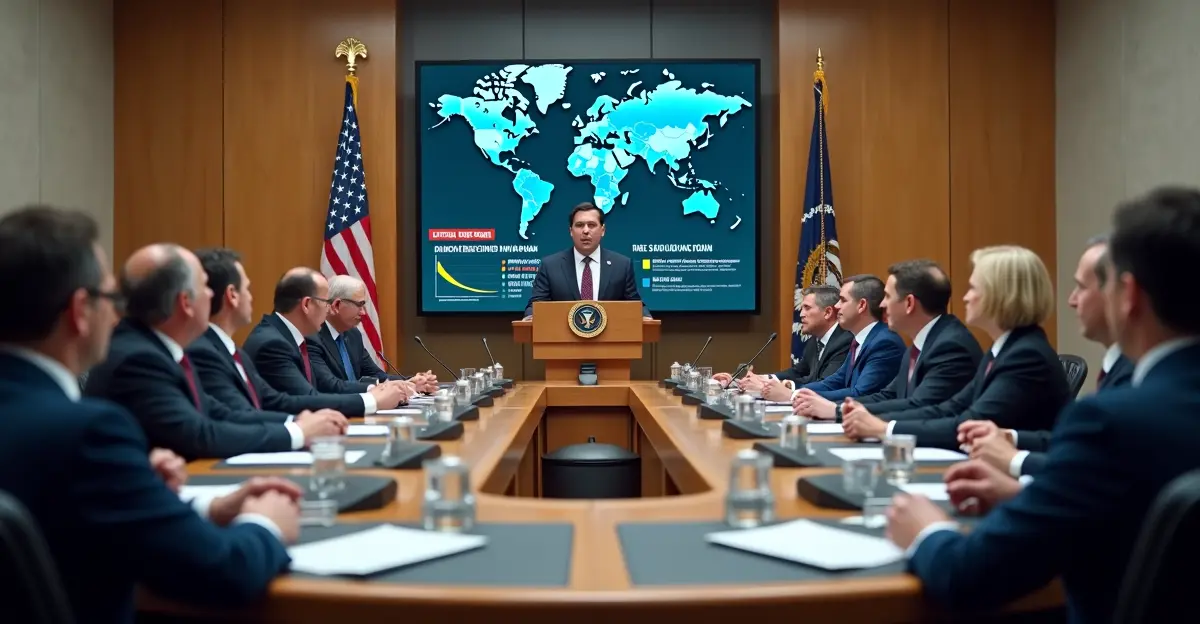
In February 2026, the U.S. Department of State hosted the inaugural Critical Minerals Ministerial, bringing together representatives from 54 countries and the European Commission. The event marked a watershed moment, producing 11 new bilateral critical minerals frameworks and the launch of FORGE (Forum on Resource Geostrategic Engagement), the successor to the Minerals Security Partnership. According to the Atlantic Council, FORGE is designed as a plurilateral coalition creating a preferential trade-and-investment zone for critical minerals with coordinated price floors to counter adversarial market manipulation.
FORGE: America's $30 Billion Answer to China's Dominance
The Forum on Resource Geostrategic Engagement represents a significant escalation in U.S. strategy. Chaired by South Korea, FORGE operates on a 'membership by trade' model where participation is conditioned on shared trade rules rather than joint capital deployment. The administration has mobilized over $30 billion in support for critical mineral supply chain projects, including the Export-Import Bank's Project Vault — a $10 billion initiative to establish a domestic strategic reserve for critical minerals.
Project Vault, announced on February 2, 2026, is a public-private partnership backed by a $10 billion EXIM loan and nearly $2 billion in private capital. It will create a physical minerals stockpile for civilian use, allowing companies to secure minerals at fixed prices through a government-backed reserve. The Bipartisan Policy Center notes that while stockpiling addresses immediate supply risks, challenges remain, including storage infrastructure needs and the risk of market destabilization.
Secretary of State Marco Rubio, alongside Vice President JD Vance and Treasury Secretary Scott Bessent, led the ministerial. The U.S. has now signed 21 bilateral framework agreements in five months with countries including Argentina, Morocco, Peru, the Philippines, the UAE, and the United Kingdom. The U.S. critical minerals strategy is increasingly focused on linking these disparate deals into a functioning plurilateral system covering two-thirds of the global economy.
China's 15th Five-Year Plan: Reinforcing Processing Dominance
China's 15th Five-Year Plan (2026–2030), unveiled in March 2026, explicitly emphasizes global leadership in rare earth elements and pledges to strengthen export controls on critical minerals. According to the Middle East Observer, the plan marks a strategic shift in energy, metals, and critical minerals policy, calling for expanded domestic mining of industrial metals while addressing overcapacity in steelmaking and petrochemicals.
China currently controls 60–70% of global rare earth production and over 90% of refining capacity for magnet rare earths. The country has invested over $120 billion in overseas mining and upstream processing since 2023, according to a report by Australian think tank Climate Energy Finance. This spending targets lithium, copper, nickel, rare earths, and bauxite as part of a coordinated strategy Beijing calls 'green energy statecraft.'
The 15th Five-Year Plan also targets a 17% reduction in carbon intensity and increasing non-fossil fuels to 25% of energy consumption by 2030. However, coal consumption is expected to peak within five years without a rapid phase-down. China aims to maintain crude oil production at approximately 200 million tonnes annually and advance work on the Power of Siberia 2 pipeline for Russian gas imports.
In April 2025, China imposed export controls on seven heavy rare earth elements, causing supply disruptions for global carmakers. On October 9, 2025, controls were escalated further, now covering parts, components, and assemblies containing Chinese-sourced rare earth materials. The IEA warns that these measures threaten energy, automotive, defense, semiconductor, and AI data center supply chains, potentially undermining diversification efforts globally.
New Entrants: Saudi Arabia and the UAE Join the Race
A third dimension of the critical minerals race involves new state-backed actors from the Middle East. Saudi Arabia claims it has $2.5 trillion in mineral reserves, including critical and rare earth minerals like gold, zinc, copper, lithium, dysprosium, and neodymium. As part of its Vision 2030 plan to diversify beyond oil, the kingdom has increased its mining exploration budget by 595% between 2021 and 2025.
State-owned mining company Maaden plans to invest $110 billion over the next decade. The Saudi Public Investment Fund (PIF) is spinning off its mining firm Manara, which was established to secure supplies of minerals critical for the energy transition. According to Rare Earth Exchanges, Manara is pivoting from acquiring minority stakes in overseas mines to structured deals including joint ventures, debt investments, and supply arrangements — prioritizing capital efficiency and domestic value-chain control.
The United Arab Emirates signed a critical minerals framework with the U.S. during the February 2026 ministerial. The IISS notes that Gulf states seek to reduce dependence on China's dominant position in critical mineral supply chains while also competing and cooperating with other major powers. The Middle East critical minerals strategy faces challenges including technical expertise gaps, environmental concerns, and the need to attract international investment in a sector with long lead times.
Impact on Global Trade and Energy Transition
The three-way competition is already reshaping global trade patterns. FORGE's coordinated price floors aim to stabilize investment in new mining and processing capacity outside China. The U.S.-Mexico Critical Minerals Action Plan, led by the U.S. Trade Representative, focuses on preferential trade and border-adjusted price floors for select minerals — a model that could be extended to other partners.
China's response has been to deepen its control over processing and expand export restrictions. The country now controls about 90% of global rare earth refining, roughly 60% of lithium processing, and over 70% of cobalt refining. Much of China's investment has flowed to Africa, Latin America, and Southeast Asia, where Chinese firms are building in-country processing facilities and infrastructure in exchange for long-term supply agreements.
For the energy transition, the stakes could not be higher. Electric vehicle batteries, wind turbines, and solar panels all require critical minerals. The IEA projects that demand for lithium could grow 40-fold by 2040 under net-zero scenarios. Copper faces potential supply shortages with a gap of 10 million metric tons by 2040. The energy transition mineral demand is driving unprecedented investment, but supply chain bottlenecks remain a major risk.
Expert Perspectives
"FORGE represents a fundamental shift in how the U.S. approaches critical minerals — moving from bilateral deals to a plurilateral system with enforceable rules," said a senior State Department official who spoke on condition of anonymity. "The coordinated price floors will give investors the certainty they need to build processing capacity outside China."
Analysts at the Center for Strategic and International Studies (CSIS) note that the Critical Minerals Ministerial introduced a new international cooperation strategy, but warn that implementation will be challenging. "Building a functioning plurilateral system from 21 bilateral agreements is a monumental task," said a CSIS trade expert. "The devil is in the details — how price floors are set, how disputes are resolved, and how new members are admitted."
Chinese state media has dismissed FORGE as an attempt to contain China's legitimate development. Beijing's 15th Five-Year Plan makes clear that China will continue to leverage its processing dominance as a strategic asset. The plan calls for strengthening export controls and expanding domestic mining, signaling that China has no intention of ceding its leadership position.
Frequently Asked Questions
What is FORGE in the context of critical minerals?
FORGE (Forum on Resource Geostrategic Engagement) is a plurilateral coalition launched by the U.S. in February 2026 as the successor to the Minerals Security Partnership. It aims to create a preferential trade-and-investment zone for critical minerals with coordinated price floors to counter market manipulation by adversarial states. Chaired by South Korea, FORGE has mobilized over $30 billion in support for supply chain projects.
How does China's 15th Five-Year Plan affect critical mineral supply chains?
China's 15th Five-Year Plan (2026–2030) reinforces its dominance in critical mineral processing by emphasizing global leadership in rare earths, strengthening export controls, and expanding domestic mining. China currently controls over 60% of global lithium processing and 90% of rare earth refining, and the plan signals continued strategic use of this leverage.
What is Project Vault?
Project Vault is a $12 billion public-private partnership announced in February 2026, backed by a $10 billion loan from the U.S. Export-Import Bank and nearly $2 billion in private capital. It establishes a U.S. Strategic Critical Minerals Reserve — a physical stockpile of essential raw materials stored in secure facilities nationwide to protect American manufacturers from supply shocks.
Why are Saudi Arabia and the UAE entering the critical minerals market?
Gulf states are diversifying beyond oil as part of their long-term economic transformation plans (e.g., Saudi Vision 2030). Saudi Arabia claims $2.5 trillion in mineral reserves and has increased mining exploration spending by 595%. State-owned Maaden plans $110 billion in mining investments, while the UAE has signed critical minerals agreements with the U.S. to secure supply chains and reduce dependence on China.
What are the main risks to critical mineral supply chains in 2026?
The primary risks include: (1) China's dominance in processing and its use of export controls as a geopolitical weapon; (2) long lead times for new mining projects (up to 29 years in the U.S.); (3) price volatility that discourages investment; (4) environmental and social governance challenges in mineral-rich developing countries; and (5) the technical and financial hurdles facing new entrants like Saudi Arabia in building processing capacity.
Conclusion: A Decisive Moment for Mineral Security
The February 2026 Critical Minerals Ministerial, the launch of FORGE, and China's 15th Five-Year Plan represent a decisive moment that will shape mineral supply chains and energy security for the rest of the decade. The three-way competition between the U.S.-led coalition, China's entrenched dominance, and new Middle Eastern entrants is creating both risks and opportunities for global trade and the energy transition.
Success for the U.S. and its partners will depend on translating bilateral agreements into a functioning plurilateral system, building actual processing capacity outside China, and navigating the complex geopolitics of mineral-rich developing nations. For China, the challenge is to maintain its processing dominance while managing the economic costs of export controls and the diplomatic fallout from resource nationalism. For new entrants like Saudi Arabia, the opportunity lies in leveraging energy resources and geographic position to become processing hubs — but execution remains the critical variable.
As the world races to decarbonize, the critical minerals supply chain security will remain at the center of geopolitical competition. The decisions made in 2026 will determine whether the energy transition proceeds smoothly or is disrupted by mineral shortages and trade conflicts.


Follow Discussion