


 Deutsch
 English
 Español
 Français
 Nederlands
 Português


 Share
Share




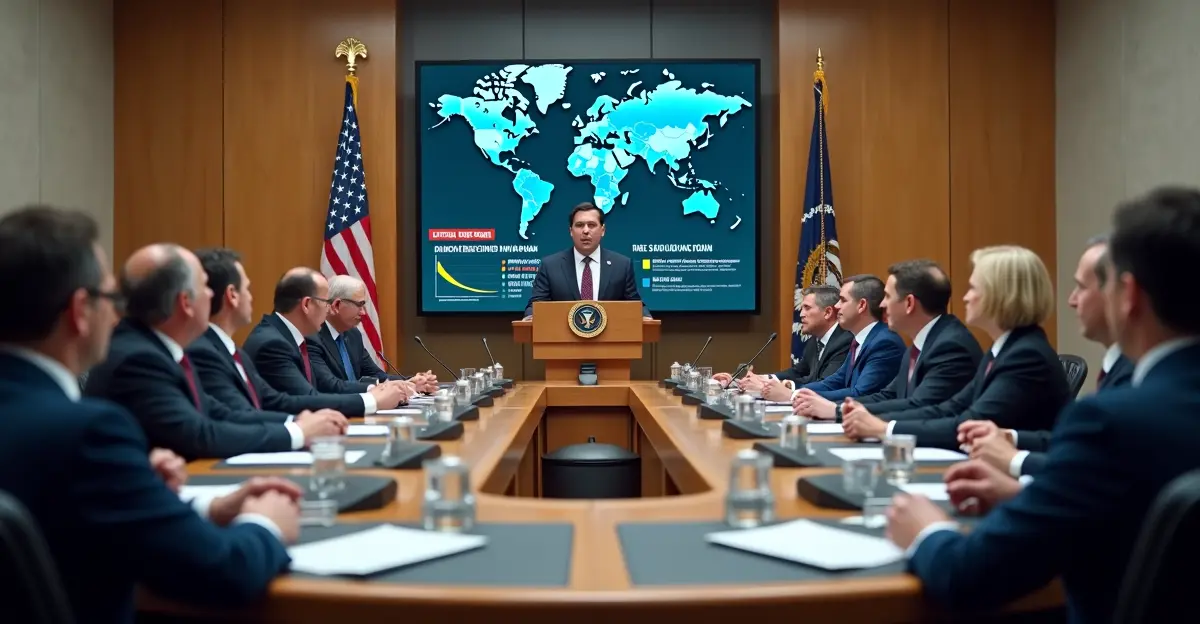
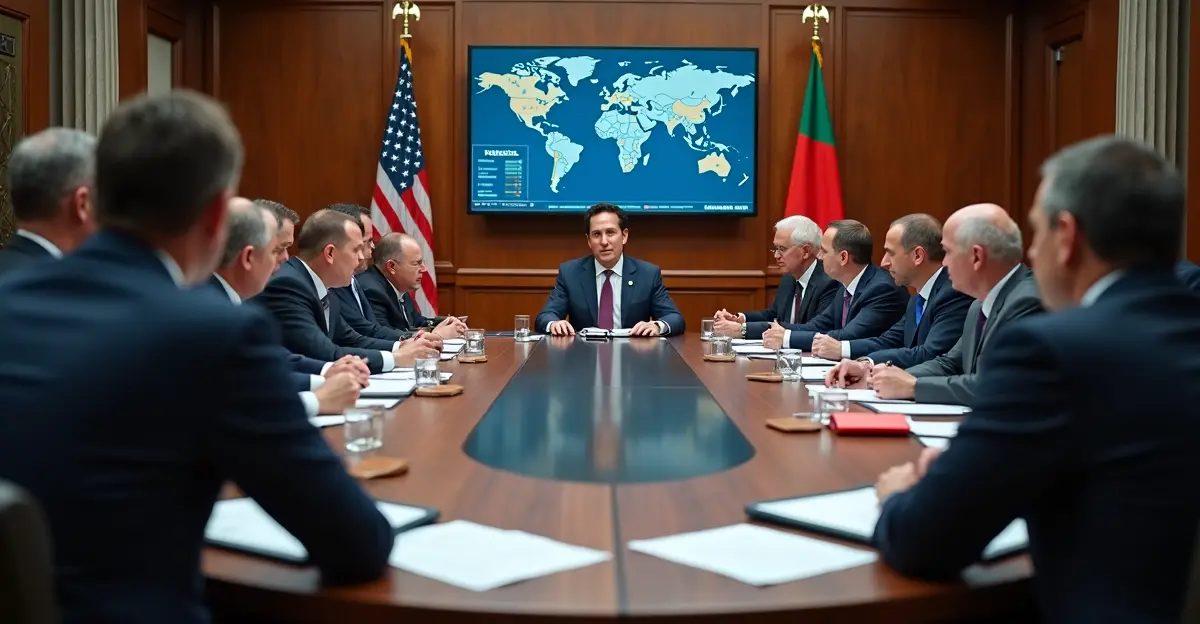
On February 4, 2026, the United States convened 54 countries and the European Commission for the inaugural Critical Minerals Ministerial in Washington, D.C., launching a sweeping realignment of global critical minerals supply chains. The event, led by Secretary of State Marco Rubio and Vice President JD Vance, marked the most ambitious Western effort yet to counter China's stranglehold on the minerals essential for AI, defense, batteries, and robotics. With over $30 billion in mobilized capital, the launch of FORGE as the successor to the Minerals Security Partnership, and 11 new bilateral framework agreements, the ministerial signals a paradigm shift in how nations secure the building blocks of the 21st-century economy.
What Is FORGE and Why Does It Matter?
The Forum on Resource Geostrategic Engagement (FORGE) is a plurilateral coalition designed to create a preferential trade-and-investment zone for critical minerals, complete with coordinated price floors to counter adversarial market manipulation. Unlike the Minerals Security Partnership (MSP), which focused on project facilitation, FORGE aims to align trade policy, price signals, and market access across partner economies. Chaired by the Republic of Korea through June 2026, FORGE seeks to link bilateral agreements into a functioning system covering two-thirds of the global economy. Vice President Vance described reference prices at each production stage, maintained through adjustable tariffs, to ensure stable investment conditions for Western mining and processing projects.
The Minerals Security Partnership Forum was the precursor to FORGE, and the new framework builds on lessons learned from that earlier initiative. FORGE operates on a 'membership by trade' model, where participation relies on adherence to shared trade rules rather than pooled financing, making it a more agile and scalable mechanism for supply chain diversification.
The $30 Billion Mobilization: Project Vault and Beyond
A centerpiece of the ministerial was the announcement of Project Vault, a $10 billion Export-Import Bank (EXIM) initiative to establish the U.S. Strategic Critical Minerals Reserve. This independently governed public-private partnership will store essential raw materials in facilities across the United States, creating a domestic buffer against supply disruptions and price volatility. Combined with approximately $2 billion in private capital, Project Vault totals $12 billion in deployable resources.
Beyond Project Vault, the U.S. government has mobilized over $30 billion in total support for critical mineral projects over the past six months, including loans, guarantees, and direct investments. This includes backing for the Orion Critical Mineral Consortium's proposed $9 billion acquisition of a 40% stake in Glencore's Democratic Republic of Congo assets—Mutanda Mining and Kamoto Copper Company—which produce approximately 247,800 metric tons of copper and 33,500 metric tons of cobalt annually. The deal, signed as a non-binding MoU on February 3, 2026, is one of three 'foundational' projects under the U.S.-DRC Strategic Partnership Agreement.
The Pax Silica initiative, launched in December 2025, complements these efforts by focusing on AI and semiconductor supply chains. The State Department has allocated $250 million for a Pax Silica Fund to support critical minerals extraction, processing, and manufacturing assets among trusted partners.
Bilateral Frameworks: Argentina, Morocco, the Philippines, and Beyond
The ministerial produced 11 new bilateral critical minerals frameworks or MOUs, bringing the total to 21 deals signed in just five months. Countries including Argentina, Morocco, the Philippines, the United Arab Emirates, Peru, Ecuador, Guinea, Paraguay, Uzbekistan, and the Cook Islands signed agreements covering cooperation in mining, processing, recycling, and investment. Seventeen additional countries have completed negotiations and are expected to sign in the coming months.
Argentina, home to one of the world's largest lithium reserves, signed a framework that prioritizes joint development of lithium brine projects and downstream processing. Morocco, which already has a free trade agreement with the U.S., committed to expanding its role in cobalt and phosphate refining. The Philippines, a major nickel producer, agreed to collaborate on nickel processing and battery supply chain integration. These bilateral deals are designed to be building blocks for the broader FORGE system, creating a web of interconnected commitments that reduce dependence on Chinese processing hubs.
The U.S.-Mexico critical minerals agreement was notably structured as a trade-centered action plan by the U.S. Trade Representative, signaling a preference for bilateral trade mechanisms over trilateral USMCA coordination. This approach allows for more tailored terms and faster implementation.
China's Dominance and the 15th Five-Year Plan
Despite these efforts, China remains the dominant force in critical minerals processing, controlling approximately 90% of rare earth refining, 60% of lithium processing, and over 70% of cobalt refining. According to a report by Australian think tank Climate Energy Finance, China has invested over $120 billion in overseas mining and upstream processing since 2023, deploying an additional $220 billion into downstream sectors like battery manufacturing and solar infrastructure.
China's 15th Five-Year Plan (2026-2030), unveiled during the Two Sessions in March 2026, elevates energy and resource security to a national priority. The plan sets a target for comprehensive energy production capacity to reach 5.8 billion tons of standard coal equivalent by 2030 and emphasizes upgrading traditional industries, strengthening supply chain autonomy, and promoting high-value-added applications rather than raw material exports. Provinces like Guangxi, Jiangxi, Guizhou, and Yunnan have aligned local plans with this national vision, creating a coordinated push to maintain China's processing dominance.
The China critical minerals export controls of 2025, which restricted exports of rare earths, germanium, tungsten, antimony, and silver, demonstrated Beijing's willingness to weaponize its market position. The International Energy Agency projects global demand for critical minerals will nearly triple by 2030 compared to 2023, intensifying the competition for supply chain control.
The UAE-Saudi Financing Competition
An emerging dynamic in the critical minerals landscape is the competition between the United Arab Emirates and Saudi Arabia to become the Middle East's gateway for mineral processing and trade. Saudi Arabia's Ma'aden leads with $4 billion in commercial-scale refining of lithium, phosphate, and rare earths at the Wa'ad Al Shammal zone, supported by amended mining laws and tax incentives under Vision 2030. The UAE has invested over $3 billion in downstream processing hubs at KIZAD and JAFZA, focusing on lithium-ion battery recycling and rare earth separation.
Both Gulf states are leveraging sovereign wealth funds to acquire stakes in global mining assets. Saudi Arabia's Manara Minerals and Abu Dhabi's International Resources Holding (IRH) have been active in Latin America, Africa, and Central Asia. The UAE signed a critical minerals MOU with the U.S. at the February ministerial, while Saudi Arabia is positioning itself as a key partner through the Future Minerals Forum in Riyadh. This competition presents both opportunities and challenges for Western diversification efforts: Gulf capital can accelerate project development, but it also introduces new geopolitical complexities as these nations maintain ties with China.
The GCC critical minerals localization strategy is reshaping supply chain dynamics across the Middle East and North Africa, with Egypt also benefiting from GCC collaboration through public-private partnerships.
Expert Perspectives
"FORGE represents an ambitious attempt to practice statecraft through markets," said a senior fellow at the Atlantic Council's Global Energy Center. "By aligning trade policy, price floors, and investment across dozens of economies, the U.S. is creating a parallel system that can compete with China's vertically integrated model."
Heidi Crebo-Rediker, former U.S. State Department chief economist and co-author of a Council on Foreign Relations report on critical minerals, argues that the U.S. cannot out-mine or out-process China and should instead pursue a leapfrog strategy centered on innovation. "AI-enabled materials discovery and breakthroughs in e-waste recycling offer promising opportunities to reduce dependence on China," she wrote. The report recommends prioritizing materials science, developing substitute materials like rare-earth-free magnets, and scaling waste-based recovery from mine tailings and coal ash.
Oskar Lewnowski, CEO of Orion Resource Partners, described the Glencore-DRC deal as "a landmark transaction that demonstrates how public-private partnerships can secure critical mineral supply chains for allied nations." The deal gives the U.S.-backed consortium rights to direct a share of production to American and allied buyers, regardless of spot market conditions.
Frequently Asked Questions
What is FORGE in critical minerals?
FORGE (Forum on Resource Geostrategic Engagement) is a plurilateral coalition launched by the U.S. in February 2026 to create a preferential trade-and-investment zone for critical minerals. It succeeds the Minerals Security Partnership and includes coordinated price floors, adjustable tariffs, and bilateral framework agreements among partner nations.
How much money has been mobilized for critical minerals?
The U.S. government has mobilized over $30 billion in support for critical mineral projects, including $10 billion from the Export-Import Bank for Project Vault, a domestic strategic reserve initiative. Private capital adds approximately $2 billion to Project Vault, and additional funding comes from development finance institutions and allied governments.
Which countries signed critical minerals agreements with the U.S.?
Eleven new bilateral frameworks were signed at the February 2026 ministerial, including with Argentina, Morocco, the Philippines, the UAE, Peru, Ecuador, Guinea, Paraguay, Uzbekistan, and the Cook Islands. These add to 10 previous deals, bringing the total to 21 agreements in five months.
What is China's share of critical minerals processing?
China controls approximately 90% of rare earth refining, 60% of lithium processing, and over 70% of cobalt refining. The country has invested over $120 billion in overseas mining and processing since 2023, and its 15th Five-Year Plan prioritizes further supply chain autonomy.
How are the UAE and Saudi Arabia involved in critical minerals?
Both Gulf states are investing heavily in domestic processing capacity and global mining assets. Saudi Arabia's Ma'aden has committed $4 billion to lithium and rare earth refining, while the UAE has invested over $3 billion in processing hubs. Their sovereign wealth funds are competing to acquire stakes in critical mineral projects worldwide.
Conclusion: A Paradigm Shift Underway
The February 2026 Critical Minerals Ministerial and the launch of FORGE represent a fundamental shift in how Western nations approach resource security. By combining bilateral frameworks, plurilateral coordination, massive public investment, and private sector partnerships, the U.S. and its allies are building an end-to-end supply chain architecture designed to compete with China's vertically integrated model. However, the scale of the challenge remains immense: China's processing dominance, its new Five-Year Plan, and the emergence of Gulf state competition mean that the road to diversification will be long and complex. The next 12 months will be critical as FORGE moves from announcement to implementation, and as the world watches whether this ambitious realignment can deliver the secure, resilient supply chains that the 21st-century economy demands.

Follow Discussion