


 Deutsch
 English
 Español
 Français
 Nederlands
 Português


 Share
Share




The Hormuz Shock: How a Chokepoint Blockade Is Rewriting Global Trade and Energy Strategy in 2026
The late February 2026 escalation in the Middle East and subsequent disruptions through the Strait of Hormuz have sent oil prices surging over 60% and gas prices more than doubling, while world merchandise trade growth has plunged to between 1.5% and 2.5%. This strategic chokepoint crisis is exposing the acute vulnerability of developing economies reliant on imported fuels and fertilizer, while simultaneously accelerating the case for renewable energy investment and critical technology autonomy. The article will analyze how this single disruption is forcing a structural recalibration of global supply chains, energy security doctrine, and geopolitical alliances in 2026.
Background: The February 2026 Escalation
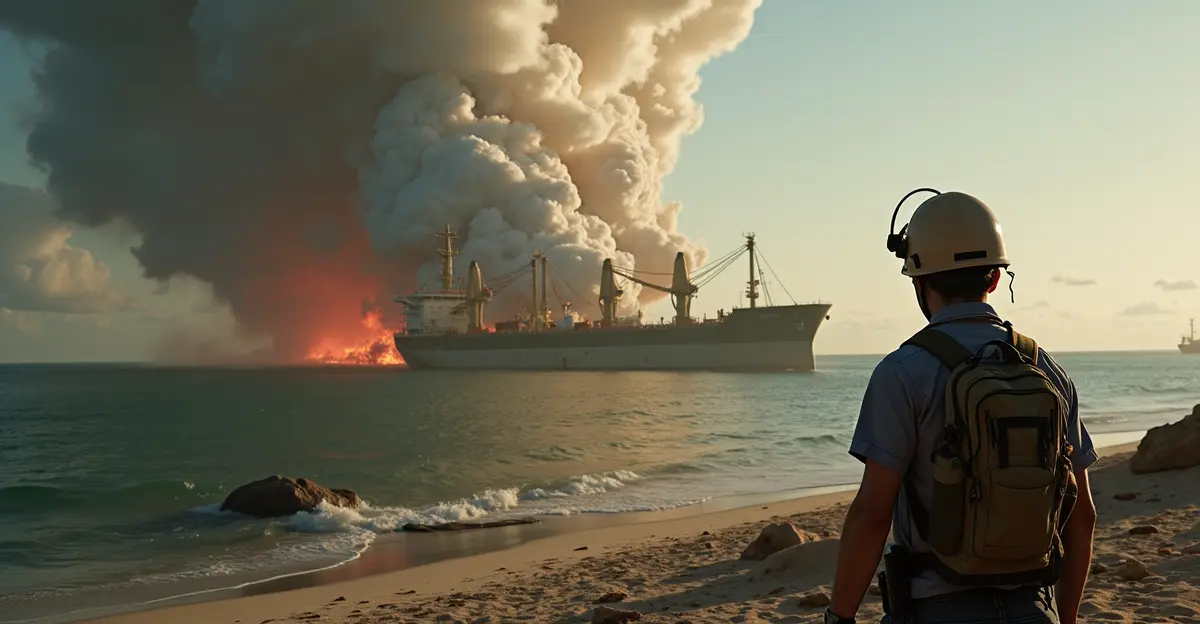
On February 28, 2026, the United States and Israel launched Operation Epic Fury — a coordinated series of airstrikes targeting Iran's military and nuclear infrastructure, which reportedly killed Supreme Leader Ali Khamenei. In retaliation, Iran effectively closed the Strait of Hormuz, the world's most critical energy chokepoint, through which approximately 20 million barrels of oil (one-fifth of global consumption) and 20% of global LNG trade pass daily. The strait, a 104-mile waterway connecting the Persian Gulf to the Gulf of Oman, had not been closed for any extended period in modern history, making this disruption unprecedented in scale. The 2026 Iran war quickly drew in Hezbollah, Houthi forces, and other members of the Axis of Resistance, escalating into a broader regional conflict.
Energy Markets in Turmoil
Oil Prices Surge Past $115
Brent crude, which traded around $73 per barrel before the conflict, surged to a peak above $144 per barrel in March 2026 — a jump of over 60%. The U.S. Energy Information Administration (EIA) estimated that 7.5 million barrels per day of crude production were shut-in from Gulf nations in March, rising to 9.1 million b/d in April. The International Energy Agency (IEA) called it the largest supply disruption in its 50-year history, triggering a record coordinated 400-million-barrel strategic petroleum reserve release across 30 nations. Even under base-case scenarios assuming a resolution by late April, Brent was forecast to average $85 for the full year, with tail risks pointing to $135–150 per barrel.
Natural Gas and Fertilizer Crisis
Natural gas prices more than doubled as Qatar's LNG exports — which account for roughly 20% of global LNG trade — were severely disrupted. Iranian retaliatory strikes damaged Qatar's Ras Laffan LNG complex, compounding the blockade's impact. The crisis also triggered a global fertilizer shock: approximately one-third of seaborne fertilizer trade passes through the strait. Benchmark urea prices rose 30% in the first month alone. Fertilizer producers in India, Bangladesh, and Pakistan shut down due to lost gas imports from Qatar. Egypt lost Israeli gas imports. The global fertilizer crisis 2026 hit just before spring planting in the Northern Hemisphere, threatening food production worldwide.
Global Trade and Economic Fallout
Merchandise Trade Growth Halved
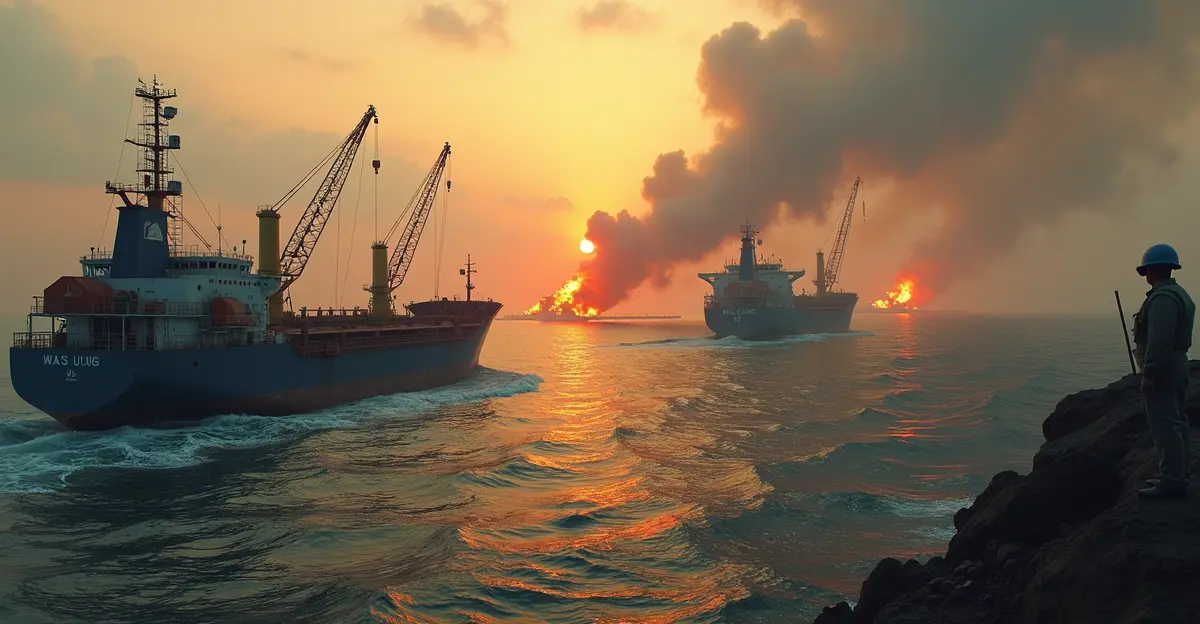
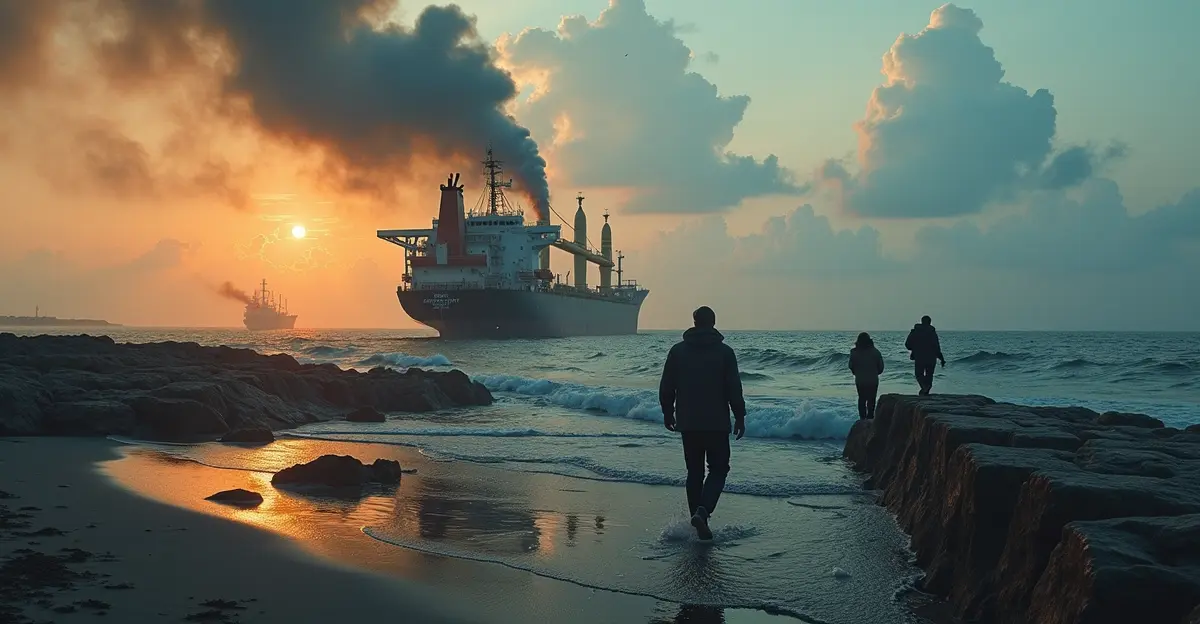
UNCTAD's rapid assessment warned that global merchandise trade growth would slow sharply from 4.7% in 2025 to just 1.5–2.5% in 2026 — a direct consequence of the Hormuz disruption. The CPB World Trade Monitor recorded a 2.1% month-on-month decline in world merchandise trade volume in March 2026, with Africa and the Middle East suffering import and export drops of 11.2% and 32.3% respectively. China's exports fell 16.8% in March, and emerging Asia saw a 9.7% decline. Shipping giants including Maersk, Hapag-Lloyd, MSC, and CMA CGM suspended transits through the strait, forcing vessels to reroute around Africa's Cape of Good Hope, adding weeks to voyage times and dramatically increasing costs. Insurance premiums for tankers transiting the region spiked 50%.
Developing Economies Bear the Brunt
Asia, which accounts for 69% of Hormuz crude flows, was hit hardest. Japan, which sources 95% of its crude from the Middle East, and South Korea, which receives 68% via Hormuz, faced stagflation risks. India's dependence on Middle Eastern crude rose to 50% (~2.6 million barrels per day). The UN's Food and Agriculture Organization (FAO) warned that the fertilizer disruption threatened a 'perfect storm' of food price inflation, export restrictions, and climate shocks. FAO Chief Economist Máximo Torero stated: 'Without immediate action — including avoiding export restrictions, supporting vulnerable households, and pursuing diplomatic solutions — we risk a global food crisis that will hit the poorest nations hardest.' The developing economy vulnerability 2026 was starkly exposed as countries like Sudan, Yemen, and Bangladesh faced acute food insecurity.
Accelerating the Energy Transition
While the crisis initially caused a scramble for fossil fuels, it also accelerated the case for renewable energy investment. IEA Chief Fatih Birol noted that countries would likely direct more investment toward clean energy as a way to mitigate geopolitical risks and enhance domestic energy security, calling the crisis 'Asia's Ukraine moment.' Solar and wind, now cost-competitive with fossil fuels, are increasingly viewed as energy security tools rather than just climate solutions. The EU and India announced accelerated green energy plans. However, analysts cautioned that Gulf Cooperation Council (GCC) countries — heavily dependent on fossil fuel revenues — are unlikely to fast-track renewables, instead focusing on alternative export routes bypassing Hormuz, such as the UAE's West-East pipeline. The renewable energy investment surge 2026 is real but uneven, with the crisis also creating near-term pressures to subsidize fossil fuels and potentially increase coal use if the conflict persists.
Geopolitical Realignment and Strategic Autonomy
The Hormuz shock has forced a structural recalibration of geopolitical alliances. The WEF Global Risks Report 2026 had ranked geoeconomic confrontation as the top risk most likely to trigger a global crisis — a warning that proved prescient. The crisis has accelerated efforts toward critical technology autonomy, with nations seeking to reduce dependence on vulnerable supply chains for energy, semiconductors, and rare earth minerals. The critical technology autonomy 2026 movement gained momentum as policymakers recognized that energy security and technological sovereignty are intertwined. Meanwhile, the conflict has deepened the divide between the U.S.-led coalition and Iran's Axis of Resistance, with long-term implications for Middle Eastern stability and global energy governance.
Expert Perspectives
Dr. Tristan Abbey, EIA Administrator, stated: 'Our forecasts depend on three key variables: the duration of the closure, estimated production outages, and the pace of reopening. Even under optimistic scenarios, a full return to pre-conflict levels is not expected until late 2026.' The Dallas Federal Reserve Bank modeled multiple scenarios: a one-quarter closure would lower global real GDP growth by an annualized 2.9 percentage points in Q2 2026; a two-quarter closure could push oil to $115/barrel; and a three-quarter closure could drive prices to $132/barrel by year-end, with negative growth persisting through 2026.
FAQ
What caused the Strait of Hormuz closure in 2026?
The closure resulted from Iran's retaliation against U.S.-Israeli airstrikes (Operation Epic Fury) launched on February 28, 2026, which targeted Iranian military and nuclear sites. Iran effectively blocked the strait, halting approximately 20 million barrels per day of oil and 20% of global LNG trade.
How much did oil prices rise after the Hormuz blockade?
Brent crude surged from around $73 per barrel before the conflict to a peak above $144 per barrel in March 2026 — an increase of over 60%. The EIA forecast Brent averaging $103 in March and peaking at $115 in Q2 2026 under base-case scenarios.
Which countries are most affected by the Hormuz disruption?
Asian economies are most vulnerable: Japan (95% Middle Eastern crude), South Korea (68% via Hormuz), India (50% dependence), and China (largest buyer of Iranian oil). Developing nations reliant on imported fertilizers — including Bangladesh, Pakistan, and many African countries — face severe food security risks.
How has the crisis affected global trade growth?
UNCTAD forecasts global merchandise trade growth to slow from 4.7% in 2025 to just 1.5–2.5% in 2026. The CPB World Trade Monitor recorded a 2.1% month-on-month decline in March 2026, with China's exports falling 16.8% and Middle Eastern trade volumes dropping by over 30%.
Will the Hormuz crisis accelerate renewable energy adoption?
Yes, particularly in Asia and Europe, where the crisis is seen as a catalyst for energy security-driven renewable investment. IEA Chief Fatih Birol called it 'Asia's Ukraine moment.' However, GCC countries are focusing on bypass pipelines rather than rapid renewables acceleration, and near-term pressures may temporarily increase fossil fuel and coal use.
Conclusion and Future Outlook
The Hormuz shock of 2026 is the most consequential geoeconomic event of the year, directly validating the WEF Global Risks Report's top-ranked warning on geoeconomic confrontation. Even if the strait reopens — a temporary ceasefire on April 8 collapsed within days — the structural impacts on global trade, energy security doctrine, and geopolitical alliances will persist for years. The crisis has exposed the fragility of just-in-time supply chains, the acute vulnerability of fuel- and fertilizer-importing developing economies, and the urgent need for diversified energy sources and critical technology autonomy. Policymakers and investors must now navigate a world where chokepoint risk is a permanent feature of the strategic landscape, demanding resilience, diversification, and a fundamental rethinking of global economic interdependence.
Follow Discussion