


 Deutsch
 English
 Español
 Français
 Nederlands
 Português


 Share
Share




What Happened at the Strait of Hormuz in 2026?
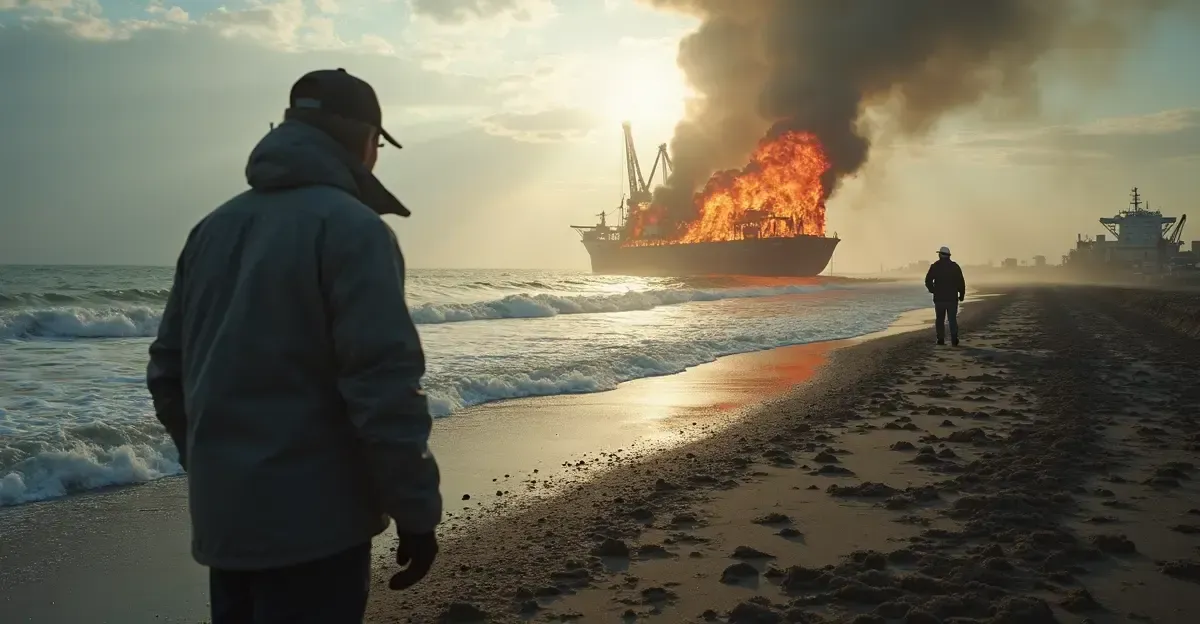
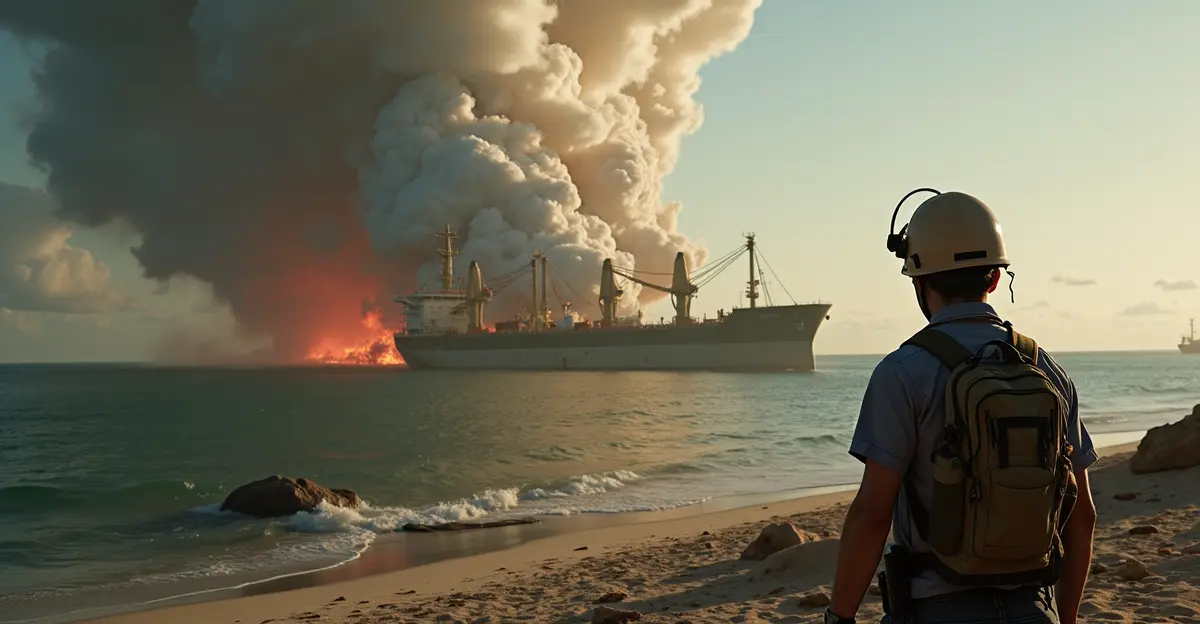
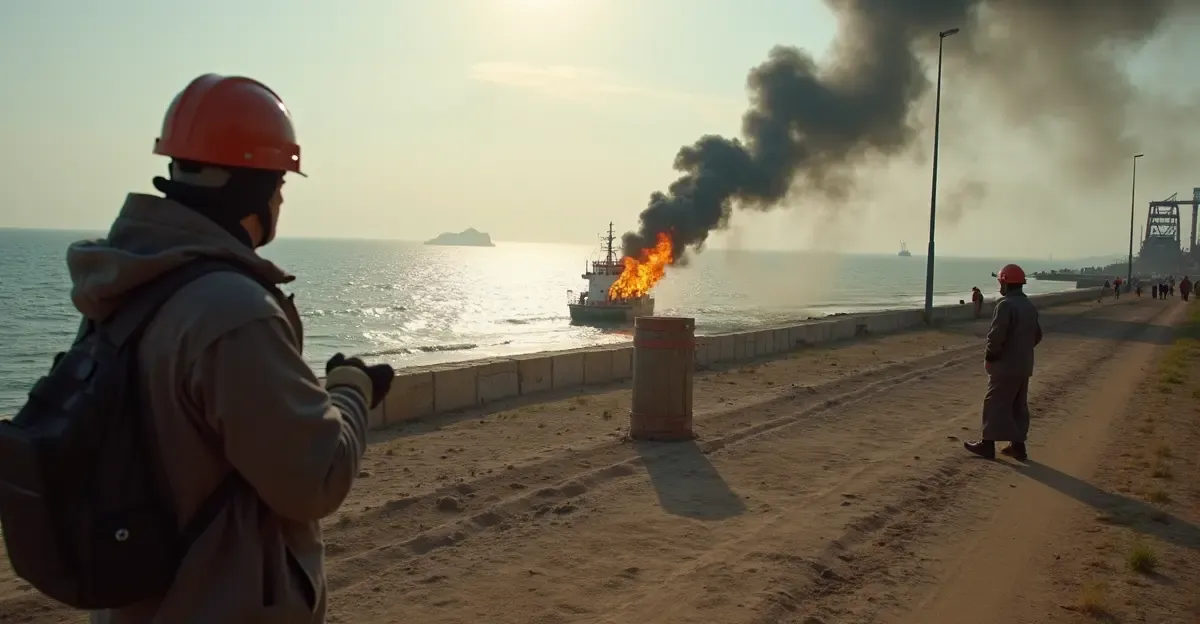
In late February 2026, escalating military conflict between Iran and a US-led coalition led to the de facto closure of the Strait of Hormuz, the world's most critical energy chokepoint. The strait, which carried roughly 20 million barrels of oil and petroleum products per day—about 20% of global supply—was effectively blocked by Iranian naval mines, missile strikes, and the threat of further attacks. This triggered the largest oil supply disruption on record, removing approximately 10 million barrels per day from global markets, according to the World Bank's April 2026 Commodity Markets Outlook.
The 2026 Middle East conflict has upended global energy security, with Brent crude surging past $100 per barrel within days and peaking at $126. The International Energy Agency (IEA) responded with an unprecedented release of 400 million barrels from emergency stockpiles, but this provided only temporary relief as the disruption continued.
Global Economic Fallout
Energy Price Shock
The World Bank projects that energy prices will surge 24% in 2026, the largest increase since Russia's 2022 invasion of Ukraine. Brent crude is forecast to average $86 per barrel, up from $69 in 2025. The Dallas Federal Reserve modeled scenarios showing that a one-quarter closure would raise West Texas Intermediate to $98 per barrel and lower global GDP growth by an annualized 2.9 percentage points in Q2 2026. A three-quarter closure scenario could push oil to $132 per barrel.
Fertilizer and Food Security Crisis
Approximately 30% of global fertilizer trade passes through the Strait of Hormuz. The disruption has sent fertilizer prices up 31%, threatening food security for up to 45 million additional people, according to the World Bank. The FAO warns that fertilizer shortages and higher energy prices threaten crop yields, especially in import-dependent regions of Africa and Asia. The global food security risks are most acute in low-income countries where food accounts for 43% of consumption.
Regional Impact: Asia Bears the Brunt
Asia is the hardest-hit region. Roughly 80% of Gulf oil is shipped to Asian markets. South Asia faces the most acute disruption: Pakistan and Bangladesh rely on Qatar and the UAE for 99% and 72% of their LNG imports respectively. India has the region's largest combined exposure, with 60% of oil imports from the Middle East. Thailand stands out as a vulnerability with net oil imports at 4.7% of GDP. China has large exposure but sufficient LNG inventories (7.6 million tons) offering a short-term buffer. Japan and South Korea face severe price effects rather than outright shortages.
Strategic Implications for Energy Security
The crisis has fundamentally reshaped the global energy security debate. Kingsmill Bond of Ember noted that fossil fuels have become "intermittent and uncertain," while renewables paired with cheaper, longer-duration batteries offer a more stable solution. Fortum CEO Markus Rauramo argued for homegrown clean electricity over imported CO2-heavy fuels. The energy transition acceleration 2026 is now a strategic imperative for many nations seeking energy sovereignty.
Alternative Supply Routes
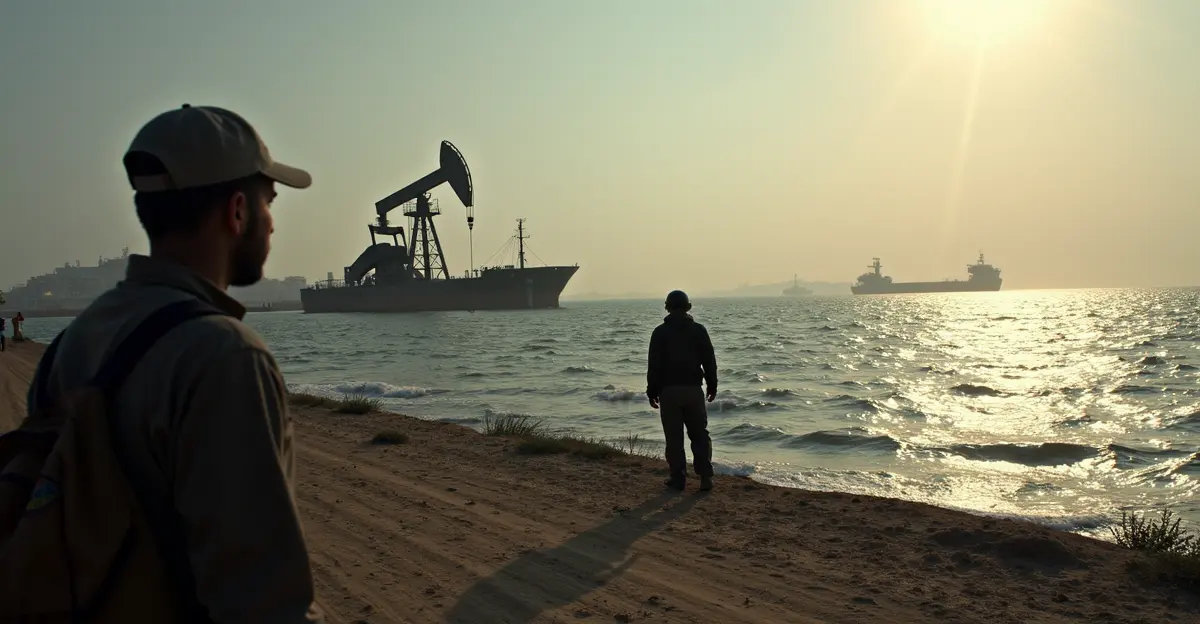
Pipeline alternatives are being accelerated but cannot fully replace maritime shipping. The Saudi East-West Petroline (capacity 5 million bpd) and the UAE's Abu Dhabi Crude Oil Pipeline (ADCOP, 1.5 million bpd) provide some relief, but they bypass only a fraction of the strait's throughput. The US launched Operation Project Freedom to escort merchant ships, but the security situation remains precarious.
Financial Market Risks
The IMF warns that sustained high energy and food prices risk reigniting inflation globally. Stock prices have declined, bond yields risen, and volatility increased worldwide. The impact is asymmetric—poorer nations and energy importers bear the heaviest burden. The IMF's April 2026 World Economic Outlook is expected to slash global growth projections, with developing economies facing inflation of 5.1% and growth slowing to 3.6%.
The systemic financial risks 2026 are compounded by the fact that many developing economies are already heavily indebted, leaving them with little fiscal space to absorb the shock.
Expert Perspectives
"This is the most serious commodity shock since the 1970s," said a World Bank economist. "War is development in reverse, disproportionately harming the poorest populations." The IMF's Tobias Adrian noted that the crisis is affecting the global economy through four main channels: energy prices, supply chains, inflation, and financial conditions.
Wood Mackenzie analysts warn that a worst-case scenario could see Brent crude approach $200 per barrel and global GDP contract by 0.4%. The Wood Mackenzie 2026 energy outlook emphasizes that the crisis creates a paradox for the energy transition: high fossil fuel prices incentivize renewables, but nations may revert to coal and emergency oil reserves in the short term.
FAQ
What caused the Strait of Hormuz closure in 2026?
The closure resulted from the escalation of military conflict between Iran and a US-Israel coalition in late February 2026, with Iran using naval mines, missiles, and the threat of attacks to block the strait.
How much oil passes through the Strait of Hormuz daily?
Approximately 20 million barrels of oil and petroleum products per day, representing about 20% of global supply, along with 20% of global LNG exports.
Which countries are most affected by the closure?
Asian economies are hardest hit, particularly India, Pakistan, Bangladesh, Thailand, Japan, and South Korea. Developing economies in Africa and Europe also face severe strain.
What is being done to mitigate the crisis?
The IEA released 400 million barrels from emergency stockpiles, the US launched Operation Project Freedom for ship escort, and alternative pipeline routes are being accelerated. Nations are also accelerating renewable energy deployment.
How long will the crisis last?
As of mid-2026, the strait remains effectively closed. The duration depends on diplomatic resolution of the conflict, which remains uncertain. Worst-case scenarios project impacts lasting through 2027.
Conclusion
The Strait of Hormuz closure of 2026 is the defining energy and geopolitical event of the year, with cascading impacts on energy prices, supply chains, food security, and global financial stability. The crisis has exposed the fragility of fossil fuel supply chains and is accelerating the global pivot toward renewable energy and energy diversification. However, the immediate humanitarian and economic toll—particularly on developing nations—is severe and will be felt for years to come.
Follow Discussion