


 Deutsch
 English
 Español
 Français
 Nederlands
 Português


 Share
Share




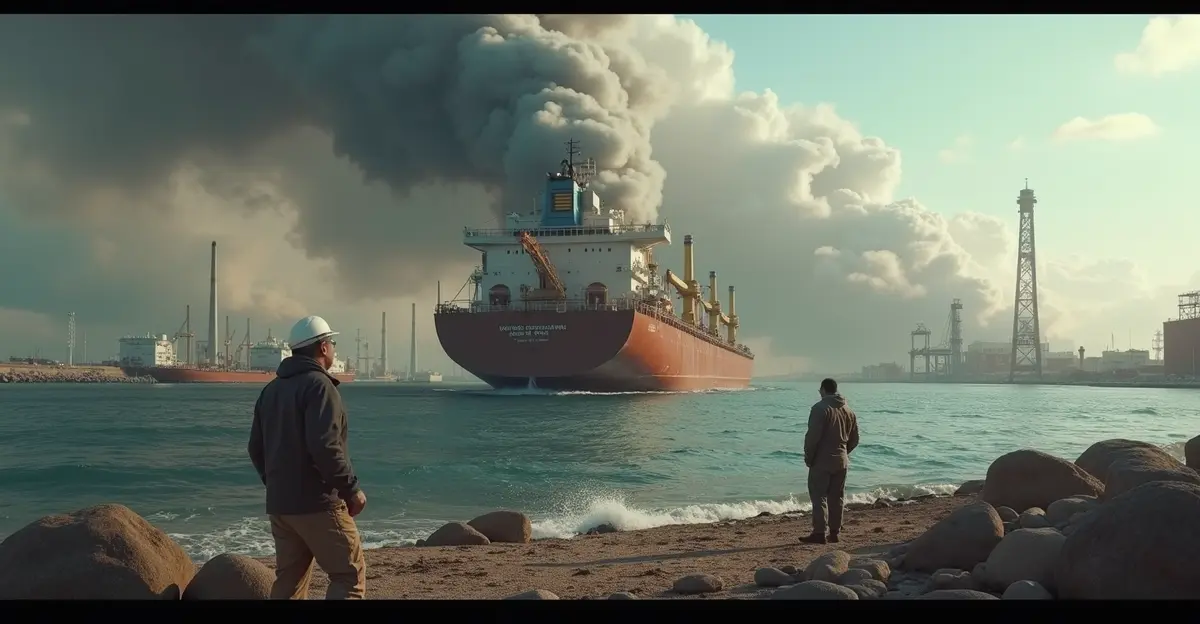
The February 2026 closure of the Strait of Hormuz following the outbreak of the US-Israeli air war against Iran has triggered the largest oil supply disruption in history, removing nearly 20% of global supplies and driving energy prices up 24% — the steepest surge since Russia's 2022 invasion of Ukraine. According to the World Bank's April 2026 Commodity Markets Outlook, this is the defining economic event of 2026, with cascading effects still unfolding across energy markets, food systems, and geopolitical alliances.
Context: The Strait of Hormuz Crisis
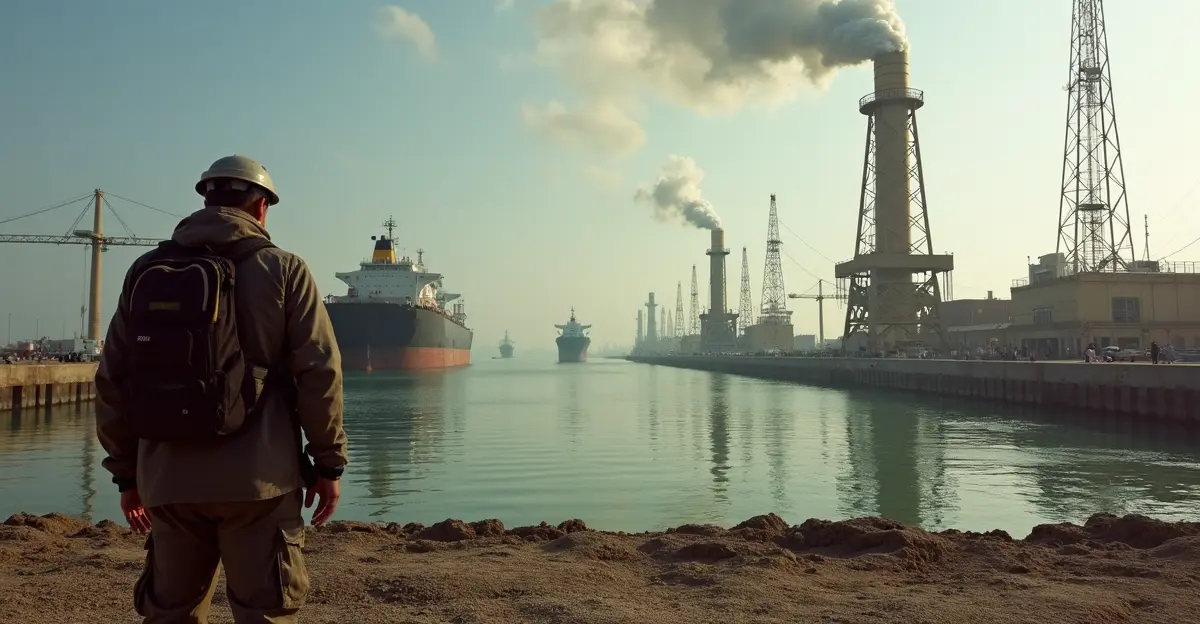
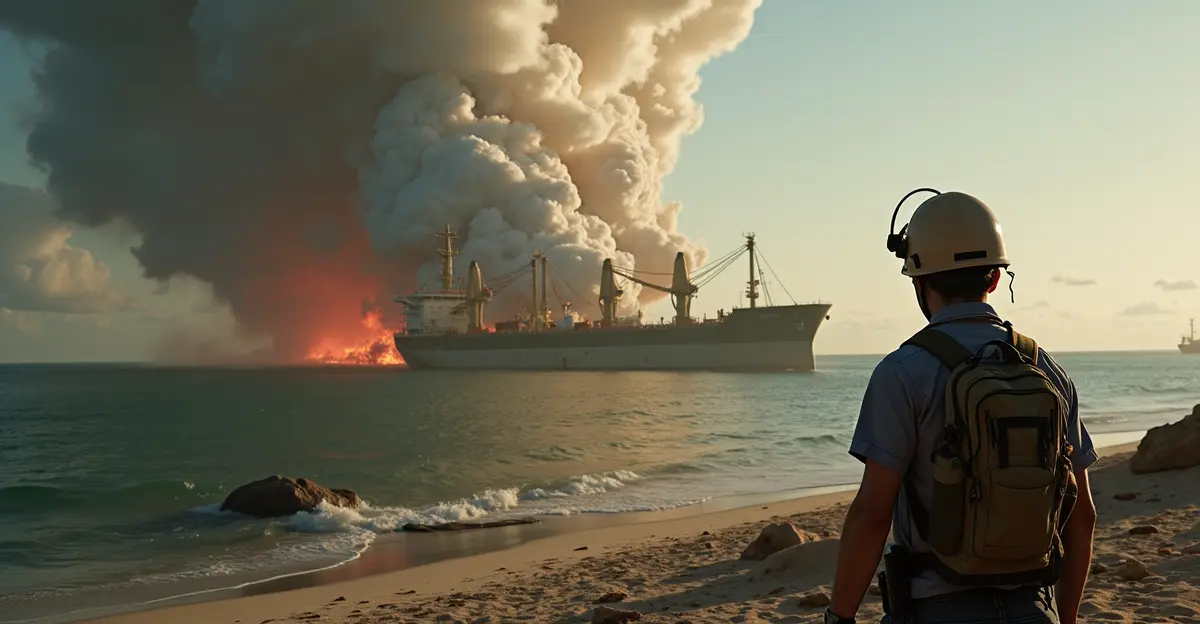
The Strait of Hormuz is a narrow waterway between the Persian Gulf and the Gulf of Oman, providing the only sea passage from the Persian Gulf to the open ocean. Before 2026, approximately 20% of the world's liquefied natural gas (LNG) and 25% of seaborne oil trade passed through the strait annually. On February 28, 2026, the United States and Israel launched 'Operation Epic Fury,' a massive air campaign against Iran that killed Supreme Leader Ali Khamenei and dozens of other officials. In retaliation, Iran's Revolutionary Guard Corps blocked the Strait of Hormuz, causing tanker traffic to drop by 70% initially, then to near zero. By early March, an estimated 2,000 ships and 20,000 mariners were stranded. Oil prices surged past $100 per barrel by March 8, reaching $126 at their peak — the largest monthly increase in history. The 2026 Iran war and subsequent blockade have fundamentally altered global energy security.
The Scale of the Supply Shock
The Dallas Federal Reserve's March 2026 analysis describes the disruption as three to five times larger than past events like the 1973 oil embargo or the 1990 Gulf War. About 80% of the affected oil is shipped to Asia. Under a one-quarter closure scenario, West Texas Intermediate (WTI) oil prices could rise to $98 per barrel, reducing global annualized real GDP growth by 2.9 percentage points in Q2 2026. A two-quarter closure could push oil to $115, while a three-quarter scenario could see prices reach $132. Even after reopening, GDP may remain below pre-closure levels for years. The U.S. Energy Information Administration (EIA) reported that oil production shut-ins in Iraq, Saudi Arabia, Kuwait, UAE, Qatar, and Bahrain reached 7.5 million barrels per day (b/d) in March and are projected to rise to 9.1 million b/d in April. Brent crude oil averaged $103/barrel in March and is expected to peak at $115/b in Q2 2026.
Beyond Oil: Fertilizers, Food Security, and Metals
The crisis extends far beyond energy markets. The Strait of Hormuz is also a vital artery for fertilizer trade, with the region accounting for 13% of global nitrogen and 9% of phosphate fertilizer exports. Approximately one-third of seaborne fertilizers pass through the strait. The UN Conference on Trade and Development (UNCTAD) warns that shipping through the strait has collapsed by over 95%, disrupting fertilizer flows and driving up natural gas prices — a key input for nitrogen-based fertilizers. The World Bank projects fertilizer prices will jump 31% in 2026, led by a 60% surge in urea prices. The World Food Programme estimates this could push an additional 45 million people into acute food insecurity by mid-2026. Developing countries in Asia and Africa — including Sudan, Somalia, Mozambique, Kenya, and Sri Lanka — face heightened vulnerability due to limited fiscal space and dependence on fertilizer imports. The UN has established a task force to facilitate safe passage of fertilizers for humanitarian purposes, warning that without immediate action, the planting season ending in May will be missed, triggering a severe food crisis. The global food security crisis 2026 is closely tied to these disruptions.
Base metals have also reached all-time highs. Copper prices surged past $13,000 per tonne on the London Metal Exchange, and aluminum hit four-year highs. Approximately 40,000 tons of copper cathode per month are trapped in the Gulf, while a 'sulphur famine' threatens African copper operations, putting nearly a quarter of global copper exports at risk. Middle East aluminum smelters, representing 9% of global production, face a 'double-jeopardy' of being unable to export while running out of feedstock. Companies like Alba and Qatalum have declared force majeure and are scaling back production. Analysts warn copper could reach $15,000 per tonne if the blockade persists. The base metals supply crisis 2026 threatens the renewable energy transition, as copper and aluminum are critical for solar panels, wind turbines, and electric vehicles.
Impact on Developing Economies
The World Bank warns that the commodity price surge will increase inflation to 5.1% in developing economies — a four-year high — and slow growth to 3.6%. Higher energy costs, rising food prices, and increased debt costs are compounding the challenges faced by emerging markets. UNCTAD's analysis notes that financial ramifications for developing countries include falling stock prices, weakening currencies, and rising cost of external debt. The International Monetary Fund (IMF) projects that in an adverse scenario with a sharper increase in energy prices and rising inflation expectations, global growth could fall to 2.5%. The World Bank's director M. Ayhan Kose stated: 'War is development in reverse. The crisis is hitting the most vulnerable the hardest, and targeted support for households is urgently needed rather than broad untargeted fiscal measures.'
Accelerating the Energy Transition
Paradoxically, the crisis is supercharging the global shift to renewable energy. The International Energy Agency (IEA) forecasts oil demand will contract by 420,000 barrels per day in 2026, potentially marking the peak year for global oil demand. Unlike previous oil shocks, this disruption coincides with mature, cost-competitive clean energy alternatives — solar, wind, batteries, and electric vehicles now offer viable pathways away from fossil fuel dependence. The IEA has coordinated its largest-ever release of emergency oil stocks, and over 50 countries gathered in Colombia for a first-of-its-kind meeting to discuss phasing out fossil fuels. UN climate chief Simon Stiell said the crisis is 'supercharging the global shift to renewable energy.' China has responded by dramatically increasing exports of solar panels, batteries, and EVs. The energy transition acceleration 2026 is a key theme emerging from this crisis.
In the United States, gasoline prices have soared 40%, with 44% of Americans reducing driving trips and public transit ridership surging. Electric vehicle sales are climbing as consumers seek alternatives to expensive fossil fuels. Several countries, including Pakistan and the Philippines, have implemented four-day work weeks to conserve energy. The IEA's State of Energy Policy 2026 report highlights that energy has become a core issue of national and economic security, with government energy spending doubling since 2019 to an estimated $405 billion annually.
Expert Perspectives
Fatih Birol, Executive Director of the IEA, described the situation as 'the biggest energy crisis in history.' The Dallas Fed's Energy Survey for Q1 2026 found that 39% of oil and gas executives expect recovery in the Strait of Hormuz by August, while others point to late 2026 or beyond. Nearly half (48%) said future disruptions in the strait are 'very likely' within the next five years. Shipping costs from the Persian Gulf are expected to remain elevated, most commonly estimated between $2 and $4 per barrel post-conflict. On the supply side, executives anticipate modest U.S. production gains of up to 250,000 bpd in 2026, but roughly two-thirds expect at least 90% of shut-in Gulf production volumes to eventually return to market.
FAQ
What caused the Strait of Hormuz closure in 2026?
The closure was triggered by the US-Israeli air war against Iran on February 28, 2026, which killed Supreme Leader Ali Khamenei. In retaliation, Iran's Revolutionary Guard Corps blocked the strait, halting nearly all tanker traffic.
How much oil supply has been lost?
Approximately 7.5 to 9.1 million barrels per day have been removed from global markets, representing nearly 20% of global oil supplies — the largest disruption in history.
How high have oil prices gone?
Brent crude oil surged past $100 per barrel by March 8, 2026, reaching a peak of $126. The World Bank forecasts Brent to average $86/barrel in 2026, up from $69 in 2025.
What is the impact on food security?
Fertilizer prices are projected to rise 31%, with urea surging 60%. The World Food Programme estimates an additional 45 million people could face acute food insecurity by mid-2026, particularly in Africa and Asia.
How is the crisis affecting the energy transition?
The crisis is accelerating the shift to renewable energy, with the IEA forecasting oil demand to contract by 420,000 bpd in 2026. Clean energy alternatives like solar, wind, and EVs are becoming more competitive as fossil fuel prices soar.
Conclusion and Future Outlook
The Strait of Hormuz closure of 2026 is reshaping the global order in real time. The World Bank warns that risks are tilted toward even higher prices, with Brent potentially reaching $95-$115 per barrel if disruptions prove more severe. The Dallas Fed's simulations show that even after the strait reopens, GDP may remain below pre-closure levels for years. The crisis is forcing a fundamental recalibration of global supply chain and energy security strategy, with governments worldwide diversifying energy sources, building strategic reserves, and accelerating the transition to clean energy. As the global energy security strategy 2026 evolves, the events of 2026 will be studied for decades as a turning point in the geopolitics of energy.
Sources
- World Bank Commodity Markets Outlook, April 2026
- Dallas Federal Reserve Economic Analysis, March 2026
- UNCTAD Report on Strait of Hormuz Disruptions
- U.S. Energy Information Administration, April 2026 Short-Term Energy Outlook
- International Energy Agency, 2026 Energy Crisis Policy Response Tracker
- World Food Programme Food Security Update, March 2026

Follow Discussion