


 Deutsch
 English
 Español
 Français
 Nederlands
 Português


 Share
Share




The February 2026 closure of the Strait of Hormuz triggered the largest oil supply disruption in history, cutting approximately 10 million barrels per day and sending Brent crude above $90 per barrel. But beyond energy markets, the crisis is propagating through fertilizer supply chains—disrupting 1.5–3 million metric tons monthly and surging urea prices by over 50%—threatening staple crop yields across vulnerable developing nations. This article analyzes the multi-layered transmission mechanism from a single maritime chokepoint into a simultaneous energy, food, and inflation shock, and assesses which economies and regions face the deepest structural vulnerabilities.
Background: The Strait of Hormuz as a Global Chokepoint
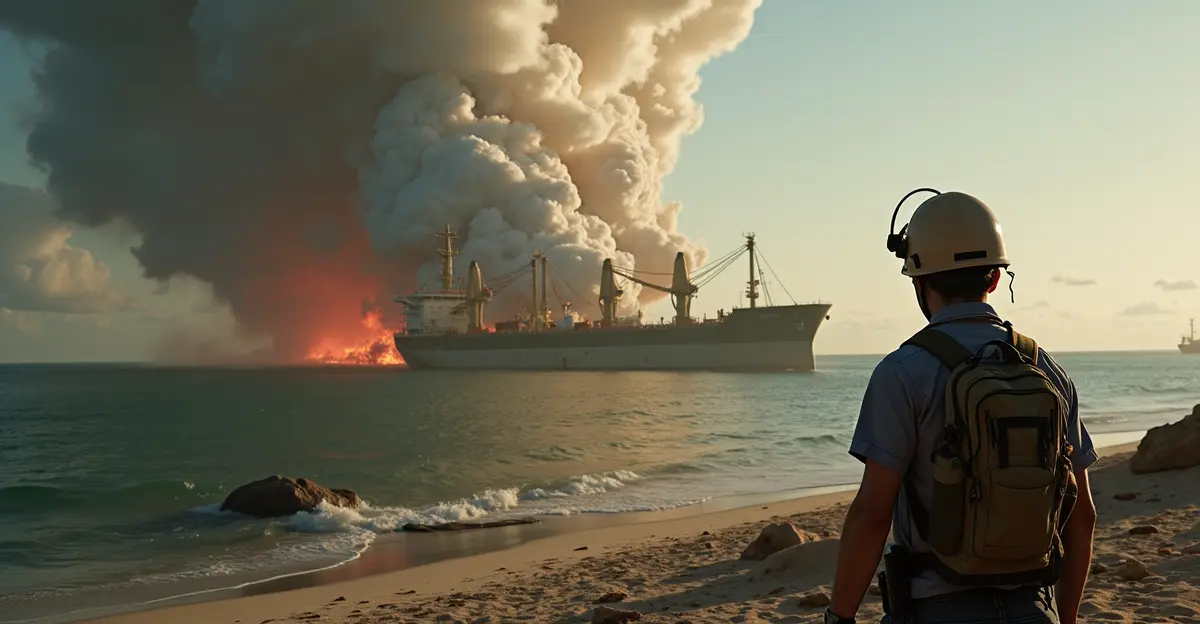
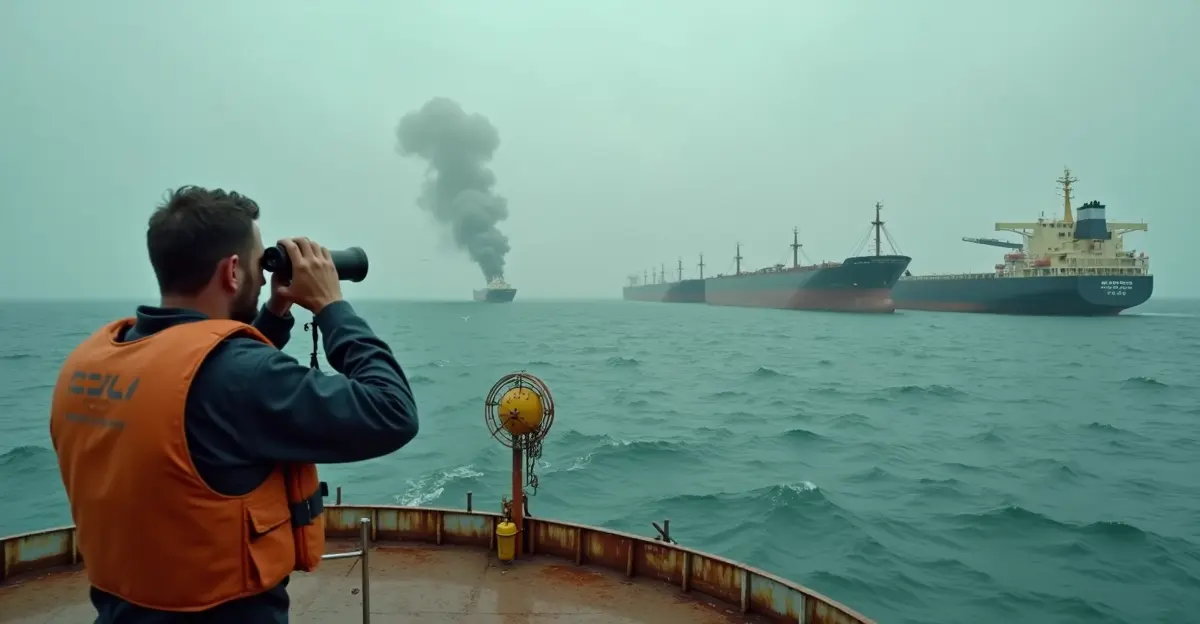
The Strait of Hormuz, connecting the Persian Gulf to the Gulf of Oman, carries roughly 20% of the world's traded oil, 20% of natural gas, and 20–30% of seaborne fertilizer trade. In late February 2026, US-Israeli strikes on Iranian nuclear and military facilities prompted Iranian retaliation, including mine-laying, drone attacks on tankers, and the closure of the strait to commercial shipping. By early March, the waterway was effectively impassable, with insurance premiums skyrocketing and naval escorts unable to guarantee safe passage.
The geopolitical tensions in the Middle East have long made the strait a flashpoint, but the scale and speed of the 2026 disruption caught global markets off guard. The World Bank described it as "the largest oil market shock in history," with global oil supply crashing by 10.1 million barrels per day (mb/d) in March alone.
Energy Shock: Oil Markets in Uncharted Waters
Supply Disruption and Price Surge
According to the U.S. Energy Information Administration (EIA), an estimated 7.5 mb/d of crude oil production from Gulf states was shut in during March, rising to 9.1 mb/d in April. Brent crude surged about 65% ($46/bbl) in March—its highest monthly rise ever—and the EIA's April 2026 Short-Term Energy Outlook forecast Brent averaging $96/barrel for the year, peaking at $115/b in Q2 2026. Retail gasoline in the U.S. was projected to average $3.70/gallon in 2026, with diesel prices potentially exceeding $5.80/gallon in April.
Market Deficits and Demand Destruction
The World Bank baseline forecast sees a 3.7 mb/d market deficit in Q2 2026, with global oil output falling by 6.9 mb/d year-on-year—the largest quarterly decline since COVID-19. Oil demand fell by 0.8 mb/d in March and is forecast to drop further as high prices destroy consumption. The global energy transition and oil demand dynamics are being tested as never before, with some analysts warning that the shock could accelerate the shift to renewables while others fear a prolonged period of high energy costs.
Fertilizer Crisis: The Hidden Transmission to Food Systems
Disruption of Urea and Ammonia Supply
While oil dominates headlines, the fertilizer shock may prove more damaging in the long run. The Middle East accounts for nearly a quarter of global urea exports. Iran halted ammonia production, Qatar suspended urea and ammonia output, and India reduced production due to lower LNG supplies. The World Bank's fertilizer price index rose over 12% in Q1 2026, reaching its highest level since October 2022. Urea prices climbed above $850/metric ton in April—up 80% since February.
The global fertilizer supply chain vulnerabilities are now starkly exposed. The Strait handles roughly one-third of global seaborne fertilizer trade, including major flows of urea, DAP, and MAP from Saudi Arabia and Iran. Yara International's CEO estimated that the shortage is costing the world approximately 10 billion meals per week.
Impact on Food Security
The FAO warns that the closure is not a temporary disruption but a systemic agrifood shock that could trigger a severe global food price crisis within 6 to 12 months. The FAO Food Price Index rose for a third consecutive month in April, driven by high energy costs and Middle East conflict disruptions. The shock unfolds in stages: energy, fertilizer, seeds, lower yields, commodity price increases, then food inflation.
FAO Chief Economist Maximo Torero stressed the need for urgent intervention: "Without timely access to inputs, farmers will face lower yields, driving food prices higher later this year. The situation could worsen with the expected onset of El Niño, bringing droughts and disrupted rainfall patterns globally."
Regional Vulnerabilities: Who Is Hit Hardest?
Developing Nations in Asia and Africa
Developing nations in Asia and Africa are most exposed, as they rely heavily on imported fertilizers and have limited fiscal space for social protection. The World Food Program estimates 260 million people already face acute food insecurity before this shock. Reduced fertilizer application in 2026 could compound food security risks into 2027, as production restarts could take weeks to months even after a ceasefire.
Europe and the UK
European and UK markets face severe inflation risks. Bank of America warns the energy shock may extend into H2 2026, as insurance costs and logistical complexity slow normalization even after a ceasefire. The Federal Reserve faces a 97.5% probability of no rate change in June 2026 due to inflationary oil pressure, with implications for global monetary policy.
India and South Asia
India, a major fertilizer importer, has already reduced production due to lower LNG supplies. The impact of energy prices on South Asian economies is particularly acute, as these nations face both higher import bills and reduced agricultural output.
Expert Perspectives and Policy Responses
UNCTAD has warned that what began as a shipping disruption has become a wider development risk. The World Bank, IMF, FAO, and UNCTAD have all issued urgent warnings in recent weeks. Key recommendations from the FAO include securing alternative land and sea corridors, avoiding export restrictions, protecting humanitarian food flows, activating social protection programs, and expanding affordable credit for farmers.
The EIA's outlook assumes the conflict does not persist past April, with production gradually returning to pre-conflict levels by late 2026. However, prediction markets place a 51.5% probability on WTI reaching $110 before end of May 2026, with some analysts forecasting $130–$150 in prolonged escalation scenarios.
FAQ
What caused the Strait of Hormuz closure in 2026?
The closure was triggered by US-Israeli strikes on Iranian nuclear and military facilities in late February 2026, followed by Iranian retaliation including mine-laying, drone attacks on tankers, and the effective closure of the strait to commercial shipping.
How much oil supply was disrupted?
Global oil supply crashed by 10.1 million barrels per day in March 2026, with an estimated 7.5–9.1 mb/d of Gulf state production shut in. This is the largest oil supply disruption in history.
How are fertilizer prices affected?
Urea prices surged over 80% since February 2026, reaching above $850/metric ton in April. The World Bank's fertilizer price index rose over 12% in Q1 2026 and is projected to rise over 30% for the full year.
Which countries are most vulnerable to food insecurity?
Developing nations in Asia and Africa are most exposed due to heavy reliance on imported fertilizers and limited fiscal capacity. The World Food Program estimates 260 million people already face acute food insecurity before this shock.
What is the outlook for oil prices?
The EIA forecasts Brent crude averaging $96/barrel in 2026, peaking at $115/b in Q2 2026. The World Bank baseline sees $86/bbl in 2026, but upside risks could push prices 10–35% higher depending on geopolitical developments.
Conclusion
The Strait of Hormuz crisis is the defining geopolitical-economic event of early 2026, with cascading impacts on energy markets, food systems, and developing-economy stability that will shape the remainder of the year. The multi-layered transmission mechanism—from oil to fertilizer to food—means that even a rapid resolution would leave lasting scars, particularly for vulnerable nations. Policymakers face a narrow window to prevent the crisis from becoming a humanitarian catastrophe, requiring coordinated action on alternative supply routes, social protection, and diplomatic de-escalation.




Follow Discussion