


 Deutsch
 English
 Español
 Français
 Nederlands
 Português


 Share
Share




The near-closure of the Strait of Hormuz following the February 2026 Middle East escalation has triggered the largest oil supply disruption on record and is now squeezing critical non-oil commodities including fertilizers, sulfur, methanol, aluminum, and helium. This analysis examines how the crisis has reset global commodity prices—with the World Bank projecting energy prices up 24% and fertilizers up 31% in 2026—and explores the strategic realignment of supply chains as import-dependent Asian economies face acute food and energy insecurity.
Background: The February 2026 Escalation
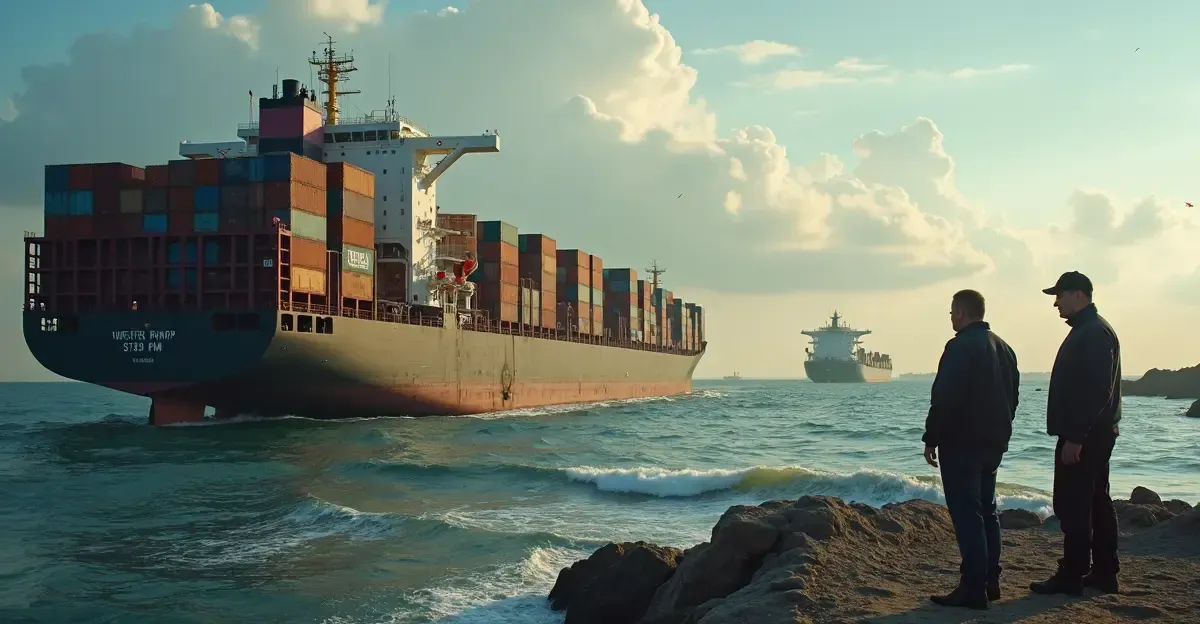
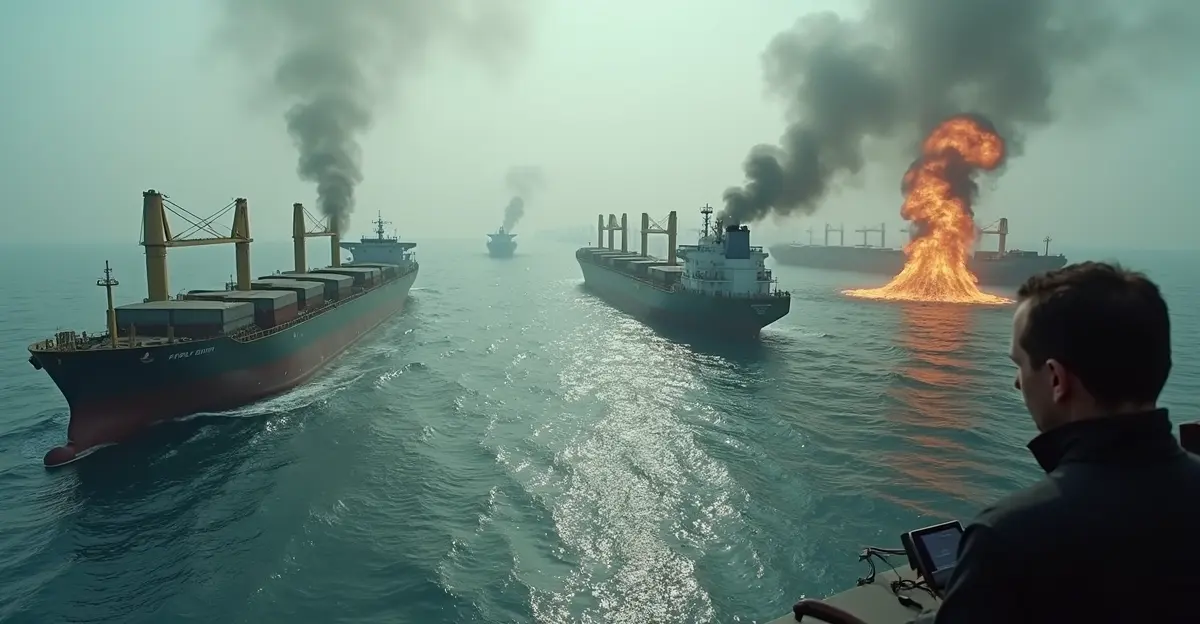
On February 28, 2026, Iran largely blocked shipping through the Strait of Hormuz—a critical maritime chokepoint handling about 25% of global seaborne oil trade and 20% of LNG. In retaliation for US and Israeli airstrikes and the assassination of Iran's supreme leader Ali Khamenei, Iran's Islamic Revolutionary Guard Corps (IRGC) issued warnings, attacked merchant ships, laid sea mines, and forbade passage to vessels going to or from US, Israeli, and allied ports. Tanker traffic dropped by about 70%, with over 150 ships anchored outside the strait. Brent crude surged past $126 per barrel, marking the largest monthly price increase in history and the biggest disruption to global energy supply since the 1970s crisis. The crisis triggered a dual blockade: Iran blockaded the Gulf while the US blockaded Iranian ports. A temporary ceasefire in April briefly opened the strait under Iranian tolls, but restrictions soon resumed.
The 2026 Iran war and its impact on global trade routes has been described by the World Bank as the defining economic shock of 2026. According to the IMF's April 2026 World Economic Outlook, titled 'Global Economy in the Shadow of War,' global growth has been cut to 3.1%, with downside risks dominating the forecast.
Commodity Price Shock: Beyond Oil
Energy Prices Surge 24%
The World Bank's April 2026 Commodity Markets Outlook warns that the Middle East war will trigger the biggest energy price surge in four years. Energy prices are projected to jump 24% in 2026, with overall commodity prices rising 16%. Attacks on energy infrastructure and disruptions in the Strait of Hormuz have caused the largest oil supply shock on record, reducing global supply by about 10 million barrels per day. Brent oil is forecast to average $86/barrel, up from $69 in 2025. The report warns that if hostilities escalate, Brent could average $115/barrel, pushing developing-economy inflation to 5.8%.
Fertilizer Crisis Threatens Global Food Security
Fertilizer prices are expected to rise 31%, led by a 60% surge in urea prices. Roughly 30% of globally traded fertilizers move through the strait, including 23% of ammonia, 34% of urea, and nearly 20% of phosphates. Middle East urea prices have jumped ~40%, with warnings that nitrogen fertilizer prices could double. India, Bangladesh, and Brazil face acute planting season risks. The FAO warns that while global food prices remain stable for now thanks to existing stocks, this buffer is temporary. The next planting season is at risk as farmers face rising input costs and limited fertilizer access, which could reduce crop yields significantly later in the year. The World Bank projects that up to 45 million additional people could be pushed into acute food insecurity.
The global food security crisis is further compounded by disruptions in other critical inputs. Sulfur, essential for battery chemistry and fertilizer production, has seen supply chains severely constrained. Methanol, used in plastics and chemicals, is also affected, with $20-25 billion worth of petrochemicals passing through Hormuz annually.
Metals and Helium: Industrial and High-Tech Fallout
Gulf producers account for ~10% of global aluminum output and ~20% of exports, with prices hitting multiyear highs. A U.S. blockade and conflict have stranded Gulf aluminum shipments, driving prices to a four-year high. European markets are especially vulnerable due to ~20% dependency on Middle Eastern supply, with Rotterdam premiums jumping to $300-340/tonne. U.S. Midwest premiums rose to 104-107 cents/lb amid tariff uncertainties. The shortage is felt globally, particularly in Asia and the U.S., where Gulf aluminum represents about 20% of needed capacity.
Qatar produces one-third of the world's helium, vital for semiconductor manufacturing and MRI scanners. The disruption has threatened healthcare and high-tech supply chains. Over 20% of U.S. aluminum imports from the Persian Gulf are disrupted, and helium shortages are compounding semiconductor industry challenges. The helium shortage 2026 has become a critical concern for medical and tech sectors worldwide.
Strategic Realignment of Supply Chains
The crisis is reshaping global supply chains, driving up prices across sectors from agriculture to high-tech manufacturing, and shifting industrial policy towards resilience and diversification. Securing critical inputs has become a matter of economic and national security. Asian economies, which received 89% of strait oil exports (China alone 37.7%), face acute vulnerabilities. Existing bypass pipeline infrastructure can offset no more than 35% of pre-crisis volumes, leaving a 13+ mb/d supply gap.
The Asian energy security strategy is being fundamentally rethought as countries scramble to secure alternative sources. War risk insurance premiums have made most commercial voyages economically unviable, and the crisis is permanently reshaping how energy markets price geopolitical risk.
Expert Perspectives
"The Strait of Hormuz disruption is the most strategically important global trade story unfolding right now," said a World Bank economist. "We are witnessing the largest commodity price spike since 2022, with cascading effects on food prices, inflation, and economic growth."
ADNOC's CEO called the closure "economic terrorism," as the Pentagon reinforces the region. The IMF warns that a prolonged conflict could lead to deeper geopolitical fragmentation, disappointment over AI-driven productivity, and renewed trade tensions.
FAQ
What caused the Strait of Hormuz crisis in 2026?
The crisis began on February 28, 2026, when Iran largely blocked shipping through the Strait of Hormuz in retaliation for US and Israeli airstrikes and the assassination of Iran's supreme leader Ali Khamenei. Iran's IRGC attacked merchant ships, laid sea mines, and forbade passage to vessels going to or from US, Israeli, and allied ports.
How much oil flows through the Strait of Hormuz?
Prior to the crisis, the strait handled approximately 20 million barrels per day of oil, representing about 25% of global seaborne oil trade and 20% of LNG. After the blockade, flows collapsed to roughly 1 mb/d.
Which non-oil commodities are most affected?
Beyond oil, the crisis impacts fertilizers (urea, ammonia), sulfur, methanol, aluminum, helium, graphite feedstocks for EV batteries, monoethylene glycol (MEG), iron ore/steel pellets, and green hydrogen infrastructure.
How will this affect food prices?
Fertilizer prices are projected to rise 31% in 2026, with urea up 60%. The World Bank warns that up to 45 million additional people could face acute food insecurity. The next planting season is at risk as farmers face rising input costs and limited fertilizer access.
What is the economic outlook for 2026?
The IMF projects global growth at 3.1% in 2026, below pre-pandemic averages. Inflation in developing economies is projected at 5.1%. If hostilities escalate, Brent oil could average $115/barrel, pushing developing-economy inflation to 5.8%.
Conclusion and Future Outlook
The Strait of Hormuz crisis of 2026 represents a watershed moment for global trade. The disruption has exposed structural vulnerabilities in energy and commodity supply chains that will take years to address. As the World Bank and IMF have both highlighted, the defining economic shock of 2026 is not just about oil—it is about the interconnected web of fertilizers, metals, and critical materials that underpin modern economies. The strategic realignment of supply chains, particularly for Asian import-dependent nations, will be one of the most consequential economic developments of the decade.


Follow Discussion